Valentine’s Day in France

If you’re imagining streets lined with rose petals, lovers declaring their devotion from balconies, and centuries-old romantic traditions playing out in every village, I hate to disappoint you. Valentine’s Day in France is… well, it’s lovely, but it’s also surprisingly commercial, often low-key, and nothing like the grand romantic gesture you might expect from the self-proclaimed country of love.
That said, the French do have their own particular way of celebrating 14th February, and it’s worth understanding if you want to see how romance actually works in the country that gave us the word “amour.” And if you fancy calling your other half something more interesting than “darling” this year, the French have you covered.
The history is not as French as you’d think
Rome
Most historians trace Valentine’s Day back to third-century Rome and a priest called Valentine who allegedly performed illegal weddings for soldiers. The story goes that Emperor Claudius II had banned marriage because unmarried men made better soldiers. Valentine ignored the edict, got thrown in prison, and was eventually executed on 14th February, 270 AD. Before his death, he supposedly restored sight to his jailer’s blind daughter and sent her a farewell note signed “from your Valentine.”
Whether that’s actually true is anyone’s guess. There were multiple Saint Valentines kicking about in early Christianity, and the whole story might be complete fabrication.
Charles, Duke of Orléans
The tradition of Valentine’s poetry really took off in the 15th century. Charles, Duke of Orleans, was captured at the Battle of Agincourt in 1415 and spent 25 years imprisoned in the Tower of London. During that time, he wrote loads of poetry, including romantic verse that referenced his “Valentine.” His most famous Valentine poem, “Je suis desja d’amour tanné, Ma tresdoulce Valentinee” (I am already sick of love, my very gentle Valentine), is now held at the British Library, though his wife died before he was ever released. Lovers tragedy, that.
Une loterie d’amour
There was also something called “une loterie d’amour” (a love lottery), where single people would gather outside houses and call out to each other until they’d paired off. If a bloke wasn’t particularly keen on his newly assigned partner, he could just… leave. The rejected women would then gather to burn images of the men who’d abandoned them. This got out of hand fairly quickly and was eventually banned by the French government.
So much for French romance, eh?

How the French celebrate Valentine’s Day today
Modern Valentine’s Day in France looks quite similar to what you’d find in the UK or US, but with a few key differences.
It’s only for lovers!
In France, Valentine’s Day is strictly for romantic couples, not friends, not family, not your work colleagues. French schoolchildren don’t give valentines to their entire class. You don’t send cards to your mates. It’s exclusively a celebration of romantic love.
This is actually quite different from the UK or US, where Valentine’s Day has been somewhat democratised to include friendship and familial affection. In France, if you send someone a Valentine’s card, you’re declaring romantic interest. Full stop.
Restaurant bookings are everything
The biggest Valentine’s tradition in France is booking a table at a nice restaurant. And I mean proper bookings, weeks in advance, often at places you wouldn’t normally be able to afford.
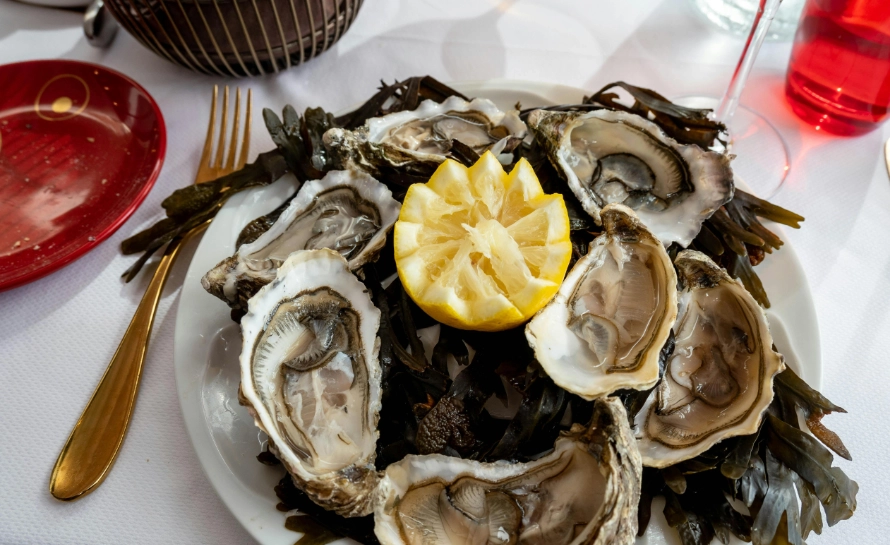
A typical Valentine’s meal in France starts with champagne or a Kir Royal (champagne with blackcurrant liqueur), followed by delicate starters like oysters (considered an aphrodisiac) or foie gras, then a rich main course such as filet mignon with truffle sauce or duck with red wine reduction. Dessert is usually something decadent like fondant au chocolat (molten chocolate cake) or delicate macarons.
Restaurants go all out with special Valentine’s menus, often charging considerably more than usual. But the French consider it worth it. This is the one night where you’re expected to make a proper effort.
Don’t even think about just turning up on the night. Every decent restaurant in France will be fully booked by early February. If you’re planning a Valentine’s meal in France, book your table by the end of January at the latest.
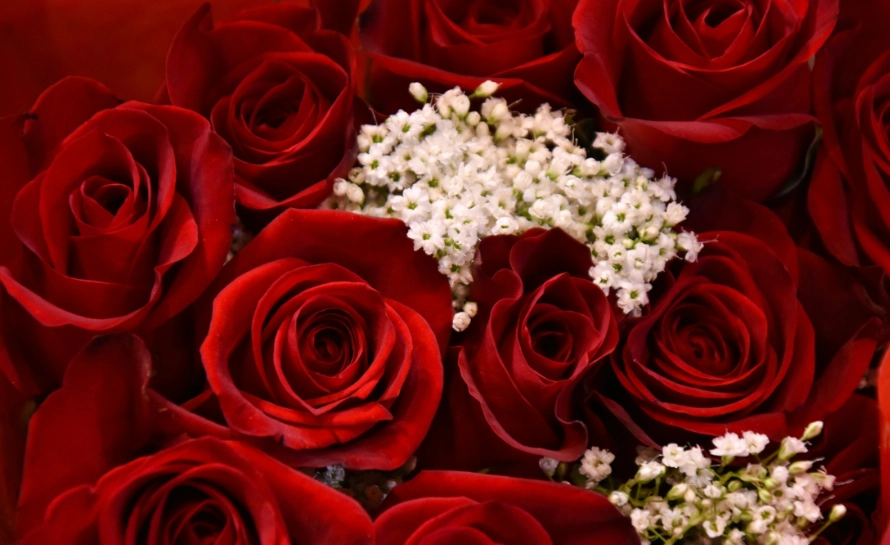
Roses, roses, everywhere roses
French florists make in a single day on Valentine’s what they’d normally make in a week, with 80 percent of their sales being red roses.
Red roses are the default Valentine’s flower in France, not wildflowers, not mixed bouquets, not your beloved’s favourite blooms. Just red roses. It’s traditional, it’s expected, and it’s utterly unimaginative, but that’s what people do.
The price of roses absolutely skyrockets around 14th February, naturally. Florists know they’ve got you over a barrel, and they’re not apologising for it.
Cards? Not so much
The French typically don’t send Valentine’s cards at all, or if they do, they’re far less elaborate than the British tradition. You might exchange a small card with your partner, but it’s not the centrepiece of the celebration.
Instead, gifts tend towards jewellery, perfume, chocolates, or champagne. Something you can actually use or consume, rather than a bit of card that’ll sit on the mantelpiece for a week before being binned.
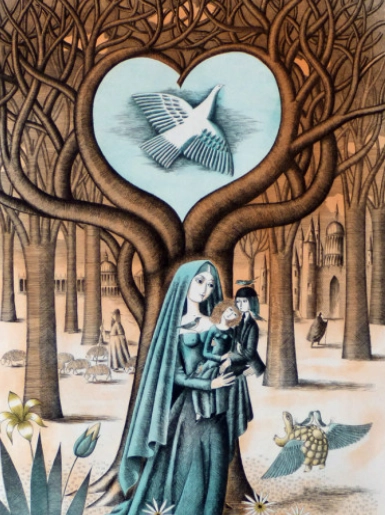
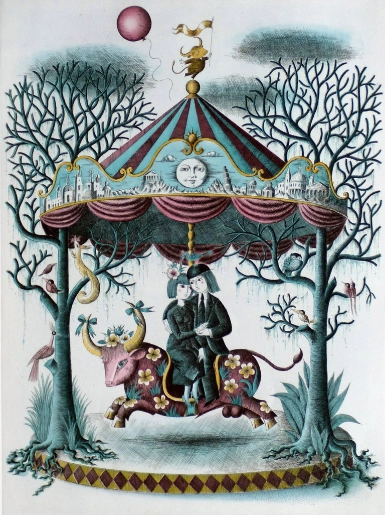
Raymond Peynet defined French romance
If there’s one figure who captures modern French Valentine’s imagery, it’s Raymond Peynet, the illustrator who created “Les Amoureux” (The Lovers) in 1942.
Peynet was sitting on a bench in Valence, opposite a music kiosk, when he drew a young violinist with long hair playing alone while a young girl listened with admiration. Later, the violinist became a poet, and the girl became his lover. These simple line drawings, a couple in love, often accompanied by small birds and angels, became iconic symbols of French romance.
Peynet’s lovers appeared everywhere: magazines, postcards, posters, stamps, jewellery, ceramics, film studios. They’re still recognised across France today. The original bandstand in Valence where Peynet created his drawings has been classified as a historical monument since 1982.
Peynet died on 14th January 1999, exactly one month before Valentine’s Day, which feels almost too perfectly French to be coincidental.
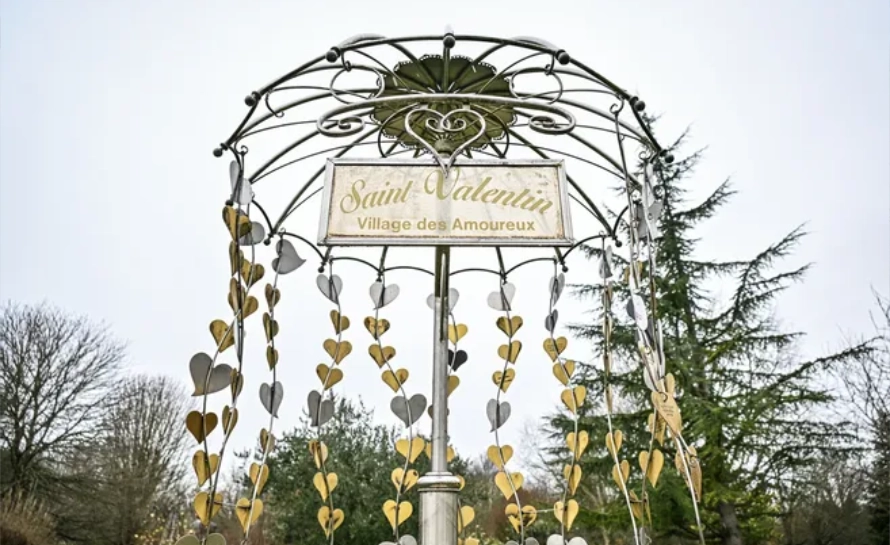
Saint-Valentin: France’s village of lovers
There’s one place in France where Valentine’s Day is taken deadly seriously: the village of Saint-Valentin in the Indre department, the only village in France to bear the name of the patron saint of lovers.
This tiny commune of about 280 inhabitants becomes the epicentre of French Valentine’s celebrations every February. The village has been organising Valentine’s events for 60 years, and couples travel from across France (and beyond) to celebrate there.
What makes Saint-Valentin special
The village has a “Jardin des Amoureux” (Lovers’ Garden) featuring an Arbre aux Vœux (Tree of Wishes) where couples can attach their written wishes, a Saule en Cœur (Willow in the shape of a heart), and a kiosque des amoureux built by the Compagnons du Tour de France.
The mayor Pierre Rousseau has created a special ceremony called the “diplôme d’amour” (certificate of love) for couples who can’t officially marry in the village because they don’t live there. It’s not legally binding, but it’s a romantic gesture that allows couples to celebrate their commitment in France’s most romantically-named village.
Saint-Valentin also has the only Michelin-starred restaurant in the Indre department: Au 14 Février, a Franco-Japanese restaurant run by chef Masami Kimura. The coincidence of having a starred restaurant in a village of 280 people that happens to be named after Saint Valentine is almost too perfect.
The village organises a three-day festival around Valentine’s Day weekend, with market stalls, marriage vow renewals, concerts, certificate ceremonies, and special Valentine’s merchandise. About 3,000 visitors descend on the village during the festival, which is roughly 11 times the normal population.
The celebrations cost the village about 30,000 euros annually, with financial support from the Indre department. For such a small commune, that’s a significant investment in romance.
How to visit Saint-Valentin
Saint-Valentin is located in central France, about 10 kilometres west of Issoudun and roughly 25 kilometres from Châteauroux. It’s about 260 kilometres from Paris, making it reachable for a romantic weekend getaway.
The village celebrates Valentine’s weekend rather than just the 14th itself, typically running festivities from Friday through Sunday. Check the village website for specific dates and events.
Outside of Valentine’s weekend, Saint-Valentin is worth visiting if you’re in the area, the Lovers’ Garden is open year-round, and the village maintains its romantic atmosphere even when it’s not packed with visitors. But be warned: there’s only one restaurant and one bakery, and accommodation options are extremely limited in the village itself. You’ll likely need to stay in nearby Issoudun or Châteauroux.
What the French actually eat on Valentine’s Day
Forget the idea of a specific “Valentine’s dish.” The French Valentine’s meal is all about luxury ingredients: oysters, champagne, foie gras, high-quality meat or fish, cheese, and rich chocolate desserts. the stuff you’d normally save for special occasions. Valentine’s Day in France is about treating yourself and your partner to something special, not about preparing grandmother’s traditional recipe.
The meal follows classic French structure, it’s just longer and more indulgent than an ordinary dinner, with better wine.

Paris: The Valentine’s Day tourist trap
Paris markets itself heavily as the “City of Love” and pulls out all the stops for Valentine’s Day. The Eiffel Tower is lit up (as always), restaurants charge premium prices (more than usual), and tourists flock to the city believing it’s the most romantic place on earth.
There’s the “I Love You” wall in Montmartre, where “I love you” is written in 250 languages. It’s become a popular spot for Valentine’s Day photos and declarations of love.
There used to be a tradition of attaching padlocks to the Pont des Arts bridge and throwing the key into the Seine as a symbol of eternal love. This became so popular that over one million locks had to be removed in 2015 because the excessive weight was damaging the bridge structure. The bridge is still associated with Parisian romance, just without the locks.
Is Paris actually more romantic on Valentine’s Day? Not particularly. It’s crowded, expensive, and full of tourists doing exactly what you’re doing. But if the idea of celebrating Valentine’s in Paris appeals to you, go for it. Just book everything well in advance and expect to pay tourist prices.

Single on Valentine’s Day?
If you’re single in France on Valentine’s Day, you’re largely expected to ignore the whole thing. Unlike countries that have developed “Galentine’s Day” or similar alternatives, France doesn’t really have an anti-Valentine’s movement.
There’s something called “Fête des Célibataires” (Singles’ Day), but it’s not widely celebrated and certainly not an established tradition.
The French approach to being single on Valentine’s Day is essentially to shrug and get on with your life. It’s not a day for friendship celebrations or family gatherings. It’s for couples, and if you’re not in a couple, you just… don’t participate. Don’t worry though, you’ll find your pigeon.
The bottom line
Valentine’s Day in France is lovely, commercial, slightly cynical, and genuinely romantic all at once. It’s not some centuries-old French tradition steeped in cultural significance. It’s a modern celebration that the French have adopted and adapted to their own style.
The French do it with better food, better wine, and perhaps a bit more style than some other countries. But at its core, it’s the same holiday you’d find in London or New York: couples exchanging gifts, restaurants charging premium prices, florists making a fortune on roses.
If that’s your thing, France is a brilliant place to celebrate. If it’s not, the French won’t judge you for skipping it (nor will we). Because romance, after all, shouldn’t need a designated day on the calendar, don’t you think?