Tabbouleh
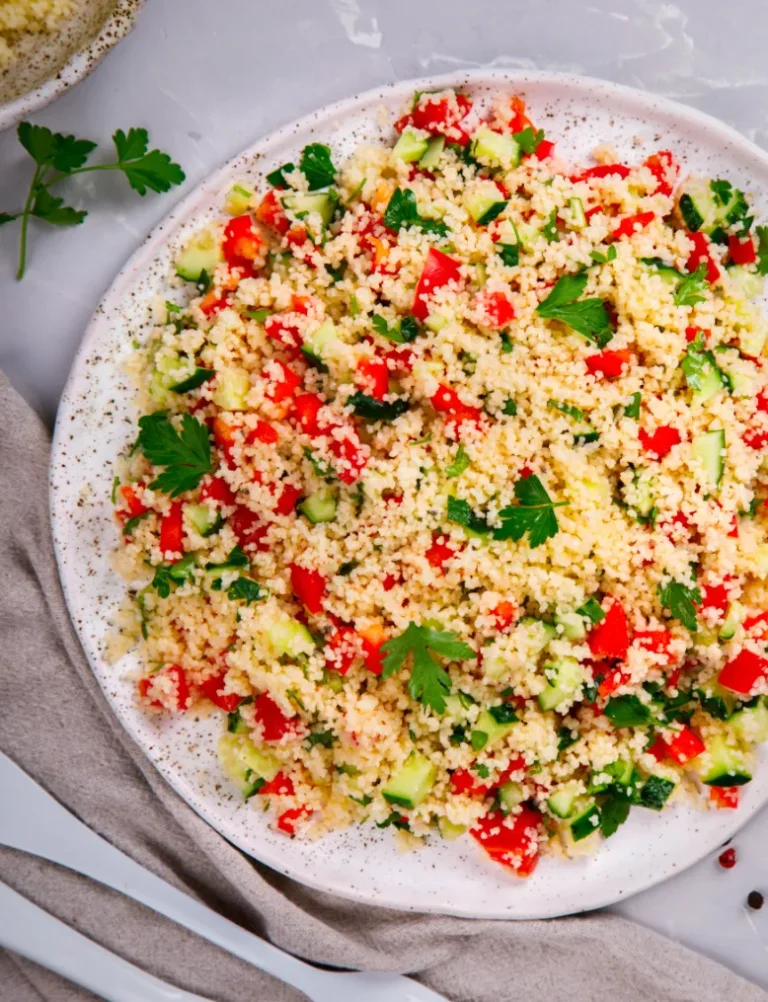
Tabbouleh
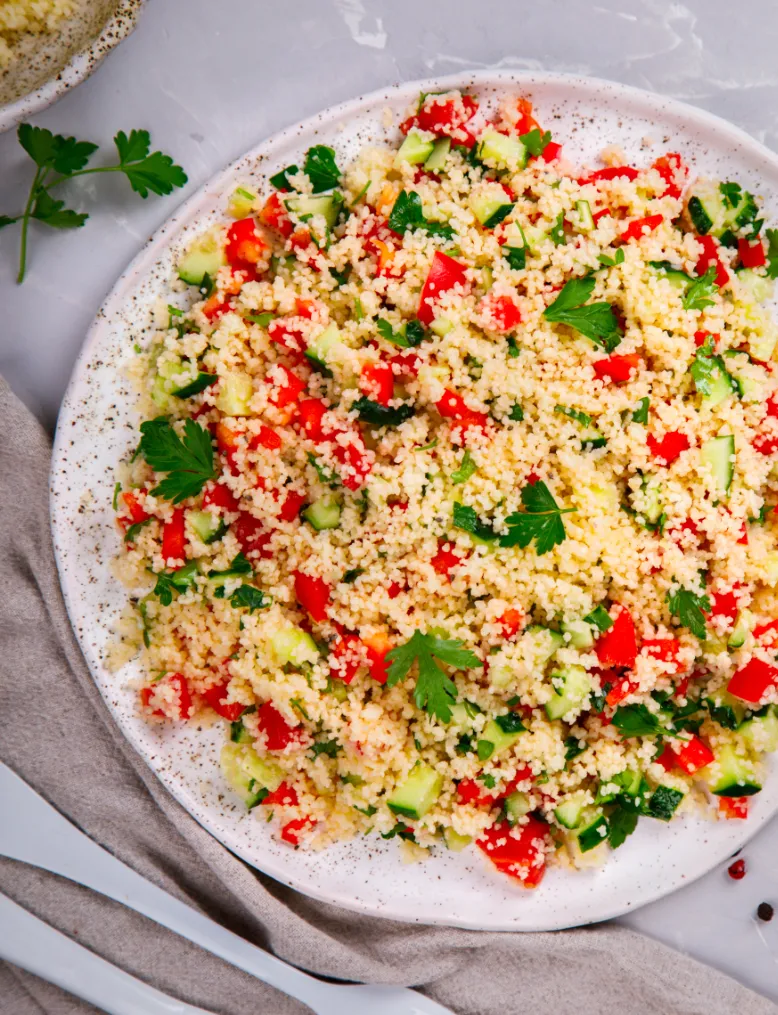
Sweet tomatoes and crisp cucumber mixed with tender couscous, all sharpened up with lemon and loads of fresh parsley. The olive oil makes it rich without being heavy, and the mint gives it that fresh, summery kick. Light, bright, and ridiculously easy.


Ingredients

For the salad
- 200 gr couscous medium grain
- 200 ml boiling water
- 5 tomatoes ripe, about 400gr
- 1 cucumber about 300gr
- 2 onions
- 100 gr flat-leaf parsley
- 100 mint
- salt
For the dressing
- 6 tbsp olive oil extra virgin
- 100 ml lemon juice
- salt and black pepper
Instructions
- 1. Prepare the couscousPut the couscous in a large bowl, add a bit of salt and a tablespoon of olive oil and mix it well. Then pour over the boiling water (use 250ml for 200g couscous). Stir once, then cover the bowl tightly with a plate or cling film and leave it for 10 minutes. The couscous will absorb all the water and fluff up.After 10 minutes, uncover and fluff it up thoroughly with a fork, breaking up any clumps. Spread it out on a large plate or leave it in the bowl to cool completely whilst you prep the vegetables. You don't want to add the tomatoes to hot couscous or they'll go mushy.
- 2. Prep the vegetablesDice the tomatoes into small cubes (about 1cm). If they're particularly watery, you can scoop out some of the seeds, but most French recipes keep them in.Peel and finely dice the onion. Red onion is slightly milder and sweeter, but white onion works just as well. You want it chopped quite fine so it distributes evenly through the salad.Peel the cucumber, cut it in half lengthways, and scoop out the seeds with a teaspoon. Dice the flesh into small cubes, roughly the same size as the tomatoes.
- 3. Chop the herbsThis is where French Tabbouleh differs from other grain salads—you need loads of herbs. It should be green and fresh, not just a grain salad with a bit of parsley on top.Wash the parsley and mint, then dry them properly, wet herbs make watery Tabbouleh. Pick the leaves from the stalks (you can use the tender upper stalks of parsley if you like, but discard the thick woody ones).Chop the herbs finely. Not minced to death, just properly chopped. You want them distributed throughout.
- 4. Make the dressingIn a small bowl, whisk together the olive oil, lemon juice, salt, and pepper. Taste it, it should be quite sharp and punchy because it's dressing a lot of bland couscous. You want enough acidity to wake everything up.
- 5. Assemble the saladPut the cooled couscous in your largest mixing bowl. Add all the chopped vegetables, onions, and herbs. Pour over the dressing.Mix everything thoroughly with your hands or salad servers. You want the dressing evenly distributed and everything well combined. The herbs should be throughout, not sitting on top.
- 6. Rest before servingCover the bowl and refrigerate for at least 30 minutes before serving. This gives the flavours time to meld together properly. It's better if you can leave it for a few hours, or even make it the night before.Give it a good stir before serving and taste it again. Tabbouleh often needs a bit more lemon juice and olive oil after it's been sitting, as the couscous absorbs the dressing.
Notes
- Couscous gives a lighter, fluffier texture and takes half the time to prepare. Bulgur has more chew and a nuttier flavour. For bulgur, use 200g medium bulgur with 400ml boiling water and leave it to soak for 30 minutes. Both versions are completely standard in France.
- Use the ripest, sweetest tomatoes you can find. Out of season, cherry tomatoes often have better flavour than larger ones.
- French Tabbouleh should be quite lemony. Start with two lemons, then add more to taste. You want it bright and sharp.
- Tabbouleh keeps brilliantly in the fridge for 3-4 days. In fact, it improves after a day as the flavours develop. You might need to add a bit more lemon juice and olive oil before serving as the couscous continues to absorb liquid.
- Brilliant as part of a mezze-style spread, alongside grilled aubergines or stuffed peppers, or just on its own with some good bread. Also excellent for packed lunches or picnics.
✱ Drink pairing
About this recipe
Yes, tabbouleh is Lebanese in origin, but it’s also completely French at this point. You’ll find it in every supermarket across France, even in tiny rural villages, and if you grew up in the South like I did, you made it constantly in summer. It’s one of those dishes that crossed over so completely that French people don’t think twice about it anymore. When the weather gets warm, you make tabbouleh. That’s just what you do.
As I was saying, French supermarkets sell ready-made versions everywhere, often in those plastic tubs alongside salade piémontaise and macédoine. But homemade is miles better, fresher, brighter, and you control how lemony it is.
The couscous version is particularly popular because it’s so quick. No waiting around for grains to soak, just pour on boiling water, leave it for 10 minutes, and you’re done. Perfect for weeknight dinners or last-minute lunches.
French families often have their own little variations, some add more lemon, some prefer more mint, some include cucumber and some don’t. Once you’ve made it a few times, you’ll develop your own preferred version. That’s just how it works.
It’s also brilliant for feeding a crowd because it’s cheap, easy to scale up, and doesn’t require any cooking beyond boiling a kettle. Proper summer food.
The beauty of French Tabbouleh is its simplicity. Good tomatoes, fresh herbs, sharp lemon dressing. Nothing fancy, just ingredients that work together.
Share your feedback and spread the love!
If you try this Tabbouleh recipe, I’d love to hear how it turns out! Leave a ★★★★★ rating and your thoughts in the comments, it helps fellow food lovers discover this recipe too. Snap a photo and tag me @frogsinbritain on Instagram if you’re sharing your bake online. Don’t forget to save this recipe to Pinterest so you’ll always have it handy for your next French-inspired meal!
Disclosure: This post contains sponsored content and/or affiliate links. If you make a purchase through these links, I may receive a small commission at no extra cost to you. All opinions are my own!