Famous Washed Rind Strong Smelling Cheeses
Introduction
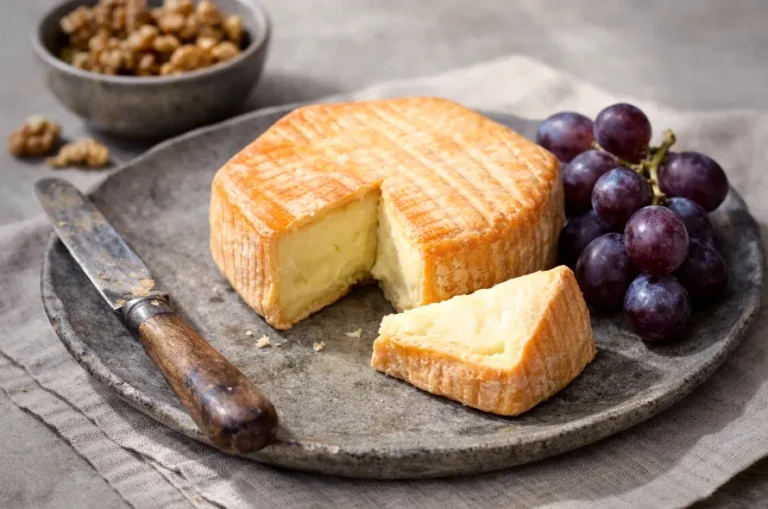
Washed-rind cheeses are not subtle. These strong smelling cheeses announce themselves before you open the wrapper, fill a room within minutes, and tend to provoke strong reactions from anyone who hasn’t grown up with them. That’s the whole point. These are cheeses that have been bathed repeatedly in brine, beer, wine, or spirits during aging, creating those distinctive orange-to-rust-colored rinds and aromas that range from farmyard to frankly pungent.
The five cheeses here represent the strongest-smelling varieties France produces, the ones with real character and history. Époisses, Munster, Livarot, Maroilles, and Langres are all AOC-protected, all traditionally made, and all completely unapologetic about what they are. If you’re looking for mild and inoffensive, look elsewhere. These are cheeses that demand attention, reward patience, and taste nothing like they smell. Which is exactly what makes them worth knowing.
✱ Époisses
Made in
Burgundy
Milk
Cow’s milk (raw or pasteurized)
Aged
4-8 weeks
AOP/PDO Status
Yes (AOC since 1991)
Fat content
50% minimum
Origin and Production
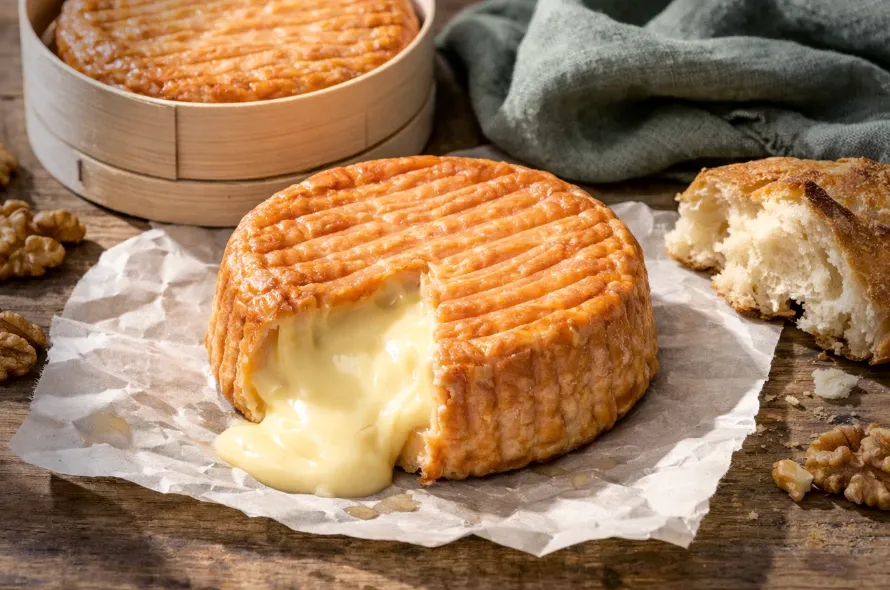
Époisses comes from the village of Époisses in Burgundy and has been made since the 16th century, originally by Cistercian monks. The cheese is washed regularly during aging with Marc de Bourgogne (local pomace brandy), which gives it that distinctive rust-orange rind and powerful aroma. Production nearly died out after World War II but was revived in the 1950s. Today it’s made by only a handful of producers who follow strict AOC guidelines.
Taste and Texture
The smell is barnyard-intense, but the taste is surprisingly refined, creamy, salty, and rich with a subtle boozy note from the Marc de Bourgogne. The texture is soft and unctuous, almost spoonable when fully ripe. The paste should be pale ivory to cream-colored with a smooth, velvety consistency that flows slightly at room temperature.
Culinary Uses
Best eaten on its own with crusty bread and a good Burgundy red wine—Gevrey-Chambertin works beautifully. Some use it in cooking for dishes like Époisses fondue or baked Époisses with white wine and garlic. Napoleon was reportedly a devotee, and Brillat-Savarin called it “the king of cheeses.”
Seasonal Availability
Year-round, though traditionally best from May to September when cows are on pasture
✱ Munster (Munster-Géromé)
Made in
Alsace and Vosges
Milk
Cow’s milk (raw or pasteurized)
Aged
2 weeks to 3 months
AOP/PDO Status
Yes (AOC since 1969)
Fat content
45% minimum
Origin and Production
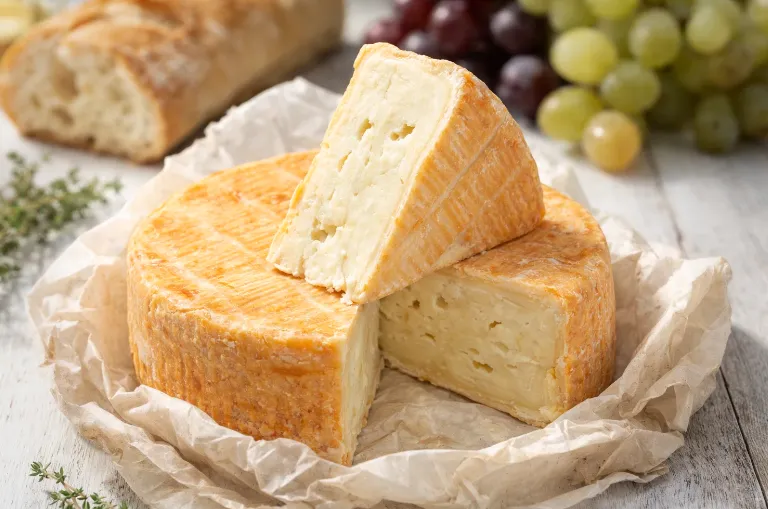
Munster takes its name from the monks (munster = monastery) who created it in the Vosges mountains in the 7th century. The cheese is washed with brine during aging, developing its characteristic orange-red rind and notorious smell. Production is split between the Alsace and Lorraine sides of the Vosges, where it’s sometimes called Géromé. The AOC protects both traditional production methods and geographical origin.
Taste and Texture
Intensely aromatic with barnyard notes, but the taste is surprisingly mild and creamy with a subtle tang. The texture is supple and smooth, becoming softer and more pungent with age. Young Munster is relatively mild; aged Munster develops complex flavors with hints of herbs from the mountain pastures.
Culinary Uses
Traditionally eaten with boiled potatoes, cumin seeds, and a glass of Gewürztraminer or local Alsatian beer. Also used in tarte flambée, quiche, or simply on rye bread. In Alsace, it’s often served with caraway seeds which complement the cheese’s earthy flavors.
Seasonal Availability
Year-round, though “fermier” (farmhouse) versions are best in summer and autumn
✱ Livarot
Made in
Normandy (Pays d’Auge)
Milk
Cow’s milk (raw or pasteurized)
Aged
3-4 months
AOP/PDO Status
Yes (AOC since 1975)
Fat content
40-45%
Origin and Production
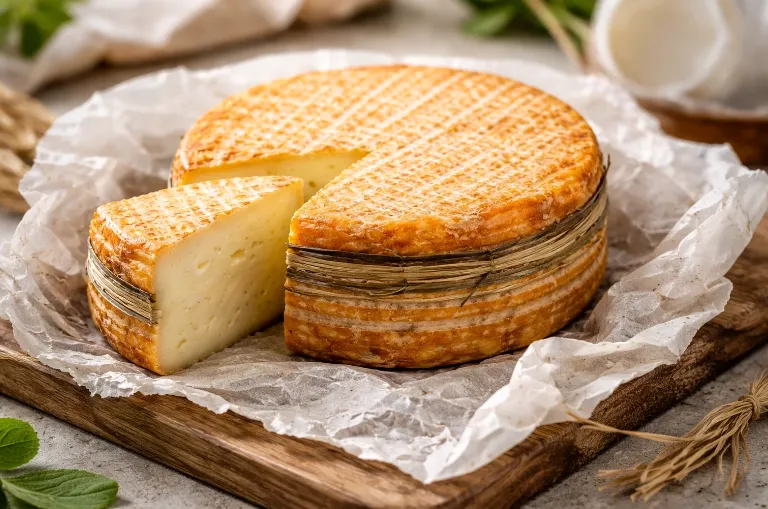
Livarot comes from the Pays d’Auge region of Normandy and has been made since the 13th century. It’s instantly recognizable by the five strips of dried sedge (laîches) wrapped around it, earning it the nickname “the Colonel” after the five stripes on a French colonel’s uniform. These strips originally served to hold the soft cheese together during aging. The cheese is washed with brine or cider during maturation, creating its rust-colored rind.
Taste and Texture
Livarot has a powerful, spicy aroma, one of the strongest in the washed-rind category. The taste is robust and tangy with a slight bitterness, less creamy than Époisses but more assertive. The texture is supple and elastic, becoming softer and more pungent with age. The paste is golden-yellow with a smooth, dense consistency.
Culinary Uses
Best enjoyed with crusty bread and a glass of Norman cider or Calvados, which cuts through the richness. Normandy locals pair it with apples or pears. While it can be used in cooking, its strong flavor means it’s usually eaten on its own or with simple accompaniments.
Seasonal Availability
Year-round, though best from spring through autumn
✱ Langres
Made in
Champagne region (Plateau de Langres)
Milk
Cow’s milk (raw or pasteurized)
Aged
5 weeks minimum
AOP/PDO Status
Yes (AOC since 1991)
Fat content
50% minimum
Origin and Production
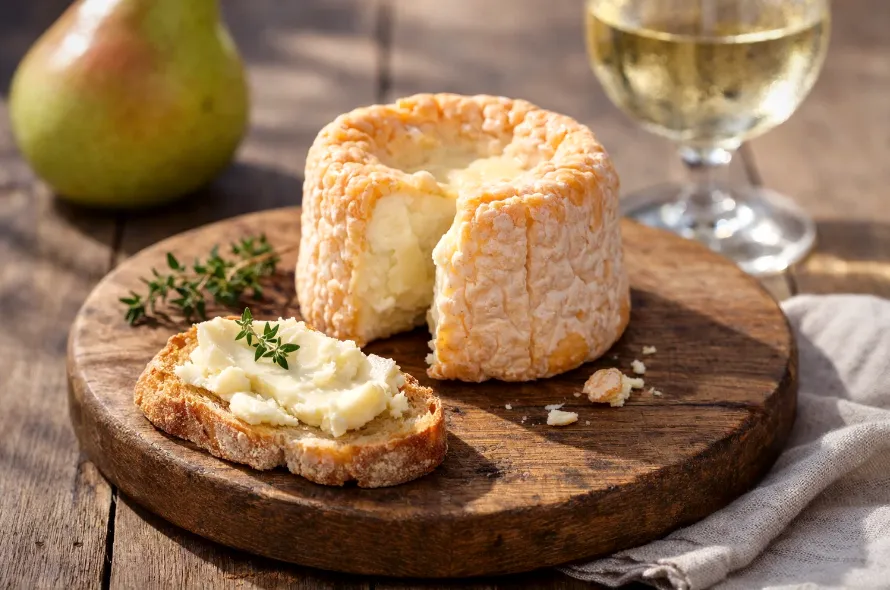
Langres comes from the Plateau de Langres in Champagne and has been made since the 18th century, though likely much earlier. Unlike most cheeses, Langres is never turned during aging, creating a distinctive concave top called the “fontaine” (fountain). This depression is sometimes filled with Champagne or Marc de Champagne before serving. The cheese is washed with brine and sometimes Champagne during maturation.
Taste and Texture
Langres has a strong, spicy aroma with hints of the brine and spirits used in washing. The taste is complex, salty, tangy, and slightly bitter with a creamy richness. The texture is soft and creamy, becoming almost runny when fully ripe. The paste is ivory to pale yellow with a smooth, velvety consistency.
Culinary Uses
Traditionally served with the “fontaine” filled with Champagne or Marc de Champagne and left to macerate briefly before eating. Best enjoyed with crusty bread and, naturally, a glass of Champagne. The cheese’s saltiness and creaminess pair beautifully with the bubbles.
Seasonal Availability
Year-round
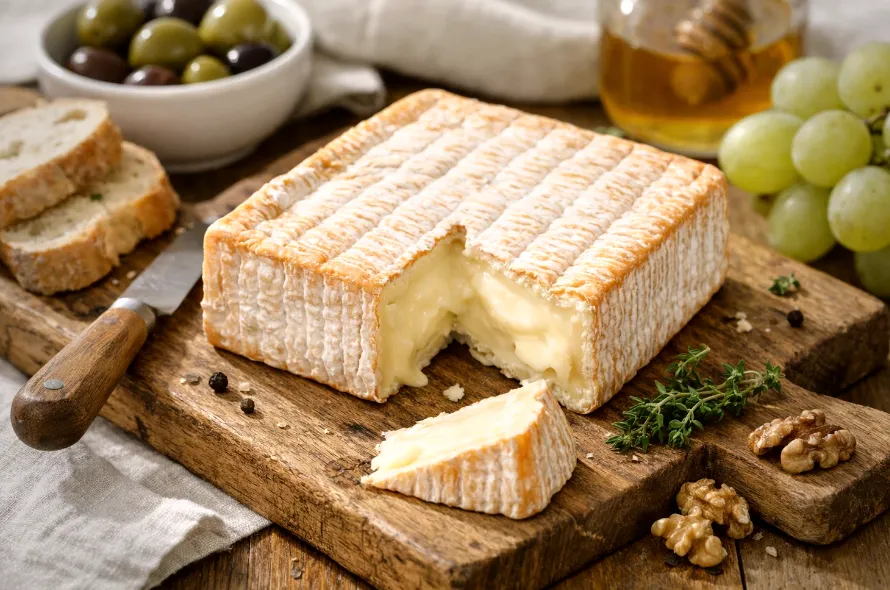
✱ Maroilles
Made in
Northern France (Thiérache region)
Milk
Cow’s milk (raw or pasteurized)
Aged
5 weeks to 4 months
AOP/PDO Status
Yes (AOC since 1976)
Fat content
45-50%
Origin and Production
Maroilles comes from the Thiérache region near the Belgian border and dates back to the 10th century, created by monks at the Abbey of Maroilles. It’s washed regularly with brine during aging, developing its distinctive rust-orange rind and famously powerful smell. The cheese comes in four sizes, with the largest (720g) being the traditional format. It’s one of the oldest French cheeses still in production.
Taste and Texture
The aroma is exceptionally strong, earthy, barnyardy, and impossible to ignore. The taste, however, is rich and savory with a subtle sweetness and nutty undertones. The texture is soft and creamy when ripe, with a smooth, supple paste that’s pale yellow in color. Despite the smell, the flavor is remarkably balanced.
Culinary Uses
Essential in flamiche au Maroilles (a savory tart) and goyère (cheese pie), both regional specialties. Also eaten on its own with beer, preferably a local bière de garde from Northern France. The cheese melts beautifully, making it excellent for cooking despite its pungent nature.
Seasonal Availability
Year-round
Conclusion
These five aren’t for everyone, and they wouldn’t want to be. They’re the cheeses that separate the curious from the committed, the ones that remind you that flavor and aroma are two different things entirely. Start with whichever sounds most manageable, let it come to room temperature, and give it a proper chance. That smell that made you hesitate? It’s exactly what you’re paying for.
A Complete Hosting Guide
This complete guide takes the intimidation out of French cheese and wine hosting, so you can create an impressive, memorable evening that feels effortless.
Just so you know, a few links here earn us a commission. Doesn’t cost you anything extra, and we only link to things that are actually worth your time.