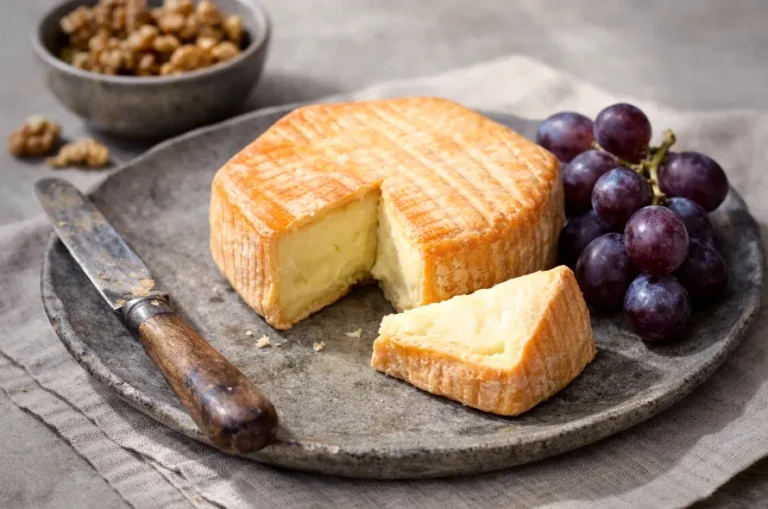
FC 2: Soft Washed Rind Cheeses

Introduction
Let’s address the elephant in the room: washed-rind cheeses smell. Some smell a bit farmyardy. Others smell like they’ve been stored in someone’s gym bag. A few, looking at you, Époisses, smell so pungent that the myth goes they’ve been banned from French public transport. And yet, these are some of the most beloved cheeses in France.
Here’s the wonderful paradox of washed-rind cheeses: they often taste nothing like they smell. That funky, foot-like aroma? It frequently gives way to flavours that are creamy, meaty, nutty, even delicate. It’s rather like the cheese world’s greatest magic trick, and once you get past the initial olfactory shock, you’re in for a treat.
From the legendary Époisses of Burgundy to the creamy Reblochon of Savoie, washed-rind cheeses represent some of France’s most characterful fromages. Whether you’re curious about that orange-ringed cheese you’ve been eyeing nervously at the cheese counter, or you’re already a convert looking to deepen your knowledge, this guide will sort you out.
What Are French Soft Washed-Rind Cheeses?
Right, the basics. Washed-rind cheeses (fromages à croûte lavée in French) are exactly what they sound like: cheeses whose rinds are regularly washed during the ageing process. But it’s not just a quick rinse with water, these cheeses get bathed in various solutions that fundamentally transform their character.
The washing liquid varies. Sometimes it’s simple brine (salt water). Other times it’s beer, wine, cider, or local spirits like marc de Bourgogne or Calvados. This regular washing creates a damp environment on the cheese’s surface that’s absolutely perfect for certain bacteria, particularly Brevibacterium linens, the star of the show.
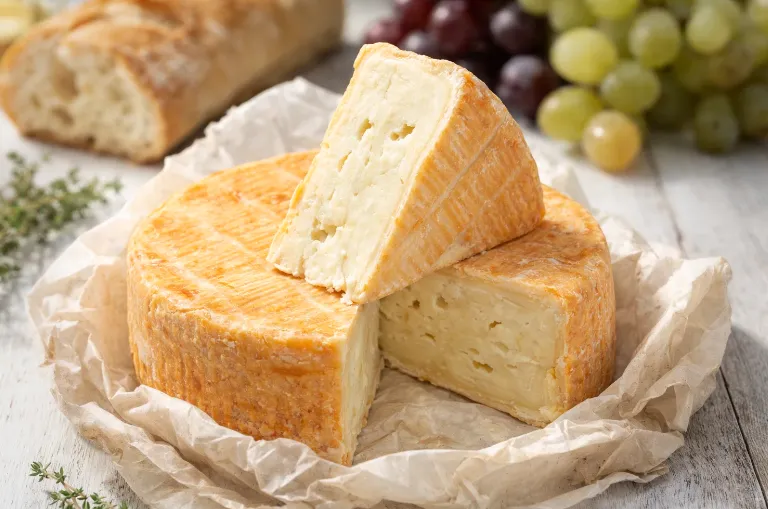
These bacteria are what give washed-rind cheeses their signature sticky, orange-pink rinds and their, shall we say, distinctive aromas. The same bacteria that live on human skin, actually, which explains why some of these cheeses smell vaguely of body odour. Appetising thought, isn’t it? But stick with me here.
The Defining Characteristics
What makes a washed-rind cheese a washed-rind cheese?
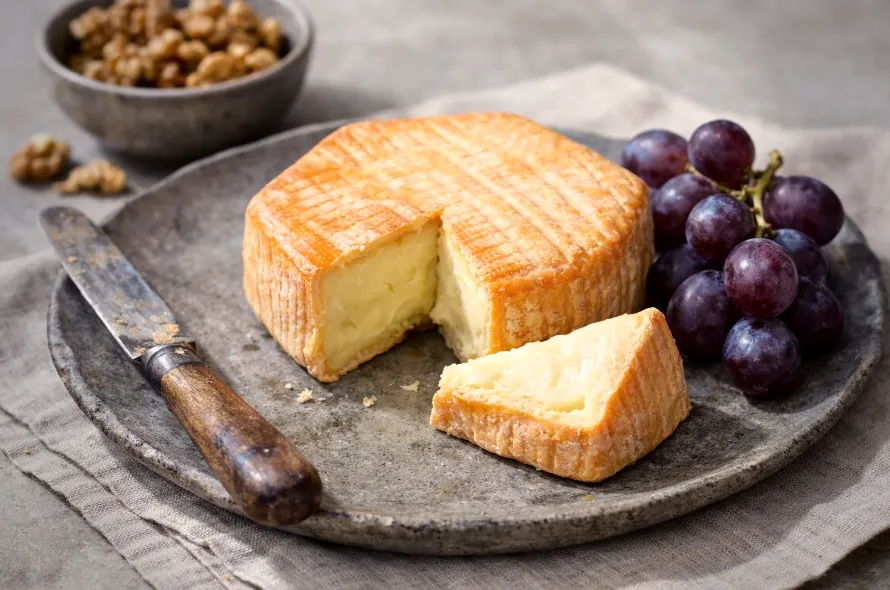
- Sticky, coloured rind: Usually orange, pink, or reddish-brown, sometimes pale, occasionally quite vivid
- Distinctive aroma: Ranging from pleasantly earthy to properly pungent, often described as “barnyardy” (being polite here)
- Regular washing: Cheeses are bathed periodically throughout ageing, from daily to monthly depending on the variety
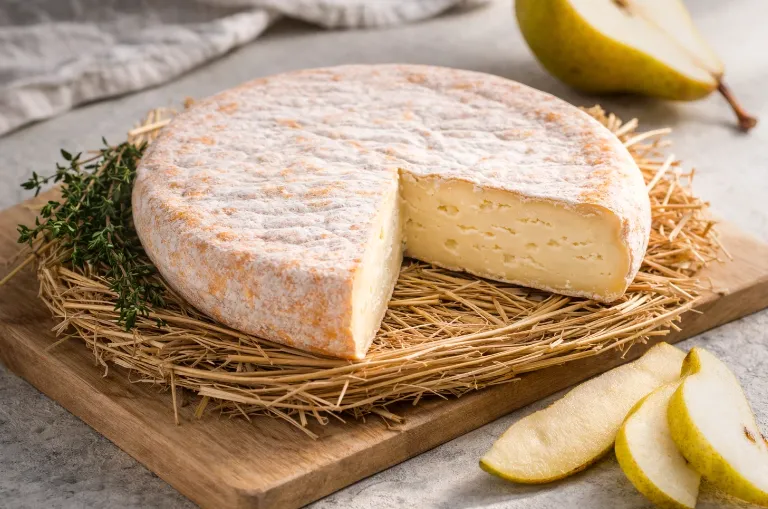
- Creamy to firm texture: Despite looking similar, washed-rind cheeses range from soft and spreadable to quite firm
- Complex flavours: Often meaty, savoury, nutty, frequently much milder than the aroma suggests
The beauty of washed-rind cheeses lies in their transformation. You’re watching beneficial bacteria literally changing the cheese’s character as it ages. The rind develops complex flavours that work their way inward, creating layers of taste that shift as you move from exterior to centre. A young washed-rind cheese and a fully ripened one are practically different products.
How French Washed-Rind Cheeses Are Made
The production of washed-rind cheese follows traditional soft cheesemaking until the ageing stage, where things get interesting. This is where French monks really earned their reputation for cheesemaking brilliance.
1. Initial cheesemaking
The process starts like most soft cheeses, milk is cultured, coagulated with rennet, cut into curds, drained of whey gently (unlike pressed cheeses, the curds aren’t pressed hard), and moulded into shape
2. Early ageing
The young cheese begins its life in ageing cellars or caves, starting to develop character
3. The washing begins
This is where washed-rind cheeses diverge from their bloomy-rind cousins. Regularly, anywhere from daily to weekly or monthly depending on the cheese, the maker bathes each cheese with the washing solution
4. Bacterial colonisation
The damp environment encourages Brevibacterium linens and other beneficial bacteria to colonise the rind. These bacteria are sometimes introduced deliberately, other times they’re already present in the ageing environment (particularly in traditional caves where they’ve lived for generations)
5. Rind development
As the bacteria work, the rind develops its characteristic colour and sticky texture. The bacteria break down proteins and fats, creating complex flavours and aromas that gradually penetrate the cheese
6. Texture transformation
As the cheese ages, the interior often becomes increasingly soft and creamy, sometimes almost liquid when fully ripe
7. Continued ageing
The washing continues throughout the ageing period, which can range from a few weeks to several months depending on the variety
The Monastic Connection
There’s a reason so many washed-rind cheeses trace their origins to monasteries. Medieval monks discovered that washing cheese rinds with whatever they had to hand, often beer or wine, which was safer to drink than water, prevented unwanted moulds whilst creating remarkably flavourful cheeses.
In monastery cellars, with their naturally humid conditions, soft cheeses were prone to developing the wrong sorts of moulds. The washing process controlled this whilst encouraging the right bacteria. Centuries later, we’re still using essentially the same technique, though modern cheesemakers understand the science behind what those clever monks worked out through trial and error.
Different washing solutions create different results. Beer-washed cheeses develop earthy, yeasty notes. Wine or spirit-washed varieties take on some of the alcohol’s character, Époisses washed in marc de Bourgogne develops distinctive woody, spirited notes. Brine-washed cheeses tend to be slightly less aromatic but develop beautiful savoury complexity.
The washing frequency matters too. Cheeses washed daily develop more pronounced bacterial activity and stronger aromas. Those washed weekly or fortnightly remain milder whilst still developing the characteristic sticky rind.
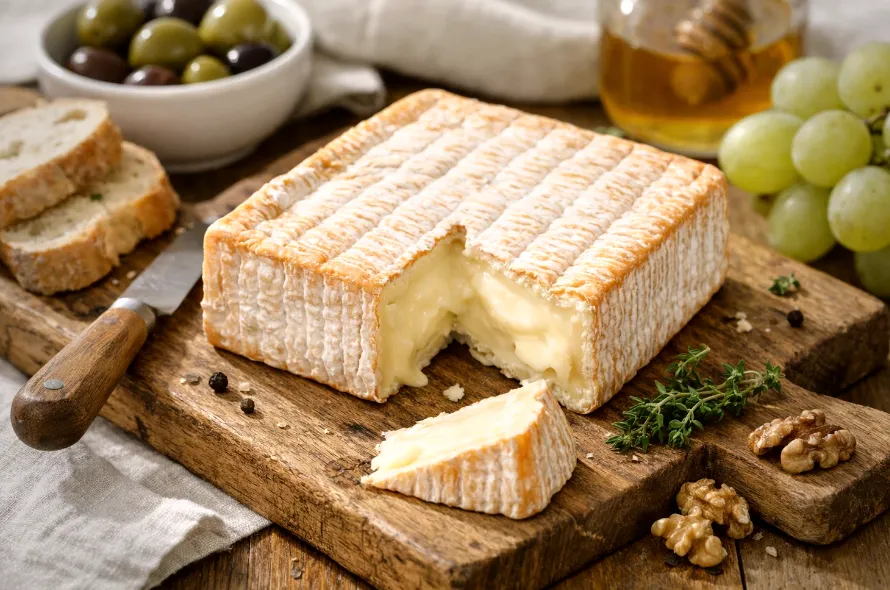
The Spectrum of French Washed-Rind Cheeses
Despite sharing the washed-rind treatment, these cheeses come in remarkable variety. Understanding the main types helps navigate this aromatic category.
By Texture
Soft and Spreadable
These are the most dramatic, nearly liquid when ripe, intensely aromatic, with sticky, deeply colored rinds. Expect powerful farmyard aromas but complex, meaty flavors. Perfect for baking whole or serving as showstopper cheese courses.
Semi-Soft and Supple
More approachable whilst still characterful. Yielding, creamy texture you can slice cleanly. Moderate aromas, sweet and nutty flavors. Excellent for cooking, they melt beautifully without becoming oily. Great introduction to the category.
By Washing Method
Brine-Washed
Saltwater creates milder, more approachable varieties. Clean, savoury flavors that let milk quality shine through. Golden to orange rinds. Good starting point for washed-rind newcomers.
Spirit & Wine-Washed
Marc, wine, or brandy washing adds aromatic complexity. Expect woody, vinous notes alongside typical washed-rind character. More intensely pungent, deeply colored, complex. These are the category’s showstoppers.
Beer-Washed
Creates distinctive earthy, yeasty, malty notes. Deep orange to brown rinds, pronounced bread-like aromas. Pair naturally with beer. Northern French specialty.
By Intensity
Mild to Moderate
Washed less frequently or consumed younger. Pleasant earthy aromas without overwhelming pungency. Perfect for those curious about the category.
Strong and Powerful
Frequently washed, often with spirits, aged longer. Very soft textures, intensely sticky rinds, fearsome aromas. Surprisingly, often taste milder than they smell. Beloved by serious cheese enthusiasts.
By Region
Alsace
Brine or white wine washing, earthy and yeasty character. Often served with cumin.
Burgundy
Spirit-washing with marc or wine. Intensely aromatic, deeply complex. Pairs with Burgundian wines.
Normandy
Exceptional dairy quality, sometimes cider or Calvados washing. Balanced, approachable style.
Savoie/Alps
Simple brine washing, excellent mountain milk. Creamy, nutty, great melting properties.
Northern France
Beer-washing traditions. Earthy, yeasty, powerfully aromatic.

How to Buy French Washed-Rind Cheeses
Buying washed-rind cheese requires confidence. Don’t be put off by the aroma at the cheese counter, it’s supposed to smell that way.
What to Look For
The rind should look healthy, moist but not wet, coloured but not grey or black. The characteristic orange-to-pink colour should be relatively even, though some variation is natural. Avoid any cheese with dry, cracked rinds or patches of blue-green mould (unless it’s specifically supposed to have that, which washed-rind cheeses aren’t).
Press the cheese gently if you can. Soft varieties should yield readily but not feel like they’re about to burst. Semi-soft types should have some give without being hard. A cheese that feels liquid under the rind might be overripe, fine if you’re eating it immediately, less ideal if you want to keep it a few days.
Ask about ripeness. Washed-rind cheeses change character significantly as they age. A young Époisses is firm and relatively mild. A properly ripe one is nearly liquid and powerfully aromatic. Neither is wrong, it’s about preference and timing.
Reading the Labels
Look for AOC/AOP designations on traditional varieties. These protected designations ensure traditional production methods and regional authenticity.
Check what the cheese is washed with if it’s mentioned. This gives clues about flavour profile. Also note whether it’s fermier (farmhouse, made with the farm’s own milk), artisanal (traditional methods, small-scale), or laitier (dairy, larger-scale production). Farmhouse versions often have more character but shorter shelf life.
Note the milk type, most washed-rind cheeses use cow’s milk, though you’ll find some goat’s milk varieties. Raw milk (lait cru) versions have more complex flavours than pasteurised, though they’re not suitable for pregnant women.

How to Store French Washed-Rind Cheeses
Storage is critical with washed-rind cheeses. Get it wrong and you’ll either dry out the cheese or create something truly alarming in your fridge.
Temperature and Location
Washed-rind cheeses need cold storage but appreciate slightly higher humidity than many other cheeses. The ideal temperature range is 2-8°C (35-46°F), the vegetable drawer works brilliantly as it’s typically slightly warmer and more humid than the main fridge compartment.
These cheeses need to breathe but also need protection from drying out. It’s a delicate balance. Too much air and the rind dries, cracks, and the cheese loses moisture. Too little and you trap ammonia and excessive moisture, creating unpleasant flavours.
Packaging and Containers
Here’s where washed-rind cheese storage gets particular. These cheeses need more careful handling than most.
For soft varieties like Époisses or Mont d’Or that come in wooden boxes, keep them in the box but wrap the whole thing in cheese paper or place it in a slightly larger container with the lid loosely fitted. This contains the aroma (your other fridge contents will thank you) whilst allowing some air circulation.
For semi-soft varieties like Reblochon or Pont-l’Évêque, wrap in cheese paper or parchment paper, then place in a container with a loose-fitting lid. Don’t use plastic wrap directly on the cheese, it traps too much moisture and the cheese will develop off flavours and potentially unpleasant sliminess.
Change the wrapping if it becomes very damp. The moisture from washed-rind cheeses can be considerable, and soggy wrapping doesn’t do the cheese any favours. Fresh wrapping every few days helps maintain proper conditions.
The Aroma Issue
Let’s be honest: washed-rind cheeses will make your fridge smell. There’s no avoiding this entirely, but proper storage helps. A dedicated cheese container or drawer contains the aroma better than loose wrapping. Some people keep particularly pungent varieties in a separate small container within the fridge.
Store washed-rind cheeses away from delicate foods that might absorb the aroma. Butter, milk, and other mild dairy products are particularly susceptible.
Shelf Life and Signs of Spoilage
Soft washed-rind cheeses should be eaten quite quickly, within a week of purchase is ideal, two weeks absolute maximum. They’re living cheeses that continue developing, and they can go from perfectly ripe to overripe rather fast.
Semi-soft varieties like Reblochon and Pont-l’Évêque last slightly longer, 10 days to two weeks after purchase if stored properly.
Trust your judgment. If the rind develops fuzzy moulds that aren’t the characteristic sticky bacteria, becomes slimy rather than sticky, or smells of ammonia rather than just pungent cheese, it’s gone too far. Some ammonia smell can develop in very ripe soft cheeses (particularly Époisses), but it should dissipate after unwrapping and airing briefly. If it doesn’t, the cheese is past it.
Texture changes also indicate problems. If the cheese becomes unpleasantly liquid, separated, or grainy, it’s overripe. If it dries out and cracks, it’s been stored too long or incorrectly.
Can You Freeze Washed-Rind Cheese?
Please don’t. Freezing absolutely destroys the texture of washed-rind cheeses. The high moisture content forms ice crystals that break down the delicate protein structure. When thawed, you get separated, grainy, weeping cheese that bears no resemblance to the original.
The beneficial bacteria also don’t survive freezing well, so you lose the living character that makes these cheeses special.
If you absolutely must avoid waste, use slightly overripe washed-rind cheese in cooking before it needs binning. Many make excellent additions to sauces or gratins where texture doesn’t matter and the strong flavour becomes an asset.
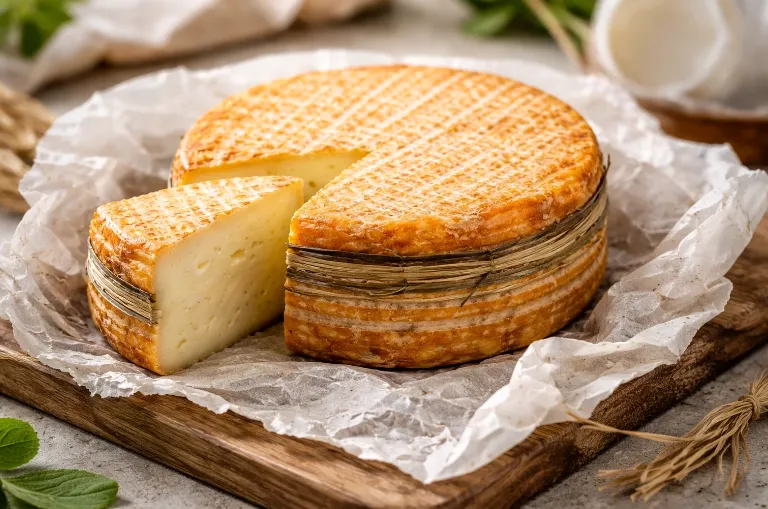
Serving French Washed-Rind Cheeses
Serving washed-rind cheese properly makes all the difference between an unpleasant experience and a revelation.
Temperature Matters Enormously
This is critical: washed-rind cheeses must come to room temperature before serving. Take soft varieties like Époisses or Mont d’Or out of the fridge a good hour before serving. Semi-soft varieties like Reblochon or Pont-l’Évêque need 45 minutes to an hour.
Cold washed-rind cheese is a sad thing. The flavours are muted, the texture is all wrong, the aroma is even more off-putting than it needs to be, and you’re not experiencing what the cheese can be. At proper temperature, soft varieties become gloriously unctuous, semi-soft types develop creamy complexity, and the flavours emerge properly.
This tempering is even more important for washed-rind cheeses than for other types. The difference between cold and room-temperature Époisses is like comparing two different cheeses entirely.
The Rind Question
Most washed-rind cheese rinds are edible, though not everyone enjoys them. The rind carries the most intense flavours, savoury, sometimes slightly bitter, deeply meaty, occasionally yeasty. Some people love it, others prefer the creamier interior.
For soft varieties like Époisses or Munster, the rind is thin and integral to the cheese’s character, most people eat it. The rind’s flavours balance the richness of the interior.
For semi-soft varieties like Livarot, the rind can be thicker and more intensely flavoured. Try a bit to see if you like it. There’s no cheese crime in leaving it on your plate if you don’t.
If the rind tastes unpleasantly bitter or overly salty, it’s fine to remove it. The cheese is there to enjoy, not to prove anything.
Cooking with French Washed-Rind Cheeses
Washed-rind cheeses are brilliant in cooking, though they need understanding.
1

Tartiflette
Sliced potatoes layered with vegetarian lardons, sweet onions, and white wine, then covered with a whole round of Reblochon cheese and baked until the cheese melts into this impossibly creamy, molten blanket. The potatoes go soft and wine-soaked and the Reblochon melts into every layer with its funky, earthy richness. It's absurdly indulgent and properly comforting. Rich, gooey, smoky and utterly addictive.
Get the recipe →Croûte au Munster
Involves topping toasted bread with slices of Munster and baking or grilling until the cheese melts. Sometimes it’s served with cumin seeds on top. Simple but spectacular, and a traditional Alsatian way to enjoy this aromatic cheese.
Mont d’Or baked
This one is often considered not cooking but rather a preparation method. You score the top of the cheese in its box, add white wine and garlic, wrap in foil, and bake until molten. Serve with boiled potatoes, bread, and charcuterie for dipping. It’s fondue without the fuss, and the spruce bark imparts subtle aromatic notes.
Cooking Tips
Washed-rind cheeses have strong flavours, so less goes further than you might think. Start conservatively and add more if needed. A little Munster in a sauce goes a long way.
Remove thick rinds before cooking, they can be bitter and won’t melt nicely. For cheeses like Reblochon where the rind is thinner and integral to the character, you can leave it on, though some recipes call for removing it.
These cheeses melt at relatively low temperatures and can separate if overheated. Don’t blast them with high heat or they’ll become oily and grainy. Gentle heat produces the best results, think moderate oven temperatures or low stove settings.
When melting washed-rind cheese for sauces, add it off the heat or at very low heat, stirring constantly. The residual heat is often enough to melt it without risking separation.

Health Benefits of French Washed-Rind Cheeses
Washed-rind cheeses offer nutritional benefits alongside their bold flavours, though moderation applies given their richness.
Nutritional Profile
Washed-rind cheeses provide excellent protein, typically 20-25g per 100g serving, making them good protein sources. They’re rich in calcium, supporting bone health, with amounts varying by variety but generally ranging from 500-700mg per 100g.
They contain good amounts of vitamin B12, essential for nerve function and red blood cell formation. Vitamin A is also present, supporting vision and immune function. The fat content varies, soft varieties like Époisses can be quite rich (around 25-30% fat), whilst semi-soft varieties like Reblochon are somewhat lower (around 20-25% fat).
The beneficial bacteria present in these cheeses, Brevibacterium linens and others, continue living in the cheese and potentially offer some probiotic benefits, though research on these specific bacteria strains is ongoing. They’re not traditional probiotics like Lactobacillus, but they contribute to microbial diversity.
The Bacteria Benefit
The bacteria that characterise washed-rind cheeses aren’t just responsible for aroma, they’re living organisms that continue working in the cheese. They break down proteins during ageing through proteolysis, making the cheese potentially more digestible than younger varieties. The aged, broken-down proteins may be easier for your body to process.
Some research suggests that the diverse bacterial populations in aged cheeses may contribute to gut microbiome diversity, though you’d need to consume them regularly for any effect. The bacteria also produce various bioactive compounds during cheese ageing that may have health benefits.
Digestibility
Many people who struggle with harder cheeses find washed-rind varieties easier to digest, partly due to the protein breakdown that occurs during ageing. The bacteria pre-digest some of the more complex proteins, making them more accessible.
However, the richness and fat content mean these cheeses are best enjoyed in moderation. They’re intensely flavoured, so a little goes a long way anyway, you’re unlikely to consume huge quantities at one sitting.

Final Thoughts
Washed-rind cheeses represent French cheesemaking at its most characterful. They’re proof that the French don’t shy away from bold flavours, strong aromas, or cheeses that demand attention. These aren’t background cheeses, they’re centre-stage performers that command respect.
Don’t let the aroma put you off. Start with milder varieties like Reblochon or Pont-l’Évêque. Let them come to proper room temperature, this is absolutely crucial. Pair them thoughtfully with good bread and appropriate wine. Give them a chance to show you what they can do.
You might discover, as generations of French cheese lovers have, that these pungent, sticky, gloriously aromatic cheeses are actually some of the most delicious things you can put on a plate. The smell is just part of their character, and honestly, once you taste a properly ripe washed-rind cheese at the right temperature with the right accompaniment, you’ll understand why the French have been making them for centuries.
Start with one cheese. Let it warm up for 45 minutes to an hour. Serve it with fresh baguette and a glass of Gewürztraminer, Pinot Noir, or good cider. Take a bite. Welcome to the wonderfully aromatic world of washed-rind cheeses.

A Complete Hosting Guide
This complete guide takes the intimidation out of French cheese and wine hosting, so you can create an impressive, memorable evening that feels effortless.
Just so you know, a few links here earn us a commission. Doesn’t cost you anything extra, and we only link to things that are actually worth your time.