FC 4: Pressed Uncooked Cheeses
Introduction
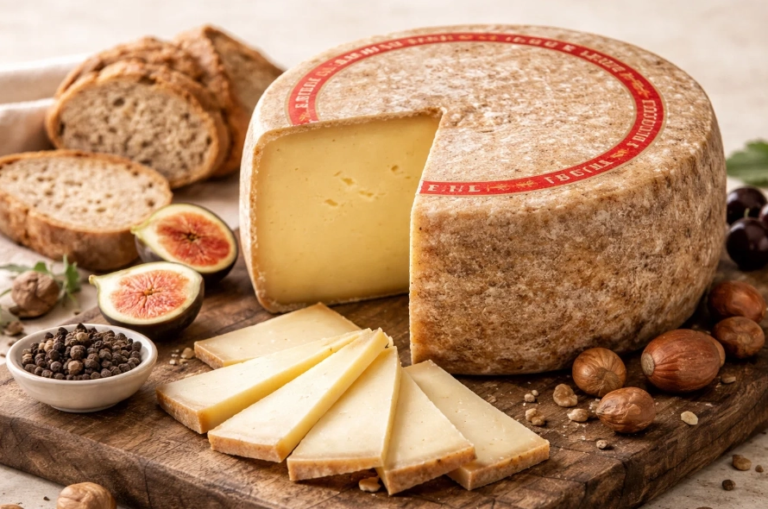
These pressed cheeses uncooked are the ones that melt beautifully in gratins, slice perfectly for sandwiches, serve elegantly on cheese boards, and store obligingly in your fridge for weeks. They’re the cheeses that do everything well without making a fuss about it. From creamy, supple varieties perfect for melting to firmer, more complex cheeses that develop remarkable character with age, pressed cheeses represent French cheesemaking at its most practical and versatile.
Whether you’re curious about those firm, golden wheels at the cheese counter, looking to understand what makes certain cheeses so perfect for cooking, or wanting to build a reliable cheese collection, this guide will sort you out.
What are French Uncooked pressed cheeses?
In French we call these “fromages à pâte pressée non cuite”, literally “pressed uncooked paste cheeses.” The name tells you everything about how they’re made. The curd is pressed to expel whey, creating firmer, denser cheeses, but it’s not heated beyond 50°C during production. This distinguishes them from their pressed cooked cousins (like Comté or Beaufort), which undergo high-temperature treatment.
The pressing is what defines this category. After the milk coagulates and forms curds, those curds are cut, stirred to release whey, then placed in molds and pressed, sometimes for hours, to squeeze out as much liquid as possible. This creates a denser, firmer cheese with lower moisture content than soft or fresh varieties.
The “uncooked” part means the curds aren’t heated to high temperatures during production. There might be gentle warming during the initial cheesemaking, but nothing like the intense heating pressed cooked cheeses undergo. This preserves more of the milk’s natural character whilst still creating a firm, long-keeping cheese.
The result is a category of cheeses with remarkable range. Some are supple and creamy, perfect for melting. Others are firmer and develop complex, nutty flavours during extended aging. They share excellent keeping qualities, reliable textures, and tremendous versatility in cooking.
The Defining Characteristics
What makes a uncooked pressed cheese?
- Firm to semi-firm texture: Dense, supple paste that slices cleanly without crumbling or spreading
- Pressed during production: Mechanical pressure expels whey, creating the characteristic texture
- Uncooked curds: Never heated above 50°C, preserving the milk’s character
- Variable aging: From two weeks to over a year, creating different flavor profiles
- Natural or washed rinds: The exterior varies from thin natural rinds to regularly washed orange-hued rinds
- Excellent keeping qualities: Lower moisture means these cheeses store well and age gracefully
The fascinating thing about pressed cheeses is how the same basic technique creates such diverse results. A cheese pressed briefly and aged for weeks tastes completely different from one pressed heavily and aged for months. The pressure applied, the aging environment, and the time in the cellar all contribute to the final character.
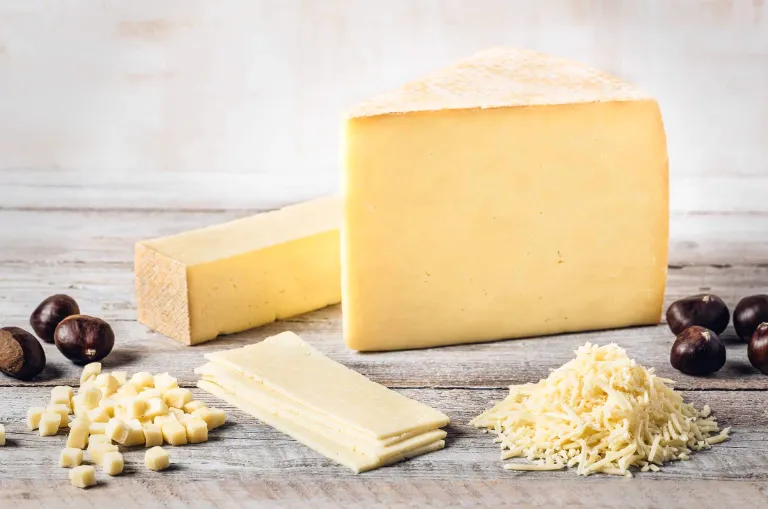
How French Uncooked Pressed Cheeses Are Made
The production of pressed cheese follows traditional methods with the crucial pressing step that defines the category. Understanding the process helps explain why these cheeses behave the way they do.
1. Milk preparation
The process starts with cow’s, sheep’s, or goat’s milk, though cow’s milk dominates this category. The milk may be gently warmed after collection but isn’t subjected to the high temperatures used for pressed cooked cheeses. Some producers use raw milk; others pasteurize it, depending on the variety and legal requirements.
2. Coagulation
The milk is cultured with lactic acid bacteria, less aggressively than for fresh cheeses, as pressed varieties need slower, gentler acidification. Rennet is added, and the milk coagulates over 30-45 minutes at moderate temperatures (32-36°C). The resulting curd is firmer than for soft cheeses but softer than for blue varieties.
3. Cutting and stirring
The curd is cut into pieces, releasing whey. The size of these pieces varies by variety, some are cut quite small, others into larger chunks. The cut curds are gently stirred in the vat for anywhere from 30 minutes to 90 minutes. This stirring, combined with optional gentle warming (never exceeding 50°C), encourages more whey to release whilst maintaining the curds’ structure.
4. Draining in the vat
For some pressed cheeses, particularly traditional mountain varieties, the curds undergo initial draining in the vat. The whey is drained off, and sometimes the curds are washed with warm water to remove additional whey and reduce acidity. This creates the cleaner, sweeter flavour profile many pressed cheeses are known for.
5. Breaking and salting (traditional method)
Some varieties, particularly Auvergne cheeses, follow a distinctive traditional method. The drained curds are broken up, salted, and sometimes left to rest before being pressed. This technique, called “caillé brisé,” creates specific texture characteristics in the finished cheese.
6. Molding and pressing
Here’s where the category gets its name. The curds are placed into molds and pressed, sometimes very heavily, to expel as much whey as possible. The pressure can be applied gradually or all at once, gently or intensely, for hours or even overnight, depending on the desired result. During pressing, the curds knit together, forming a cohesive wheel or block. The more pressure applied and the longer it’s maintained, the firmer and denser the final cheese becomes. Some cheeses are pressed, removed, turned, and pressed again multiple times to ensure even texture throughout.
5. Salting
After pressing, the cheeses are salted. This happens either by rubbing dry salt on the exterior or by immersing the whole cheese in brine for hours or days. Salting controls moisture, inhibits unwanted bacterial growth, and contributes to flavour development.
7. Aging
The cheeses are aged in cellars or caves maintained at cool, humid conditions (typically 10-15°C with 80-90% humidity). The aging period varies enormously, from just two weeks for mild, creamy varieties to over a year for more complex, aged cheeses.
During aging, the cheeses may receive different treatments depending on the variety. Some have their rinds regularly brushed or washed, developing orange-hued sticky exteriors (making them technically both pressed AND washed-rind). Others are left to develop natural rinds that remain relatively thin and pale. The aging environment and rind treatment profoundly influence the final flavour and texture.
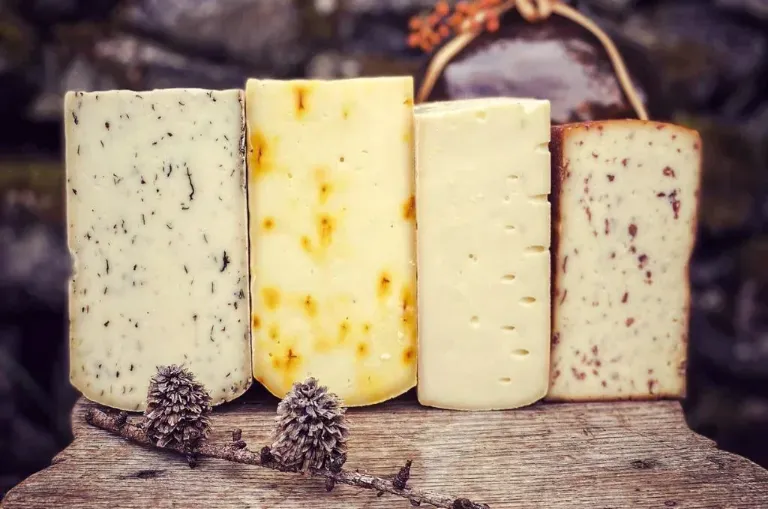
The Spectrum of French Uncooked Pressed Cheeses
Pressed cheeses come in remarkable variety despite sharing the same fundamental production method. Understanding the main types helps you navigate this versatile category.
By Texture
Supple and Semi-Soft
These pressed cheeses have been pressed gently or briefly, retaining more moisture than their firmer cousins. The texture is yielding and smooth, sliceable but with a pleasant softness that makes them excellent for melting. When you press them, they give slightly without feeling squishy.
Expect creamy, mild flavours with gentle complexity, often nutty, buttery, or slightly sweet notes. These cheeses are tremendously versatile, working brilliantly in cooking where they melt smoothly and evenly. They’re also approachable on cheese boards, offering pressed cheese character without challenging textures. They perform beautifully in recipes and please most palates.
Firm and Dense
More heavily pressed and often aged longer, these cheeses have noticeably firmer textures. The paste is compact and dense, slicing cleanly with smooth, even edges. When you bite into them, there’s pleasant resistance before they yield, and the texture is satisfying without being hard.
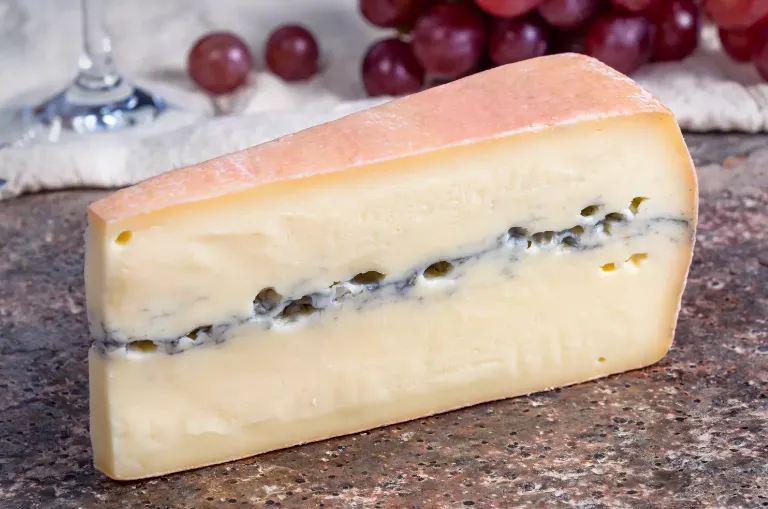
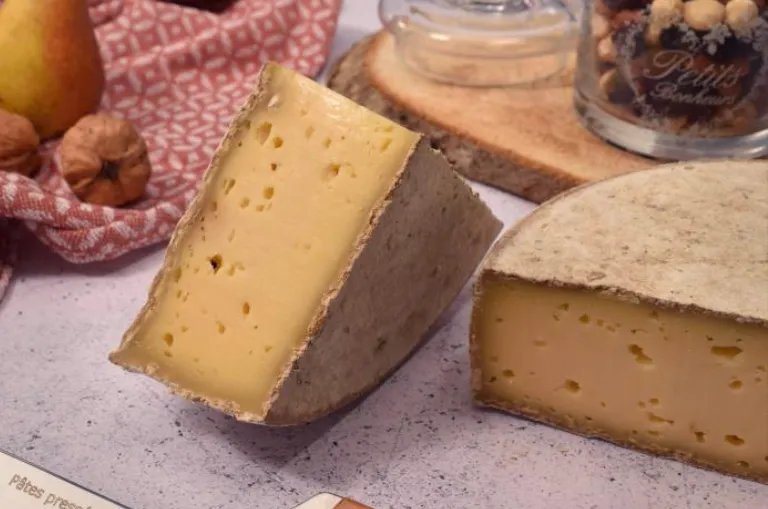
The flavour profiles tend to be more developed, nutty, fruity, complex, with good depth. Extended aging allows flavours to concentrate and evolve. These cheeses often develop small eyes (irregular holes) or a slightly granular texture as they age, signs of ongoing flavour development. Firm pressed cheeses excel when you want cheese presence without overwhelming other ingredients. They grate well, melt reliably, and hold their own on cheese boards without dominating. Many develop excellent umami character that enhances savoury dishes.
Aged and Complex
At the furthest end sit pressed cheeses aged for extended periods, six months to well over a year. These develop remarkably complex character whilst maintaining the category’s fundamental approachability. The texture becomes increasingly firm, sometimes slightly crumbly, with concentrated flavours that reward patient aging.
Expect pronounced nutty notes, fruity complexity, sometimes caramel or toffee undertones from extended aging. The paste may develop a slight graininess or crystalline texture, these aren’t flaws but signs of proper aging and flavour development. The rinds are often quite thick and deeply flavoured from months of careful tending.
These aged varieties command respect and often higher prices. They’re exceptional for grating over dishes where you want maximum flavour impact from minimal cheese, and they make impressive cheese board centerpieces for those who appreciate subtle complexity.
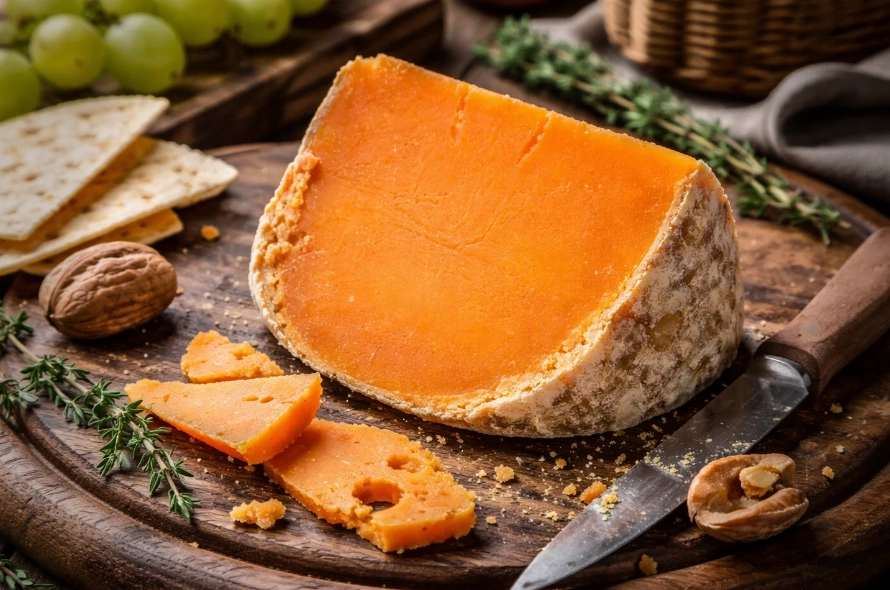
How to Buy French Uncooked Pressed Cheeses
Buying pressed cheese is generally more straightforward than selecting soft or blue varieties, but knowing what to look for ensures you get excellent cheese.
What to Look For
The rind appearance varies depending on type. Natural rinds should look relatively even, without excessive cracking or mold beyond what’s typical for that variety. Washed rinds should be moist and sticky but not slimy, orange to golden rather than grey. Brushed rinds should be relatively smooth and even-coloured.
Ask to see the interior if possible, especially for aged varieties. The paste should look uniform without cracks, holes (unless the variety typically develops them), or discolouration. The colour should be even, pale cream to golden depending on milk type and age, without dark spots or greying.
Press gently on the cheese. It should feel firm with some give, not hard as stone nor soft and yielding. The texture tells you about moisture content and age, firmer usually means drier and often older.
Reading the Labels
AOC/AOP designations guarantee traditional production methods and regional authenticity. For pressed cheeses, these protections often specify milk source, production techniques, aging minimums, and geographic boundaries.
Check the milk type and treatment. Cow’s, sheep’s, or goat’s milk each create different characters. Raw milk (lait cru) versus pasteurized affects flavour complexity, raw milk typically offers more nuanced flavours but isn’t suitable for pregnant women or young children.
Note whether it’s fermier (farmhouse), artisanal (traditional methods, small-scale), or laitier (larger dairy production). Farmhouse pressed cheeses often have more character but may be less consistent. Artisanal production typically balances quality with reliability.
Check the age if mentioned. “Jeune” (young) means mild and creamy; “demi-affiné” (half-aged) suggests medium complexity; “vieux” or “extra vieux” (old/extra old) indicates extended aging and pronounced flavours.
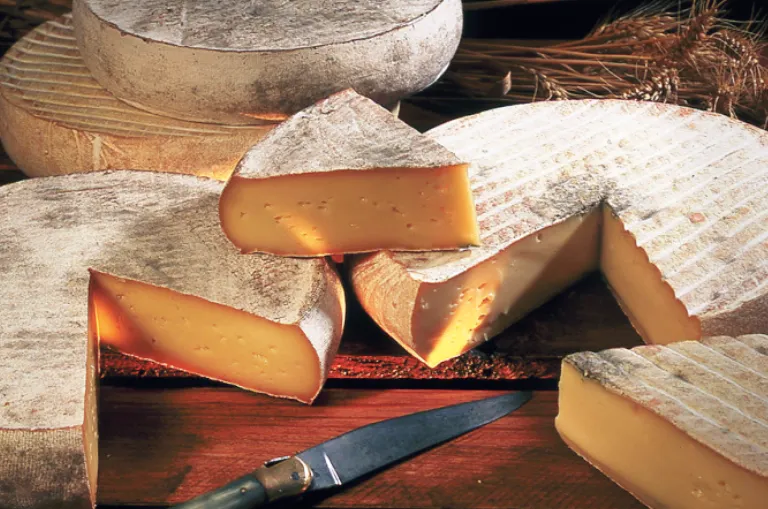
How to Store French Uncooked Pressed Cheeses
Storage is relatively straightforward with pressed cheeses, they’re among the most forgiving cheese types. But proper handling still matters for maintaining quality.
Temperature and Location
Pressed cheeses need refrigeration at 4-7°C (39-45°F). They’re flexible about temperature within this range, slightly cooler than ideal won’t harm them as much as it might soft cheeses. The vegetable drawer works well, providing good temperature and humidity balance.
These cheeses are less fussy about breathing than soft or blue varieties. Their lower moisture content and firmer texture make them more stable. Still, they appreciate some air circulation to prevent excessive moisture buildup.
Packaging and Containers
Pressed cheeses are forgiving about wrapping. The traditional cheese paper or parchment paper works excellently, allowing some breathability whilst preventing drying. You can also use wax paper.
After wrapping in paper, place in a loose plastic bag or container with a slightly loose lid. This provides additional protection without completely sealing the cheese away from air. The goal is preventing excessive drying whilst allowing some air exchange.
Change wrapping if it becomes very damp, though this is less common with pressed cheeses than with soft varieties. Their lower moisture means they don’t weep liquid the way softer cheeses do.
Shelf Life and Signs of Spoilage
Pressed cheeses are champions at keeping. Unopened, they can last several weeks beyond sell-by dates if stored properly. Once opened, consume within 3-4 weeks for best quality, though firmer varieties often last longer. Young, creamy pressed cheeses should be eaten within 2-3 weeks; aged, firmer ones can last a month or more if well-wrapped.
Watch for mold growth. Small spots of surface mold on hard pressed cheese can be cut away, trim at least 2-3cm around and below the moldy area. If mold penetrates deeply or appears throughout, discard the cheese.
Excessive drying is the main issue with pressed cheese storage. If the cheese develops hard, dried-out exterior areas, you can sometimes trim these away and use the interior. Very dried cheese might be past its best for eating fresh but can work grated into cooking.
Check for off-smells. Pressed cheeses should smell pleasant, nutty, milky, possibly slightly earthy. Sour, ammonia, or unpleasant musty smells indicate problems.
Texture changes signal age. If the cheese becomes excessively hard, crumbly in unpleasant ways, or develops slimy areas, it’s past its prime.
Can You Freeze Pressed Cheese?
Pressed cheeses freeze better than most cheese types, though quality still suffers. The texture becomes more crumbly after freezing, and some flavour loss occurs. But if you need to prevent waste, freezing is reasonable.
For best results, cut into portions you’ll use in one go, wrap very well in multiple layers, and freeze for no more than 3-6 months. Thaw slowly in the refrigerator.
Frozen-then-thawed pressed cheese works reasonably well grated into cooking, the texture changes matter less when the cheese will be melted anyway. It’s less ideal for eating fresh on cheese boards.
Firmer, aged pressed cheeses freeze better than young, creamy ones. The lower moisture content means less ice crystal formation and texture damage.
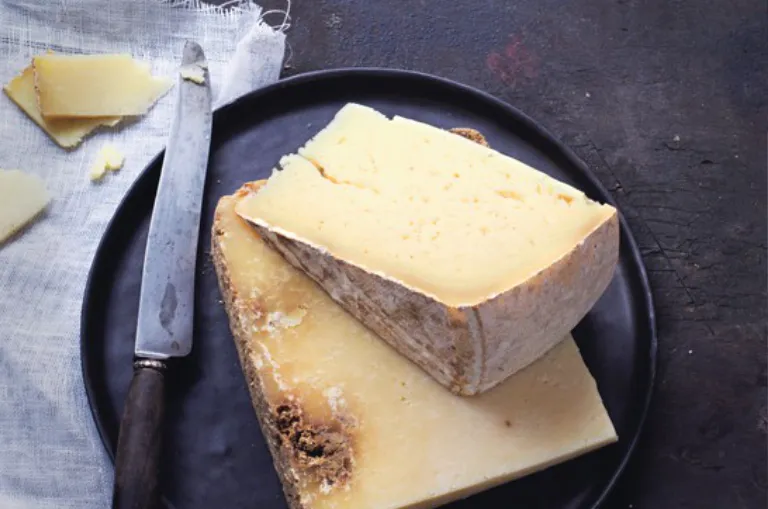
Serving French Uncooked Pressed Cheeses
Serving pressed cheese properly showcases their versatility and character.
Temperature Matters
Like all cheeses, pressed varieties benefit from coming to room temperature before serving. Remove them from the fridge 30-45 minutes before you plan to serve. Firmer, aged varieties benefit from the full 45 minutes; younger, creamier ones need at least 30 minutes.
Cold pressed cheese has muted flavours and somewhat tough texture. At room temperature, the fat softens slightly, the flavours emerge fully, and the texture becomes more pleasant to eat. The difference is significant, what tastes merely okay cold becomes genuinely delicious at proper temperature.
This matters less for pressed cheeses you’re using in cooking, where they’ll be heated anyway. But for cheese boards or eating fresh, temperature makes a real difference.
Presentation
Pressed cheeses are pleasingly cooperative about presentation. They slice cleanly, hold their shape, and generally look tidy on cheese boards. Provide a sharp knife for clean cutting, a dedicated cheese knife for pressed varieties if you’re serving multiple types.
Cut pressed cheeses into neat slices, wedges, or cubes depending on the occasion. Formal cheese boards might feature elegant wedges; casual gatherings might prefer cubes for easy snacking. Either works.
The Rind Question
Pressed cheese rinds vary in edibility. Natural rinds are technically edible but often quite tough and not particularly pleasant to eat, most people trim them. Washed rinds on pressed varieties are generally edible and some people enjoy their savoury intensity, though they can be quite strong.
Brushed rinds fall somewhere between, edible but not always enjoyable depending on thickness and your preferences. Try a bit to see if you like it.
For aged pressed cheeses with thick rinds, it’s completely normal and acceptable to trim the rind before eating. The interior is what you’re really after anyway.
1
Raclette
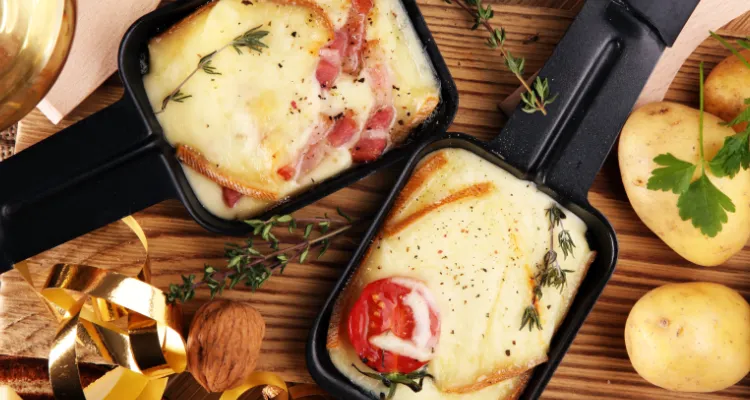
Raclette cheese melted until they're bubbling and golden at the edges. You scrape the molten cheese onto boiled potatoes, mushrooms, and pickles, it's nutty, creamy, ridiculously rich, pooling around everything in glossy streaks. It is the ultimate Alpine comfort food! Forget complicated cooking, this one’s simple, sociable, and downright delicious.
Get the recipe →Cooking with French Uncooked Pressed Cheeses
Pressed cheeses are brilliant in cooking, they’re perhaps the most versatile cheese category for culinary applications.
Gratins
Pressed cheeses are ovenbake’s champions. Their excellent melting properties, good flavour, and reliable performance make them ideal for potato gratins, vegetable gratins, and pasta bakes. Grate the cheese and layer it between vegetables, starch, and cream or sauce. The cheese melts evenly, creating delicious golden crusts whilst binding everything together. Pressed cheeses don’t become oily or grainy when baked, they melt smoothly and stay creamy.
2

Cheese Fondue Savoyarde
A glorious, bubbling cauldron of Beaufort, Comté, and Emmental melted together enriched with white wine and a splash of Kirsch until it's smooth and impossibly stretchy. It's intensely savory, properly indulgent, and tastes like the French Alps in winter. Served with bite-sized chunks of crusty baguette, inviting everyone to dip and swirl their bread through the luscious, melted cheese!
Get the recipe →Sandwiches and Toasties
Pressed cheeses are sandwich stars. They slice cleanly for cold sandwiches and melt gorgeously for toasted ones. Young, creamy varieties create luxurious melted texture; firmer ones provide more bite and flavour complexity.
For classic French croque-monsieur or croque-madame, pressed cheeses deliver exactly the right melting performance and flavour profile. They create that perfect gooey interior without making sandwiches soggy or greasy.
Cooking Tips
Pressed cheeses melt at moderate temperatures, you don’t need fierce heat. Gentle, even warmth creates the best results. High heat can make them oily or cause separation.
For sauces, grate the cheese finely and add it off heat or at very low heat, stirring constantly. The residual heat in the sauce is often sufficient to melt the cheese smoothly without risking graininess from overheating.
Young pressed cheeses melt more smoothly than very aged ones. If using aged varieties in cooking, combine them with younger, creamier cheeses for better melting whilst still getting complex flavour.
Pressed cheeses don’t need much help to melt. Unlike some cheeses that benefit from wine or cornflour additions, pressed varieties usually melt reliably on their own. This makes them forgiving and easy to work with.
When making gratins or baked dishes, save some grated cheese for topping. It creates attractive golden crusts whilst the cheese mixed throughout provides creamy texture and distributes flavour evenly.
Health Benefits of French Pressed Cheeses
Pressed cheeses offer nutritional benefits alongside their versatility, though moderation remains important given their richness.
Nutritional Profile
Pressed cheeses provide excellent protein, typically 24-28g per 100g depending on variety and age. This makes them among the better protein sources in the cheese world, particularly valuable for vegetarian diets where concentrated protein sources are useful.
They’re exceptionally rich in calcium, providing 700-800mg per 100g in many varieties. This represents roughly 70-80% of daily recommended calcium intake in just 100g. Calcium is crucial for bone health, muscle function, nerve transmission, and blood pressure regulation.
Pressed cheeses are outstanding sources of vitamin B12, providing significant percentages of daily needs in moderate servings. B12 is essential for nerve function, red blood cell formation, and DNA synthesis, particularly important for those who don’t eat much meat.
Other nutrients present in good amounts include phosphorus (works synergistically with calcium for bone health), vitamin A (supports vision and immune function), zinc (immune system support and wound healing), and vitamin K2 (important for directing calcium to bones rather than arteries).
The fat content is substantial, typically 25-32g per 100g depending on variety, with significant saturated fat. This is why moderation matters, pressed cheeses are nutrient-dense treats rather than unlimited-consumption foods.
Protein Quality
The protein in pressed cheeses is high-quality, containing all essential amino acids in proportions useful for human nutrition. During aging, proteolysis (protein breakdown) partially digests these proteins, potentially making them more bioavailable.
The concentrated protein content means pressed cheeses are efficient protein sources, you get significant protein from moderate portions. This makes them useful for meeting protein needs without consuming large volumes of food.
The protein contributes to satiety, helping you feel satisfied after eating. This can be valuable for weight management when cheese is incorporated into balanced meals rather than consumed in excess.
Digestibility
Despite being dairy products, aged pressed cheeses contain very little lactose. The cheesemaking process removes most lactose with the whey, and aging further reduces what remains. Well-aged pressed cheeses are essentially lactose-free, making them digestible for many people with lactose intolerance.
The protein and fat breakdown during aging also means pressed cheeses contain partially digested nutrients, potentially making them easier to process than younger cheeses. This is particularly true for varieties aged six months or longer.
The fat content includes some conjugated linoleic acid (CLA), which emerging research suggests may have beneficial effects on body composition and metabolism, though evidence is still developing.
Final Thoughts
Pressed cheeses represent French cheesemaking at its most versatile and reliable. These offer something equally valuable: consistent excellence and tremendous adaptability. They’re the cheeses that do everything well. Melt them, slice them, grate them, serve them fresh, age them for complexity, pressed cheeses handle it all without fuss. They’re the dependable performers that make French cheese culture accessible whilst still offering genuine quality and character.
Start with younger, creamier varieties if you’re exploring the category. These offer pressed cheese’s fundamental character, firm yet approachable texture, clean flavours, excellent versatility, without requiring you to develop appreciation for aged complexity. Try them in gratins where they’ll demonstrate their beautiful melting properties.
As your appreciation develops, explore aged varieties that show what extended maturation can achieve. The nutty complexity, the subtle crystalline crunch, the layers of flavour that months of careful aging create, these are genuinely rewarding discoveries.
You might find, as countless cooks have, that pressed cheeses become your most-used cheese category. They’re the ones you reach for when you need reliable performance, the ones that solve cooking problems without drama, the ones that please varied palates without compromising on quality.
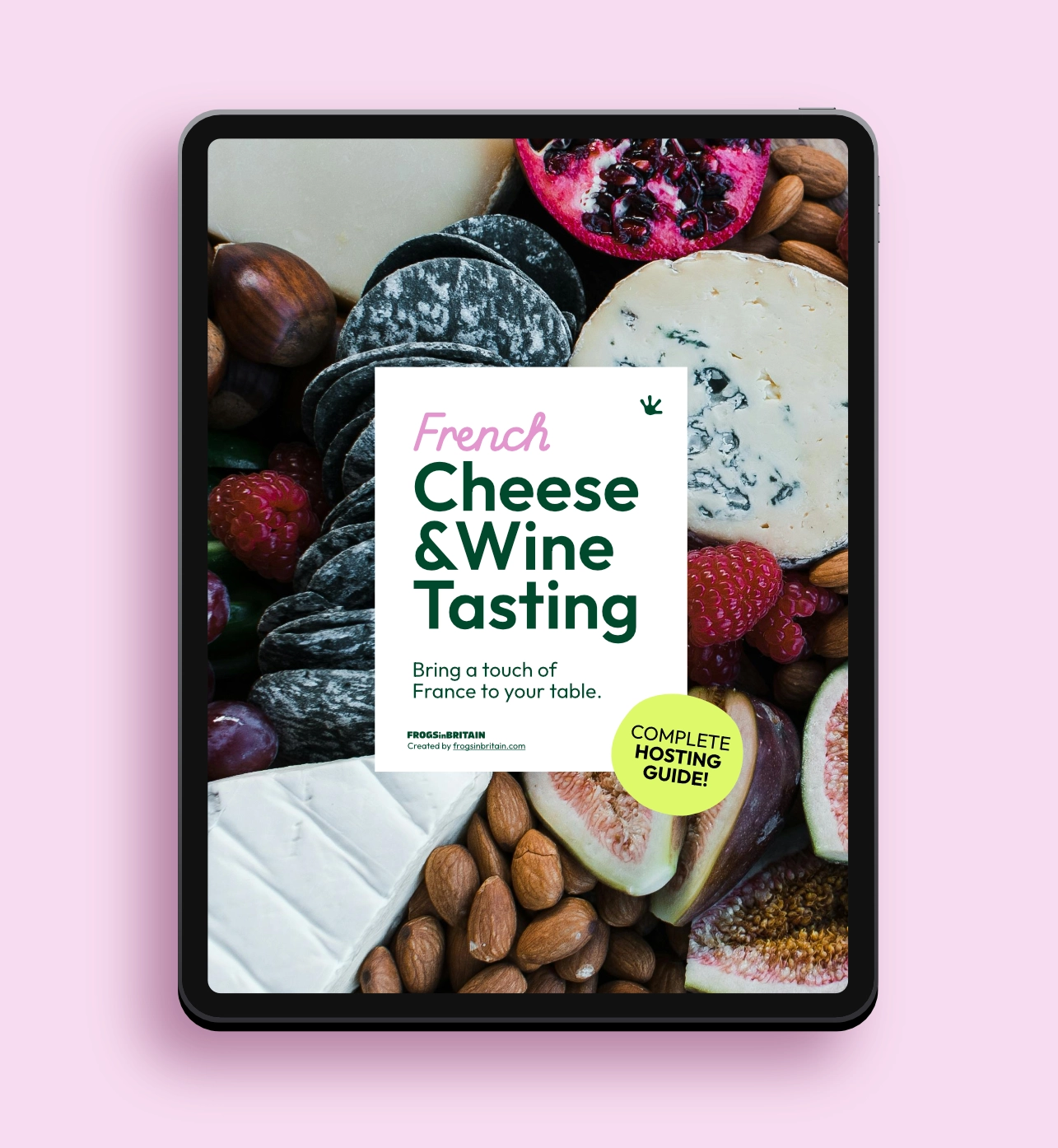
A Complete Hosting Guide
This complete guide takes the intimidation out of French cheese and wine hosting, so you can create an impressive, memorable evening that feels effortless.
Just so you know, a few links here earn us a commission. Doesn’t cost you anything extra, and we only link to things that are actually worth your time.