Poitiers
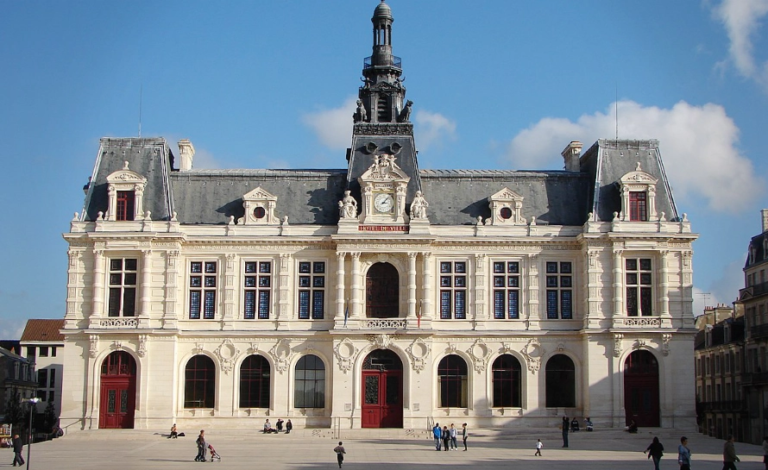
Poitiers: A religious city with parks, and a Statue of Liberty
Poitiers sits on a limestone plateau above two rivers, and it’s properly stuffed with medieval churches. Some cities have one or two Romanesque gems, Poitiers has the lot. All within walking distance of each other. Between the churches, you’ll find surprisingly good parks, —Parc de Blossac with its formal French gardens, Jardin des Plantes with its tropical greenhouse, even a botanical garden dating back to 1621. The city’s very green for somewhere this historic.
And then there’s the Statue of Liberty who catches everyone off guard the first time they see it.
Poitiers has been important since Roman times, it was the capital of Aquitaine when Eleanor held court here in the 12th century. You can still see her palace, now being converted from a courthouse into a cultural centre. The university’s one of France’s oldest (founded 1431), which means the city’s full of students and has that mix of ancient buildings and everyday life rather than feeling like a museum.
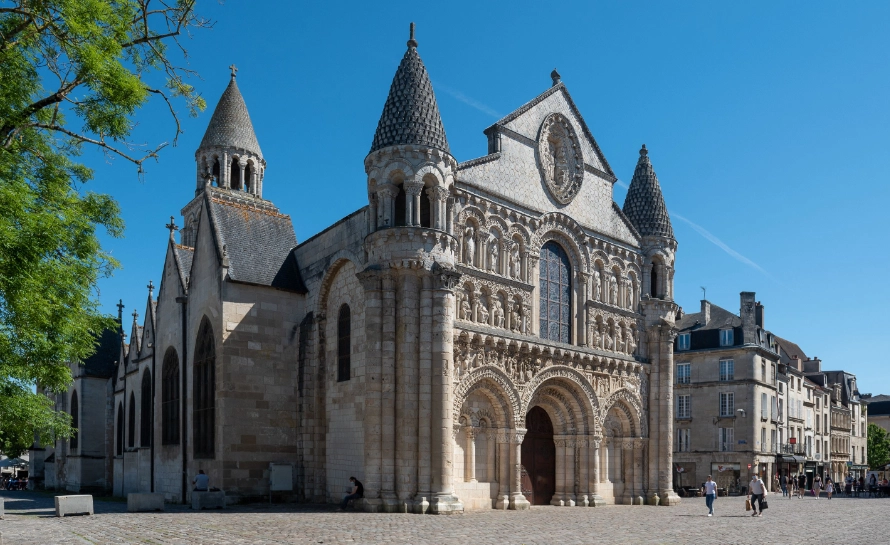
Notre-Dame la Grande
Poitiers’ most photographed church, and for good reason. The 12th-century Romanesque façade is covered in biblical sculpture, Adam and Eve, prophets, the Nativity, apostles. Astonishingly detailed for something 900 years old. You can still make out individual faces, flowing robes, carved hair. The façade was originally brightly painted. Every summer evening they recreate those medieval colours with a light show.
Inside, the painted columns and vaults are 19th-century recreations of medieval decoration. The Romanesque frescoes in the apse vault above the choir are authentic 12th century.
The church is currently closed for major restoration. The façade’s still visible from outside, which is the main attraction anyway. The Tourist Office opposite has information about reopening.
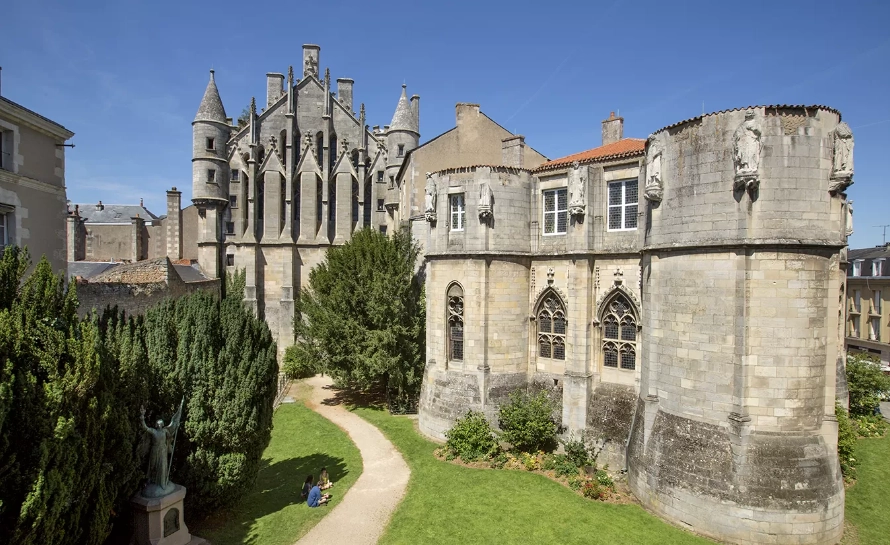
Palais des Comtes de Poitou-Ducs d’Aquitaine
The Palace of the Counts of Poitou and Dukes of Aquitaine sits at the highest point in Poitiers. Eleanor of Aquitaine held court here. Joan of Arc was examined by theologians in Poitiers in 1429 (though sources disagree on whether it was in this building or elsewhere in the city).
Built in the 11th century, most of what you see dates from the late 12th century when Eleanor had it rebuilt. The Tour Maubergeon, the rectangular keep, was added in 1104 by Duke William IX (Eleanor’s grandfather).
The Salle des Pas Perdus (Hall of Lost Footsteps) is the highlight. Built around 1190-1200, probably by Eleanor, it’s 50 metres long and 17 metres wide. The south wall has three monumental fireplaces topped by statues representing Charles VI, Queen Isabeau of Bavaria, Jean de Berry, and his wife Jeanne de Boulogne, added when Jean de Berry remodelled the palace in the 1380s-1390s.
The building served as a courthouse from the 15th century until 2019. It housed the Parlement de Paris from 1418-1436 when Paris was occupied by the English.
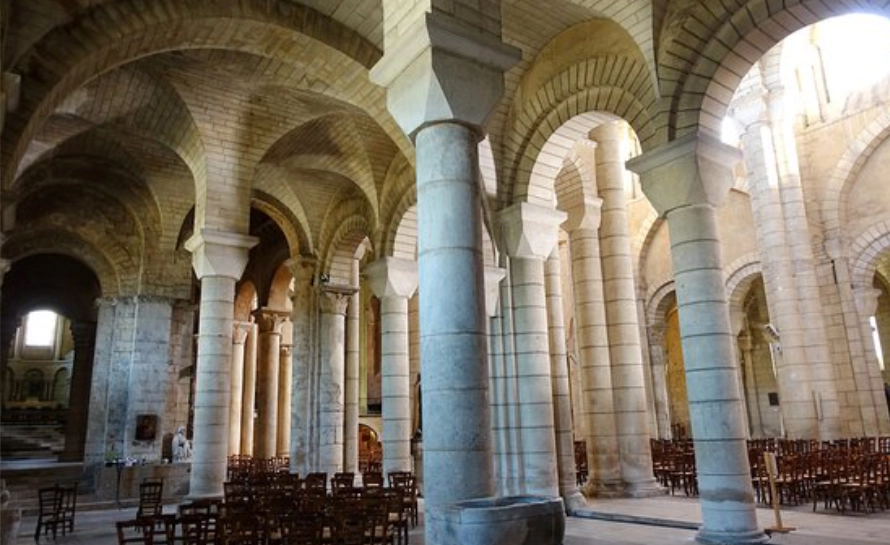
Église Saint-Hilaire-le-Grand
Built in the 11th century over Saint Hilaire’s tomb (Poitiers’ first bishop, died 367 AD). Consecrated in 1049. It’s a UNESCO World Heritage Site as part of the Santiago de Compostela pilgrimage route.
The architecture’s unusual, a forest of massive columns supporting the nave, with multiple narrow aisles added to accommodate pilgrims. The church attracted huge numbers heading to Santiago. The Romanesque choir and ambulatory with radiating chapels are original 11th century.
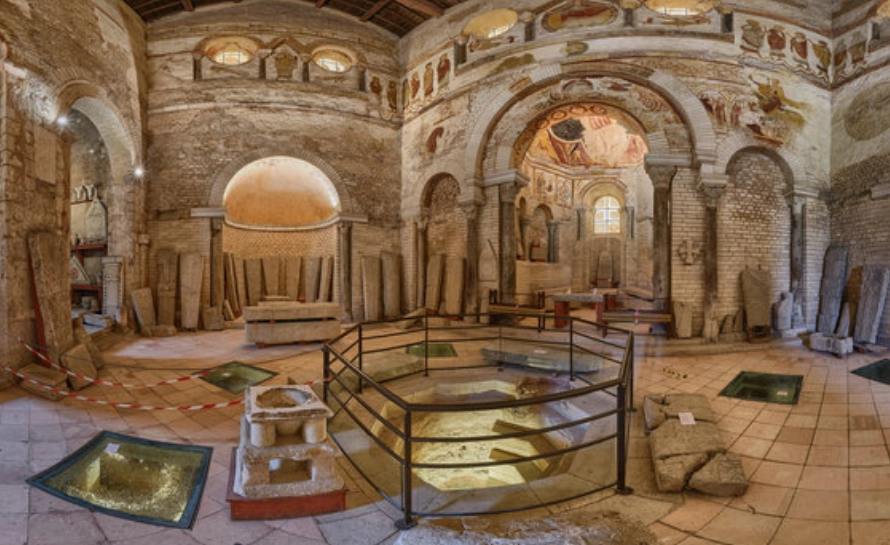
Baptistère Saint-Jean
One of France’s oldest Christian buildings, dating from around 360 AD. Saint Hilaire, Poitiers’ first bishop, probably had it built for baptisms. The central part with Roman walls dates from the 4th century. A baptismal pool for full immersion was added in the 6th century (baptism was serious business then, converts would step down into the water to be completely submerged).
The building’s been modified constantly over the centuries. You’ll see Roman walls, Merovingian additions, Romanesque windows, and Gothic frescoes (11th-13th century) showing Christ, Emperor Constantine on horseback, and peacocks. There’s also a collection of elaborately carved Merovingian sarcophagi from the 5th-7th centuries.
It nearly didn’t survive, Napoleon III’s planners wanted to demolish it for a boulevard in the 1830s, but it was saved by public subscription. Tiny building, but extraordinary. One of Poitiers’ most important historical sites.
Cathédrale Saint-Pierre
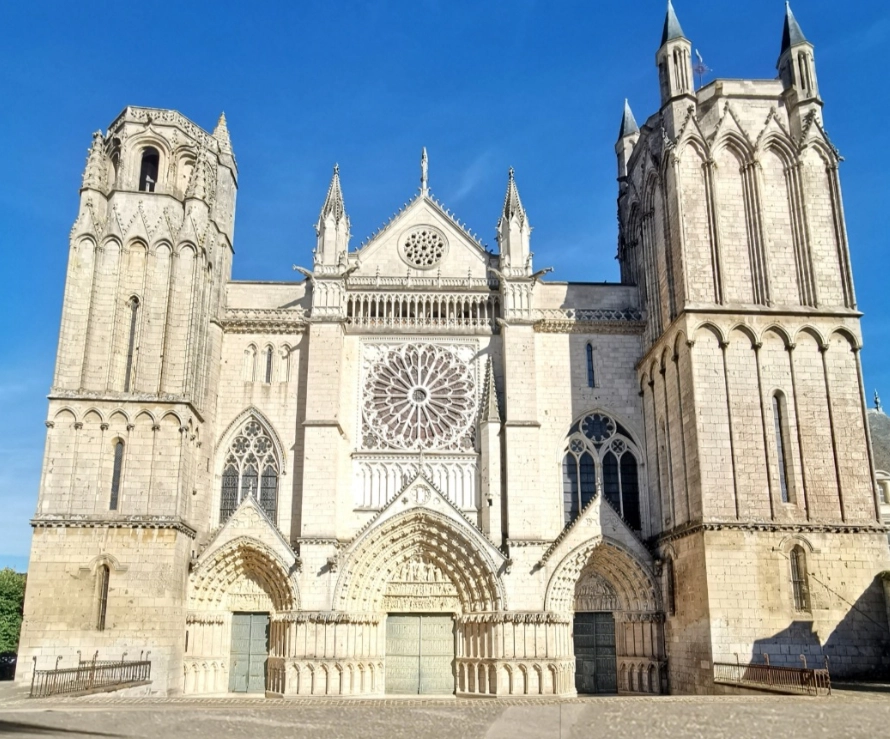
Poitiers Cathedral is grand, one of France’s largest churches. Eleanor of Aquitaine and Henry II started building it in 1162 to show off their Plantagenet power. Took over two centuries to finish, finally consecrated in 1379.
It’s Angevin Gothic, a hall church where the nave and aisles are nearly the same height, creating this vast open space. The west façade’s slightly wonky because the building’s been slowly sinking into the limestone for 800 years.
The stained glass is the real highlight. Most windows in the choir and transepts are original 12th-13th century. The massive Crucifixion window behind the altar (around 1165) was commissioned by Eleanor and Henry, you can see figures representing them at the bottom. One of the only contemporary images of Eleanor that survives.
Church of Sainte-Radegonde
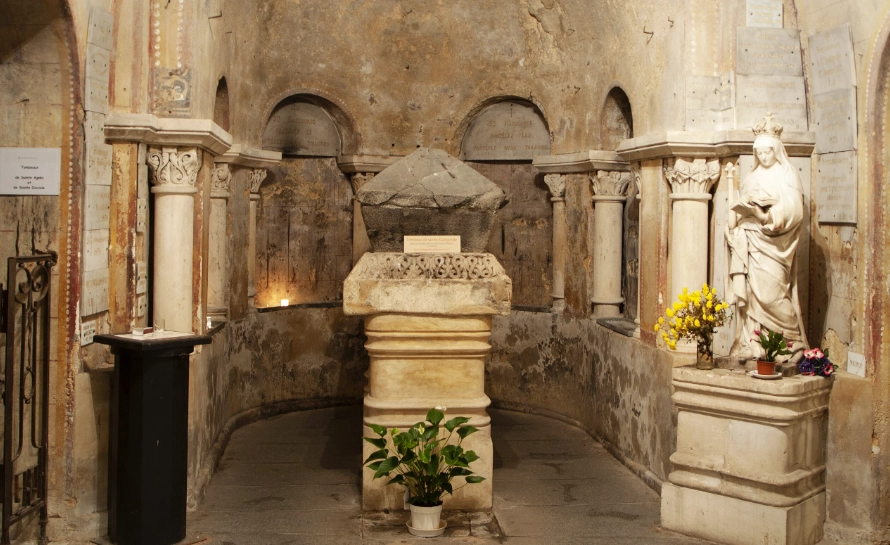
Saint Radegonde was a Frankish queen who left her husband King Clotaire I around 550, moved to Poitiers, and founded the first women’s abbey in Gaul. She built this church outside the city walls in the 6th century. When she died in 587 and was buried here, it was renamed in her honour. She’s now Poitiers’ patron saint. The current building is mostly 11th-13th century, rebuilt after a fire in 1083. Romanesque bell tower and east end from 1099, Gothic nave from the 13th century.
The crypt houses Saint Radegonde’s tomb, still a pilgrimage site. Thousands of ex-votos throughout the church show people’s gratitude over the centuries.
Musée Sainte-Croix
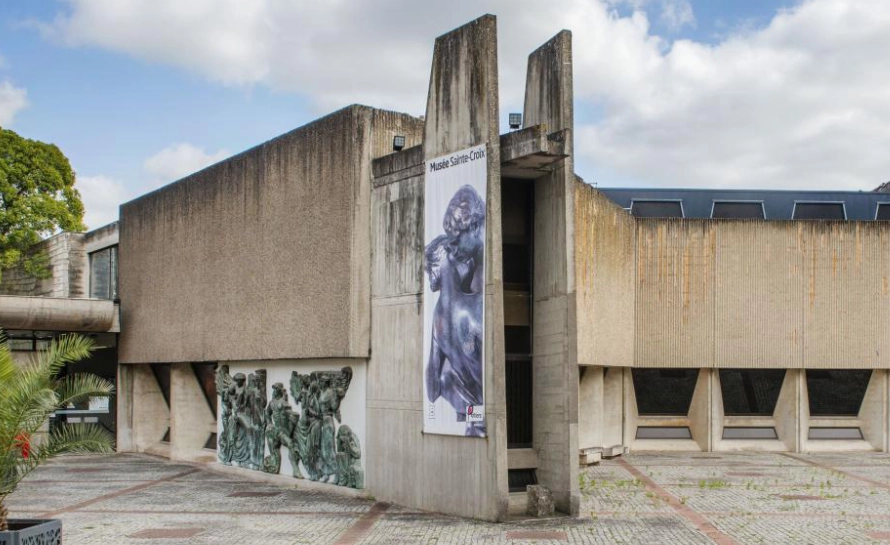
The main city museum Sainte-Croix sits on the site of a former Benedictine abbey, built in the 1970s in that brutalist style the French love. It’s got three main collections: archaeology, fine art, and sculptures.
The archaeology section’s the most interesting. Poitiers was a significant Roman town, and there’s statuary, mosaics, pottery, glasswork. The Bronze Age collection’s smaller but includes some beautiful metalwork. The Gallo-Roman material’s extensive, showing how important this area was before the fall of Rome.
The fine art collection’s hit and miss unless you’re mad about 19th-century academic painting. There are some decent Dutch and Flemish works from the 17th century, and a good collection of Orientalist paintings.
The sculpture collection includes several works by Camille Claudel, who studied in Poitiers before moving to Paris and her doomed relationship with Rodin. Her pieces are worth the visit alone.
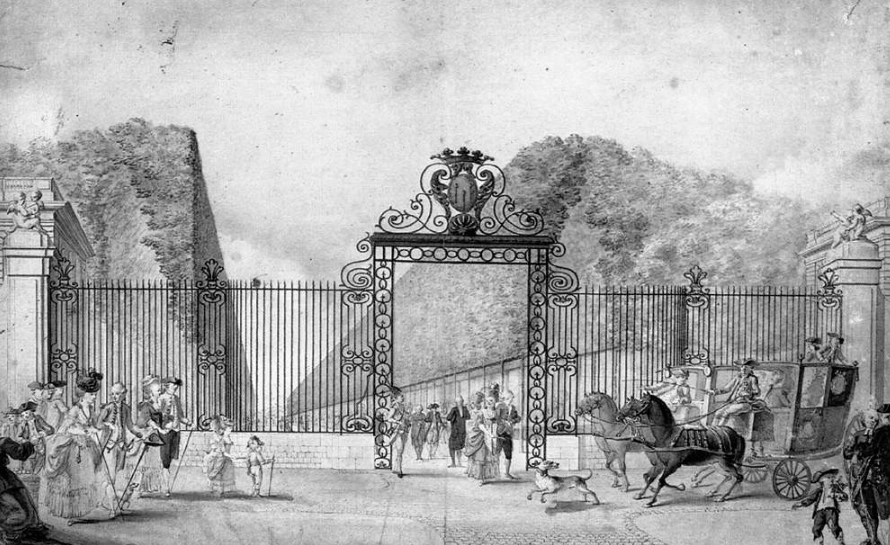
Parc de Blossac
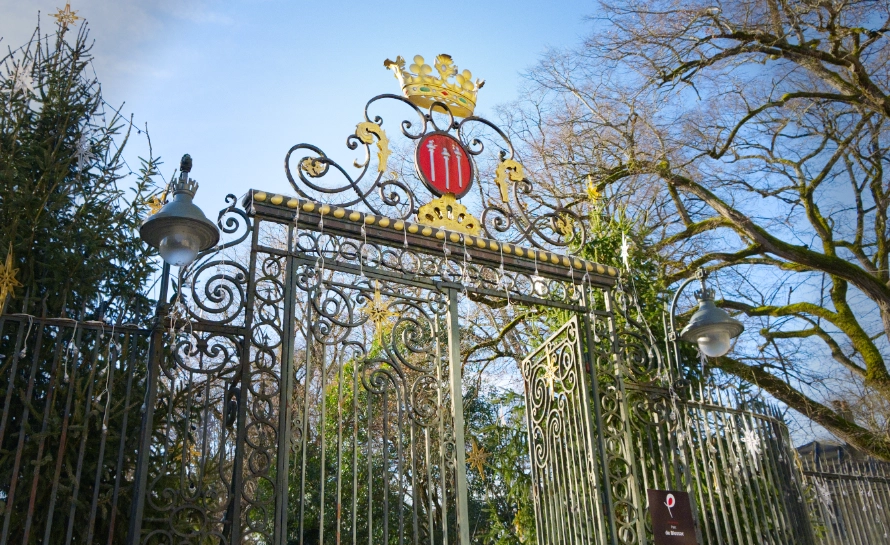
This 18th-century park sits on the western edge of the old town, built on the site of former ramparts. It’s formal French garden design, geometric paths, trimmed hedges, formal flowerbeds. Not natural or wild, but properly maintained. There’s a terrace with views over the River Clain valley. Not spectacular, but pleasant. The park’s popular with local families in the afternoons, students revising in spring, couples walking in the early evening.
Small zoo
There’s also a small zoo, free entry, with swans, chickens, rabbits, guinea pigs, and various others. Nothing exotic, but personallyy I always love watching animals.
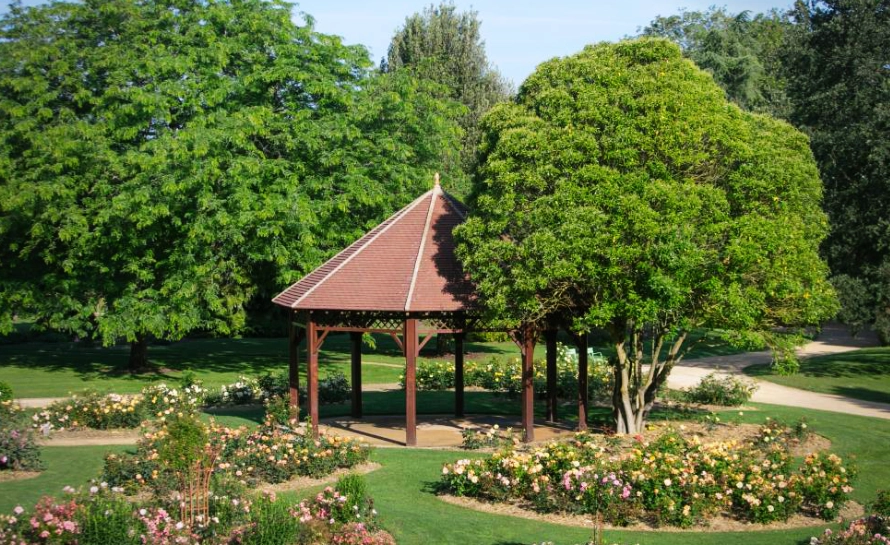
Parc Floral de la Roseraie
This is Poitiers’ botanical park, created in the 1970s when floral parks were fashionable. It sits next to the Parc des Expositions on the eastern edge of the city, covering 3.5 hectares. The main attraction is the rose garden, over 2,500 rose bushes representing around 350-400 varieties, arranged in colour-coordinated beds mixed with perennials.
Beyond the roses, there are about 6,000 planted species including peonies, dahlias, irises, and conifers. Plant labels have QR codes for detailed information. The park’s laid out with different zones: rose gardens, English-style areas, meadow sections, a small maze, woodland corners, and a pond with water lilies where ducks drift about.
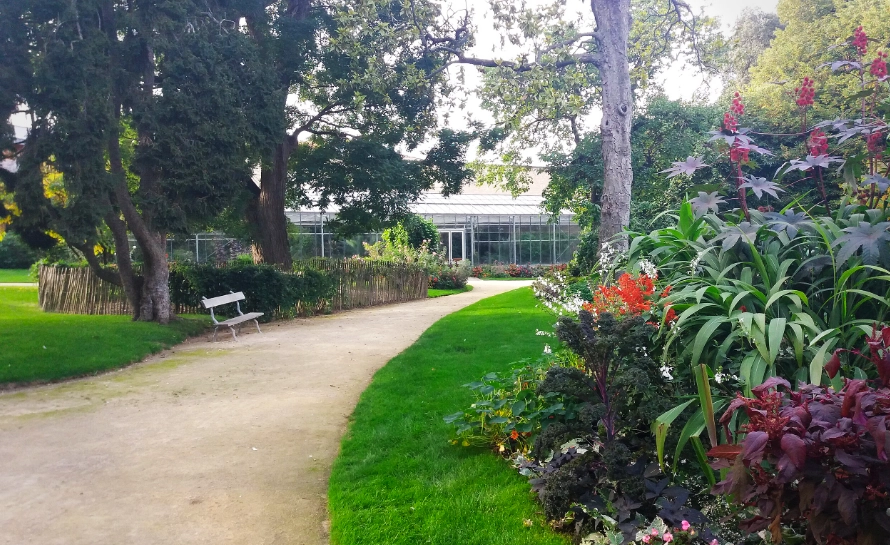
Jardin des Plantes
Poitiers’ botanical garden started in 1621 when Paschal Le Coq (Dean of the Medical Faculty) set it up to teach students about medicinal plants. It moved eight times over 250 years before settling at its current spot in 1869 on the old Hôtel-Dieu hospital grounds. One of France’s oldest botanical gardens, even if it’s been a bit nomadic.
The current site covers 1.5 hectares, English-style park with winding paths, a pond, waterfall, and about 100 tree and shrub species. Notable ones include cedars, ginkgo biloba, swamp cypress. The annual flower displays use around 6,000 plants, including one showing the city’s coat of arms.
The botanical section has thirty beds (1,700m²) with labelled collections: medicinal plants, vegetables (old and current varieties), aromatics, squashes. There’s a 200m² tropical greenhouse with 145 exotic species, bromeliads, orchids, cacti.
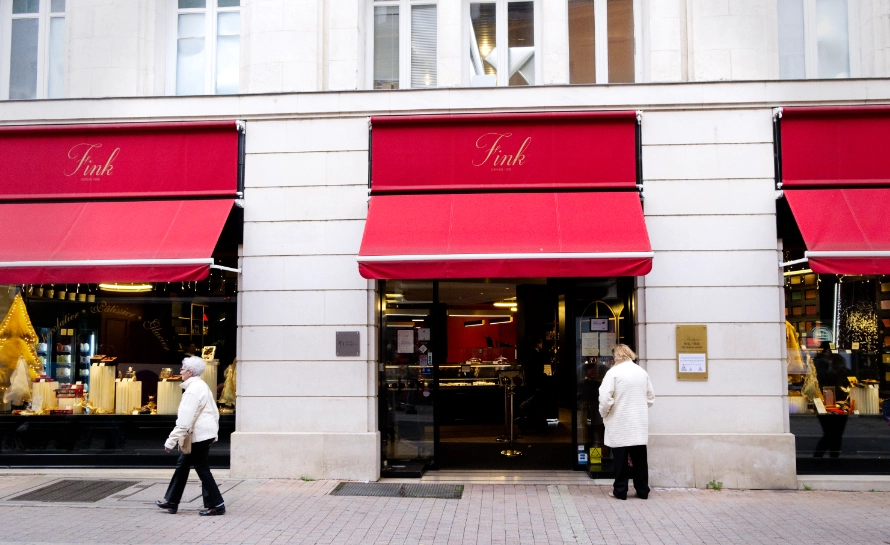
La maison Fink
Fink has been making chocolate in Poitiers since 1828. A Swiss chocolatier called Monsieur Jacomety (from the Chur region) founded it, and nine master chocolatiers have kept it going over nearly two centuries. Alexandre Gely runs it now. He did his apprenticeship here at 17, finished in 2005, then headed to Paris to work at Gérard Mulot’s pâtisserie in Saint-Germain-des-Prés. Few years later, he came back and bought the place where he’d trained. He runs it with his wife and a team of 18.
Everything’s made in-house, chocolates, macarons, pâtisserie, ice cream, confectionery. The original shop at 18 rue du Marché Notre-Dame has a tea room if you fancy sitting down with something ridiculously good and a proper coffee. Worth a visit if you’re in Poitiers and after something decadent and sweet that’s actually been made by people who know what they’re doing.
Fabrique De Parapluies François
Poitiers has a rather special umbrella workshop that’s been going since 1882. They’ve made umbrellas for Louis Vuitton and Hermès, and got certified as an “Entreprise du Patrimoine Vivant” (Living Heritage Company) in 2021. It’s one of France’s last handmade umbrella workshops, with five generations of the François family running it. The umbrellas they make are proper ones, they survive actual weather, not those flimsy things that collapse the moment it gets breezy.
Pierre Louis François (called Fernand) founded it after apprenticing with a Poitiers umbrella maker named Vallet Déchérat. Everything’s made by hand, carbon fibre or fibreglass ribs, solid wood handles (maple, chestnut), quality fabrics. The signature piece is the English umbrella (yes, the irony), a single curved piece of wood like a walking stick, fitted to your height.
You can visit the workshop at 137 Grand’Rue and watch them being made. The period shop window’s worth a look on its own.
Cimetière de la Pierre Levée
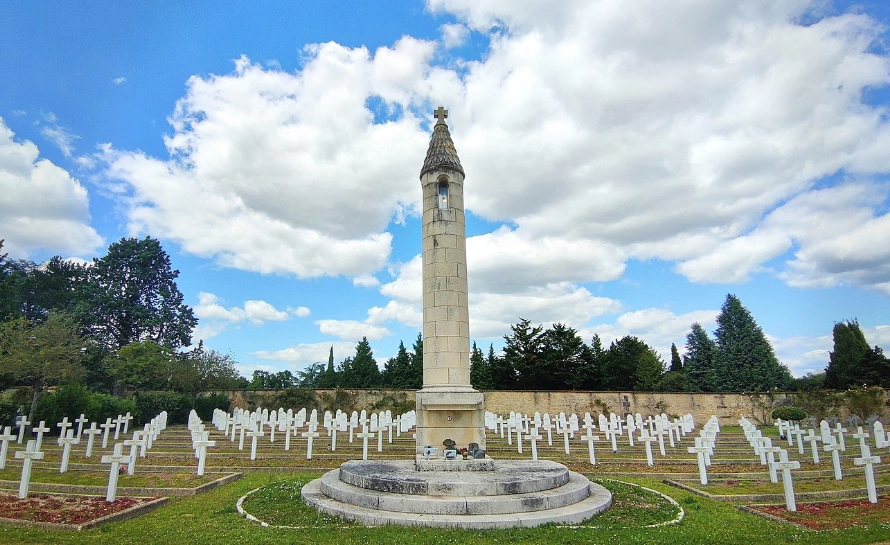
Poitiers’ largest cemetery at 7 hectares, named after the Neolithic dolmen nearby. The dolmen itself (a 5,000-year) old stone structure mentioned by Rabelais in Pantagruel, sits just outside the cemetery in a small park on rue du Dolmen. It’s been there since around 3000 BC, making it Poitiers’ oldest monument.
The cemetery has two military sections with WWI graves, one for French soldiers, one for German soldiers who died in captivity during 1914-1918. There’s a German memorial here as well. In 1936, they built a lanterne des morts (lantern of the dead) in the French-German military section, modelled on the 13th-century one from Château-Larcher. It stays lit permanently.
Lantern of the dead
These medieval stone towers were common in western France around the 12th-13th centuries, hollow columns with a lamp hoisted to the top to light cemeteries at night. They’re rare now, only about 34 authentic ones left in France. This modern replica honours that tradition.
Free to visit, though it’s a functioning cemetery, so treat it with appropriate respect.
Chapelle Saint-Louis
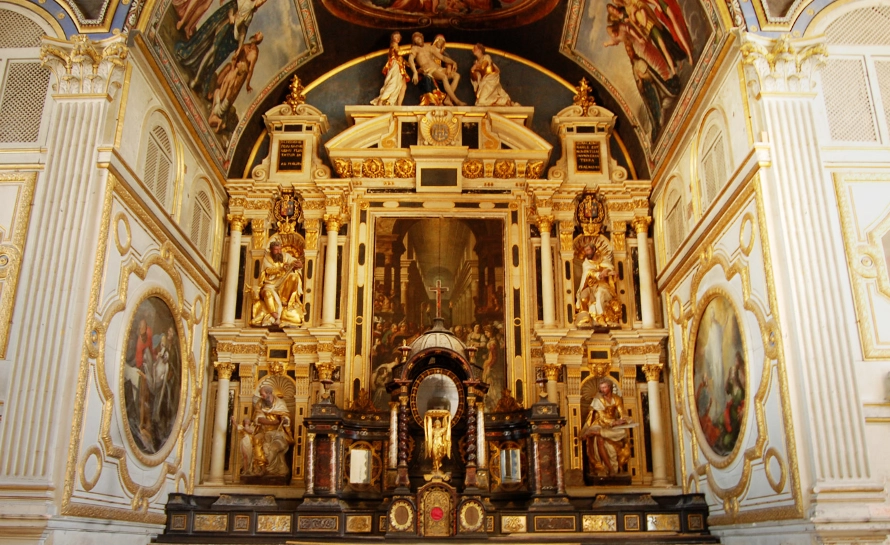
The Jesuits built this chapel between 1608 and 1613 for their newly founded college. First stone laid April 1608, consecrated October 1613, first mass January 1614. It’s one of Poitiers’ best examples of classical architecture, imposing Doric facade, single nave with Gothic ribbed vaults, monumental 1609 altarpiece. The sacristy (1664) has carved woodwork with religious monograms and royal emblems.
Built partly from salvaged stones from the ruined Abbey of Saint-Cyprien nearby. Designed to hold 800 students and teachers. Because of the sloping terrain, the choir faces south instead of the traditional east. Classified Monument Historique in 1908. Underwent major restoration 2015, reopened February 2016.
Place de la Liberté
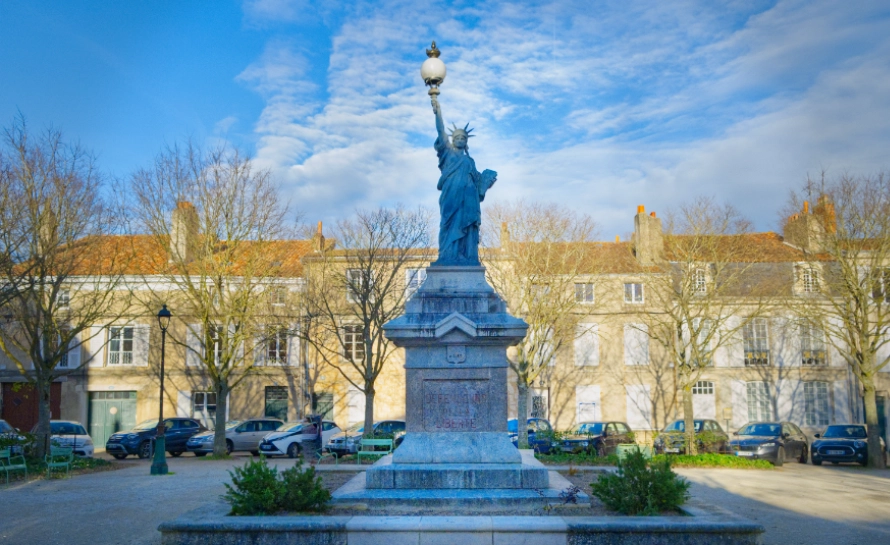
Place de la Liberté used to be called Place du Pilori, the pillory square, where criminals were exposed to public shame and where executions took place. During the Revolution, the guillotine was set up here. In 1822, General Jean-Baptiste Berton was executed here for conspiring against Louis XVIII. His last words were “Vive la Liberté!” The square was renamed in his honour in 1900.
In 1903, the local Freemason lodges erected a statue in the centre of the square, a replica of Bartholdi’s Statue of Liberty. It’s about 2 metres tall, cast in bronze by the Val d’Osne foundry in Paris. The inscription on the base reads: “When the innocence of citizens is not assured, liberty is not either”, a quote from Montesquieu, and a clear reference to the Dreyfus Affair.
Market days and food
Place du Maréchal Leclerc hosts the Saturday market, a French market, not a tourist affair. Set up by 8am, mostly packed up by 1pm. The produce is regional, goat cheese from the Poitou, melons, asparagus in spring. There’s also a smaller indoor market, Marché Notre-Dame, in a beautiful 19th-century iron and glass structure. It runs most days and it’s good for cheese, charcuterie, and bread.
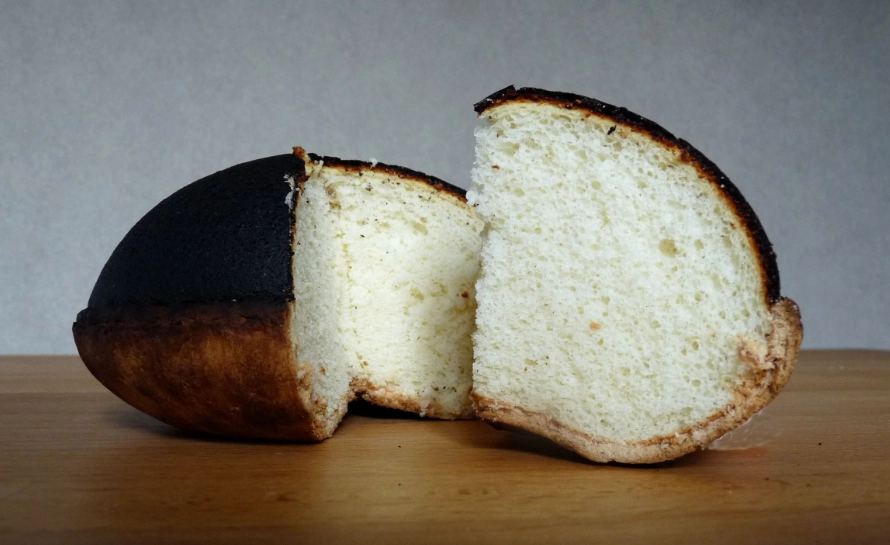
Regional specialties worth trying, farci poitevin (a terrine made with vegetables, herbs, and pork), tourteau fromagé (a cheesecake with a distinctive black crust), and broyé du Poitou (a traditional shortbread biscuit).
What to see and do in Poitiers
- Notre-Dame la Grande
Masterpiece of Romanesque architecture with an extraordinarily carved façade. Closed for restoration until 2027 but façade visible. Virtual tour available at Tourist Office. - Baptistère Saint-Jean
One of France’s oldest Christian buildings, dating from the 4th century. Original octagonal baptismal pool, Merovingian frescoes, and carved sarcophagi. Small but remarkable. 20-30 minutes, €3 entry. - Cathédrale Saint-Pierre
Massive Angevin Gothic cathedral begun by Eleanor of Aquitaine in 1162. Exceptional 12th-13th century stained glass including the Crucifixion window. Medieval choir stalls and recently discovered wall paintings. Free entry. - Palais des Ducs d’Aquitaine
Eleanor of Aquitaine’s palace with the vast Salle des Pas Perdus (50m long). Joan of Arc was examined here. Guided tours only, book ahead. 45 minutes, €8. - Église Saint-Hilaire-le-Grand
11th-century UNESCO church with unusual multi-domed architecture. Built over Saint Hilaire’s tomb, part of the Santiago pilgrimage route. 4th-century crypt. Often empty and atmospheric. Free. - Musée Sainte-Croix
City museum with extensive Gallo-Roman archaeology, fine art collection, and Camille Claudel sculptures. Brutalist 1970s building. 1-2 hours, €5 (free first Sunday). - Medieval Streets
Wander Rue de la Regratterie, Rue de la Chaîne, and streets around the cathedral. Half-timbered houses, cobbled lanes, medieval atmosphere. Free, take your time. - Place de la Liberté
Historic square with 1903 replica of the Statue of Liberty. Former site of the pillory and guillotine. Good cafés for people-watching. - Futuroscope
Massive multimedia theme park 10km north. IMAX, 4D rides, technology-focused shows. Brilliant for children and tech enthusiasts. Full day needed, €45 entry.
Practical information for visitors
- Getting there
Poitiers is 90 minutes from Paris by TGV from Paris Montparnasse. The station’s about 20 minutes’ walk from the centre, or take bus line 1.
If you’re driving from the UK, it’s about 4.5 hours from Calais, mostly motorway. Poitiers-Biard airport is 15 minutes away but small with limited connections. You’re better off flying to Bordeaux (120km) or Tours (90km) and getting the train. - Getting around
The centre’s compact and walkable. You won’t need buses unless staying outside the centre or visiting Futuroscope. Vitalis bus network: €1.90 single tickets, day passes available. Line 1 connects the station to the centre. Line E goes to Futuroscope. Multi-storey car parks around the centre. Street parking free on Sundays. - Accommodation
Stay in Vieux Poitiers or near Place du Maréchal Leclerc for easy access to everything. Hotels range from €60-150 per night for mid-range options. Book ahead for weekends and summer. Futuroscope has themed hotels if you’re visiting the park, convenient but you’ll miss the medieval city atmosphere.