French kitchen knives: Why Opinel belongs in your kitchen
Let’s talk about French kitchen knives. Not the ones that cost £300 and require a PhD to maintain. The ones I and French people actually use. I took my Opinel to the Chestnut Festival. Knew it would come in handy for opening those roasted chestnuts everyone was selling by the kilo. And it did, perfectly. That’s the thing about these knives. They’re not showpieces. They’re tools that work.
Opinel has been making knives in the French Alps since 1890. You know them for the folding pocket knife with the wooden handle, the one that’s in every French person’s junk drawer, camping bag, or coat pocket. But Opinel also makes proper kitchen knives. And if you’re cooking French food at home, you should know about them.
I’m going to tell you about a knife company that’s been quietly perfecting kitchen blades for over a century, that French chefs trust, that won’t bankrupt you, and that actually makes cooking more enjoyable.
Why French kitchen knives matter
French cooking requires decent knives. You’re slicing shallots for a vinaigrette. Trimming green beans. Cutting pumpkins for your pumpkin soup. Filleting fish. Chopping herbs. Slicing a baguette without murdering it.
Supermarket knives, those stamped steel things with plastic handles that go blunt after three uses, just don’t cut it. Japanese knives are brilliant but often feel precious. German knives are workhorses but can feel heavy.
French kitchen knives sit somewhere in the middle. Sharp enough for delicate work. Robust enough for everyday use. Comfortable for hours of prep. Affordable enough that you’re not terrified to actually use them.
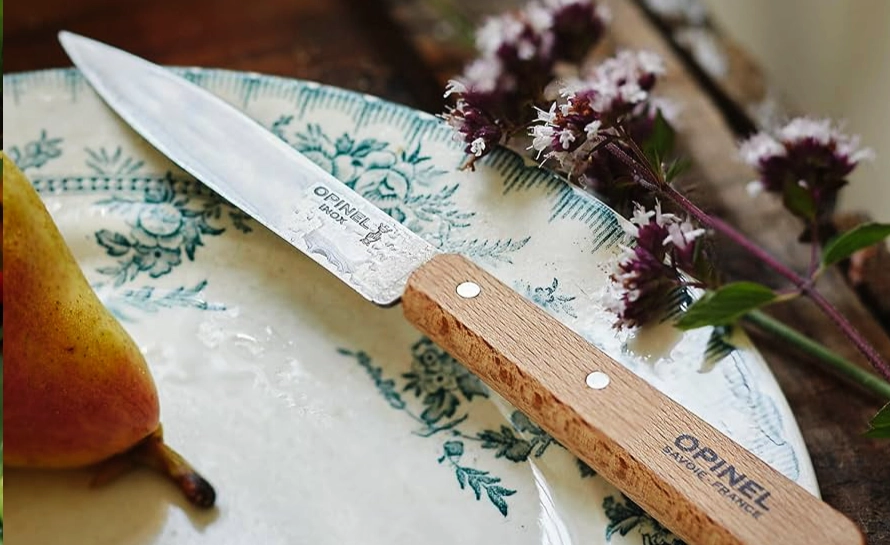
Opinel makes French kitchen knives the way they make everything: simple design, quality materials, reasonable prices, made in France.
The Opinel story (kitchen edition)
Joseph Opinel started making folding knives in 1890 in Savoie. The pocket knife became iconic, and I mean properly iconic. In 1985, the Victoria and Albert Museum in London selected it as one of the 100 best-designed objects in the world, alongside the Porsche 911 and Rolex watches. The Museum of Modern Art in New York put it in their permanent collection. The Phaidon Design Classics book called it one of the 999 most successful designs of all time.
Pablo Picasso used his Opinel No.8 to carve sculptures. Julia Child kept one in her kitchen drawer. In 1989, “Opinel” became an entry in the Larousse dictionary alongside Bic and Frigidaire, one of those brand names that becomes shorthand for the object itself.
What I think is remarkable is that the design has remained essentially unchanged since 1890. Same blade shape. Same wooden handle with the distinctive groove. Same rotating collar mechanism (upgraded with the Virobloc locking ring in 1955, but the basic principle stayed the same). When something works for 134 years without needing fundamental redesign, you’re dealing with working design, not fashion.
The kitchen knives came later, drawing on that same knife-making expertise. Same attention to blade geometry. Same quality steel. Same sustainable beechwood handles from French forests. Just different shapes for different kitchen tasks.
The kitchen knife collections launched properly in the 2000s, though Opinel had been making kitchen knives sporadically for decades before that. They’re not trying to reinvent French cuisine or create the next trending knife shape. They’re just making proper French kitchen knives that work.
The French kitchen knives you actually need
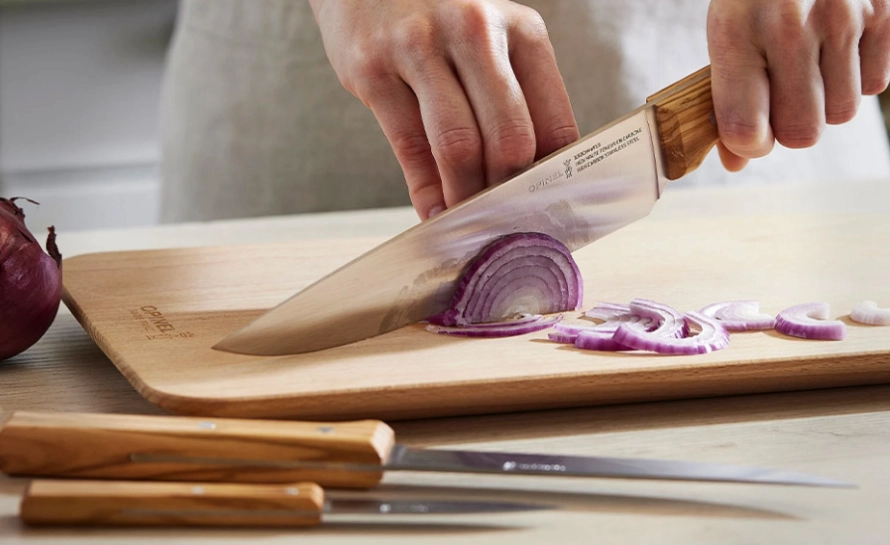
French home cooking doesn’t require seventeen specialist knives. You need three or four good ones that you use constantly.
This is your workhorse. In French kitchens, the paring knife does about 60% of the work.
What it’s for
- Peeling vegetables and fruit
- Trimming shallots and garlic
- Cutting small vegetables
- Deveining prawns
- Removing strawberry hulls
- Slicing cheese
- Cutting charcuterie for serving
- Anything requiring precision
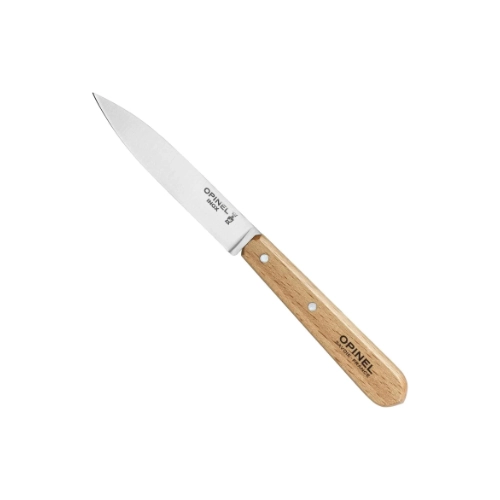
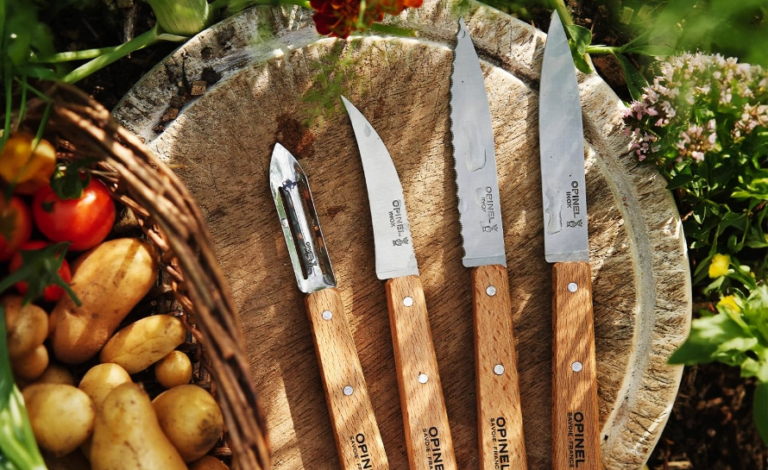
Opinel makes several versions. The blade is around 8-10cm, stainless steel, sharp. The handle, whether beechwood or polymer, fits comfortably in your hand for extended use. I use mine for everything from prepping a Salade Niçoise to cutting cornichons for a Raclette. It lives on the counter because I reach for it ten times a day. If you’re buying one Opinel kitchen knife, buy a paring knife. This kitchen knife set includes a paring knife, serrated knife, vegetable knife, and peeler, everything you need for French cooking prep.
The big knife. 18-20cm blade. For serious chopping, slicing, and general kitchen work.
What it’s for
- Chopping onions, carrots, celery
- Breaking down large vegetables
- Slicing meat
- Chopping herbs in quantity
- General prep work requiring a longer blade
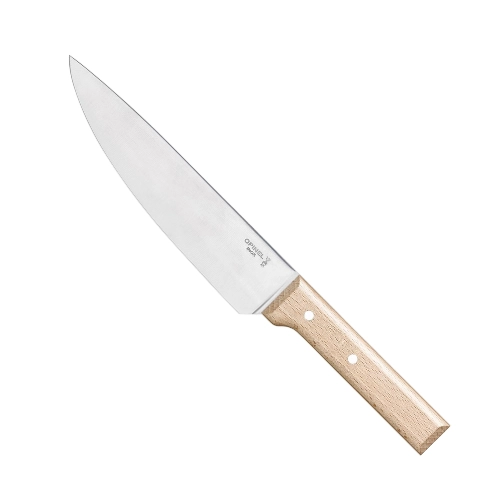
Opinel’s chef’s knives have a comfortable weight, good balance, and a blade that actually cuts rather than crushes. The Parallèle collection does a lovely version with a beechwood handle that feels warm in your hand. The blade is stainless steel, a proper workhorse steel that sharpens well and holds an edge.
The Japanese-style knife that’s become standard in French kitchens. Shorter than a chef’s knife (around 17cm), with a straighter edge and a squared-off tip.
What it’s for
- Slicing fish and meat thinly
- Chopping vegetables
- General prep when you want more control than a chef’s knife gives you
- Asian-influenced French cooking
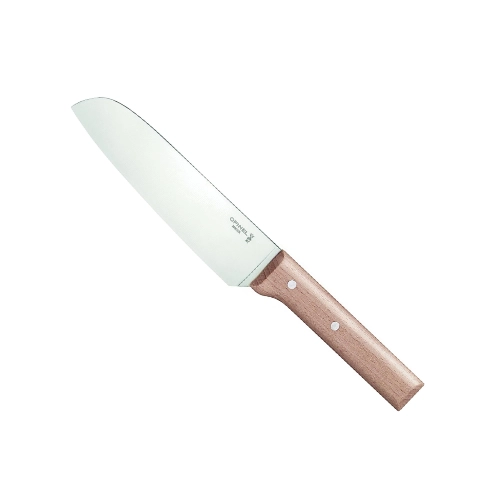
Opinel’s Santoku knife from the Parallèle collection is unique. The blade is 17cm, shorter than a chef’s knife but with more width. The distinctive feature is the dimpled blade (alveoli) that traps air bubbles to prevent food sticking, brilliant when you’re slicing through quantities of vegetables or salmon.
Essential for slicing bread. Which, if you’re cooking French food, you’re eating daily.
What it’s for
- Slicing baguettes without crushing them
- Cutting crusty sourdough
- Slicing tomatoes (the serrations work brilliantly)
- Cutting cakes and pastries
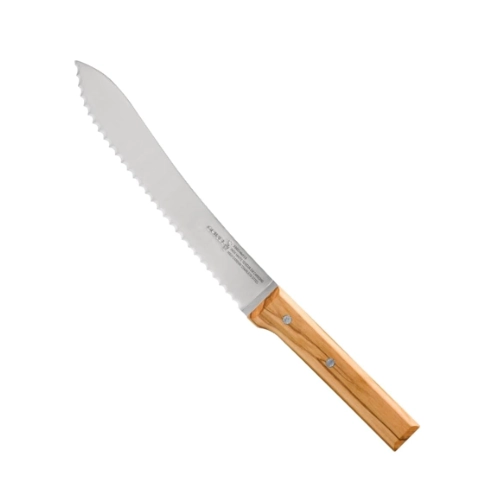
Opinel’s bread knife has a long serrated blade that actually cuts through crust without sawing. The olive wood handle version is particularly lovely and the one I own in my kitchen, feels substantial and looks elegant on the counter.
The Collections: Which one should you choose?
Opinel makes three main collections of French kitchen knives. Here’s what you need to know.
Parallèle Collection: Classic French Style
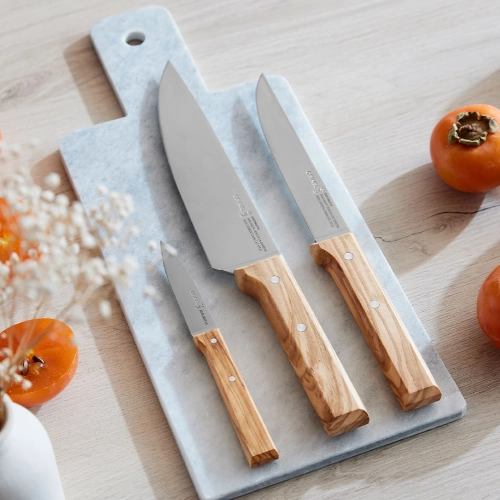
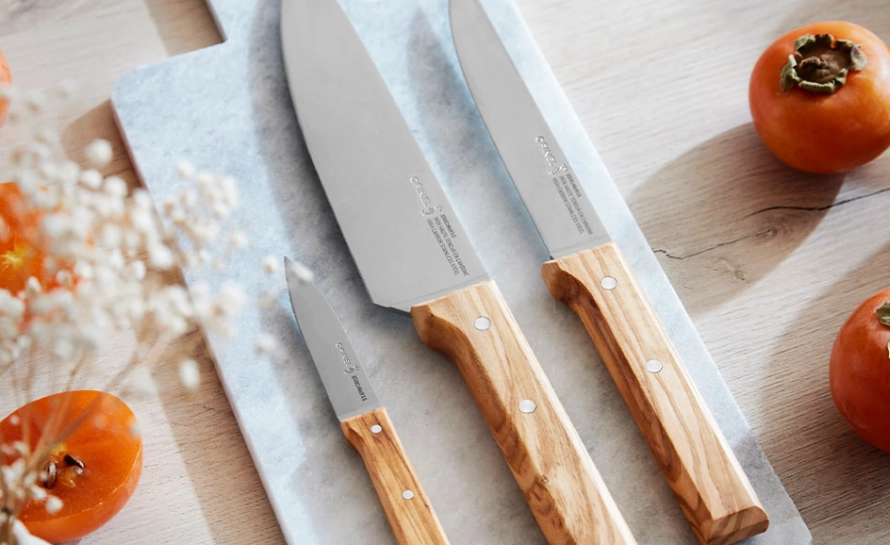
This is the traditional line. Beechwood handles, stainless steel blades, half-tang construction. They look like French kitchen knives are supposed to look. The handles are comfortable. The blades are sharp. The balance is good. They’re affordable, you can build a proper kitchen knife set without spending a fortune. Available with standard beechwood or olive wood handles. The olive wood versions are gorgeous but cost a bit more.
The Parallèle Trio set (paring knife, chef’s knife, carving knife) is brilliant value if you’re starting from scratch or upgrading from terrible knives.
Les Forgés 1890: Professional Quality
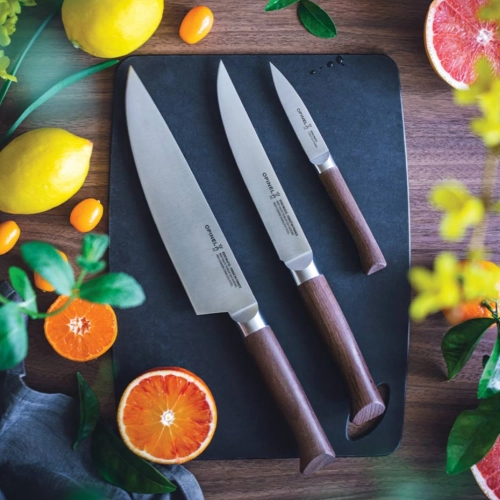
The premium line. Full-tang construction. Blades forged from a single piece of steel. Heavier, more substantial, more expensive. These are proper professional-grade French kitchen knives. The weight gives you more control for heavy-duty work. The balance is exceptional. They’re beautiful objects that happen to be extremely functional. Worth the investment if you cook daily and want knives that’ll last decades. Probably overkill if you’re only cooking a few times a week.
Intempora Collection: Modern and Practical
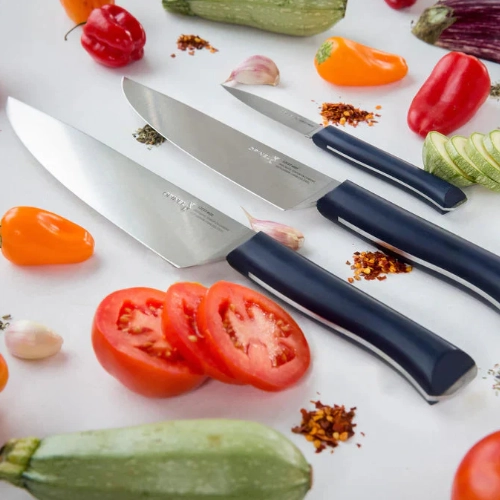
The contemporary option. Polymer handles instead of wood. Dishwasher-safe. Full-tang construction. Lighter weight than Les Forgés. Honestly? If you’ve got small children, limited time, or just want knives you can chuck in the dishwasher, these make sense. The polymer handles are comfortable and hygienic. The blades are the same quality stainless steel as the other collections. Less romantic than wooden handles, but considerably more practical for busy households.
Three main collections
- Parallèle: Traditional beechwood handles, classic French style
- Les Forgés 1890: Premium fully-forged blades, professional quality
- Intempora: Modern polymer handles, dishwasher-safe
The pocket knife in the kitchen
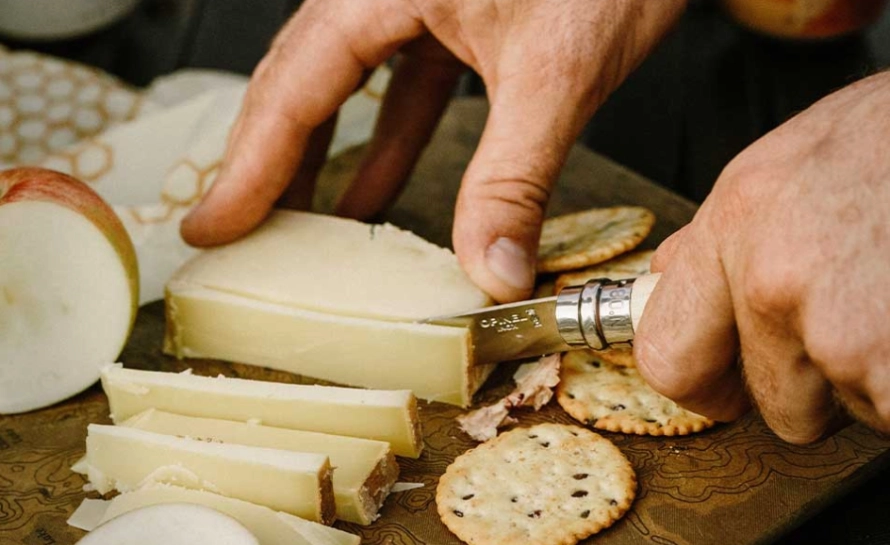
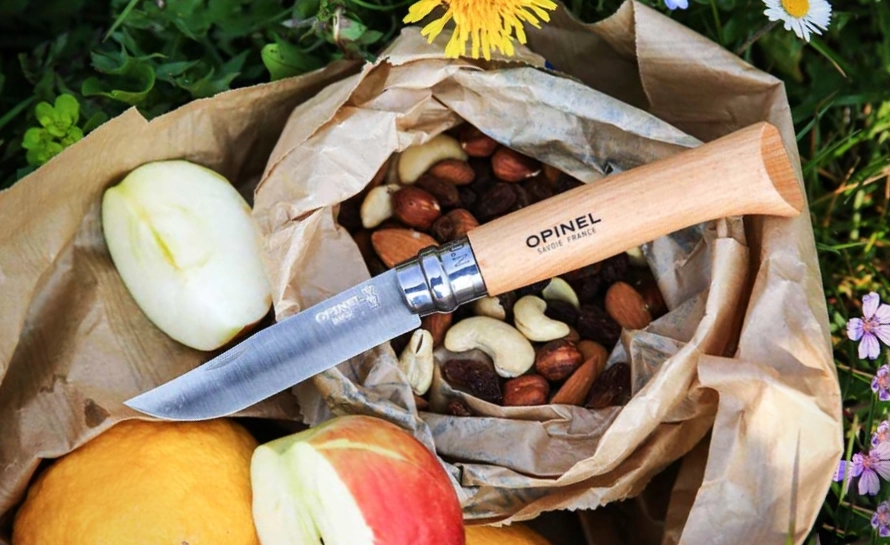
You might think a pocket knife doesn’t belong next to your chef’s knives, but I use my little No.8 stainless steel the same way I use my paring knife. Lives in my kitchen drawer. Gets used daily. And when I’m putting together a cheeseboard, it’s perfect, very sharp for cutting cheese, and it looks rustic and French on the board rather than overly formal. In France, the line between “kitchen knife” and “pocket knife” is blurrier than British culture suggests. A good sharp knife is a good sharp knife, whether it folds or not.
The classic Opinel No.8 pocket knife lives in my kitchen drawer.
What it’s for
- Slicing cheese at the table
- Cutting saucisson
- Trimming mushrooms
- Peeling apples for a tarte tatin
- Cutting herbs from the garden
- Slicing vegetables for crudités
- For your cheeseboard
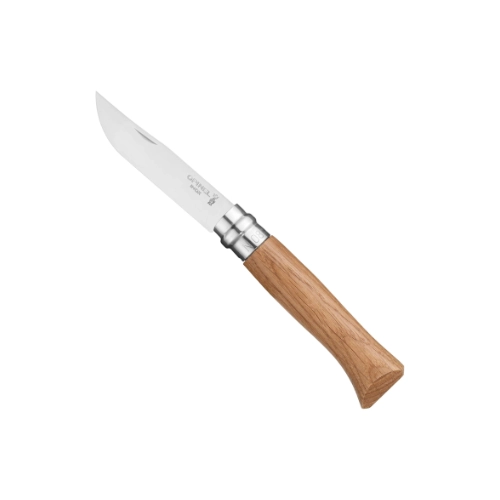
The smaller No.6 with olive wood handle is particularly lovely for table use, small enough to not be intimidating, beautiful enough to leave out.
Specialist French kitchen knives
Beyond the basics, Opinel makes some specialist knives for specific French cooking tasks.
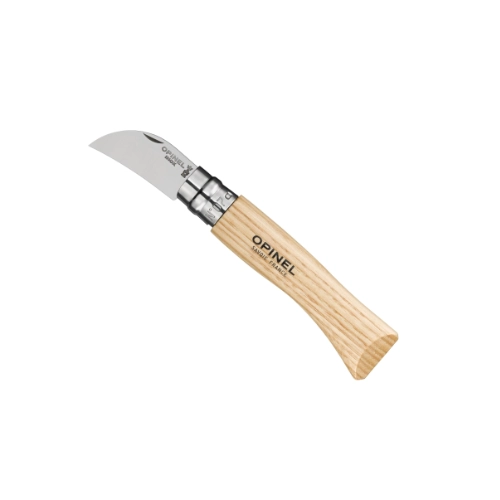
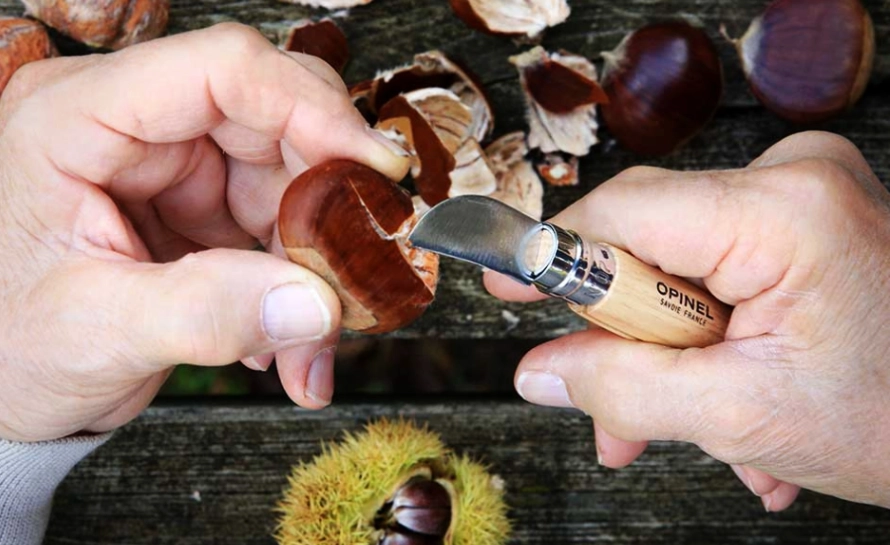
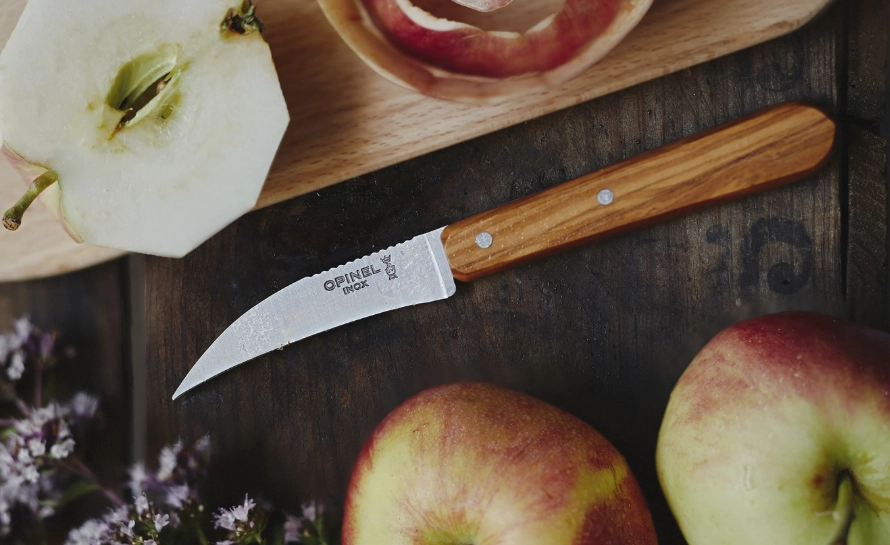
If you’re making anything with chestnuts, which you should, because roasted chestnuts are delicious, the Opinel chestnut knife is very cleverly designed. It’s got a curved blade specifically designed for scoring chestnuts before roasting. The shape lets you cut the X in the shell without fighting with the nut. Once roasted, the same knife peels the shells off beautifully.
But it’s not limited to chestnuts. I use this knife for cutting garlic, trimming small vegetables, and general detailed kitchen work where the curved blade gives you more control. The compact size and sharp curve make it particularly good for precision tasks.
The Oyster Knife
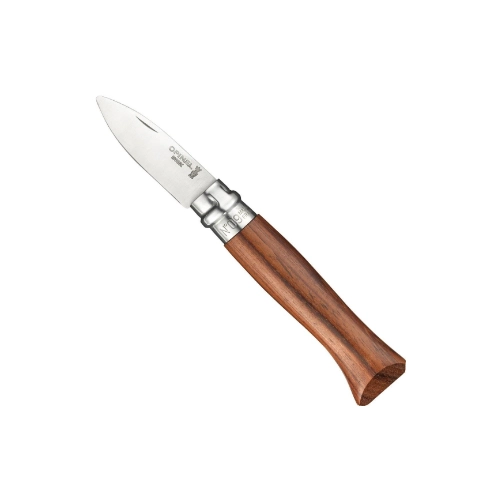
Oysters are a staple of French coastal cooking. Opening them with a butter knife is dangerous and inefficient. Opinel makes a proper oyster knife with a short, sturdy blade and a guard to protect your hand. The blade is designed to slide between the shells and twist to pop them open. Worth having if you’re serving oysters more than once a year. Otherwise, ask your fishmonger to open them.
One thing to note: these are surprisingly hard to find outside France. If you want one, you’ll either need a friend bringing it back from France, or you’ll need to pick one up yourself next time you visit. Makes them a bit more special when you do get one.
The Mushroom Knife
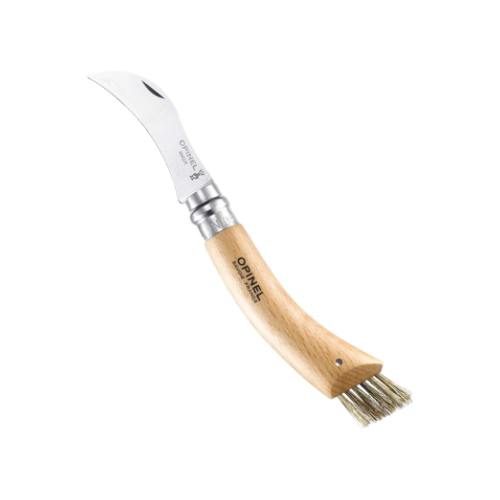
For foraging or just working with fresh mushrooms, Opinel makes a folding knife with a curved blade and a boar’s hair brush built into the handle. The blade cuts mushroom stems cleanly. The brush removes dirt without damaging the mushroom. It’s one of those specialist tools that does its specific job perfectly. Lovely if you forage or buy whole mushrooms regularly from the market. Not essential if you mostly buy pre-sliced button mushrooms from the supermarket.
Like the oyster knife, these are easier to find in France than abroad. Worth picking up if you’re visiting, or having a friend bring one back. The mushroom knife has a bit of a cult following among foragers.
Maintaining your French kitchen knives
French kitchen knives aren’t fussy, but they do need basic care.
Sharpening: Essential and Simple
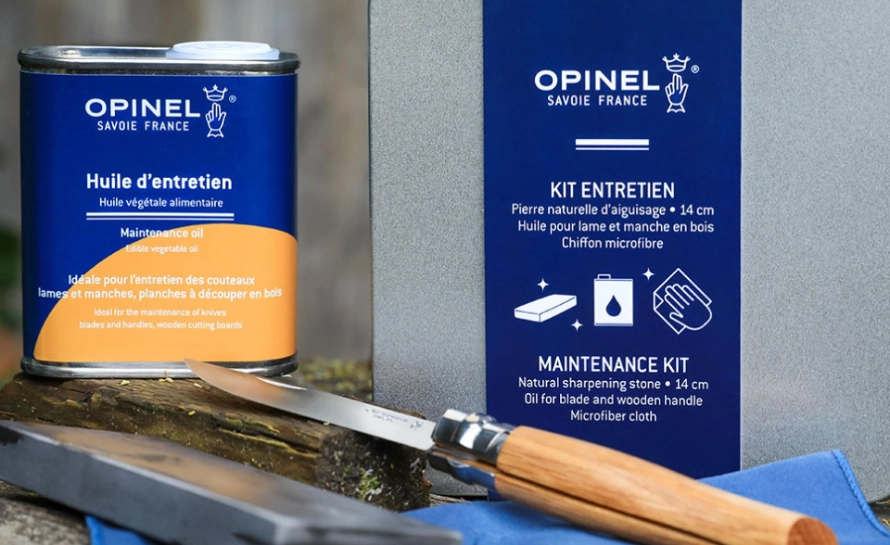
A sharp knife is safer and more pleasant to use than a dull one. Opinel knives come sharp from the factory, but they’ll dull with use like any other knife. You will need a sharpening stone. Not a honing steel (which realigns the edge), not a pull-through sharpener (which damages the blade). An actual stone.
Opinel makes a natural sharpening stone that works beautifully with their knives. Wet it, hold the blade at about 15-20 degrees, draw it across the stone a dozen times each side. Job done. If you want everything in one package, the knife care set includes a whetstone, oil, and a cloth. Makes maintenance dead simple. Sharpen your knives every few months if you’re cooking daily. More often if you’re using them heavily.
Washing: Hand Wash Only (Mostly)
Wooden-handled knives should be hand washed and dried immediately. Wood doesn’t like sitting in water or going through the dishwasher. The handle will split eventually. If you search online, you will find different ways to strengthen the wooden handle so it doesn’t budge.
The Intempora collection with polymer handles can go in the dishwasher if you must. But honestly, washing a knife takes thirty seconds. Just do it by hand to maintain them for longevity.
The Wooden Handle: A Living Material
Beechwood and olive wood handles will develop character over time. They’ll darken slightly. The grain will become more pronounced. If you handle them regularly, they’ll take on a lovely patina from the oils in your hands. This is normal and good. It means you’re using your knives properly. If the wood seems dry, occasionally rub it with food-safe mineral oil or beeswax. Keeps it from cracking and makes it feel lovely.
For the adventurous: custom handle modifications
If you’re feeling creative, there’s a whole community of people who modify Opinel handles into works of art. Hand-carved patterns, pyrography (wood burning), intricate designs, some of them are really gorgeous. People also customise the blades with etchings and decorative patterns. It’s particularly popular with the pocket knives, but you’ll see it on kitchen knives too. Worth searching online if you want to see what’s possible. Makes for a truly one-of-a-kind knife.
Chopping board
Use a wooden or plastic cutting board. Never glass or marble, they’re terrible for knife edges and make an awful noise anyway. Have at least two boards: one for raw meat/fish, one for everything else. This isn’t fussy French perfectionism; it’s basic food safety.
The real value of French kitchen knives
An Opinel paring knife costs around £8-12. A chef’s knife, £25-40. A bread knife, £25-35. The Parallèle Trio set with three essential knives? Around £80. Compare this to department store “professional” knife sets at £150-300 (often mediocre quality despite the marketing), or a single Japanese chef’s knife starting around £170-250 and easily reaching £400-600 for premium models. German knife sets typically run £250-500 for a basic collection, with premium sets costing significantly more.
Opinel isn’t cheap because it’s worse. It’s affordable because the company has been making knives for 134 years in the same factory with efficient production. They’re not spending fortunes on marketing or creating artificial prestige. You get French-made knives with quality steel, comfortable handles, and proper sharpness for a fraction of what you’d pay for comparable quality elsewhere.
And after you’ve used Opinel French kitchen knives for a year, you’ll probably buy more. Not because the first ones failed but because you’ll fall in love with it and want more options. A bread knife to go with your chef’s knife. A Santoku for fish prep. A smaller paring knife for delicate work.
The value isn’t just the initial price. It’s that these knives last decades with basic care. I’ve got Opinel knives I’ve used almost daily for five years. They’re still sharp, still comfortable, still doing their jobs brilliantly.
Building your French kitchen knife collection
If you’re starting from nothing
Buy the kitchen essentials set with paring knife, serrated knife, vegetable knife, and peeler. This covers 90% of French cooking prep work. Then add a chef’s knife when you’re ready to invest more. The Parallèle Trio gives you paring, chef’s, and carving knives, everything you need for proper cooking.
If you already have decent knives
Add the specialist ones that match how you cook: If you bake regularly, get the bread knife. Cook a lot of fish? A carving knife makes life easier. Want something lovely for your cheeseboards use? The No.6 olive wood pocket knife is beautiful. Cook with chestnuts? The chestnut knife is properly clever.
Don’t forget maintenance
When you buy your knives, buy the sharpening stone or care set at the same time. Sharp knives are useless if you can’t keep them sharp.
Final toughts
I’ve been using Opinel knives for years now, from that chestnut knife at the festival to my daily paring knife that gets more use than anything else in the kitchen. They’re not flashy. They don’t come in fancy boxes. But they’re properly good knives that happen to be affordable.
The real charm of Opinel French kitchen knives, is that they’re designed for actual cooking, and they look fantastic. Sharp enough for precision work, comfortable enough for extended prep, durable enough to hand down. That wooden handle develops character over time. The blade holds its edge if you treat it right.
Now I’m curious, what’s your experience with French knives? Do you have a favourite Opinel that’s been in your kitchen for years? Or are you thinking about making the switch from whatever you’re currently using? Drop a comment below. I’d love to hear what’s working (or not working) in your kitchen.
Now go cook something properly French!
Just so you know, a few links here earn us a commission. Doesn’t cost you anything extra, and we only link to things that are actually worth your time.