Lyon
Lyon: France’s capital of gastronomy
Lyon has 2,000 years of history layered into steep hills and Renaissance streets, a food scene that puts most European cities to shame, and the kind of lived-in authenticity that’s become rare in major French cities.
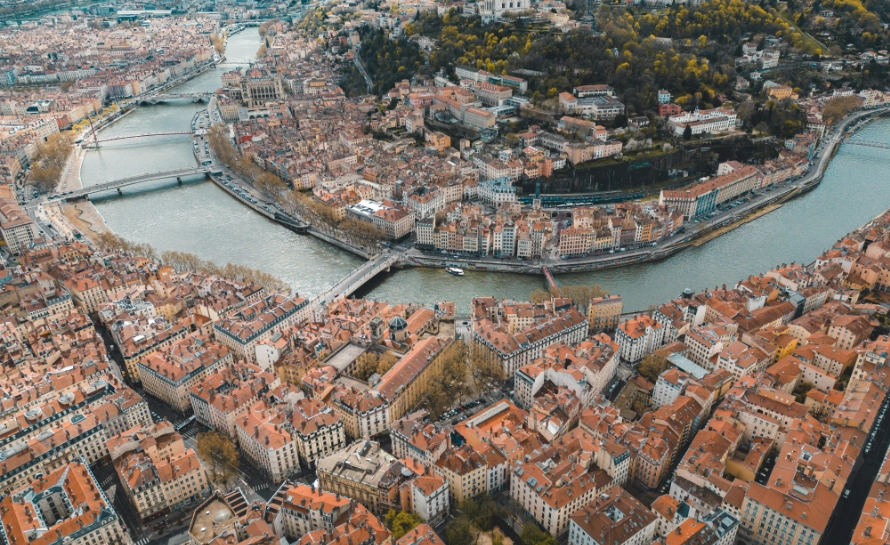
France’s third-largest city sits at the confluence of the Rhône and Saône rivers, wedged between two hills, Fourvière to the west and Croix-Rousse to the north. That geography made it a natural crossroads for trade routes stretching back to Roman times. And somehow it still feels like a real city where actual people live, not just a museum piece for tourists.
The history of Lyon: from Roman capital to silk centre
Lugdunum: the Roman beginning
The Romans founded Lugdunum in 43 BCE, recognising what the terrain offered. Two major rivers meeting at a defendable hilltop position? Perfect for controlling Gaul. The Roman proconsul Lucius Munatius Plancus established the colony, and within decades it became the capital of three Gallic provinces.
At its peak, Lugdunum covered 350 hectares with over 30,000 residents, twice the size of Pompeii. The city had everything a major Roman settlement needed: forum, amphitheatre, odeon, aqueducts, and temples. More importantly, it sat at the centre of the Via Agrippa road network, connecting the Atlantic coast to the Mediterranean. France’s major highways still follow those Roman routes today.
Early Christian Lyon and medieval trade
The city’s fortunes waxed and waned over the centuries. In 177 CE, Christian persecution saw 48 martyrs killed, including Lyon’s first bishop, Saint Pothin, and Saint Blandine. Twenty years later, a succession war between rival emperors left the city damaged, and it never quite recovered its Roman prominence. Medieval Lyon became a major trade hub again by the 11th century. Its position between northern and southern Europe made it indispensable for merchants.
The Renaissance: banking and commerce
But the Renaissance brought real transformation. In 1464, King Louis XI established commercial fairs that attracted Italian bankers and merchants. These weren’t small affairs, Lyon’s fairs became some of the most important in Europe. The Italian influence shows in Vieux Lyon’s architecture. Bankers built grand townhouses combining French and Italian styles into something distinctly “Lyonnais”.
Lyon’s silk industry: global capital of weaving
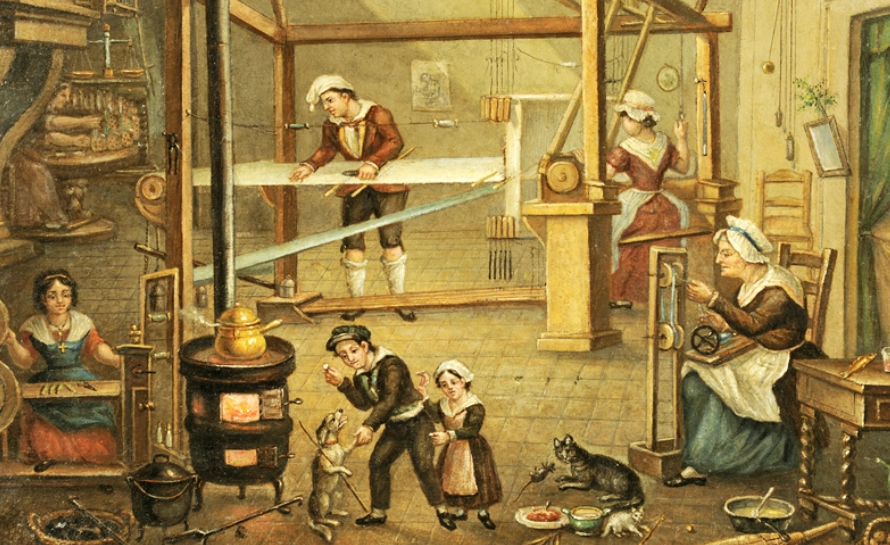
Then came silk. Louis XI set up Lyon’s first silk manufacture in 1466, and by 1540, François I granted the city a monopoly on silk production. Every luxury silk good from Italy or Asia travelling the Silk Roads had to pass through Lyon’s warehouses. By the 17th century, the city had over 10,000 silk looms. Lyon became the global capital of silk weaving, a position it held for centuries.
Architecture built for silk workers
The industry created its own architecture. In Croix-Rousse, tall buildings with large windows were built specifically for silk looms. The famous “traboules”, covered passageways connecting buildings, allowed silk workers to transport delicate fabrics through the streets without exposing them to weather. Many of these secret passages still exist, threading through Vieux Lyon and Croix-Rousse like a hidden network.
The Canuts revolt: early labour movement
The silk industry also created social tension. In 1831, the Canuts (silk workers) staged a revolt over exploitative wages, one of the first major labour uprisings in industrial Europe. Their slogan, “Vivre en travaillant ou mourir en combattant” (Live working or die fighting), resonates even now.
Lugdunum: Roman museum and ancient theatres
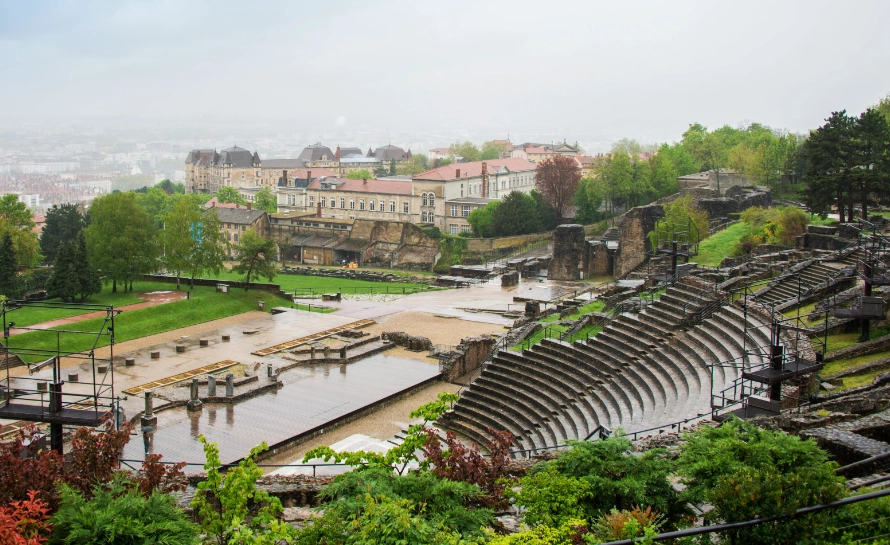
Just behind the Basilique Notre-Dame de Fourvière sit two remarkably preserved Roman theatres and the Lugdunum museum, offering a direct connection to Lyon’s origins as the capital of Roman Gaul. What’s brilliant is that they’re still used today. Every summer during the Les Nuits de Fourvière festival, the Grand Théâtre hosts concerts, theatre performances, and dance shows.
The Lugdunum Museum sits adjacent to the theatres, cleverly built into the hillside so it doesn’t obstruct the ruins. Inside you’ll find artifacts excavated from Roman Lyon: mosaics depicting chariot races and mythological scenes (the Circus Mosaic is particularly impressive), bronze statues, ceramics, coins, jewellery, and everyday objects. The displays explain Lyon’s role as capital of the Three Gauls, the road networks that made it central to Roman administration, and a digital scale model shows Lugdunum’s development through different periods.
La Maison des Canuts: The silk workers’ museum
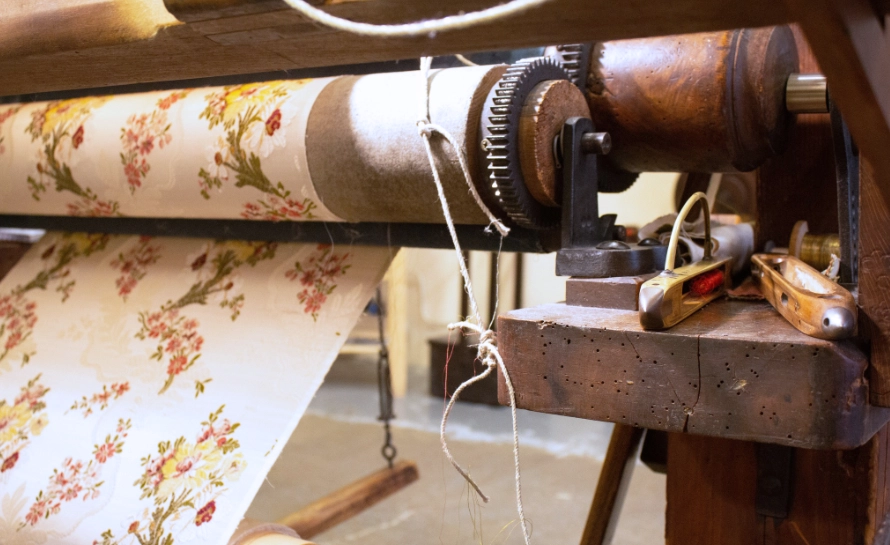
La Maison des Canuts tells the story of Lyon’s silk workers through working looms, historical artifacts, and demonstrations that bring the industry to life. This small museum run by former silk workers and their descendants preserves the craft and social history that shaped Lyon for centuries.
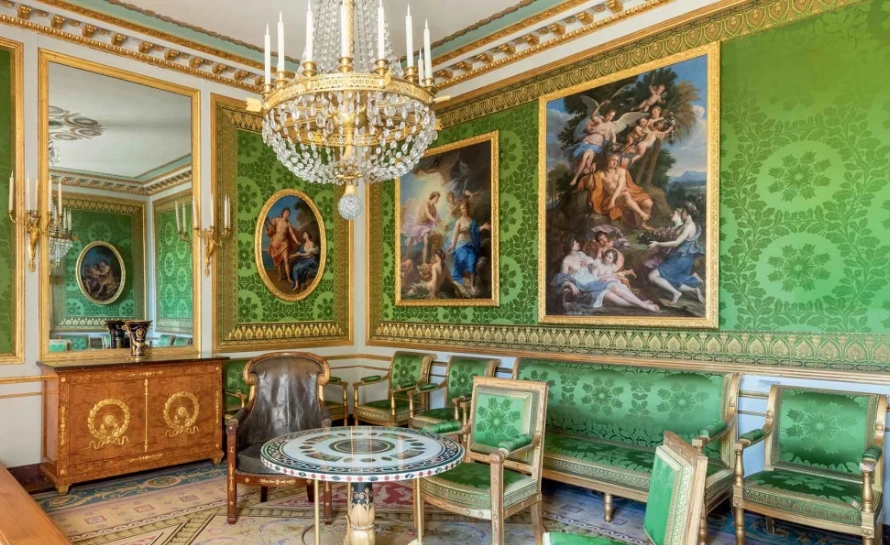
Versailles, the Élysée, and the White House
Lyon silk still furnishes some of the world’s most important buildings. When the Palace of Versailles undertakes restoration work, they commission Lyon silk workshops to recreate 17th and 18th-century fabrics using traditional techniques. The same applies to the Élysée Palace (the French president’s residence), various châteaux throughout France, and even the White House in Washington. These aren’t cheap reproductions, workshops use historical patterns, period-appropriate looms, and the same weaving methods that produced the originals.
A handful of Lyon companies specialize in this work, including Prelle (founded 1752) and Tassinari & Chatel (founded 1680), both still operating in or near Lyon. They maintain archives of historical patterns going back centuries, allowing them to recreate exact replicas of fabric that might have hung in Marie Antoinette’s chambers or Napoleon’s throne room.
Louis XIV and “À la Mode Française”
Louis XIV understood silk’s political power. The Sun King made French fashion, and by extension, Lyon silk, synonymous with luxury and sophistication across Europe. His finance minister Jean-Baptiste Colbert regulated silk production in 1667, establishing quality standards and worker protections that elevated Lyon’s reputation even further.
Under Louis XIV, wearing Lyon silk became a statement. European aristocrats wanted French fashion, which meant French silk. The phrase “à la mode française” became shorthand for elegance and refinement. Lyon weavers created increasingly elaborate patterns, damasks, brocades, lampas, that other European silk centres couldn’t match. This reputation, built over centuries, is why restoration projects still turn to Lyon when authenticity matters.
Vieux Lyon: exploring the old town
Renaissance architecture and UNESCO status
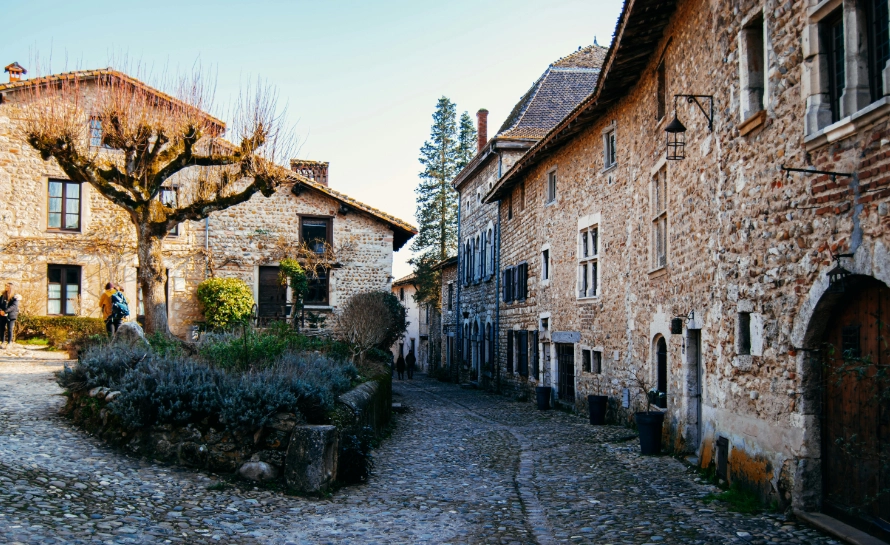
Vieux Lyon sprawls along the right bank of the Saône at the foot of Fourvière Hill. It’s one of Europe’s largest Renaissance districts, a maze of cobbled lanes lined with ochre and terracotta townhouses from the 15th and 16th centuries. The neighbourhood earned UNESCO World Heritage status in 1998, and rightly so.
Hidden courtyards and architectural details
The architecture here tells stories. Italian bankers built these grand houses during Lyon’s Renaissance boom. Inner courtyards hide behind heavy doors, often with elaborate staircases and loggias. Some courtyards are open to the public, push open doors marked with a small plaque and you’ll find yourself in spaces that haven’t changed much in 400 years.
The Traboules: Lyon’s secret passages
Then there are the “traboules”. About 40 of these covered passageways are open to visitors in Vieux Lyon. The most famous is at 54 rue Saint-Jean, Lyon’s longest traboule, winding through multiple courtyards. The Cour des Voraces in Croix-Rousse is spectacular, a six-storey passage with monumental staircases that feels more like a stage set than a pedestrian route. The Rose Tower traboule at 16 rue du Boeuf has a pink tower visible from inside the courtyard, hence the name.
How to find the traboules
Look for buildings marked with a small lion’s head plaque on yellow background, that’s the sign you can enter. But remember, people live in the buildings above these passages. Keep noise down, don’t linger too long, and treat them with respect.
Cathédrale Saint-Jean-Baptiste
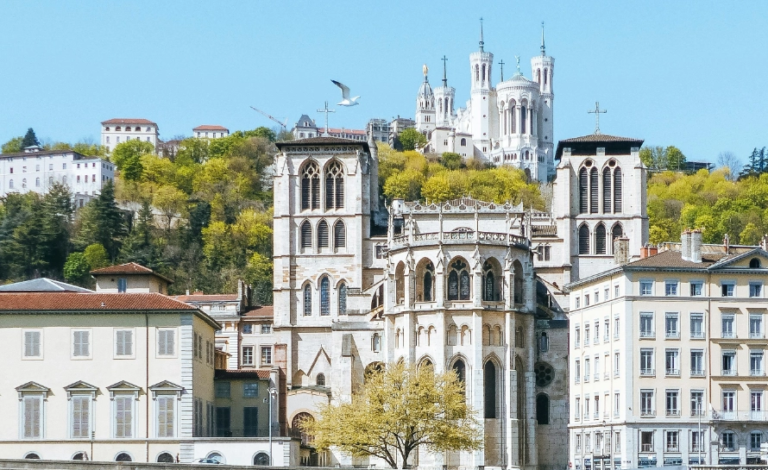
The Cathédrale Saint-Jean-Baptiste dominates one end of Vieux Lyon. Construction started in the 12th century and dragged on for 300 years, which explains why it mixes Romanesque and Gothic styles. The astronomical clock inside dates from the 14th century and still works, showing religious feast days alongside astronomical data. It chimes at noon, 2pm, 3pm, and 4pm with a small automated show featuring angels, saints, and the Annunciation.
Presqu’île: Lyon’s city centre
Understanding the peninsula
The Presqu’île (peninsula) sits between the Rhône and Saône, a long strip of land that forms Lyon’s beating heart. This is 19th-century Lyon, wide boulevards, grand squares, upmarket shops, and civic buildings that project serious municipal confidence.
Place Bellecour
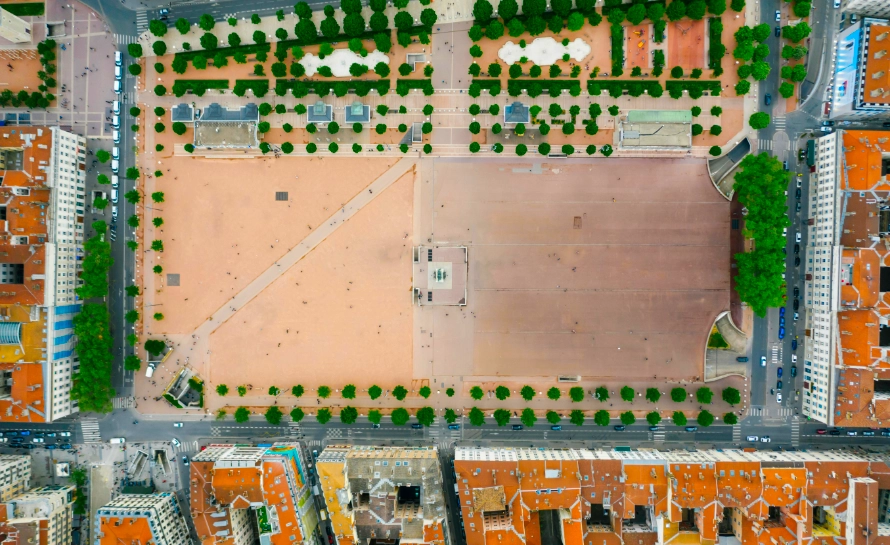
Place Bellecour is massive, one of the largest pedestrian squares in Europe. It’s a bit bland architecturally, too much open space, too little going on, but it works as a meeting point and orientation landmark. A statue of Louis XIV on horseback sits in the centre, and locals use the square for markets, events, and as a shortcut between the shopping streets that radiate outward.
Shopping on Rue de la République
North of Bellecour, rue de la République runs straight up to Place des Terreaux. This is where Lyon does upmarket retail, international brands, French chains, the usual pedestrianised shopping street experience. But duck into the side streets and you’ll find independent boutiques, vintage shops, and the kind of places that remind you this is still France, not just another homogenised city centre.
Place des Terreaux
Place des Terreaux sits at the Presqu’île’s northern end, flanked by the Hôtel de Ville (city hall) and the Musée des Beaux-Arts. The square’s fountain, designed by Frédéric Bartholdi (yes, the Statue of Liberty sculptor), depicts France as a female figure in a chariot drawn by four horses representing rivers. It’s properly dramatic, and at night when it’s lit up, quite something to see.
Croix-Rousse: the silk workers’ neighbourhood
The character of Croix-Rousse
Croix-Rousse rises north of the Presqu’île, a former working-class neighbourhood that’s gentrified but kept its edge. This was the Canuts’ territory, where silk workers lived and worked in tall buildings purpose-built for their craft. The neighbourhood still feels different from the rest of Lyon, bohemian, arty, slightly scruffy in a good way.
Croix-Rousse Market
Boulevard de la Croix-Rousse hosts a daily food market, one of Lyon’s busiest. It runs along the boulevard’s pedestrian section, stalls selling fruit, vegetables, cheese, charcuterie, flowers, and prepared foods. On Sundays it expands to fill the entire street. It’s properly local, not staged for tourists.
Lyon’s food scene: France’s gastronomic capital
Lyon calls itself France’s gastronomic capital, and whilst every French city makes similar claims, Lyon’s got the credentials to back it up. The city sits between Burgundy’s wines to the north, Beaujolais to the west, and the Rhône valley to the south. Premium ingredients arrive from all directions.
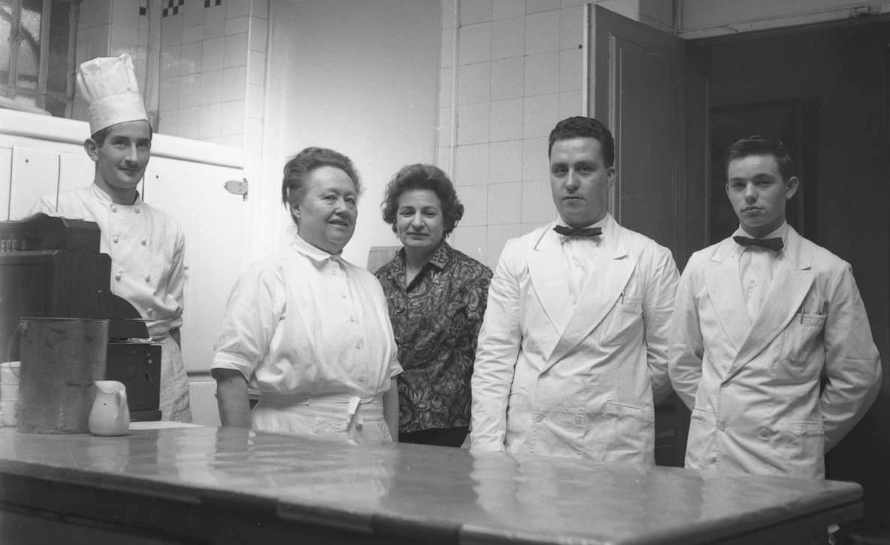
Then there’s Paul Bocuse, Lyon’s most famous chef, whose restaurant near the city held three Michelin stars for over 50 years until his death in 2018. He trained under Eugénie Brazier (La Mère Brazier), who in 1933 became the first woman to earn three Michelin stars. Lyon’s culinary tradition runs deep, this isn’t just modern foodie culture, it’s generations of serious cooking.
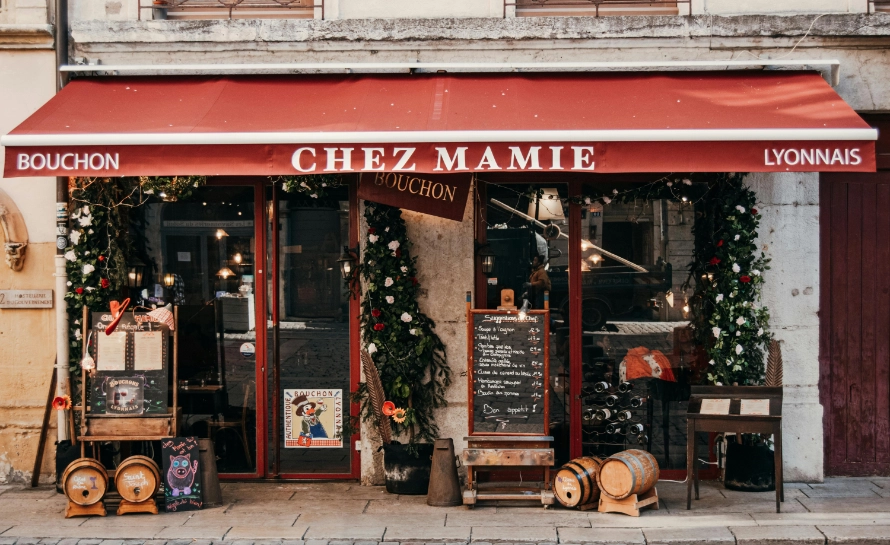
Bouchons: traditional Lyon restaurants
What makes a Bouchon authentic
Bouchons are Lyon’s unique contribution to French dining. These small, unpretentious restaurants serve traditional Lyonnais dishes in a convivial atmosphere. The name supposedly comes from the bunches of straw (bouchons) that tavern keepers once hung outside to indicate they served food.
Bouchons emerged in the 18th century to feed silk workers. Local women, nicknamed “mères” (mothers), would prepare hearty, affordable meals. By the 20th century, some of these mères had gained serious reputations.
Official Bouchon certification
Only 20 restaurants currently hold official “Authentique Bouchon Lyonnais” certification, they’re evaluated regularly to ensure they maintain traditional standards. You can find the complete list on the official Lyon bouchons website.
Classic Bouchon dishes
Salade lyonnaise
Frisée lettuce with lardons, a poached egg, and croutons
Quenelles
Pike or chicken dumplings in Nantua sauce (crayfish-based)
Andouillette
Tripe sausage. Not for everyone, but beloved by those who are into it
Tablier de sapeur
Breaded, fried tripe
Cervelle de canuts
Fresh cheese mixed with herbs, shallots, and vinegar. Translates as “silk workers’ brains
The Bouchon experience
The portions are generous, the wine flows, and the atmosphere tends towards noisy and packed. This isn’t refined dining, it’s gutsy, flavourful food that’s been feeding Lyonnais for centuries.
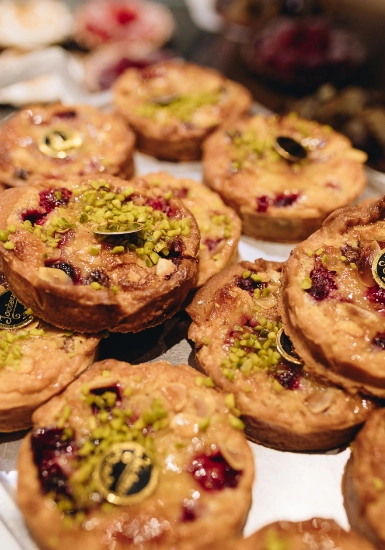
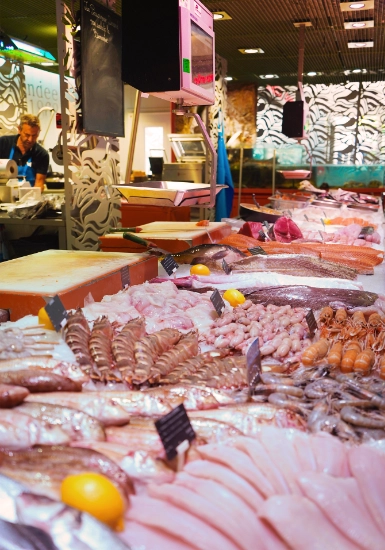
Les Halles de Lyon Paul Bocuse
Lyon’s premier food market
This covered market in the Part-Dieu district is proper food heaven. Named after Paul Bocuse, it houses about 60 vendors selling the finest produce Lyon has to offer. Les Halles de Lyon Paul Bocuse has cheese mongers, butchers, fishmongers, pastry chefs, chocolatiers, wine merchants, every stall represents decades of expertise.
History of Les Halles
The market opened in 1971, though Lyon’s had covered markets since 1859. The current building was renovated in the early 2000s, creating a modern space that still feels authentically French. It’s not a tourist attraction pretending to be a market; it’s a working market that tourists happen to love.
Best stalls at Les Halles
Highlights include Mère Richard for perfectly aged Saint-Marcellin cheese, the oyster stalls (best eaten early morning with cold white wine), Bresse chickens from specialist poultry vendors, and an overwhelming selection of charcuterie. Several small restaurants operate within the market, including bouchon-style places where you can eat what you’ve just been admiring at the stalls.
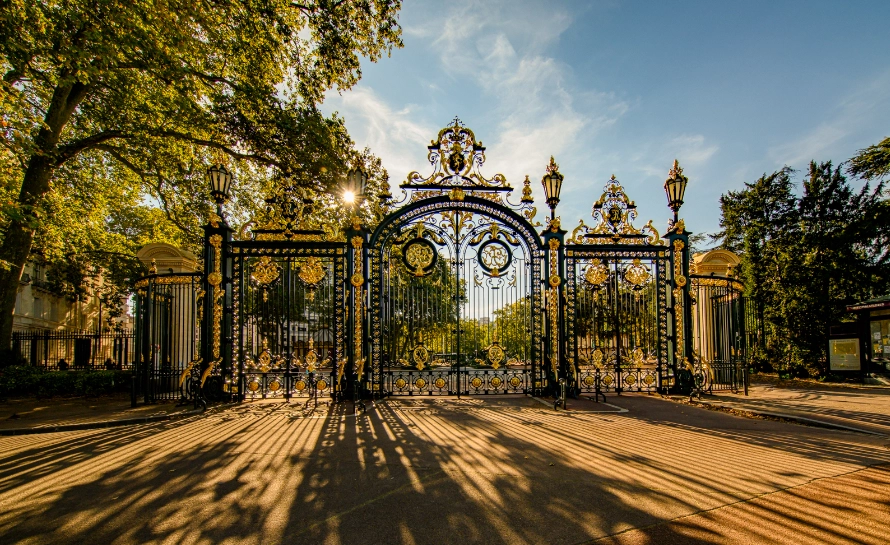
Parc de la Tête d’Or: Lyon’s green lung
Europe’s largest urban park
North of the Rhône sits Parc de la Tête d’Or, a massive 117-hectare park that’s been Lyon’s favourite green space since 1857. It’s one of the largest urban parks in France, and it’s completely free to enter. The park has everything, a large lake where you can rent pedal boats, botanical gardens with over 15,000 plant species, rose gardens that are spectacular in June, and sprawling lawns where Lyonnais come to picnic, jog, or just collapse in the sun.
The zoo and botanical gardens
There’s also a free zoo, which is brilliant if you’ve got kids. It’s not enormous, but it’s well-maintained with African plains animals, primates, and a rather impressive collection of pink flamingos. The botanical gardens include greenhouses dating from the 19th century, the tropical greenhouse is particularly stunning, all Victorian ironwork and exotic plants.
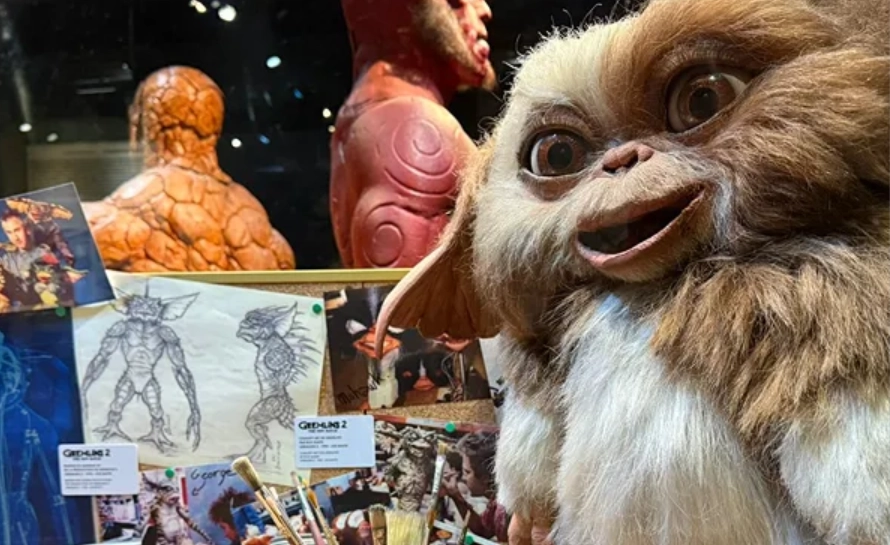
Musée Cinéma & Miniature
The Musée Miniature et Cinéma is one of those places you might walk past without realising what you’re missing. It’s actually two museums in one, half dedicated to incredibly detailed miniature scenes, half to special effects and props from major films.
It’s two collections in one: hyperrealistic miniature rooms at 1:12 scale where every tiny detail is perfect (newspapers, light switches, aged patina on furniture), and special effects props from major films like Alien, Perfume, and Mrs. Doubtlife. The miniatures are mind-bending, you’ll press your nose against the glass trying to work out how artist Dan Ohlmann achieved such detail. The cinema section shows actual mechanical creatures, prosthetic makeup, and miniature sets, explaining how practical effects worked before CGI. You can see everything in 90 minutes it’s worth it.
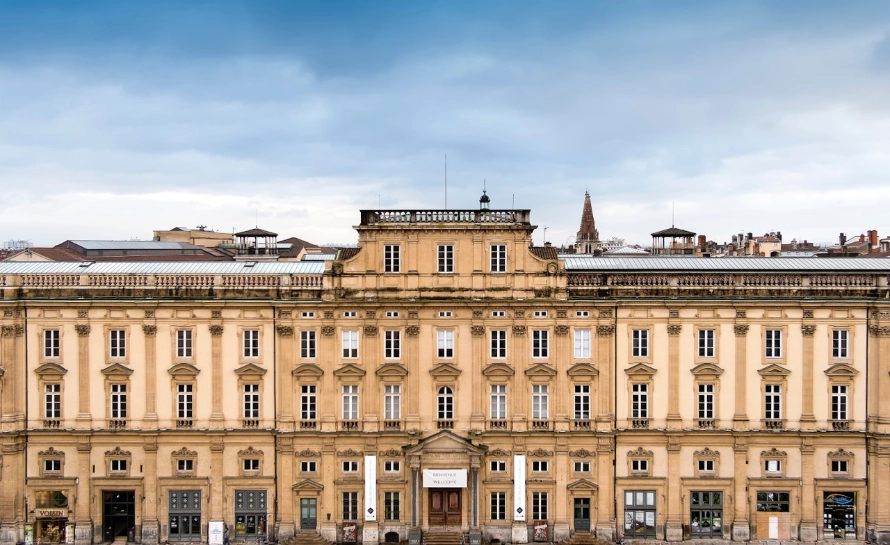
Musée des Beaux-Arts
The Musée des Beaux-Arts occupies a stunning 17th-century former Benedictine abbey on Place des Terreaux. It’s France’s second-largest art museum after the Louvre, but somehow it never feels overwhelming. The building itself is worth the visit—a vast stone structure built around a peaceful central courtyard filled with sculptures and a garden where you can catch your breath between galleries.
The museum covers an impressive range: Egyptian antiquities, Greek and Roman artifacts, European paintings from the 14th to 20th centuries, and an excellent sculpture collection. You’ll find works by Rembrandt, Rubens, Delacroix, Monet, Renoir, Gauguin, and Picasso. The 19th-century French painting collection is particularly strong, and the modern art galleries on the second floor showcase works by artists like Francis Bacon and Jean Dubuffet.
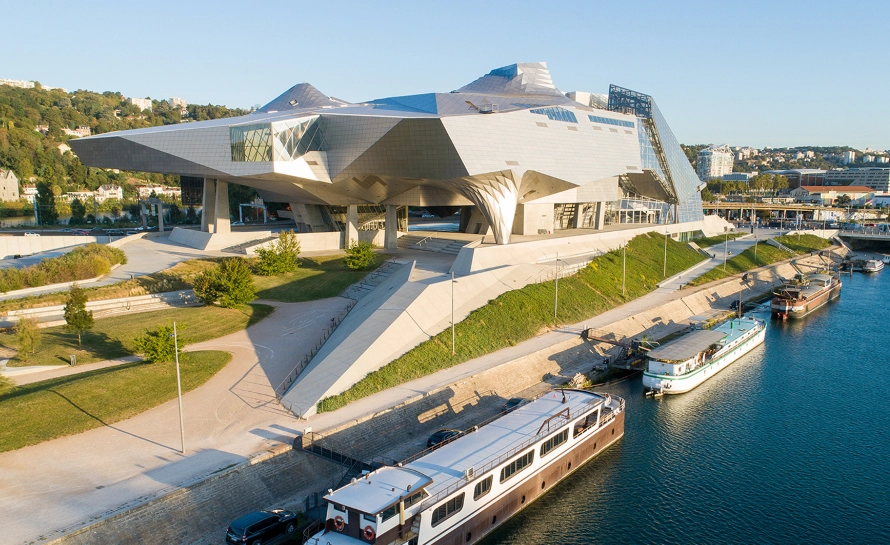
Musée Des Confluences
At the southern tip of the Presqu’île, where the Rhône and Saône finally merge, sits the Musée des Confluences. The building alone is worth seeing, a striking contemporary structure of glass, concrete, and steel that looks like a spaceship landed at the water’s edge. Opened in 2014 after years of construction delays, it’s become one of Lyon’s most recognizable modern landmarks.
This is a natural history and anthropology museum on a grand scale. The permanent exhibitions explore massive themes: the origins of the universe, the evolution of life on Earth, human societies, and what it means to be mortal. You’ll find dinosaur skeletons, meteorites, taxidermied animals from around the world, artifacts from ancient civilizations, and contemporary cultural objects all woven together.
The displays are ambitious and sometimes spectacular, a full mammoth skeleton here, a Siberian permafrost chamber there, Egyptian sarcophagi alongside Aboriginal Australian artifacts. It’s not your traditional dusty museum. Everything’s presented with dramatic lighting, multimedia installations, and modern exhibition design.
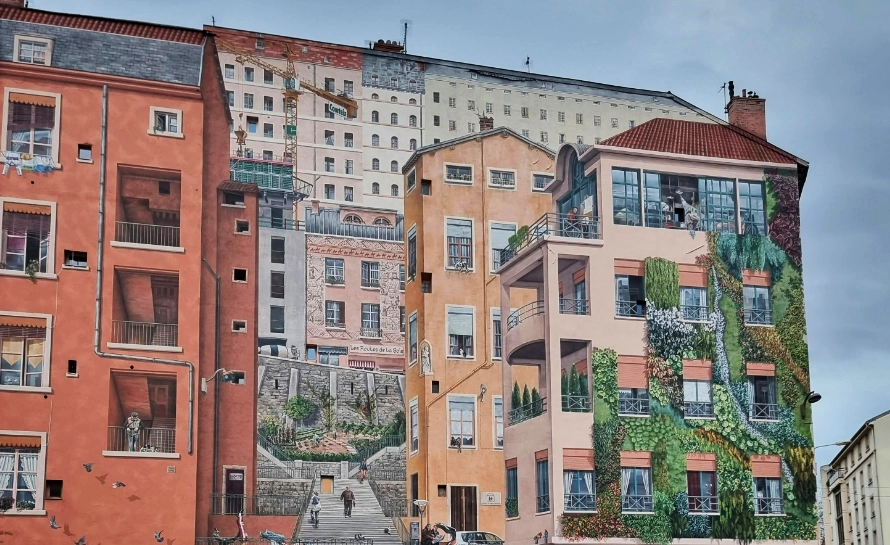
Mur des Canuts, Lyon’s famous trompe-l’oeil
Lyon has over 100 murals scattered across the city, turning entire neighbourhoods into open-air galleries. The most famous is the Mur des Canuts. Created in 1987 and updated several times since, this massive trompe-l’oeil covers 1,200 square metres of building facade. It depicts daily life in the Croix-Rousse neighbourhood, residents on balconies, people climbing stairs, shop fronts, even a tribute to the silk workers who once dominated the area. The detail is extraordinary. From certain angles, the painted windows, shutters, and architecture look completely three-dimensional.
What to see and do in Lyon
- Vieux Lyon and the Traboules
Wander Renaissance streets and discover secret covered passageways once used by silk workers. About 40 traboules are open to the public. Look for lion’s head plaques on yellow backgrounds marking entrances. - Fourvière Hill and Basilica
Take the funicular up to the brilliant white basilica with its stunning mosaics and gilt interior. The views across Lyon from the hill are spectacular. - Roman Theatres and Lugdunum Museum
Two remarkably preserved Roman theatres dating from 15 BCE, still used for summer concerts. The adjacent museum houses mosaics, sculptures, and artifacts from Roman Lyon. - Les Halles de Lyon Paul Bocuse
Lyon’s premier food market with 60 vendors selling cheese, charcuterie, oysters, and pastries. Open Tuesday-Saturday 7am-7pm, Sunday 7am-1pm. Arrive early on weekends. - Eat in a Bouchon
Try Lyon’s traditional restaurants serving quenelles, salade lyonnaise, and andouillette. Only 20 hold official certification. Expect hearty portions and flowing wine. - Musée des Beaux-Arts
France’s second-largest art museum with collections spanning Egyptian antiquities to Picasso. Housed in a stunning 17th-century former abbey. - La Maison des Canuts
Small museum in Croix-Rousse with working Jacquard looms and demonstrations showing how silk was woven. Essential for understanding Lyon’s silk heritage. Open Tuesday-Saturday, €7.50. - Parc de la Tête d’Or
Massive 117-hectare park with lake, botanical gardens, and free zoo. Perfect escape from the city centre. Accessible via metro (Masséna stop). - Place Bellecour
One of Europe’s largest pedestrian squares with a Louis XIV statue. Good orientation point and often hosts markets and events. - Croix-Rousse Market
Daily food market along Boulevard de la Croix-Rousse selling fresh produce, cheese, and charcuterie. Expands on Sundays. Properly local, not touristy. - Musée Miniature et Cinéma
Hyperrealistic miniature rooms at 1:12 scale plus special effects props from major films like Alien. At 60 rue Saint-Jean in Vieux Lyon. - Cathédrale Saint-Jean-Baptiste
Gothic and Romanesque cathedral in Vieux Lyon with a 14th-century astronomical clock that chimes at noon, 2pm, 3pm, and 4pm with an automated show. - Mur des Canuts
Lyon’s most famous trompe-l’oeil mural covering 1,200 square metres in Croix-Rousse. Depicts daily neighbourhood life with extraordinary three-dimensional detail. Free, always accessible. - Musée des Confluences
Striking contemporary building at the confluence of the Rhône and Saône. Natural history and anthropology museum with dinosaur skeletons, meteorites, and cultural artifacts. Open Tuesday-Sunday, €9. - La Mère Brazier Restaurant
Dine at Eugénie Brazier’s original restaurant, now run by Michelin-starred chef Mathieu Viannay. Her classic dishes from 1921 remain on the menu alongside modern interpretations.
Practical information for visitors
- Getting there
Lyon is two hours from Paris by TGV, 90 minutes from Geneva, three hours from Marseille. Lyon-Saint Exupéry Airport is 30 minutes to Part-Dieu station via Rhône Express tram. The city’s well-connected by high-speed rail from across France and Europe. - Getting around
The TCL network (metro, tram, buses, funiculars) makes transport straightforward. Most main areas are walkable, Vieux Lyon to Presqu’île is 15 minutes on foot. Buy individual tickets (€1.90) or the Lyon City Card for unlimited transport plus museum entry. On 8 December during Fête des Lumières, transport is free from 4pm. - Accommodation
Stay in Vieux Lyon or Presqu’île for easy access to major sights and restaurants. Croix-Rousse offers a more local, bohemian feel. Part-Dieu is modern and business-focused but well-connected. Expect €100-150 for mid-range hotels. Book well ahead for the Fête des Lumières in December when prices surge.