Layered Strawberry Dessert
Layered Strawberry Dessert
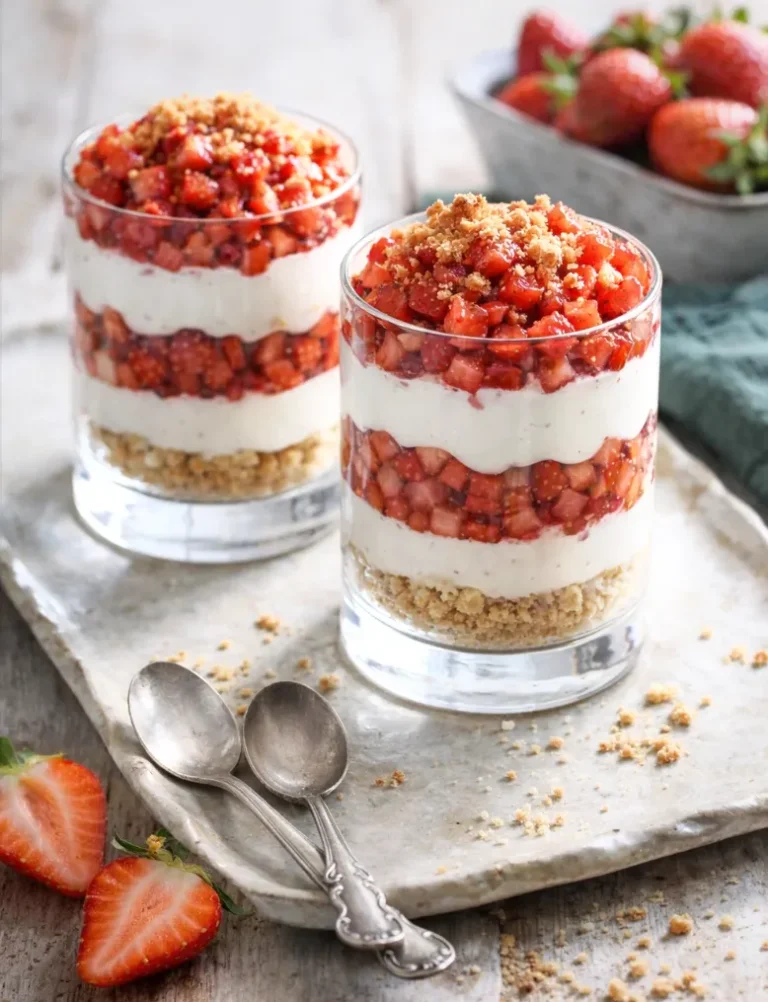
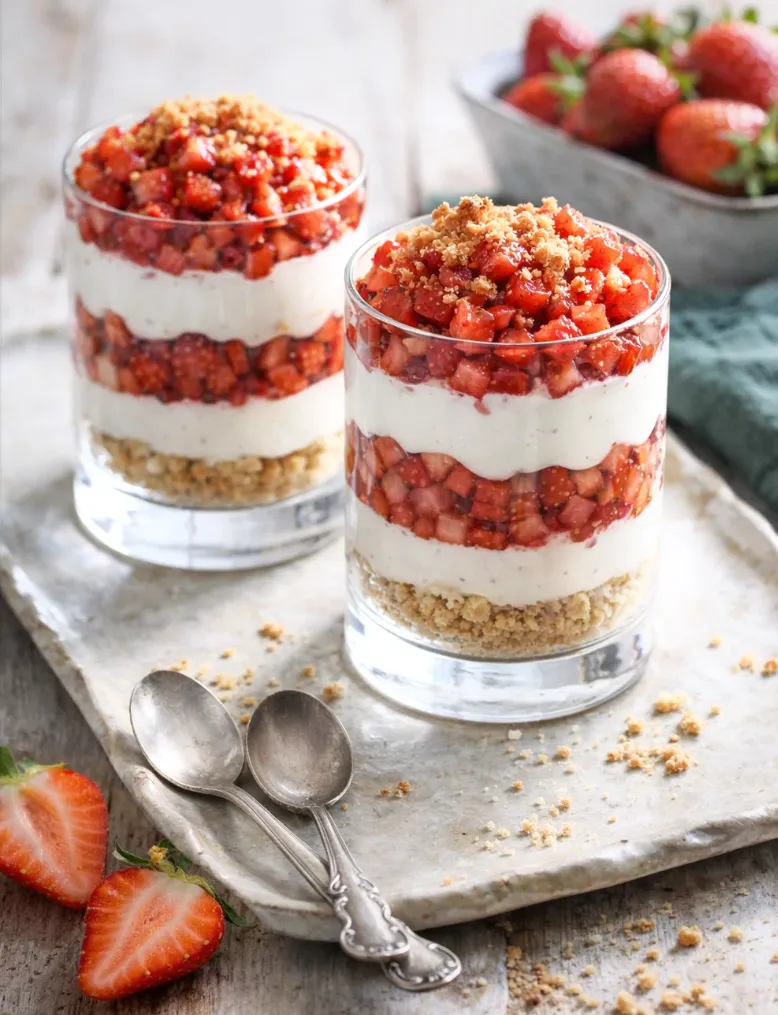
Layers of buttery Breton shortbread, silky mascarpone cream, and fresh strawberries. The biscuits stay just crisp enough to give you texture against the cloud-light cream, and the strawberries add a sharp, fresh hit that cuts through the richness. Easy to make and perfect when you've got people coming round!


Ingredients

For the base
- 200 gr sablés bretons or other butter shortbread cookies
For the mascarpone cream
- 250 gr mascarpone
- 200 ml double cream very cold
- 30 gr icing sugar
- 1 vanilla pod or 1 tsp vanilla extract
For the strawberry layers
- 600 gr strawberries
Equipment
- 6 small clear glasses 200-250ml capacity
- food processor
Instructions
- 1. Make the mascarpone creamWhip the very cold heavy cream with the powdered sugar and vanilla using an electric mixer on medium speed. You're after stiff peaks, about 3-4 minutes. It should hold its shape when you lift the whisk.Add the mascarpone in three batches, folding gently with a spatula or on low speed. Don't overwork it or you'll knock out the air. Stop when it's smooth and creamy. Set aside while you prep everything else.
- 2. Prep the biscuits and strawberriesCrush the sablés bretons (or other biscuits) roughly, either put them in a freezer bag and bash with a rolling pin, or pulse them briefly in a food processor. You want a mix of crumbs and chunky bits for texture, not fine dust.Hull and the strawberries into a fine brunoise (tiny cubes, about 3-4mm) for the layers and topping.
- 3. Assemble the layered strawberry dessertStart with 2-3 tablespoons of crushed biscuits in the bottom of each glass. Press down gently to settle them.Add 2 tablespoons of mascarpone cream, then layer with the strawberries.Repeat and end with whatever you like best on top!
- 4. ServeYou can serve these immediately, or chill for 20-30 minutes if you prefer them cold. They're delicious either way, at room temperature, the cream is softer and more mousse-like; chilled, it firms up slightly and feels more refreshing.
Notes
- If you can’t find sablés bretons, use any good buttery shortbread or sugar cookies. Avoid anything too hard or it won’t soften in the cream.
- The mascarpone helps the whipped cream hold its shape for several hours. If you do want to make these ahead, they’ll keep in the fridge for up to 2 hours without the biscuits getting soggy.
- Strawberry swap: Out of season, swap strawberries for raspberries, blackberries, or diced peaches in summer. The brunoise works with any soft fruit that dices cleanly.
- You can add a tablespoon of Cointreau or Grand Marnier in the cream to add depth. Or macerate the diced strawberries in a splash of orange liqueur for 10 minutes before layering.
- Anything clear as serving glasses works, wine glasses, tumblers or mason jars. The layers are the point, so make sure people can see them.
- If you want the biscuits to stay extra crispy, assemble and serve within 30 minutes. For softer, cake-like biscuit layers, let them sit for a few hours.
✱ Drink pairing
About this recipe
The verrine, literally “small glass”, became wildly fashionable in French restaurants in the 1990s and hasn’t really left. Originally a way for chefs to show off precise plating in a glass instead of on a plate, it quickly migrated to home kitchens because it’s dead easy and looks far more impressive than the effort involved.
Traditionally, verrines were savoury, think smoked salmon mousse, gazpacho or courgette feta appetizers, but sweet versions took over once pastry chefs realised you could layer creams, fruits, and biscuits without the structural headaches of actual patisserie. No piping bags, no precise temperature control, just good ingredients in the right order.
The sablé breton is a Brittany classic, a rich, crumbly shortbread made with salted butter and egg yolks that’s been around since the 1900s. Originally a thick biscuit sold at markets and fairs, it’s now found in every decent French boulangerie. The high butter content (often 50% butter to flour) means it holds up well in cream-based desserts without dissolving into paste, which is exactly what you want here.
The brunoise cut (tiny, uniform dice) is classic French knife work, but it’s just a precise way of saying “chop them small and neatly.” Worth the extra minute for how it looks on top.
Share your feedback and spread the love!
If you try this Layered Strawberry Dessert recipe, I’d love to hear how it turns out! Leave a ★★★★★ rating and your thoughts in the comments, it helps fellow food lovers discover this recipe too. Snap a photo and tag me @frogsinbritain on Instagram if you’re sharing your bake online. Don’t forget to save this recipe to Pinterest so you’ll always have it handy for your next French-inspired meal!
Disclosure: This post contains sponsored content and/or affiliate links. If you make a purchase through these links, I may receive a small commission at no extra cost to you. All opinions are my own!