La Brenne
France’s land of a thousand ponds (actually over 2,000)
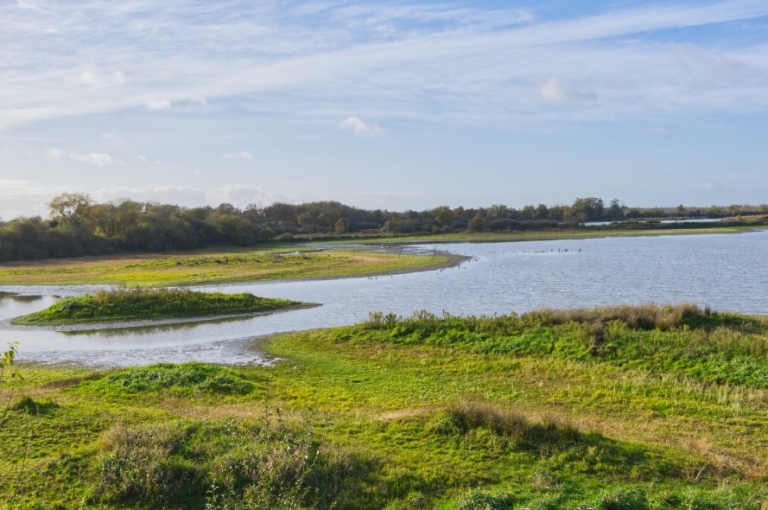
La Brenne sits in the Indre, about 40 kilometres west of Châteauroux. It’s called the “land of a thousand ponds,” which is underselling it, there are actually over 2,000 ponds scattered across 166,000 hectares of wetland, woodland, and farmland. This is France’s second-largest wetland after Champagne, and one of the most important in Europe for breeding and migratory birds.
Most British visitors have never heard of it. The French know it well, particularly birdwatchers, anglers, and anyone who appreciates proper countryside without crowds. It’s the place where you can walk for an hour and see three people, 47 species of birds, and more dragonflies than you knew existed.
The Parc Naturel Régional de la Brenne was established in 1982, but the landscape’s been shaped by humans since the 8th century when monks started digging ponds for fish farming. That tradition continues, La Brenne’s still one of France’s most important freshwater fish farming regions, producing about 800 tonnes annually.
It’s flat in the north, hilly in the south where it meets the Massif Central, and criss-crossed by the Creuse and Anglin rivers. The centre, what’s called La Grande Brenne, is a mosaic of water, reeds, heathland, and bocage (those lovely hedgerow-divided fields). This is where most visitors come, and for good reason. It’s stunning.
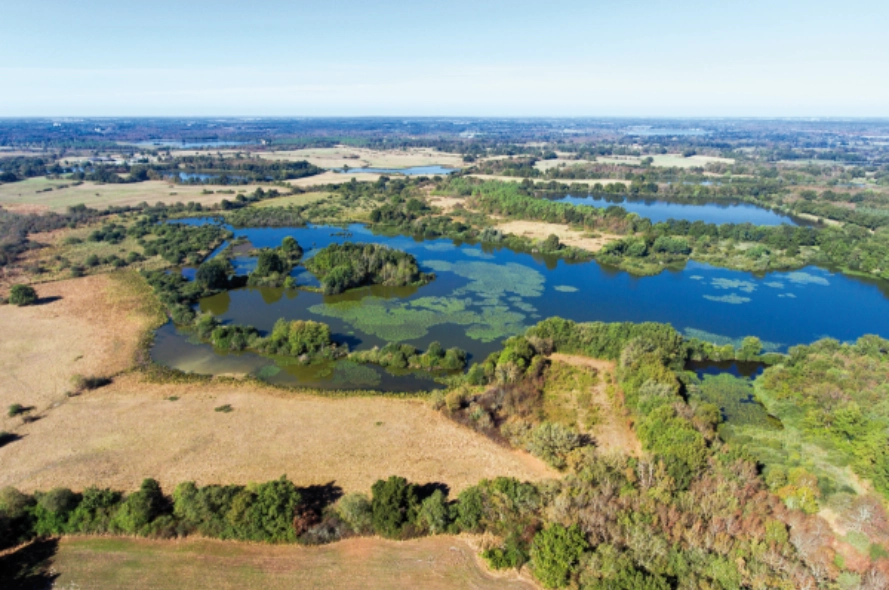
How medieval monks built a wetland
Legend has it that monks from Méobecq and Saint Cyran started landscaping the marshes in the 8th century. The original swampland was largely useless, too wet in winter, too dry in summer, soil too poor for crops. So they dug ponds, built dykes, created drainage systems.
By the 12th and 13th centuries, local lords and farmers had expanded the network. The goal was fish farming. With poor soil and unpredictable weather, fishing became more reliable than agriculture. The ponds were organized in chains, one feeding into the next, so water could be managed efficiently.
Every single pond was hand-dug or dammed. And they’re still managed the same way, using techniques that haven’t changed fundamentally in 800 years. Each autumn and winter, the ponds are drained to harvest the fish. The process, called “pêches d’étangs”, is so culturally significant it’s recognized by UNESCO as intangible cultural heritage.
The monks knew what they were doing. They created one of Europe’s most biodiverse wetlands entirely by accident while trying to make a living.
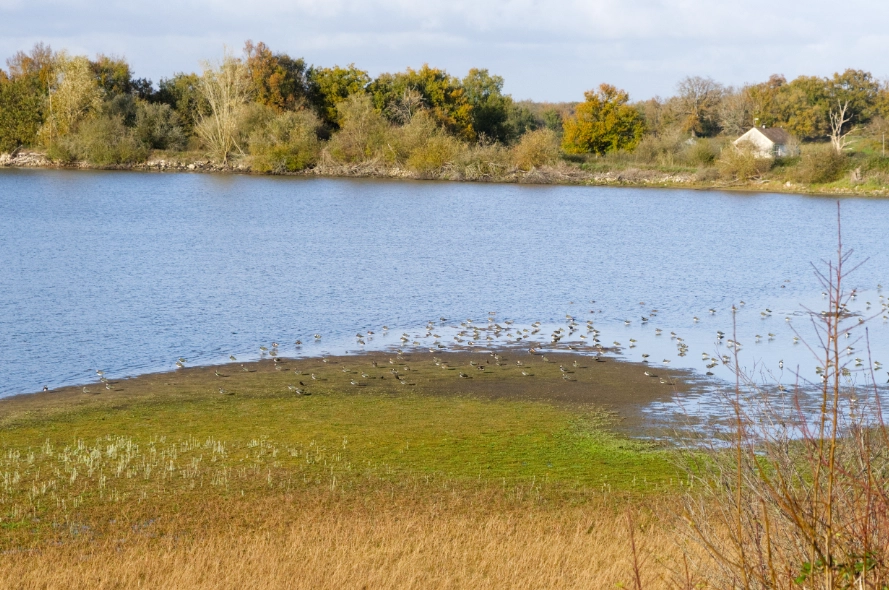
The birds: 267 species and counting
La Brenne is famous for the variety of birds. Over 2,300 animal species live here, but it’s the 267 bird species that draw the crowds, or rather, the small number of people who count as crowds in La Brenne.
The star attractions are water birds. Purple herons, black-necked grebes, Eurasian bitterns, night herons. During migration season, thousands of birds stop over. Common cranes arrive in autumn, watching them come in to roost at dusk is properly spectacular. They fly in huge flocks, calling to each other with that beautiful bugling sound, then settle in the shallows for the night.
In early morning you might see deer at the water’s edge. By mid-morning the herons are hunting. Bitterns hide in the reeds, fantastically camouflaged brown birds that are nearly impossible to spot unless they move. Purple herons are easier, large, elegant, with that distinctive purple-grey plumage.
The Brenne’s also home to European pond turtles, which are rare across most of Europe but thriving here. Dragonflies everywhere, 15,000 insect species have been recorded. Butterflies including rare protected species. Wild boar, roe deer, pine martens. If you’re into nature, this place is absurd.
There are observation hides dotted around the major ponds, Chérine nature reserve, Foucault, Bellebouche, and Massé. Bring binoculars. Bring patience. Arrive at dawn or dusk when the birds are most active. And be quiet. The birders here take it seriously.
Regional food
Carp
Carp’s the local specialty. Traditionally served stuffed (carpe farcie), which takes hours to prepare and most people don’t bother anymore. Modern preparations: smoked carp, carp fillets, rillettes, terrines, and frites de carpe which are brilliant.
Goatcheese
Pouligny-Saint-Pierre is a local goat’s cheese, pyramid-shaped, AOC-protected, creamy and mild. Buy it at markets or fromageries.
Green lentils
Lentilles vertes du Berry (green lentils) pair excellently with carp. They’re grown locally, nutty flavor, hold their shape when cooked.
The Maison du Parc restaurant serves park specialties, try the carp dishes. Several restaurants in Le Blanc and the villages serve traditional Berrichon cuisine. It’s hearty, unfussy, rural French cooking.
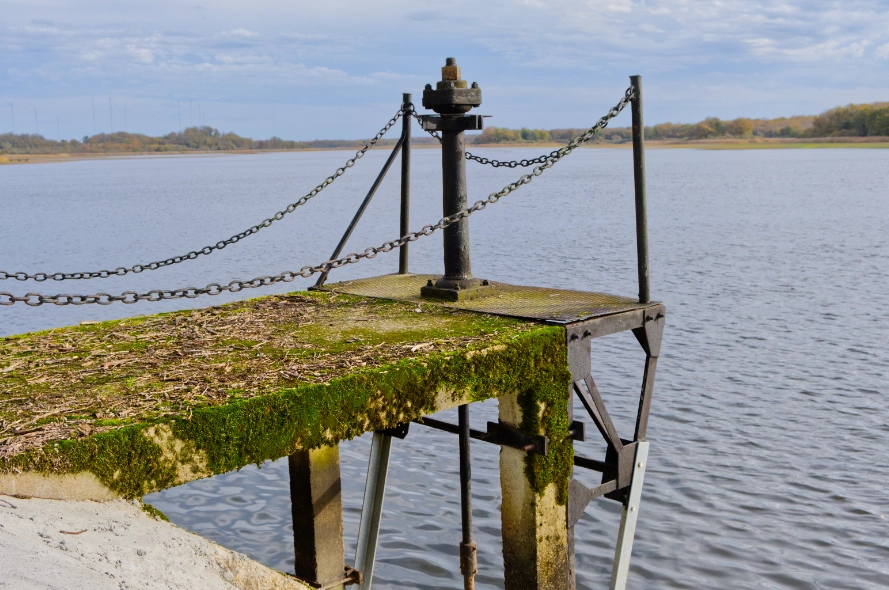
The traditional pond harvest
How the draining works
From October to March, the ponds are drained and fished using methods that date back centuries. It’s called “mettre en tire”, putting the pond in drain mode. The bonde (sluice gate) at the base of the dam is opened, and over days or weeks the water level drops until the fish concentrate in the pêcherie, a deeper section near the outflow.
Fishing day
On fishing day, teams arrive at dawn. Waders on, filanches (traditional handleless net scoops) in hand, they work in the cold water corralling fish with large nets called tramails. The fish (carp, roach, tench, pike, zander, perch) are scooped out, sorted by hand on trestle tables, weighed, and loaded into oxygenated tanks on trucks.
It’s community work. Family, friends, neighbors turn up to help. At the end, everyone gets paid in fish. Then there’s a drink and something to eat. It’s been done this way for generations.
Where the fish go
The catch goes two places: about 75% to restock other ponds and rivers across France, and 25% to Fish Brenne, a processing facility in Pouligny-Saint-Pierre that makes carp fillets, smoked carp, terrines, and rillettes. You can also find frites de carpe (deep-fried carp nuggets) in local restaurants and most famously at La Maison du Parc.
The industry today
The industry employs about 50 people directly, plus seasonal workers during harvest. Ten professional fish farmers work the region, plus 300-400 private landowners who farm their own ponds. It’s not lucrative, cormorants eat about 30% of the stock (400 tonnes annually, costing the industry a million euros), and climate change is making water management harder. But it persists because it’s both livelihood and tradition.
Watching a harvest
You can attend public pond harvests! The park organizes commented visits where guides explain the process. Book through La Maison du Parc. Expect to get up early, dress warm, and possibly get your boots muddy.
Things to do in La Brenne
Walking and cycling
The park has marked walking trails ranging from a few kilometres to multi-day routes. The “Balades au Coeur de Brenne” route runs 70 kilometres over 3 days from Mézières-en-Brenne. “Grand Brenne, entre étangs et forêts” is 114 kilometres over 5 days. “Par les falaises de l’Anglin et de la Creuse” starts from Le Blanc and covers 74 kilometres in 4 days.
Shorter day walks include the Sentier du Blizon in Rosnay and the Sentier de Beauregard in Saint-Michel-en-Brenne, both have information panels and pass observation hides.
Cycling’s excellent. The terrain’s mostly flat, roads are quiet, and there are dedicated cycle paths. The park website lists routes. You can hire bikes at various points including the Maison du Parc.
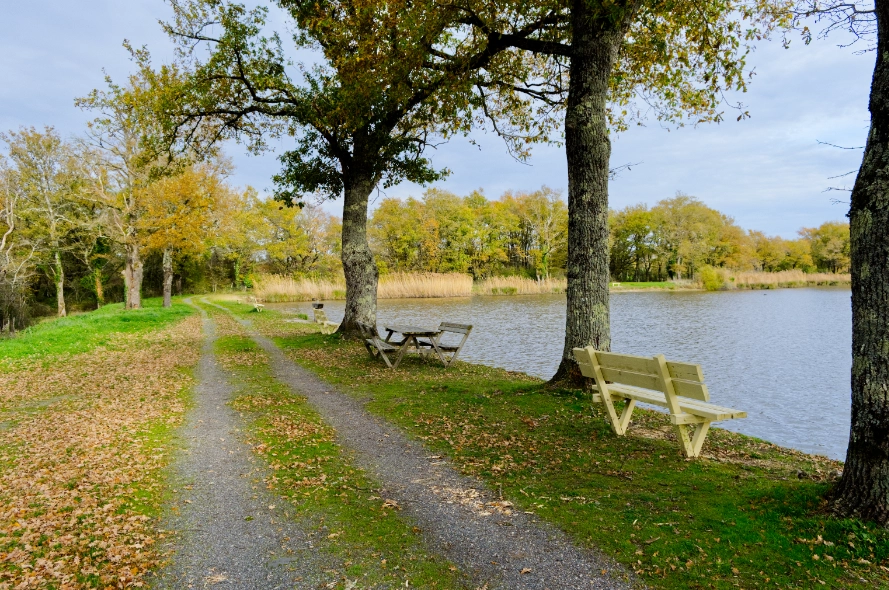
The landscape’s subtle rather than dramatic. Water, reeds, woods, open heathland. It reminds some people of the Norfolk Brecks, only larger and with more water. Others compare it to parts of the Camargue without the salt and horses. It’s peaceful, gently beautiful, the sort of place where time moves differently.
Birdwatching
This is why most serious visitors come. Spring and autumn are peak times, migration brings huge numbers of species through. Summer’s good for breeding birds. Winter’s quieter but you’ll see overwintering species and the landscape takes on a stark, beautiful quality.
Key spots
Chérine Nature Reserve
Observation hides, marked trails, one of the best places for bitterns and purple heron
Étang Massé
near Rosnay: Large pond with hides, part of a regional nature reserve
Bellebouche Pond
Good for waterfowl, also has swimming and a beach if you have non-birding family members
Foucault Pond
Quieter, good hides
Fishing
With 2,000+ ponds, there’s fishing everywhere. You’ll need a permit, available from local tackle shops, tourist offices, or the Fédération de Pêche. Most ponds are private, but many allow fishing by arrangement. Some are designated public fishing waters.
Carp, pike, zander, roach, perch, tench. It’s coarse fishing heaven. Anglers come from across Europe. Bring patience, this is not fast fishing. It’s the French version: sitting by a pond all day, possibly with wine and cheese, occasionally catching something.
Relaxing
La Brenne’s excellent for this. Find a pond, sit down, watch. Dragonflies, birds, the occasional turtle surfacing. The French have mastered the art of productive idleness, and La Brenne’s built for it. We spent good hours just staring at the ponds and emptying our heads, very meditative.
Pack a picnic. Bring a book. Don’t schedule too much. This isn’t the Loire Valley where you’re ticking off châteaux. It’s a place to really slow down.
The towns of La Brenne
Le Blanc
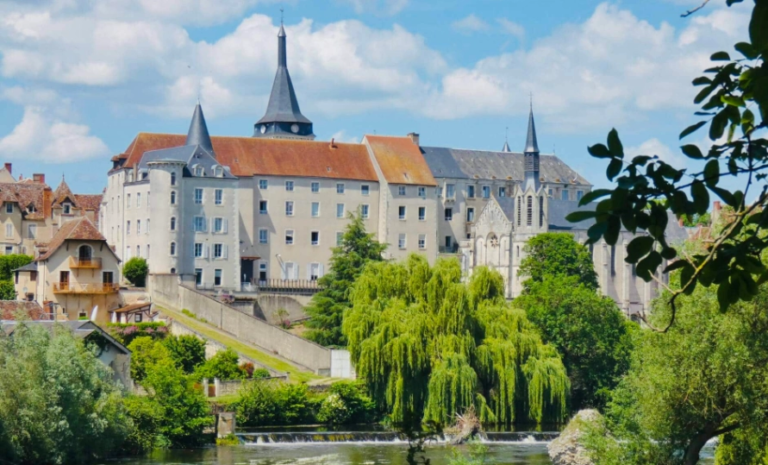
The park’s capital and largest town (pop. 6,500). It’s on the Creuse river with a medieval old town, ruined castle, and the Château Naillac which houses the Écomusée de la Brenne. This quirky museum covers the region’s history from prehistoric times through the development of fish farming. Le Blanc has shops, restaurants, a market on Saturdays. It’s the practical base if you want facilities.
Mézières-en-Brenne
Smaller (pop. 1,100), right in the heart of the park. Pleasant little town, several restaurants, accommodation options. The Maison de la Nature is just outside. Good base for walking and cycling.
Rosnay
Tiny village (pop. 450) that’s home to the Maison du Parc, the park’s main visitor centre. The centre has exhibitions, a shop selling local products, a restaurant serving park specialties including carp dishes, and expert staff who can advise on routes and current wildlife activity.
Start here. Get maps, ask questions, watch the short film about the park. They know what birds have been spotted where, which ponds are being harvested, which trails are muddy.
Saint-Michel-en-Brenne
Another small village (pop. 450) with the Maison de la Nature et de la Réserve. Good restaurants, accommodation. Central location for exploring.
Who’s La Brenne for?
Birdwatchers, obviously. This is one of Europe’s premier birding destinations! Nature lovers who want proper wildlife rather than manicured gardens. People who enjoy walking or cycling through countryside. Families wanting outdoor holidays without theme parks. Anglers. Anyone seeking peace and quiet.
It’s not for people who need constant stimulation or shopping or nightlife. The villages are small. There’s one cinema in Le Blanc. Entertainment is watching herons hunt. If you want beautiful French countryside, exceptional wildlife, traditional culture that’s still practiced not just preserved, and space to breathe, La Brenne’s brilliant. It’s genuinely quiet. Some people find that restful. Others find it boring. Know which you are before you book a week in a gîte surrounded by ponds.
Have you birdwatched in La Brenne? We’d love to hear what you spotted, was it the purple herons fishing at dawn, the autumn crane migration, or perhaps one of those camouflaged bitterns everyone talks about but nobody actually sees? And if you’re planning a visit, what’s top of your must-see list?
What to see and do in La Brenne
- Attend a traditional pond harvest (Pêche d’étang)
From October to March, watch fish farmers drain medieval ponds using techniques unchanged for centuries. Teams use filanches (traditional net scoops) to catch carp, pike, and tench. Everyone gets paid in fish. Book through the Maison du Parc. Bring warm clothes and boots. - Birdwatching at Chérine Nature Reserve
Observation hides, marked trails, one of the best spots for bitterns and purple herons. Go at dawn or dusk when the birds are most active. In autumn, watch thousands of cranes come in to roost, properly spectacular. - Cycle the quiet backroads
Flat terrain, quiet roads, dedicated cycle paths. The park’s massive so rent bikes and explore at your own pace. Routes vary from easy loops to multi-day tours. No tractors trying to overtake you. - Bellebouche Pond
Sandy beach, swimming, water sports centre if you need a break from wildlife-watching. Also good for waterfowl if you bring binoculars. Works for families, kids can swim whilst parents bird-watch. - The Maison du Parc (Le Bouchet, Rosnay)
Start here. Exhibitions on the park’s ecology, short film, restaurant serving carp specialties including frites de carpe. Staff know which birds have been spotted where. Get maps, ask questions, buy local products. - Étang Massé and observation hides
Large pond near Rosnay with hides for watching waterfowl. Part of a regional nature reserve. Peaceful, well-maintained, excellent for serious birders or anyone who fancies sitting quietly watching herons hunt. - Walk the Sentier du Blizon (Rosnay)
Marked trail with information panels passing through varied landscapes, ponds, woods, heathland. Good for understanding how the ecosystem works. Wear boots, paths can be muddy. - Écomusée de la Brenne (Le Blanc)
Housed in Château Naillac. Covers the region’s history from prehistoric times through medieval pond creation to modern fish farming. Worth visiting to understand what you’re looking at in the park. - Try the local specialties
Frites de carpe (deep-fried carp nuggets) at the Maison du Parc restaurant or local spots. Also smoked carp, carp rillettes, and Pouligny-Saint-Pierre goat’s cheese. - Do absolutely nothing by a pond
Find a quiet spot. Sit. Watch dragonflies. Listen for bitterns. See what turns up. Bring a book, some cheese, maybe wine. This counts as an activity.
Practical information for visitors
- Getting there
By car from Paris, about 3 hours via the A20. From Châteauroux, 40 kilometres west. The A20 runs along the eastern edge, exit at Châteauroux Nord or Le Blanc. No train station in the park itself. Nearest stations are Châteauroux and Le Blanc, both with connections to Paris. - When to visit
Spring (April-June): Breeding season, wildflowers, warming weather. Orchids bloom in the meadows. Birds are nesting and vocal. Lovely.
Summer (July-August): Warmest, busiest (which is still quiet by normal standards). Families come for the pondsc. and cycling. Some ponds are partially dried, so less water bird activity but dragonflies everywhere.
Autumn (September-November): Peak time. Migration brings thousands of birds including cranes. Pond harvests start in October, you can watch traditional fishing. Deer are rutting. Mornings are misty. Properly beautiful.
Winter (December-March): Quiet. Cold. Pond harvests continue until March. Overwintering birds. Stark landscapes. If you like solitude and don’t mind the cold, it’s atmospheric. Most tourists come April-October, so winter’s when you’ll have it to yourself. - Accommodation
Gîtes are everywhere, the park’s website lists dozens. They range from basic to luxurious, from couples’ cottages to houses sleeping twelve. Many are on working farms. Some are specifically set up for birders with hides in the garden.
Chambres d’hôtes (B&Bs) are plentiful. Expect homemade jam at breakfast and hosts who know where the purple herons are nesting.
Hotels exist in Le Blanc and the larger villages. Nothing fancy, this isn’t luxury tourism territory, but comfortable and good value.
Campsites dot the region. Some are basic field pitches, others have facilities. Several cater specifically to cyclists and walkers.
If you’re bringing a horse, several gîtes and campsites have stabling. The park’s big on equestrian tourism, there are 500 kilometres of bridleways. - Getting Around
You need a car. Buses exist but infrequent. Cycling works if you’re staying in one area, but the park’s large and villages are spread out.