FC 6: Soft Bloomy Rind Cheeses
Introduction
If you’ve made it through the washed rind cheeses and survived to tell the tale, well done. Those were the bold, punchy ones that smell like a weekend in the country. Now we’re moving to something a bit more mellow, bloomy rind cheeses.
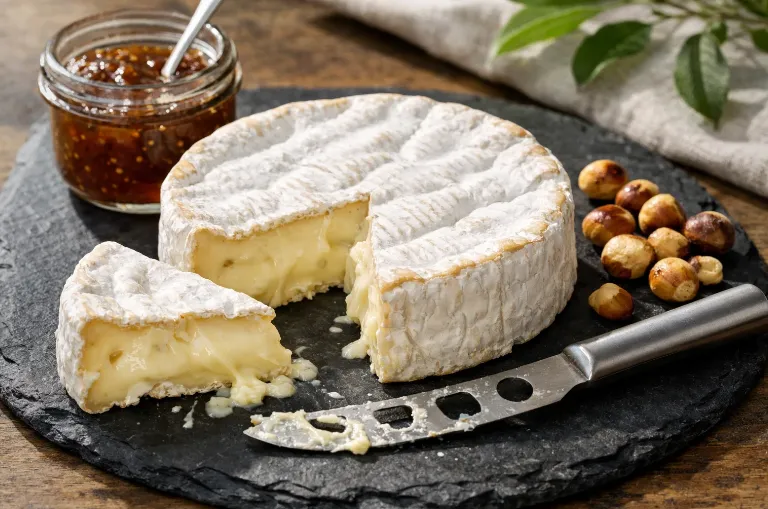
These are the ones with that fluffy white coating, like someone draped them in velvet. The French call it “croûte fleurie”, which sounds far more elegant than “mouldy cheese,” but that’s essentially what it is. Penicillium candidum grows on the surface during aging, creating that distinctive white rind and helping develop the creamy, sometimes runny interior beneath.
They’re approachable, crowd-pleasing, and far less likely to have your guests questioning your life choices. But don’t mistake mild for boring, these cheeses have proper depth and character when done right.
What are French bloomy rind cheeses?
French bloomy rind cheeses are defined by their distinctive white, velvety exterior and soft, creamy interior. The rind develops naturally during aging as specific white moulds bloom across the surface, hence “bloomy rind.” The mould plays a crucial role in breaking down the cheese from the outside in, creating that luscious, spreadable texture.
Inside, the paste ranges from firm and chalky when young to soft and oozing when perfectly ripe. Flavours tend towards mild and buttery with mushroomy, earthy notes, though some varieties pack more punch than others. They’re traditionally made from cow’s milk and aged for a few weeks to a couple of months.
Unlike washed rind cheeses that announce themselves from across the room, bloomy rinds are more subtle. They smell pleasant, earthy, slightly funky in a good way, and taste refined without being bland.
5 French bloomy rind cheeses
Camembert
Made in: Normandy
Milk: Cow’s milk (traditionally unpasteurised)
Aged: 3-4 weeks
Size: Small rounds, typically 250g
Origin and Production
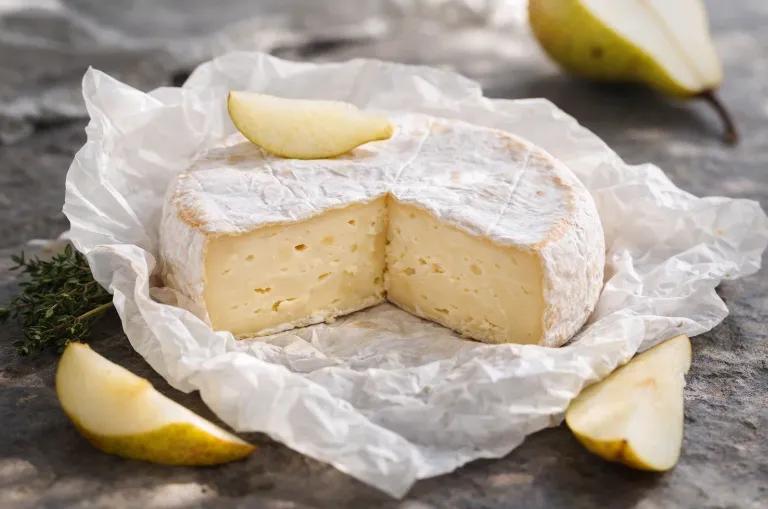
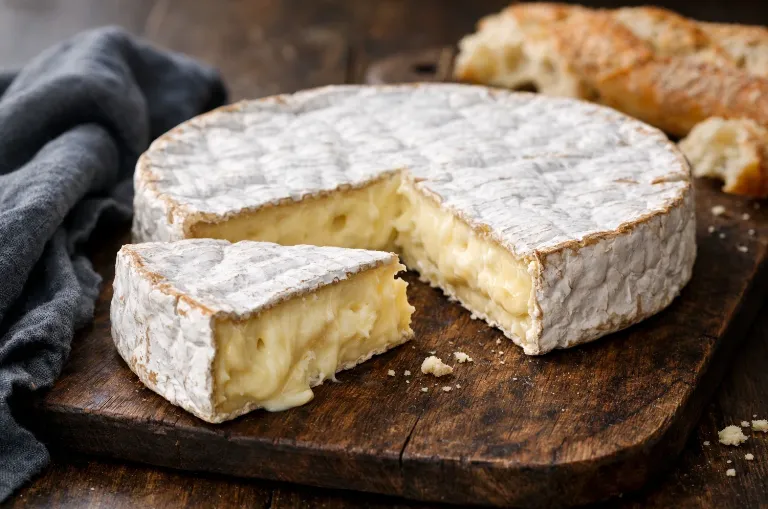
Camembert is the poster child for bloomy rind cheeses, created in Normandy in the late 18th century by Marie Harel. The proper stuff, Camembert de Normandie AOP, is made from raw milk in the Normandy region using traditional methods. It’s smaller and rounder than Brie, hand-ladled into moulds, and develops its characteristic white coat during aging. The industrial versions you find everywhere are good, but they’re a different beast entirely. The raw milk AOC Camembert is worth seeking out if you want the real experience.
Taste and Texture
When young, Camembert is firm and chalky with mild, milky flavours. Give it time, and it transforms into something brilliant, soft, almost liquid near the rind, with rich buttery flavours, earthy mushroom notes, and a slight tang. The rind itself is edible and adds a subtle bitterness that balances the richness. A ripe Camembert should bulge slightly when you press it and ooze onto your plate. That’s when it’s perfect.
Culinary Uses
Camembert works beautifully baked whole like in this recipe of oven-baked Camembert, score the top, drizzle with honey, bake until molten, then dip crusty bread straight in. It’s also brilliant on a cheese board with apples, walnuts, and a glass of cider. Room temperature is essential, cold Camembert is a crime against cheese.
Brie de Meaux
Made in: Île-de-France, Meaux
Milk: Cow’s milk (raw)
Aged: 4-8 weeks
Size: Large wheels, 2.5-3kg
Origin and Production
Technically, this is my cheese as I was born in Meaux. Brie de Meaux is the king of Bries, made in the Île-de-France region since the 8th century. It’s protected by AOC status, meaning it must be made from raw milk using traditional methods within specific areas. The wheels are much larger than Camembert, about 36cm across, and hand-ladled in thin layers. Legend says Charlemagne loved it, and it was famously declared the “king of cheeses” at the Congress of Vienna in 1815. Not bad credentials.
Taste and Texture
Brie de Meaux is more complex than standard Brie. It’s creamy and supple with a slight bounce when pressed, developing hazelnut, butter, and earthy flavours as it ages. There’s a gentle tang and a hint of sweetness that makes it ridiculously easy to eat. The rind has a mild mushroom flavour that complements rather than dominates. Properly ripe Brie should be soft throughout, none of that chalky centre business.
Culinary Uses
Serve it simply with crusty bread, grapes, and champagne. It’s also excellent melted in croque-monsieur or in a baguette with some honey drizzled on top.
Coulommiers
Made in: Île-de-France
Milk: Cow’s milk
Aged: 4-6 weeks
Size: Small rounds, 400-500g
Origin and Production
Coulommiers is essentially Brie’s smaller cousin, made in the same region but in more manageable sizes. It’s named after the town of Coulommiers in Seine-et-Marne, where it’s been produced for centuries. The smaller format means it ages differently, developing flavours more quickly and evenly throughout. It’s less famous than Brie or Camembert but equally good, often better actually because the size-to-rind ratio is spot on.
Taste and Texture
Coulommiers has all the creamy, buttery goodness of Brie but with a slightly denser texture and more pronounced earthy flavours. It’s less delicate, more robust, with nutty undertones and a pleasant tang. The smaller size means you get more of that flavourful rind relative to the paste. It’s reliably delicious, less temperamental than larger Bries that can be hit or miss depending on ripeness.
Culinary Uses
Perfect for smaller gatherings where a whole Brie feels excessive. Serve it with fig jam and toasted hazelnuts. It also bakes well, wrap it in puff pastry with some herbs and honey for a dead simple but impressive starter.
Chaource
Made in: Champagne and Burgundy
Milk: Cow’s milk
Aged: 2-4 weeks
Size: Small cylinders, 250-450g
Origin and Production
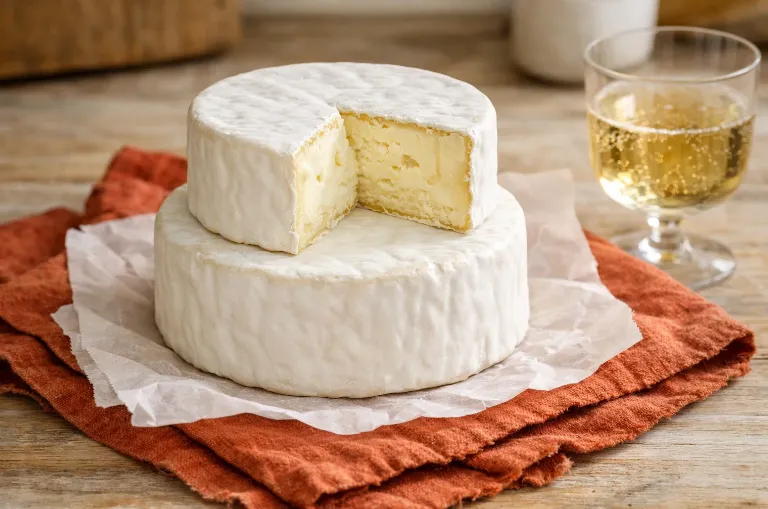
Chaource comes from the Champagne and Burgundy regions, where it’s been made since the Middle Ages. It has AOC protection and must be produced locally using specific methods. Unlike flatter bloomy rinds, Chaource is shaped into taller cylinders, giving it a different texture and aging pattern. The Champagne connection isn’t accidental, it pairs beautifully with bubbly.
Taste and Texture
Chaource is fresher and lighter than Camembert or Brie. When young, it’s firm and crumbly with bright, milky, slightly acidic flavours. As it ages, the exterior softens whilst the centre stays a bit more structured, creating this lovely contrast between the gooey edges and firmer middle. It’s less earthy, more delicate, with subtle mushroom notes and a clean finish. Properly refreshing for a bloomy rind cheese.
Culinary Uses
Chaource is brilliant with champagne, obviously, but also works well with crisp white wines and cider. Pair it with fresh fruit like strawberries or raspberries, some honey, and good bread. It’s light enough for summer cheese boards when heavier cheeses feel too much.
Brillat-Savarin
Made in: Normandy (originally Île-de-France)
Milk: Cow’s milk with added cream (triple cream)
Aged: 1-2 weeks
Size: Small flat rounds, 400-500g
Origin and Production
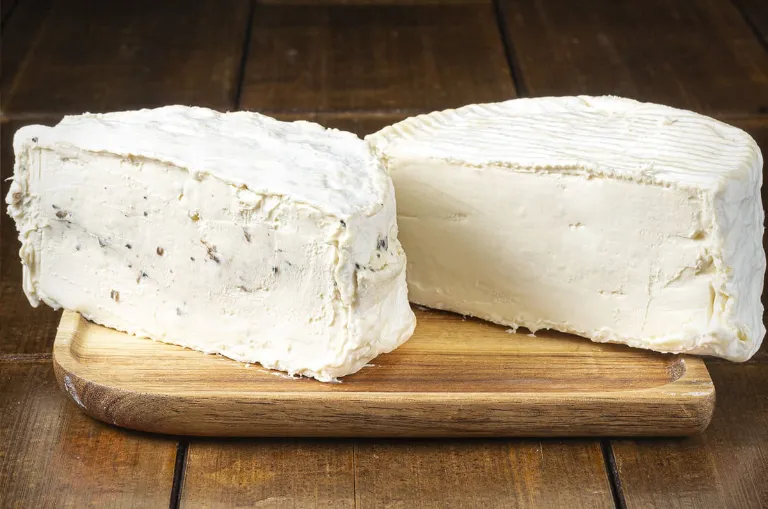
Brillat-Savarin is a relative newcomer, created in the 1930s by Henri Androuët and named after the famous French gastronome Jean Anthelme Brillat-Savarin. It’s a triple cream cheese, meaning cream is added to the milk before curdling, resulting in a fat content around 75%. Properly indulgent. The aging is brief, just a week or two, because it’s already rich enough without extended maturation.
Taste and Texture
This is butter in cheese form. Brillat-Savarin is incredibly rich, smooth, and almost mousse-like in texture. It practically melts on your tongue. Flavours are mild, sweet cream, butter, with just a whisper of mushroom and tang from the rind. It’s decadent without being overwhelming. A little goes a long way. Seriously, you’ll want seconds, but pace yourself.
Culinary Uses
Serve it at room temperature with champagne or a crisp white wine. Fresh berries, honey, and delicate crackers are all it needs. Don’t bake this one or pair it with anything too strong, it’s meant to be savoured simply. Save it for special occasions when you want something properly luxurious.
Buying and Storing French Bloomy Rind Cheeses
- Store bloomy rind cheeses in their original paper or wrap them loosely in parchment paper, then place in a container with a lid that’s not completely airtight, they need to breathe.
- Keep them in the vegetable drawer or a dedicated cheese box in the fridge.
- Remove from the fridge at least 30 minutes before serving, cold bloomy rind cheese is pointless, all the flavour and texture disappears.
- Once cut, these cheeses are best eaten within 3-5 days. The exposed paste will dry out and lose its creamy texture.
- The rind should be white or ivory, never grey or slimy. A few brownish spots are fine on older cheeses, but anything dark or smelly in a bad way means it’s past it.
- If the cheese smells strongly of ammonia, it’s overripe. Still safe to eat, but not pleasant.
Pairing French Bloomy Rind Cheeses
Bloomy rind cheeses are versatile and pair well with lighter accompaniments:
- Breads: Baguette, walnut bread, or plain crackers—nothing too strongly flavoured
- Fruits: Fresh grapes, pears, apples, berries, or dried apricots and figs
- Nuts: Walnuts, hazelnuts, or almonds add texture without overwhelming
- Preserves: Honey, fig jam, or quince paste for a touch of sweetness
- Drinks: Champagne and sparkling wines are classic, but also try crisp white wines, cider, or light reds like Pinot Noir
- Extras: Fresh herbs like thyme, a drizzle of truffle honey if you’re feeling fancy
Health Benefits
Soft bloomy rind cheeses provide good amounts of calcium, protein, and vitamins A and B12. The triple cream varieties like Brillat-Savarin are obviously richer in fat, but the standard bloomy rind cheeses are relatively moderate compared to some other French cheeses.
The white mould on the rind is Penicillium candidum, a beneficial mould that aids digestion. The rind is entirely edible, some people prefer to cut it off, but you’re missing out on texture and flavour if you do.
Like all cheese, moderation is sensible. But a decent portion with fruit and bread makes a balanced, satisfying meal that won’t leave you feeling heavy.
Conclusion
French bloomy rind cheeses bring elegance without pretension to your table. Whether you’re serving a classic Camembert baked until molten, pairing Brie de Meaux with champagne, or indulging in the ridiculous richness of Brillat-Savarin, you’re experiencing centuries of French cheesemaking tradition at its most refined.
They’re approachable enough for guests who claim they “don’t really like cheese” (they will after this), but complex enough to satisfy proper cheese enthusiasts. Mild doesn’t mean boring, these cheeses have depth, character, and that satisfying creamy texture that makes you reach for just one more piece.
Serve them properly, at room temperature, with simple accompaniments, and a glass of something decent, and you’ve got yourself a very civilised afternoon indeed.
A Complete Hosting Guide
This complete guide takes the intimidation out of French cheese and wine hosting, so you can create an impressive, memorable evening that feels effortless.
Just so you know, a few links here earn us a commission. Doesn’t cost you anything extra, and we only link to things that are actually worth your time.