Gratin Dauphinois
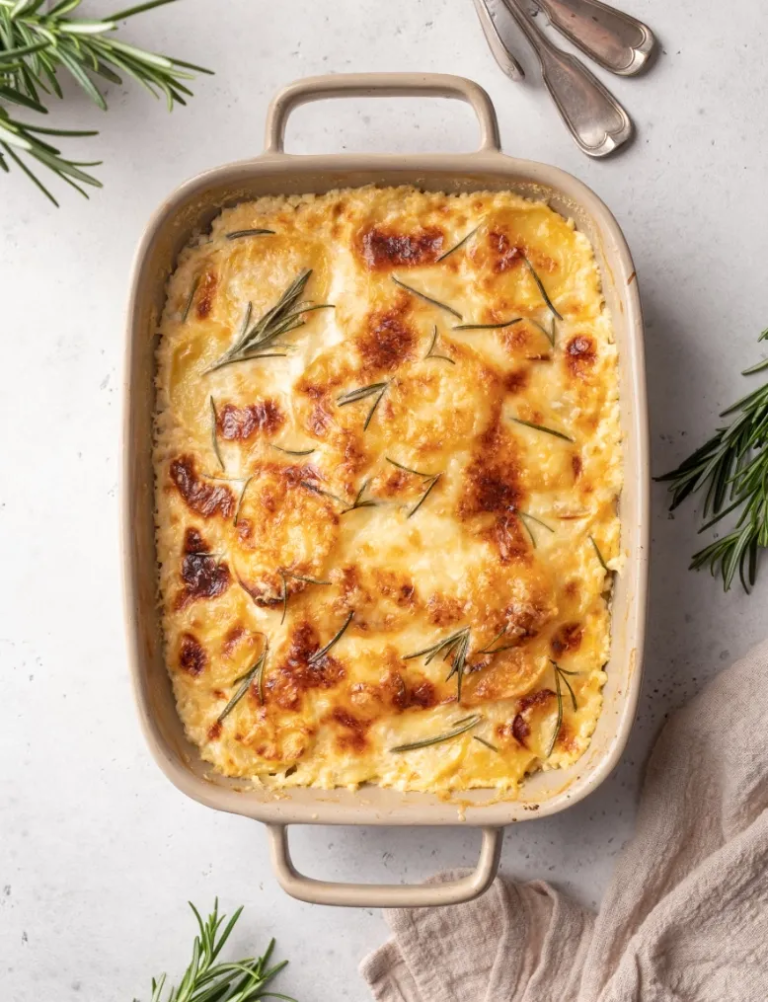
Gratin Dauphinois
Thin slices of potato, layered in a dish rubbed with garlic, drowned in cream and milk, then baked low and slow until the top is golden and the inside is melting and rich. This is gratin dauphinois is the real one, without cheese. It's been made this way in the Dauphiné region since at least 1788, and there's a reason it hasn't changed.
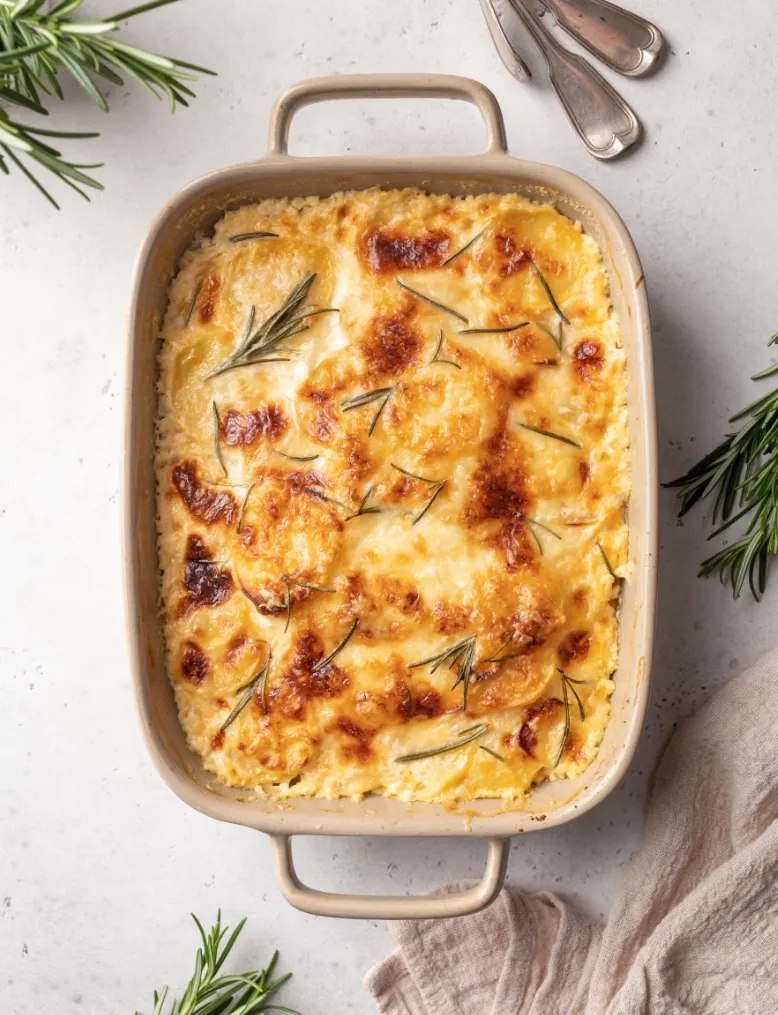
Pin Recipe Print Recipe Prep Time 20 minutes Cook Time 1 hour 30 minutes Total Time 1 hour 50 minutes Servings 6
 Prep Time 20 minutes
  Cook Time 1 hour 30 minutes
  Total Time 1 hour 50 minutes
  Servings 6
Ingredients

- 1.2 kg potatoes
- 200 ml whole milk
- 300 ml Double cream
- 2 cloves garlic
- 30 gr unsalted butter
- ¼ tsp nutmeg
- salt and black pepper
Instructions
- 1. Prep the potatoesPeel the potatoes and slice them into thin rounds, about 3mm thick. A mandoline makes this quick work, but a sharp knife and patience will get you there. The key is consistency: uneven slices mean uneven cooking.Important note: do not rinse the potatoes. That starchy coating is what gives the gratin its silky texture and helps bind everything together. Set them aside on kitchen paper but don't wash them.
- 2. Prepare the dishPreheat your oven to 150°C (130°C fan). Cut one of the garlic cloves in half and rub it vigorously all over the inside of your oven dish, bottom and sides. The heat of the oven will release that garlic flavour into the cream as it cooks. Butter the dish generously.
- 3. Infuse the creamPour the milk and cream into a saucepan. Crush the remaining garlic clove with the flat of a knife and add it to the pan along with the nutmeg, a good pinch of salt and a few grinds of pepper. Heat gently until steaming and just starting to simmer, don't let it boil. Take off the heat and leave to infuse for 10 minutes, then fish out the garlic.
- 4. Layer the potatoesArrange a layer of potato slices in the dish, overlapping them slightly like roof tiles. Season lightly with salt and pepper. Add another layer, season again. Continue until you've used all the potatoes, you're aiming for about 3-4 layers depending on your dish size.Pour over the infused cream mixture. It should come just to the top of the potatoes without completely submerging them. Give the dish a gentle shake to help the liquid settle between the layers.
- 5. Bake low and slowDot the top with small pieces of butter and slide into the oven. Bake for 1 hour 15 minutes to 1 hour 30 minutes, until the top is deep golden and the potatoes are completely tender when pierced with a knife. The cream will have reduced and thickened, absorbed by the potatoes into something gloriously rich.If the top is browning too quickly, cover loosely with foil for part of the cooking time, removing it for the last 20 minutes to let it colour.
- 6. Rest before servingLet the gratin sit for 10-15 minutes before serving. This isn't just about not burning your mouth, the resting time allows everything to set slightly, making it easier to cut into portions that hold together rather than collapsing into a delicious heap.
Notes
- You want a variety of potatoes that’s waxy enough to hold its shape but starchy enough to absorb the cream. Maris Piper is the best all-rounder available in UK supermarkets. Charlotte works well too. Avoid anything too floury (like King Edwards) which can fall apart, or too waxy (like new potatoes) which won’t absorb the cream properly.
- Don’t rinse the potatoes: This is the single biggest mistake people make. The surface starch is essential, it combines with the cream to create that silky, unctuous texture. Rinsing it away gives you watery, separated gratin.
- Low and slow is essential: High heat makes the cream split and the top burn before the potatoes are cooked through. Keep it gentle; the long cook time is what creates the magic.
- No cheese, really: The authentic gratin dauphinois contains no cheese. If you add cheese, you’ve made gratin savoyard – delicious, but a different dish entirely.
- Make ahead: You can assemble the gratin, cover and refrigerate for up to 24 hours before baking. It’s also excellent reheated, many say it’s even better the next day.
About this recipe
The gratin dauphinois is one of France’s great regional dishes, born in the Dauphiné, the mountainous area around Grenoble that now covers the departments of Isère, Drôme and Hautes-Alpes. It’s also one of the most hotly debated.
The first mention of the dish is from 12 July 1788. It was served with ortolans at a dinner given by Charles-Henri, Duke of Clermont-Tonnerre and lieutenant-general of the Dauphiné, for the municipal officials of the town of Gap. This was just weeks after the “Journée des Tuiles”, a violent uprising in Grenoble that’s considered one of the opening events of the French Revolution. The Duke had avoided a massacre by withdrawing his troops, and the dinner was something of a diplomatic gesture. The humble potato gratin, it seems, has always had a talent for bringing people together.
The recipe spread through the auberges of the southeast before eventually reaching Paris, where a restaurant called “Le Gratin Dauphinois” opened in 1930. By then, variations had already started appearing, some with eggs, some with cheese, some with stock instead of cream. The debates continue to this day.
But ask anyone from the Dauphiné and they’ll tell you firmly: the real gratin dauphinois has no cheese, no eggs, no onions. Just potatoes, cream, milk, garlic, butter and seasoning. The Académie du Gratin Dauphinois, founded in 1985 in Grenoble, defends this position fiercely, holding annual competitions where contestants must follow the strict traditional rules.
The confusion with cheese often comes from the gratin savoyard, a cousin from neighbouring Savoie. That version uses stock and cheese (usually Beaufort) instead of cream, equally delicious, but a fundamentally different dish. The gratin dauphinois relies entirely on the natural starch of the potatoes combining with the cream to create its silky, binding texture. No cheese needed.
The secret to a proper gratin dauphinois is patience. The low oven temperature, around 150°C, allows the potatoes to absorb the cream slowly, becoming tender and infused with flavour without the top burning or the cream splitting. It takes time, but the result is worth every minute.
Share your feedback and spread the love!
If you try this Gratin Dauphinois recipe, I’d love to hear how it turns out! Leave a ★★★★★ rating and your thoughts in the comments, it helps fellow food lovers discover this recipe too. Snap a photo and tag @frogsinbritain on Instagram if you’re sharing your bake online. Don’t forget to save this recipe to Pinterest so you’ll always have it handy for your next French-inspired meal!
Disclosure: This post contains sponsored content and/or affiliate links. If you make a purchase through these links, I may receive a small commission at no extra cost to you. All opinions are my own!