FC 1: Fresh cheeses
Introduction
Fresh cheeses are the unsung heroes of the French cheese world. Whilst everyone gets excited about a perfectly ripe Camembert or a pungent Époisses, it’s the humble fromage frais sitting quietly in every French fridge that actually does most of the heavy lifting in daily life.
Walk into any French supermarket and you’ll find an entire aisle, yes, an entire aisle, dedicated to fresh dairy products. From creamy fromage frais to the delicate Brocciu of Corsica, these are the cheeses I grew up eating for breakfast, the secret ingredients that make French home cooking so effortlessly good, and frankly, some of the most versatile things you can keep in your fridge.
Whether you’re trying to recreate that lovely French breakfast you had on holiday, looking for lighter alternatives to cream, or simply curious about what the French are actually eating when they’re not performing elaborate cheese rituals for tourists, this guide will sort you out.

What Are French Fresh Cheeses?
Right, let’s start with the basics. Fresh cheeses (fromages frais if you want to sound knowledgeable at the cheese counter) are exactly what they sound like: cheese that’s fresh. No ageing in caves, no developing funky rinds, no waiting months for it to be ready. These are the cheeses that go from milk to your table in a matter of days.
In France’s official cheese classification system, yes, they have one, because of course they do, fresh cheeses have their own category within les huit familles de fromage (the eight cheese families). They’re distinguished by their high moisture content (around 70-80%) and their refreshingly short production time. Whilst a Comté is aging for 18 months and getting all complex and expensive, a fromage blanc has been made, sold, and eaten in less than a week.
The Defining Characteristics
What makes a fresh cheese a fresh cheese?
- No rind
Fresh cheeses never develop a protective outer layer, as they’re consumed before this process can begin - High moisture content
This is why they’re so creamy and spreadable, they’ve kept most of the milk’s original water - Mild flavour
Delicate, slightly tangy, fresh, not the sort of cheese that announces itself from across the room - Short shelf life
We’re talking 1-2 weeks in the fridge, not months - Versatile texture
From spoonable (like yoghurt) to spreadable (like cream cheese)
The beauty of fresh cheese is its honesty. There’s nowhere to hide, it either tastes of good milk handled well, or it doesn’t. A really excellent fromage frais will actually tell you something about where it came from: the pastures, the season, the care taken. It’s quite remarkable when you think about it.
How French Fresh Cheeses Are Made
The production of fresh cheese is wonderfully straightforward, which doesn’t mean it’s simple. The best French cheese-makers have spent years perfecting what appears to be straightforward, knowing precisely when to add cultures, how long to let things develop, when to drain the curds.
1. Milk selection
Fresh cheeses can be made from cow’s, goat’s, or sheep’s milk. The milk may be whole, semi-skimmed, or skimmed, depending on the desired richness
2. Acidification
Lactic acid bacteria go into the milk and start their work, fermenting and acidifying over 12-24 hours at carefully watched temperatures
3. Coagulation
The milk separates into curds (the good bit) and whey (the liquid). Some cheeses use just acid for this, others add a touch of rennet to help things along
4. Draining
The curds are gently drained, traditionally in linen cloths or those lovely little moulds called faisselles that let the whey escape slowly
5. Finishing
Some get whipped for extra smoothness, some have cream added for richness. Herbs, salt, and other flavourings might go in at this point
A useful distinction: you’ll see both fromage frais and fromage blanc on labels, and technically they’re slightly different. French law says fromage frais must have live cultures when you buy it (fermentation still happening), whilst fromage blanc has had fermentation stopped. In practice, they’re very similar, though fromage frais tends to be a bit tangier thanks to those active cultures still doing their thing.
This gentle approach preserves most of the milk’s nutrients (proteins, calcium, vitamins) and those beneficial bacteria might even offer probiotic benefits. It’s one reason the French have always considered fresh cheese a perfectly sensible thing to eat every day.
The Spectrum of French Fresh Cheeses
Despite looking rather similar at first glance, French fresh cheeses actually come in quite the variety. Understanding the main types helps when you’re faced with that overwhelming French supermarket dairy aisle.
Classic Spoonable Varieties
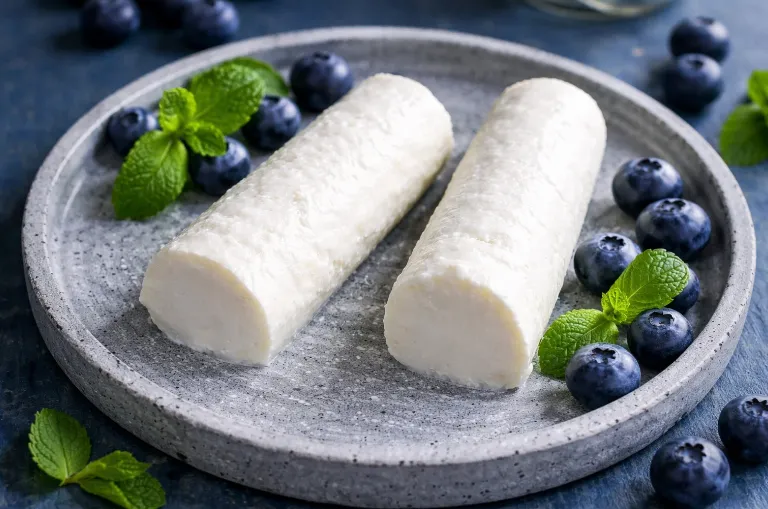
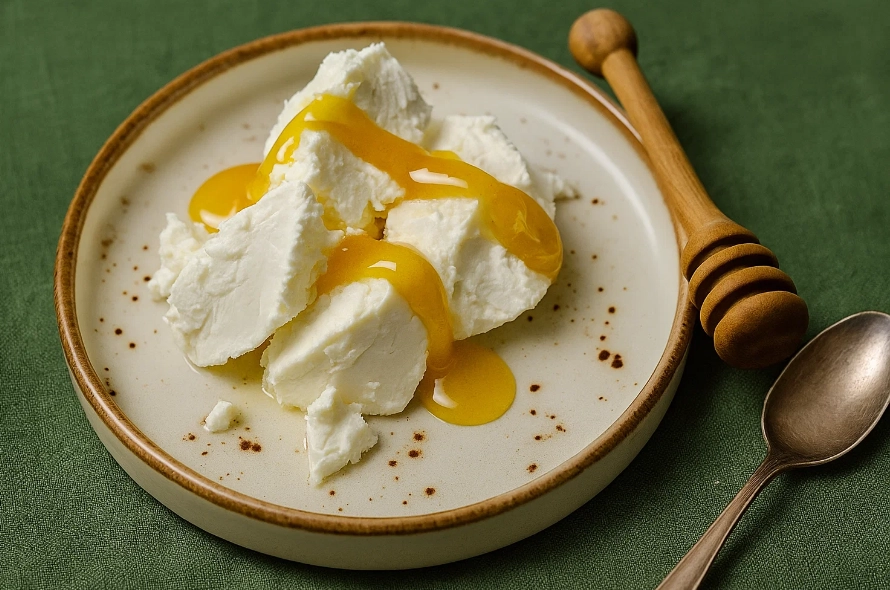
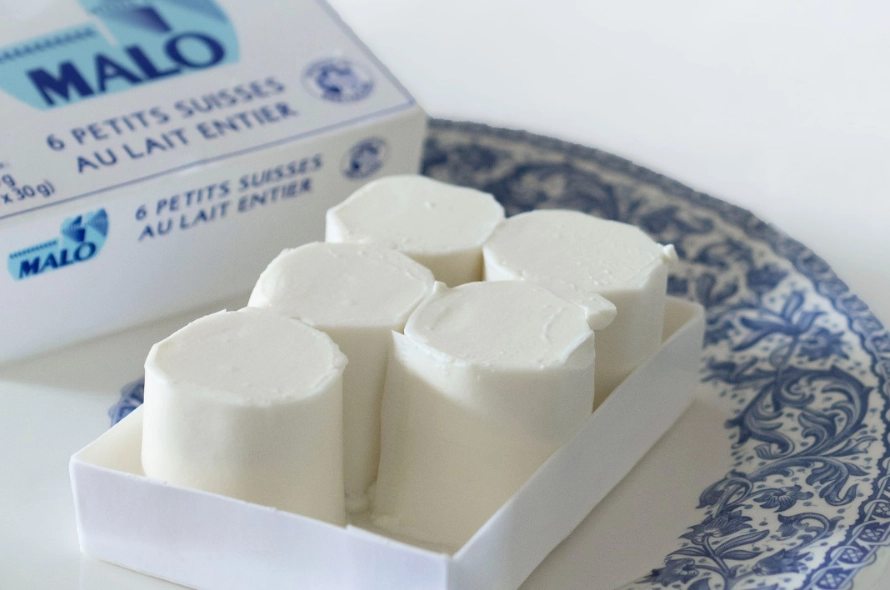
These are your everyday French fresh cheeses, the ones that have a texture like Greek yoghurt. Fromage frais and fromage blanc lead the charge, available in fat percentages from 0% (practically virtuous) to 8% (properly indulgent). Petit-suisse, those little cylindrical portions that French kids adore, falls into this category, as does faisselle, which is basically fromage blanc still sitting in its draining mould looking authentically rustic. Perfect for breakfast with honey, lovely as a light pudding, infinitely useful in cooking.
Regional Specialities
French regions being French regions, they’ve all got their own versions of french fresh cheeses. Provence gives us Brousse du Rove, a delicate goat or sheep’s milk cheese with a slightly grainy texture that’s absolutely lovely with honey. Corsica claims Brocciu, which is essential to the island’s cooking, they put it in everything from pasta to desserts. It’s similar to ricotta but with its own distinct character.
Lyon produces cervelle de canut, which translates rather unfortunately as “silk worker’s brain” but is actually a preparation of fromage blanc beaten with shallots, chives, white wine, and olive oil. Banon frais from Provence and Pélardon frais show how even cheeses famous in their aged forms start life as delicate fresh varieties.
From the Niort region, there’s Jonchée niortaise, traditionally made in rush baskets that give it a distinctive pattern. Fontainebleau is a particularly luxurious fresh cheese from the Île-de-France, made by folding whipped cream into fromage blanc, it’s cloud-like in texture and rather decadent.
Cooking Varieties
Some fresh cheeses are kitchen workhorses. Ricotta française and mascarpone français serve the same culinary purposes as their Italian cousins but made in France. Plain fromage frais nature (without sugar) works beautifully in both sweet and savoury dishes. Well-drained petits-suisses nature can substitute for cream cheese in recipes, as can faisselle égoutée (well-drained faisselle). These varieties prioritise being useful over being eaten straight from the pot, though there’s nothing stopping you if you fancy it.
Light Versions
For the health-conscious or calorie-counting, there’s fromage blanc 0%, petit-suisse light, and various other reduced-fat options. Brands like Jockey 0%, Gervais léger, and Taillefine specialise in these. They keep the protein and calcium whilst ditching most of the fat. Not quite as luxurious as full-fat versions, obviously, but perfectly nice and genuinely useful if you’re watching your intake.
How to Buy French Fresh Cheeses
Finding decent fresh cheese requires a bit of know-how, whether you’re shopping in France or searching for French imports in your local area.
Reading the Labels
Fresh cheese labels are refreshingly straightforward. Look for the fat content as a percentage, this is now shown as a percentage of the finished product (8% means 8g of fat per 100g of cheese). Much more honest than the old system. The ingredient list should be short and sweet: milk, lactic cultures, maybe cream, possibly salt. If you’re reading a paragraph of stabilisers and additives, you’re looking at industrial cheese. Not necessarily terrible, it’ll keep longer, but it won’t taste of much beyond “generically creamy.”
What to Look For
Check the date religiously. Fresh cheese is meant to be, well, fresh. Buy the newest you can find. The packaging should be intact, no swelling or damage that might suggest unwanted bacterial activity beyond the good cultures. If you’re buying from a cheese counter, the cheese should look moist but not swimming in liquid. Colour should be pure white to creamy white. Any yellowing (unless it’s a naturally yellow regional variety) means it’s past its best.
How to Store French Fresh Cheeses
Storage is absolutely critical with fresh cheese. Get it wrong and you’ll have something unpleasant growing in your fridge rather faster than you’d like.
Temperature and Location
Fresh cheese needs consistent cold: 1-4°C (34-39°F) is ideal. The vegetable drawer or cheese drawer of your fridge is perfect, slightly warmer than the main compartment, more humid, which stops the cheese drying out whilst keeping it safely chilled. Don’t store it in the fridge door where temperatures fluctuate every time someone fancies a midnight snack. And keep it away from the coldest bits near the freezer, which can affect texture and even cause ice crystals in extreme cases.
Packaging and Containers
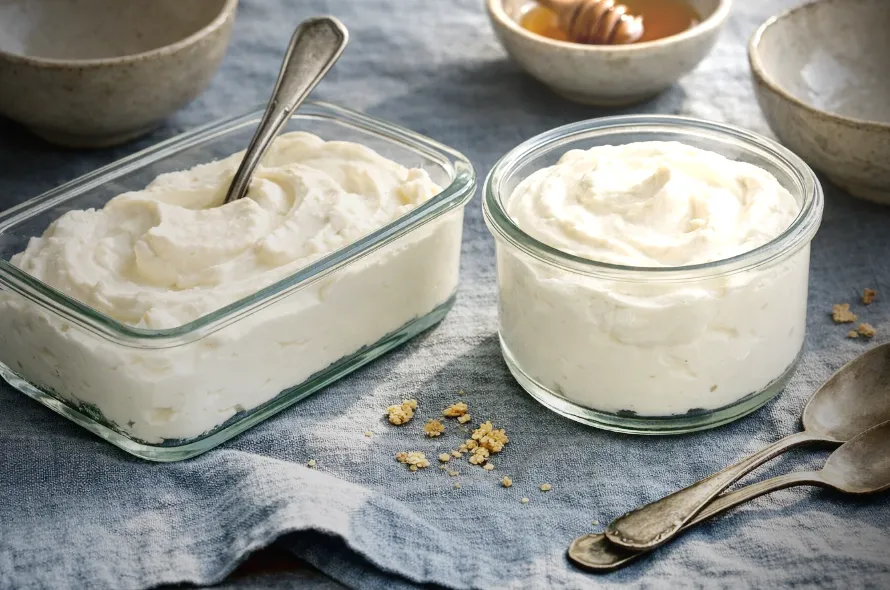
Unopened fresh cheese stays in its original packaging, it’s been designed for the job. Once opened, though, rules change. Decant unused portions into an airtight container immediately. This could be the glass Le Parfait jars or the stainless steel Black+Blum containers or the plastic Mepal containers. This stops the cheese absorbing every other smell in your fridge and prevents it drying out.
Glass, stainless steel or good-quality plastic containers with tight-fitting lids work brilliantly. If it came in a decent plastic tub, you can keep using that, just make sure the lid seals properly. For cheese bought in traditional faisselle moulds, either transfer to a covered container or keep the faisselle in a larger covered container to catch any further whey that drains out.
Shelf Life and Signs of Spoilage
Fresh cheese typically lasts 7-14 days in the fridge after opening, though this varies. Unopened, you’ll get 2-3 weeks if storage is good. Pay attention to the use-by date, unlike with aged cheese, this is a firm deadline, not a vague suggestion.
Trust your nose. Fresh cheese gone bad will smell properly off, beyond the normal slight tanginess. Any mould at all means bin it. Unlike hard cheese where you can cut away mould, fresh cheese’s high moisture means mould penetrates invisibly throughout. Not worth the risk.
Changes in texture, slimy, excessively watery, weird consistency, also mean it’s had its day. Fresh cheese should stay pleasantly creamy throughout its life. Separation beyond normal whey drainage suggests deterioration.
Can You Freeze Fresh Cheese?
Short answer: please don’t. Freezing fresh cheese ruins it. The high water content forms ice crystals that destroy the protein structure. When you thaw it, you get grainy, separated, frankly unpleasant stuff. The lovely smooth texture that makes fresh cheese worth eating simply cannot survive the freezer.
If you absolutely must freeze it to avoid waste (though honestly, just buy less next time), understand it can only go into cooked dishes afterwards. Never served fresh. Thawed fresh cheese is adequate in sauces or baked goods where it gets thoroughly mixed with other ingredients. But really, that rather defeats the purpose.
Serving French Fresh Cheeses
Fresh cheese is wonderfully unfussy compared to its aged cousins. No elaborate tempering rituals required.
Temperature Matters
Fresh cheese is generally served chilled or cool room temperature. Take it from the fridge about 10-15 minutes before serving, just enough to take the edge off without actually warming it. This brief rest lets the flavours emerge whilst keeping that refreshing quality. Some varieties, especially those used in desserts, can go straight from fridge to table. The cool temperature is part of their appeal when paired with fruit or honey. Use your judgment, if it tastes better cold, serve it cold.
Presentation
Fresh cheese needs minimal faffing about. Individual portions like petit-suisse or single-serving pots can go on the table as-is, no shame in that whatsoever. For larger quantities, a simple bowl does the job, or present it in the traditional faisselle if you’re feeling properly French.
If serving on a cheese board, fresh cheese provides lovely contrast to aged varieties, just keep it away from strong blue cheeses that’ll bully its delicate flavour.
The French Way
In France, fresh cheese appears throughout the day. Breakfast might feature fromage blanc with sugar or honey. At lunch, “cervelle de canut” (Cheese spread from Lyon) might appear as a starter with crusty bread. At dinner, fresh cheese might replace pudding, served with seasonal fruit. The same pot of fromage frais could be sweetened for breakfast, mixed into a savoury dip for lunch, and dolloped over fruit for dinner. Remarkably versatile stuff.
1
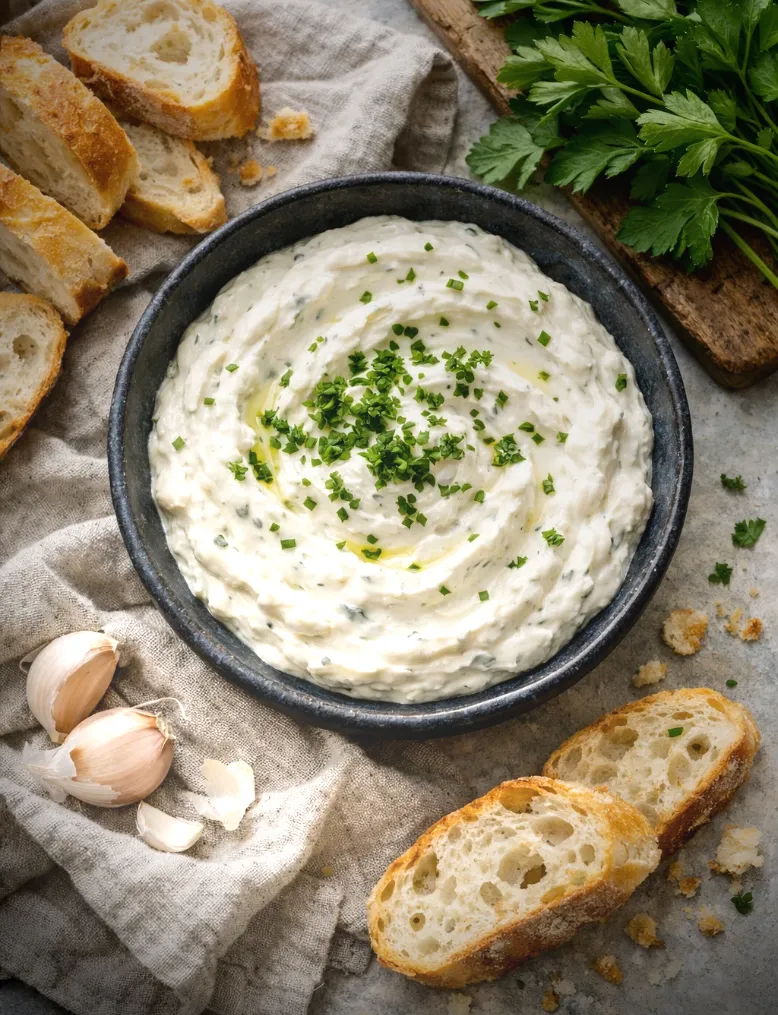
Cheese Spread Lyon
This is Lyon's brilliant answer to herb cheese, fresh fromage blanc whipped with shallots, garlic, chives, parsley, and a good glug of walnut oil. The texture's somewhere between cream cheese and thick yogurt, but lighter and sharper than both.
Get the recipe →Pairing French Fresh Cheeses
Fresh cheese’s mild nature makes it brilliantly versatile. Unlike aged cheeses that demand specific wine matches, fresh cheese gets along with almost anything.
With Fruit
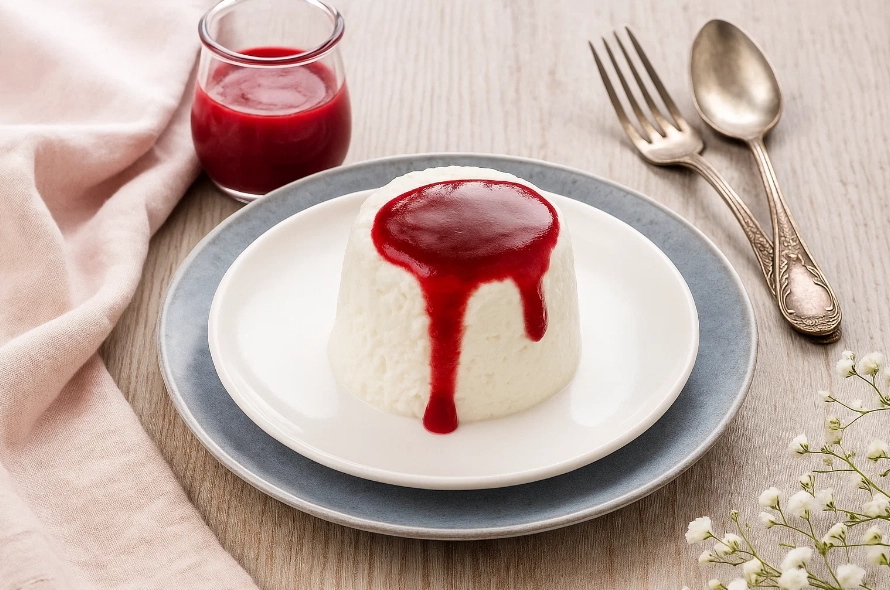
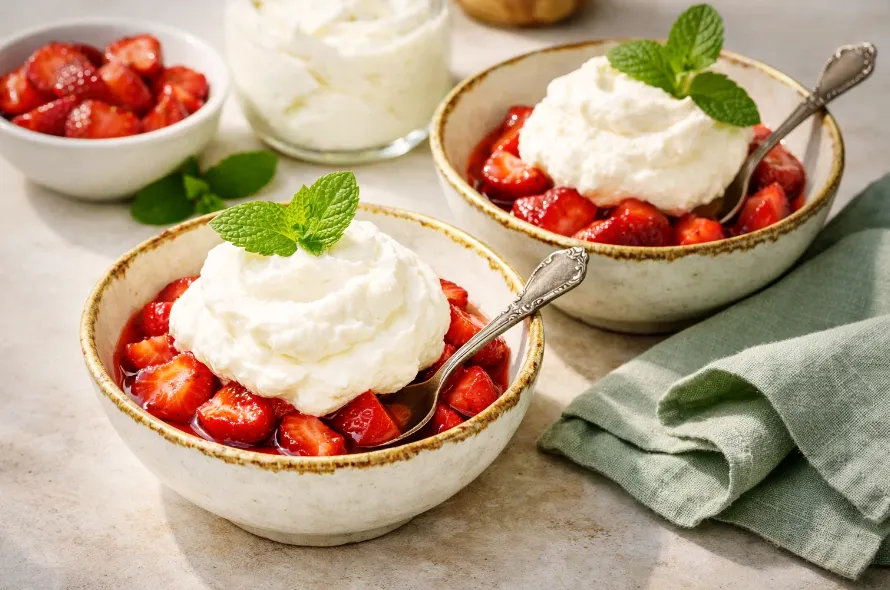
Fresh cheese and fruit is one of those perfect combinations that feels both indulgent and virtuous. Fresh berries work beautifully, strawberries, raspberries, blueberries, their tartness balancing the cheese’s gentle sweetness. Stone fruits like peaches and apricots add aromatic complexity. Figs, fresh or preserved, offer textural contrast and concentrated sweetness.
Fruit compotes, jams, and coulis extend the possibilities brilliantly. A spoonful of blackcurrant jam through fromage blanc creates instant pudding. Honey, particularly lavender honey from Provence or acacia honey, brings floral notes without overwhelming the cheese.
With Bread and Crackers
Crusty bread is the classic vehicle. A fresh baguette with plain fromage blanc is simple perfection. Wholegrain breads provide nutty flavours that work well with lightly salted varieties like demi-sel. Crackers, water biscuits or French cracottes, offer a neutral base that lets the cheese shine.
With Wine and Other Beverages
Fresh cheese pairs surprisingly well with wine, though differently from aged cheese. Light, crisp white wines are brilliant, Muscadet, young Chablis, dry Alsatian whites. Their acidity complements the cheese’s tanginess whilst cleansing the palate.
Sparkling wines, including Champagne and Crémant, are excellent partners. The bubbles cut through the creaminess whilst the wine’s freshness matches the cheese’s character. For non-alcoholic options, fresh apple juice or herbal teas (chamomile or mint particularly) provide pleasant contrast.
With Herbs and Seasonings
Fresh herbs transform plain fresh cheese into something sophisticated. Chives, parsley, dill, basil, all work wonderfully. This is essentially what “cervelle de canut” (Cheese spread from Lyon) does so brilliantly. Garlic adds depth if you’re not heavy-handed. Black pepper, fleur de sel, or smoked paprika contribute subtle complexity.
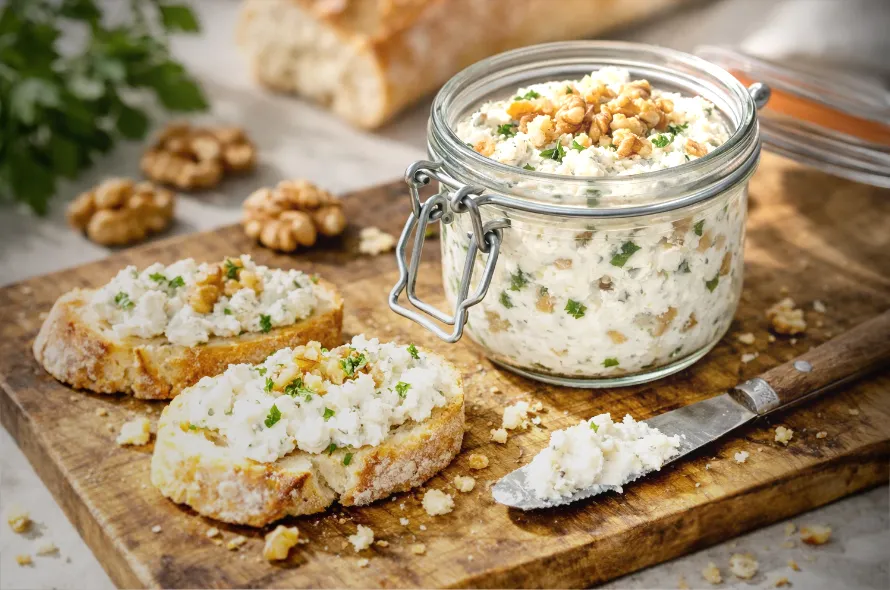
Walnuts or hazelnuts add crunch and richness. A drizzle of good olive oil elevates simple fromage blanc into an elegant appetiser. The key is restraint, fresh cheese’s delicate nature makes it easy to overpower.
Cooking with French Fresh Cheeses
Fresh cheese is rather a secret weapon in French home cooking. Its versatility in both sweet and savoury applications makes it invaluable when you want creamy richness without heaviness.
As a Cream Substitute
Fresh cheese replaces cream in many recipes with excellent results and considerably fewer calories. Use fromage blanc in pasta sauces, adding it at the end to prevent separation. Stir it through soups just before serving for body without excessive richness. In salad dressings, fromage frais creates creamy vinaigrettes that feel indulgent whilst being relatively light.
The technique needs a gentle hand. Fresh cheese doesn’t tolerate high heat or prolonged cooking like cream does. Add it off the heat or at very low temperatures, stirring constantly. If further cooking is needed, keep temperatures low to prevent curdling.
In Baking
French bakers use fresh cheese extensively. Fromage blanc creates light, moist cakes with tender crumb. It works in pastry dough, producing flaky results without the fiddliness of butter-based doughs. Cheesecakes made with fromage frais emerge lighter and less dense than American-style versions whilst maintaining richness.
Use fresh cheese at room temperature for baking, cold cheese doesn’t incorporate smoothly into batters. If substituting for cream cheese, note that fresh cheese has higher moisture content. You might need to reduce other liquids slightly or increase flour to maintain proper consistency.
In Savoury Dishes
Fresh cheese shines in countless savoury applications. Mix it with herbs for instant dip or spread. Use it as quiche filling base with eggs and vegetables. Stuff it into courgettes or tomatoes before baking. Layer it in lasagne for creamy richness without heaviness.
Corsican cuisine showcases fresh cheese brilliantly. Brocciu fills cannelloni au brocciu, appears in fiadone (a lemon-scented cheesecake), and stuffs courgette flowers. These traditional preparations show how fresh cheese can be the star rather than simply a supporting ingredient.
Classic French Recipes
Several classic French dishes rely specifically on fresh cheese. “Cervelle de canut” (Cheese spread from Lyon) combines fromage blanc with shallots, chives, white wine, and olive oil for a spread traditionally eaten with boiled potatoes. Gâteau au fromage blanc is the French take on cheesecake, lighter and less sweet than American versions. Tarte au fromage blanc from Alsace showcases fresh cheese in a sweet tart that’s become a regional signature. Jonchée niortaise is traditionally served as a dessert with sugar and cream.
2

Rillettes de thon (Tuna Spread)
A creamy, no-cook French tuna spread that's done in 10 minutes flat. Rillettes de thon is the ultimate apéritif cheat code, minimal effort, maximum impression. Slather it on crusty bread and pretend you've been slaving away in the kitchen.
Get the recipe →Health Benefits of French Fresh Cheeses
Fresh cheese has long been considered wholesome daily food in France. Modern research supports many traditional beliefs, though moderation applies as with everything.
Nutritional Profile
Fresh cheese delivers impressive nutrition. A 100g portion of 8% fat fromage frais provides roughly 115 calories, considerably lighter than aged cheeses. It’s rich in protein, over 70% of calories come from protein in lower-fat versions, making it excellent for muscle maintenance.
Calcium content is impressive at around 90mg per 100g, supporting bones, teeth, and various metabolic functions. Fresh cheese also provides significant vitamin B12 (essential for nerve function and red blood cells) and vitamin B2/riboflavin (supports energy metabolism).
Fat content varies dramatically from virtually zero (fromage blanc 0%) to 8% in full-fat versions. This flexibility lets you choose versions fitting your dietary needs without sacrificing protein and calcium benefits.
Digestibility
Many people who struggle with milk find fresh cheese more digestible. Fermentation partially breaks down milk proteins, making them easier to absorb. Lactic acid bacteria pre-digest some lactose, potentially making fresh cheese more tolerable for mild lactose sensitivity (though not severe intolerance).
Live cultures in fromage frais offer potential probiotic benefits, supporting digestive health, contributing to gut flora balance, possibly supporting immune function. Whilst specific strains and quantities vary, regular consumption of fresh cheese with active cultures could contribute to digestive wellness.

Final Thoughts
Fresh cheese offers a gentle introduction to French cheese culture whilst giving experienced cheese lovers versatile ingredients for countless applications. The simplicity is deceptive, making excellent fromage frais requires knowledge, skill, and quality milk with nowhere to hide.
Whether you’re spreading plain fromage blanc on morning toast, folding it into cake batter, or simply enjoying a bowl with fruit for pudding, you’re participating in centuries of French dairy tradition. The beauty lies in purity, milk transformed into something nourishing, delicious, and quintessentially French.
Start with good quality fromage frais or fromage blanc from wherever you can find it. Taste it plain first, appreciating its clean dairy flavour and smooth texture. Then experiment, add honey and berries, fold it into recipes, create herb-flecked spreads. You’ll quickly understand why the French consider these unassuming cheeses indispensable to daily life.
A Complete Hosting Guide
This complete guide takes the intimidation out of French cheese and wine hosting, so you can create an impressive, memorable evening that feels effortless.
Just so you know, a few links here earn us a commission. Doesn’t cost you anything extra, and we only link to things that are actually worth your time.