French sweets that you won’t find anywhere else
I’m not addicted to sugar, give me cheese over sweets any day. But there are a handful of French sweets I genuinely miss when I’m in Britain. Simply because you cannot find them anywhere else. And once you’ve had the real thing, nothing else quite does it.
Every region in France has its own sweet. Proper regional specialities with centuries of history, fierce local pride, and recipes that get passed down like family secrets. We’re not talking about mass-produced big brand stuff you can grab anywhere. These are special sweets that come from specific towns, made by families who’ve been doing it the same way for generations.
Whilst Britain has its sherbet lemons and pear drops, French sweets are a different beast entirely. Each one tells a story about where it was made, whether that’s Alpine mountains, spa towns, or medieval abbeys. And because French people cannot do anything without making it official, many of these sweets have protected status or are still produced by the same families that started them over a century ago.
Pastilles Vichy
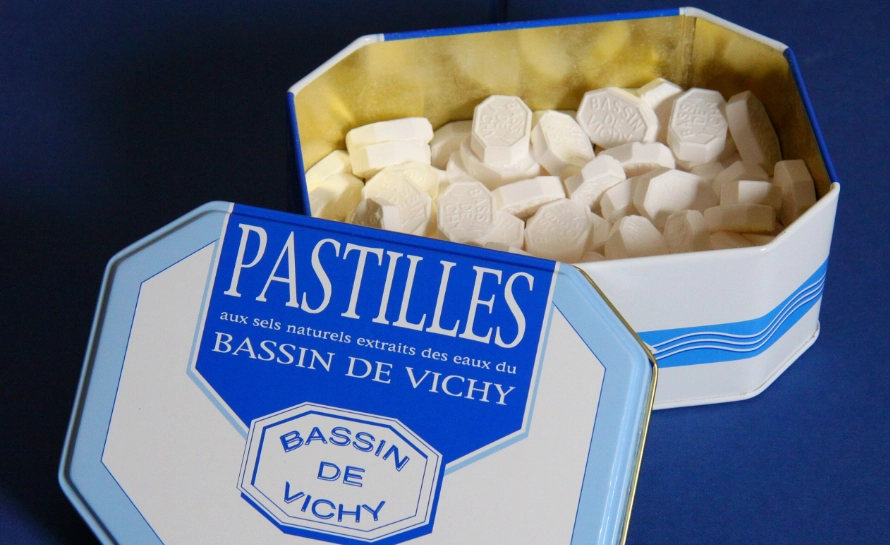
White octagonal lozenges stamped with “Vichy” that taste of mint and minerals. Created in 1825 using actual water from the thermal springs in Vichy, they were originally sold purely for digestive properties. Empress Eugénie was apparently a fan, which didn’t hurt sales.
They straddle the line between medicine and sweet, French pharmacies still stock them alongside actual medicine. The mineral taste is quite particular. Some people love them, others think they taste like eating chalk with a mint chaser. But they’ve been going strong for nearly 200 years, producing around 1,500 tonnes annually.
Not for kids. These are an adult acquired taste, typically sucked on after big meals by people who believe in their digestive benefits.
Bonbons de Pin des Vosges
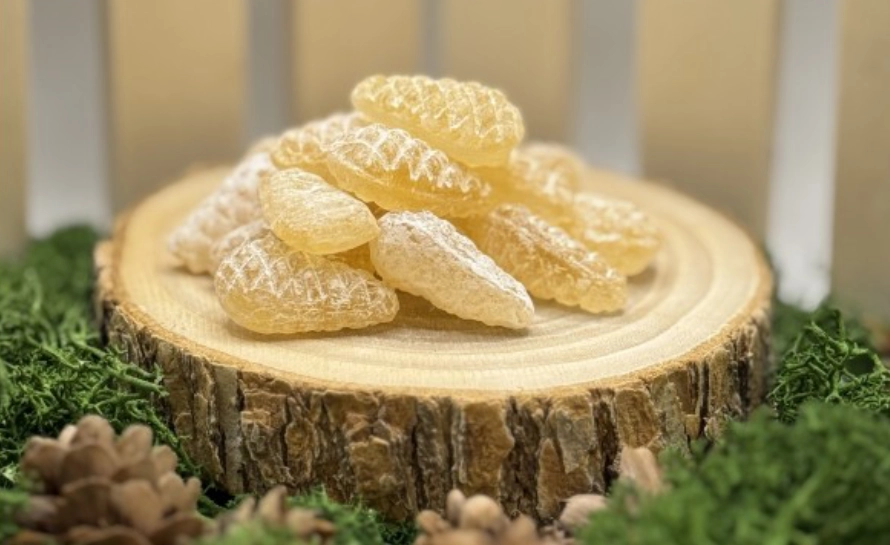
These are the ones I miss the most for their interesting taste. If you know an English version, please do let me know! Head to the Vosges, Jura, or Alps and you’ll find sweets that taste like you’re eating a forest. Made with pine sap or fir buds, often combined with honey and menthol. These are proper mountain people sweets, marketed for clearing airways and helping breathing, which is why they’re still sold in pharmacies.
The taste is intensely pine-forward, imagine walking through a conifer forest, then add sugar and mint. Artisan confectioners in Gérardmer and other Vosges towns make them in copper cauldrons using traditional methods.
You either love these or find them completely bizarre. No middle ground. But if you’ve got a cold whilst hiking in the Alps, they’re genuinely soothing.
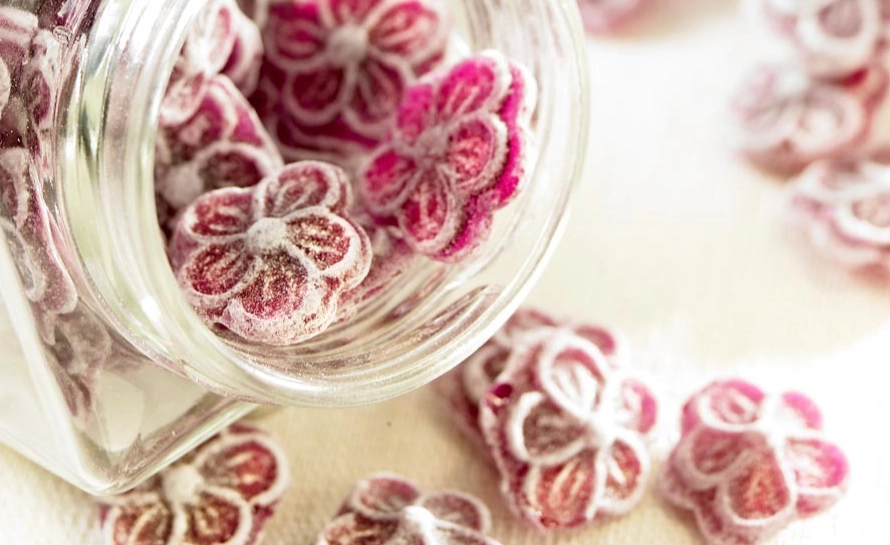
Violettes de Toulouse
Small purple candies shaped and flavoured like violets. These aren’t crystallized real flowers (though those exist too), these are proper sweets made with violet extract, sugar, and natural colourings. They’ve been made in Toulouse since the early 1900s when the city was famous for violet cultivation.
The candies are hard-boiled sweets with an intensely floral, perfumed flavour, you either love them or find them like eating soap. Personally, I love the floral flavours! They’re often sold in pretty tins featuring violet imagery and are considered a classic Toulouse souvenir.
Violets were huge business in Toulouse from the 1850s onwards, with 600 families living off violet sales in winter. The flowers were exported across Europe. When that industry declined, the sweets kept the violet tradition alive. The brand “Violette de Toulouse” is protected, and various confectioners still make violet-flavoured products, candies, liqueur, perfume, even mustard. They’re quite old-fashioned now, the sort of thing French grandmothers have in a tin.
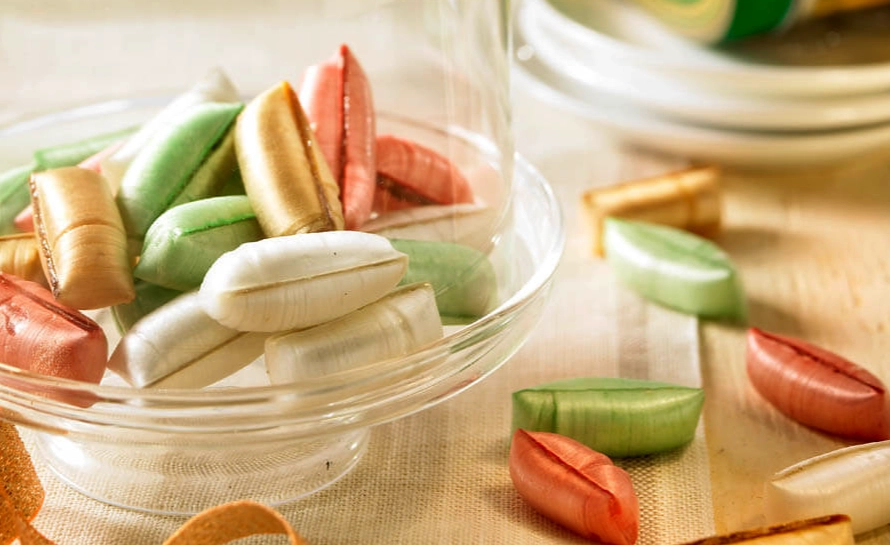
La Forestine de Bourges
The world’s first filled sugar sweet, created in 1879 by Georges Forest. A smooth praline filling, almonds, hazelnuts, and chocolate, wrapped in a satiny sugar shell that comes in various pearlescent colours.
The sugar coating is still hand-beaten to get that distinctive satin-like appearance. They’re cut and separated by hand using techniques from over 140 years ago. The Tavernier family (fourth generation) still makes them in Bourges.
Registered in France’s national gastronomic heritage inventory and won a Slow Food prize for tradition in 2012. They’re quite expensive, but this is proper artisan confectionery, not something churned out by the tonne.
Berlingots
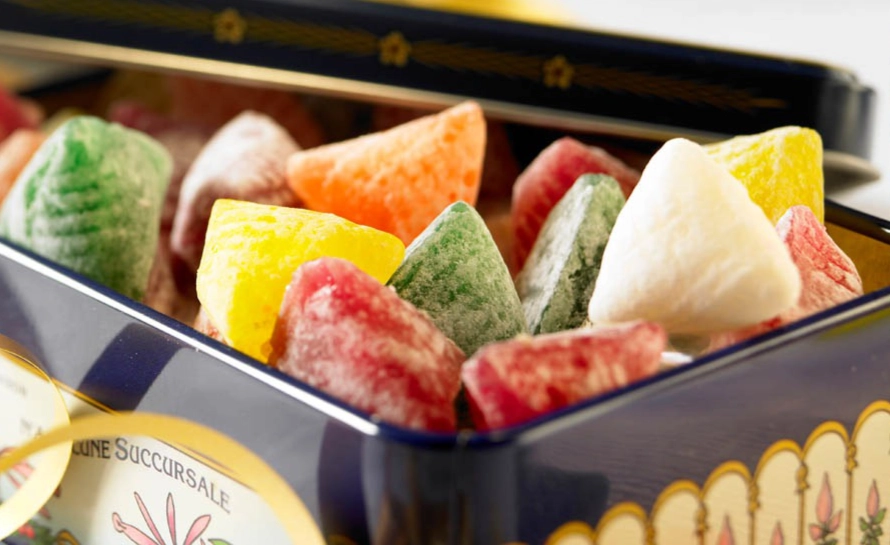
Small pyramid-shaped hard sweets. Two towns claim them: Carpentras and Nantes, and they’re quite different.
Berlingots de Carpentras are translucent with white stripes, made from candied fruit syrup. Created around 1844 when a pastry-maker had the idea to use leftover syrup from making candied fruits. The white stripes come from beaten sugar mixed into coloured sugar paste. They come in flavours like mint, anise, lemon, orange, lavender, and more.
Berlingots Nantais are opaque, smaller, and coated in sugar rather than striped. Made at the end of the 19th century when Nantes had a thriving sweet industry due to its port importing sugar cane. Flavours include orange, lemon, blackcurrant, strawberry, anise, caramel, and mint.
Legend says the name comes from “Bertrand de Got” (Pope Clement V’s real name), though this is disputed. By the 1950s, Carpentras berlingots were hugely popular, over 2,000 tonnes produced annually.
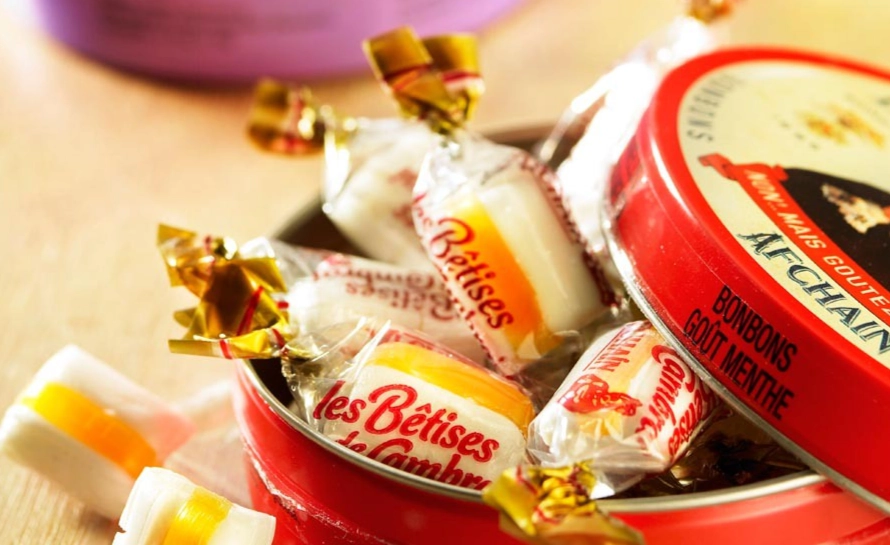
Bêtises de Cambrai
Small rectangular mint sweets with caramel stripes, created by accident in 1850. “Bêtise” means “stupid mistake” in French. An apprentice at a Cambrai confectionery made an error whilst preparing sweets, his mother said he’d made “bêtises,” but customers loved the result.
Made from boiled sugar with mint flavouring, with thin stripes of caramel added to sweeten the mint taste. Two confectioners claim to be the original inventors: Afchain and Despinoy. Both still make them today.
About 400 tonnes are produced each year. New flavours have appeared, orange, lemon, raspberry, apple, violet, chocolate, poppy, but the original mint remains most popular. They’re refreshing with supposed digestive benefits, and they’re sold in attractive tins featuring Cambrai scenes.
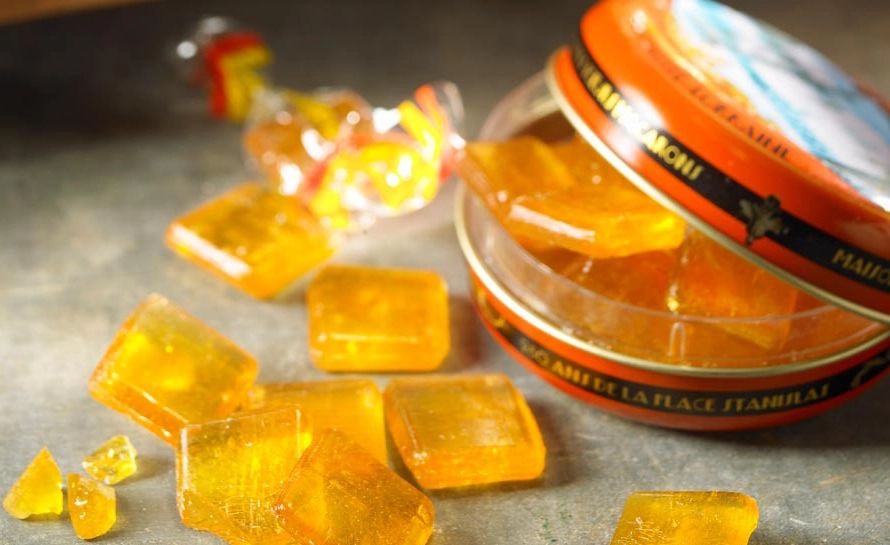
Bergamotes de Nancy
Amber-coloured hard sweets made from sugar and bergamot essential oil. Created in 1857 in Nancy (Lorraine), when a candy-maker succeeded in combining bergamot essence with sugar at a perfumer’s suggestion. Bergamot is a small citrus fruit mainly cultivated in Calabria, Italy. The essential oil from its peel is also used in Earl Grey tea.
The sweets are translucent, fragrant, and have a distinctive flat square shape. Sugar is heated over an open flame, then bergamot essence is added. After cooking, it’s poured onto marble to cool before being hand-cut. They have Protected Geographical Indication (PGI) status since 1996. Confiserie Stanislas is Nancy’s most renowned maker. The flavour is perfumed and citrusy, quite sophisticated.
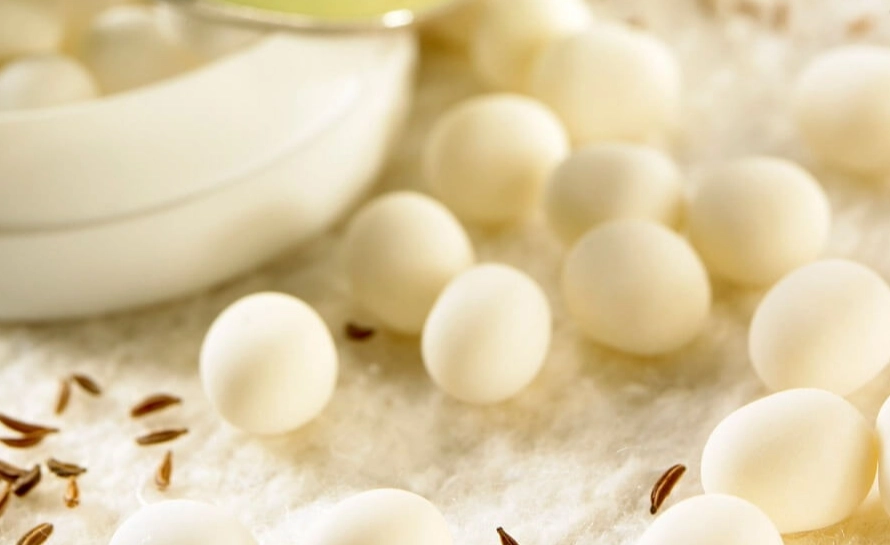
Anis de Flavigny
Made in the Benedictine Abbey in Flavigny-sur-Ozerain since 1591. Possibly the oldest branded sweet still in production in France. A single anise seed coated in thin layers of sugar syrup in large copper basins for 15 days.
The classic flavour is anise, that distinctive liquorice-adjacent taste. But they also make rose, violet, mint, orange blossom, lemon, and others. All natural flavourings are extracted from plants using steam or alcohol distillation.
The Troubat family has been running production since 1923. The Anis de Flavigny awarded “Living Heritage Company” status and recognised as a “Remarkable Taste Site.” Exported to over 35 countries. Louis XIV apparently carried a box everywhere.
The tins are gorgeous, oval-shaped metal containers with vintage pastoral illustrations. You can visit the abbey and watch them being made if you’re in Burgundy.
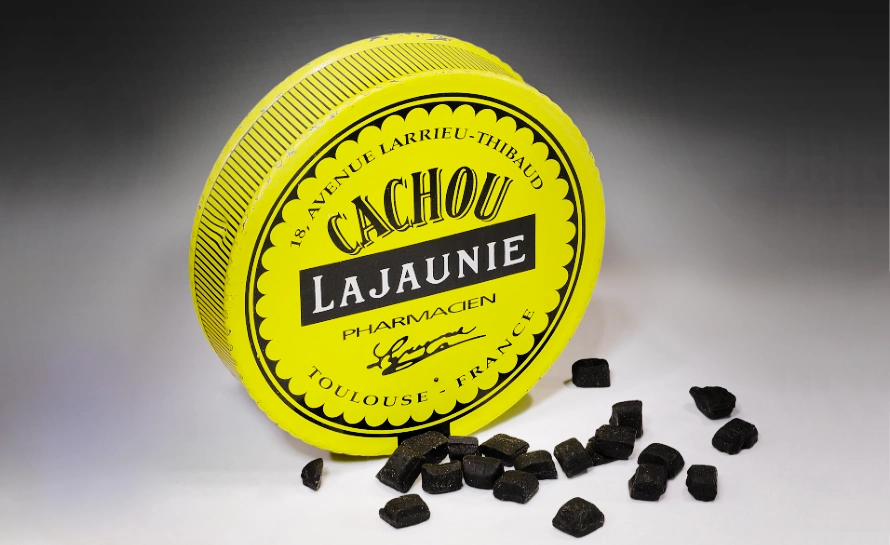
Cachou Lajaunie de Toulouse
Even though production appears to have stopped in 2024 after 145 years, I have to mention these funny little licorice bits, as they are from my childhood. These tiny black squares of concentrated liquorice and mint created in 1880 by Toulouse pharmacist Léon Lajaunie for customers who smoked or had questionable breath. The round yellow tin was designed to fit in a watch pocket, tins that are now heavily collected across France.
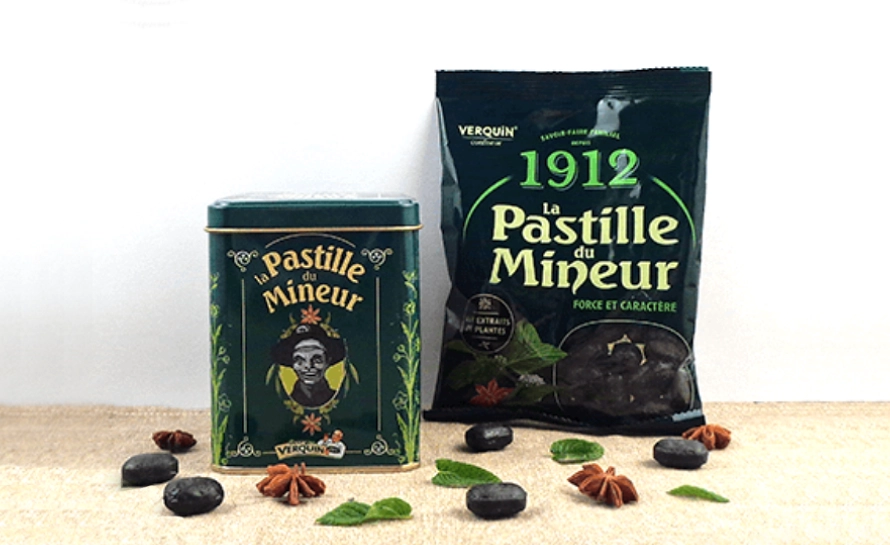
Pastille du Mineur
Small black liquorice pastilles from the mining regions of northern France, particularly around Lens and the Nord-Pas-de-Calais. Created for coal miners, but not for the reason you might think, they were meant to suppress the urge to smoke whilst working underground in the dangerous, gas-filled mines where a lit cigarette could cause an explosion.
They’re intensely strong, proper liquorice with menthol and eucalyptus. The sort of thing that makes your eyes water if you’re not expecting it. The powerful flavour was deliberate: it had to be strong enough to satisfy the craving for a cigarette during long shifts underground. As a side benefit, they also helped soothe throats irritated by coal dust.
Even though the mines closed decades ago, the pastilles are still made and still popular in the region. They’re sold in old-fashioned tins and packets, often with imagery of miners on the packaging. Some brands still exist, keeping the tradition alive as a reminder of the area’s industrial heritage. If you like Fisherman’s Friend, you’ll probably get on with these.
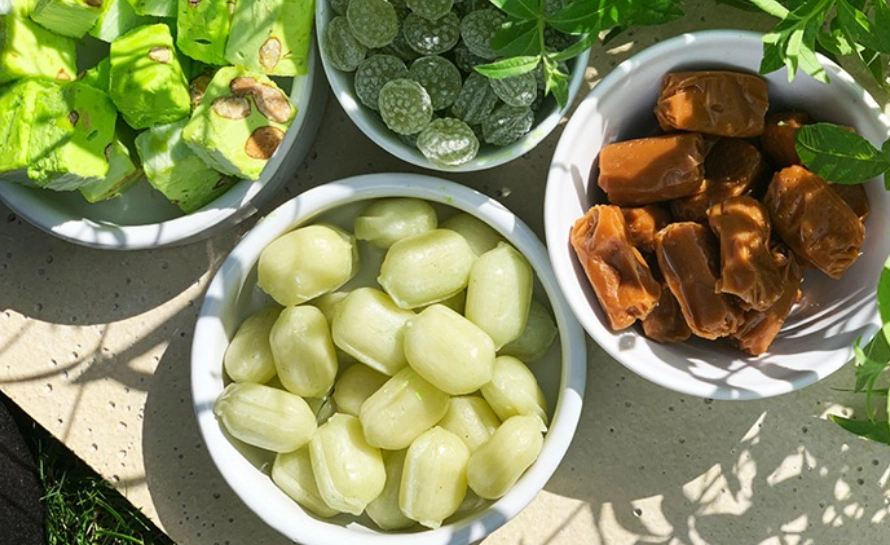
Bonbons à la Feuille de Verveine
Hard-boiled sweets flavoured with verveine (lemon verbena), a herb widely grown in southern France, particularly in the Velay region around Le Puy-en-Velay. These green or amber-coloured sweets have been made since the 19th century when verveine liqueur production was at its peak in the area.
The flavour is distinctly herbal and lemony, fresh, aromatic, and quite sophisticated compared to fruity sweets. Real verveine sweets are made with infusions or distillations of the actual plant, not artificial flavouring. You can taste the difference, there’s a complexity and slight bitterness that balances the sugar.
The Velay region is particularly known for them, verveine has been cultivated there since Benedictine monks introduced it centuries ago. You’ll find them in confiseries throughout the Haute-Loire and Auvergne. They’re often sold alongside verveine liqueur and other local products.
Do you have a sweet tooth for French sweets?
Right, so which of these would you actually try? I’m genuinely curious whether you’d go straight for the safe options like nougat and pralines, or if you’re brave enough to start with pine sweets or Bergamot ones.
And more importantly, have I missed any brilliant French regional bonbons? There are supposedly over 600 traditional sweets in France, so I’ve clearly only scratched the surface here. If your French grand-mère always had a particular tin of sweets in her handbag, or you’ve discovered something brilliant in a tiny confiserie somewhere, tell me about it in the comments below. I’m always looking for new things to hunt down on our next trips. Though my dentist might not thank me for it.
Just so you know, a few links here earn us a commission. Doesn’t cost you anything extra, and we only link to things that are actually worth your time.