The best French products at Waitrose (that are actually worth buying)
Waitrose does French food better than most British supermarkets, and as someone who grew up in France, that matters. They stock things I can’t find elsewhere, proper French cheeses, decent butter, brands French people actually buy.
When we lived in France, we used to order French products at Waitrose for my mother-in-law’s birthdays. She’d visit us and live on cheese and baguette, so we’d send her a selection of French cheeses she couldn’t get in rural Wales. They delivered to her door in the middle of Welsh nowhere, and the delivery driver even sang happy birthday. I’m not making that up. So if there’s no Waitrose near you, it’s not a problem. They deliver anywhere, which is half the point.
The fancy reputation is justified, but it’s not just about feeling posh whilst you shop. It’s about having access to ingredients you need for proper French cooking, products that make the difference between “French-inspired” and actually French.
Plus the loyalty scheme actually works. Link your Waitrose card with your Caffè Nero app and you get money off certain products. Make your regular purchases and you get “little treats”, vouchers for nice things without any extra effort. They run competitions too. Might win a cruise. Stranger things have happened.
All of which is to say: Waitrose stocks genuinely good French products, delivers them reliably, and makes the whole experience feel less like a chore. Which is why I’m happy to partner with them and recommend the French products that are actually worth your money. Here’s what’s good.
The dairy section
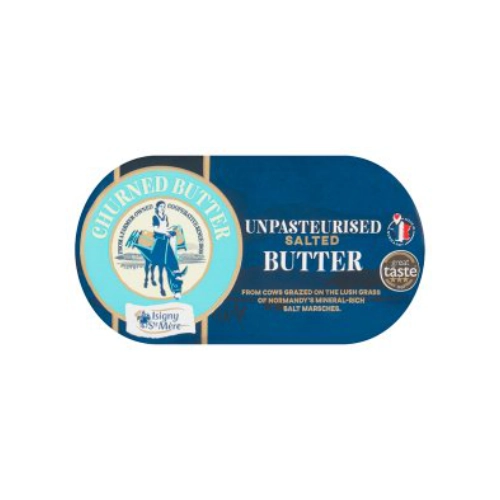
French salted butter
Butter dish “Le Creuset”
French salted butter, Isigny Sainte-Mère
There’s nothing quite like proper French salted butter (beurre demi-sel) and this unpasteurised version from Isigny-sur-Mer is the real thing. The cows graze on Normandy’s salt marshes, which gives the butter its golden colour and complex flavour. It’s PDO-protected, so you’re getting actual Isigny butter rather than something “Normandy-style.”
The unpasteurised bit matters. You can taste the cream, actual dairy flavour rather than just “butter.” The salt level is spot-on: enough to notice, not enough to overpower. Use it for everything: cooking, spreading, baking. Keep two blocks in the fridge if you can. They’ll disappear faster than you’d think.
If you want to know more about French butter and why it’s different, read our full butter guide here. And for proper storage, a butter dish or butter bell keeps it at the perfect temperature.
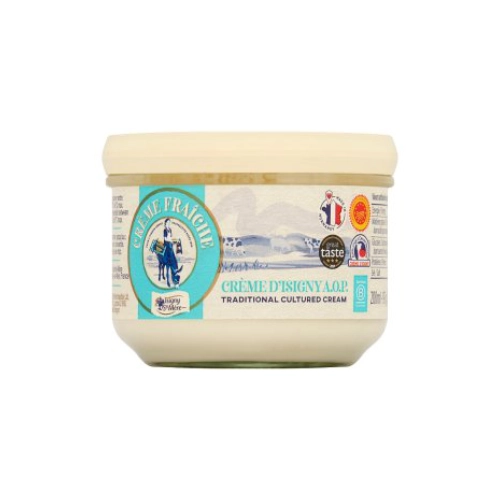
Crème Fraîche Isigny Sainte-Mère
The British version of crème fraîche is fine, but Isigny Sainte-Mère’s 40% fat version is what you want when you’re making something French. It’s thicker, richer, and doesn’t split when you add it to hot sauces, crucial when you’re enriching a French pumpkin soup for example.
The fat content makes all the difference. Lower-fat versions are healthy and sensible and entirely miss the point. Use this one. Add a dollop to scrambled eggs, stir it through pasta, top a tart. It’s endlessly useful.
Condiments and cooking basics
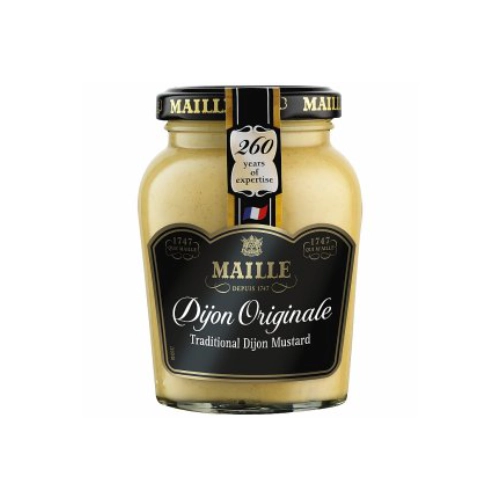
Dijon mustard
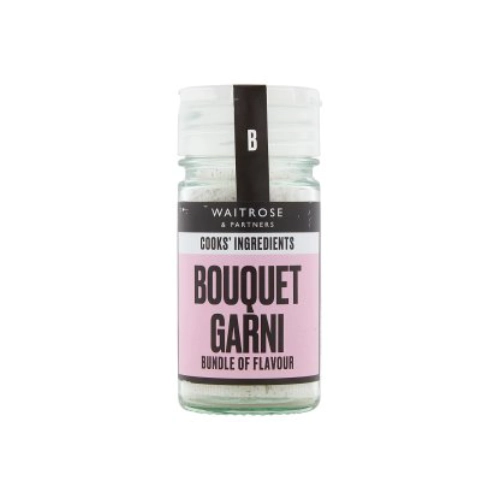
Bouquet garni
Maille Dijon Mustard
Every French kitchen has a jar of Maille. It’s been around since 1747, and there’s a reason it’s still the go-to Dijon mustard in France. Smooth, sharp, proper mustard flavour without being harsh. Goes in vinaigrettes (always), cream sauces, alongside roast chicken, spread on sandwiches. You’ll use more of it than you think. Yes, there are fancier mustards and Maille is the basic one. But that’s exactly why it’s good, it works in everything.
Bouquet Garni
Bit old-fashioned, maybe, but these little sachets are genuinely useful. Bay, thyme, parsley stalks, classic French herb combination for stocks, stews, and braises like the “Pot au Feu de la Mer” for example. Drop one in whilst something’s simmering, fish it out before serving. That’s it. You could tie up your own herbs, obviously, but these are there when you need them without having to think about it.
White wine vinegar
White Wine Stock
White wine vinegar
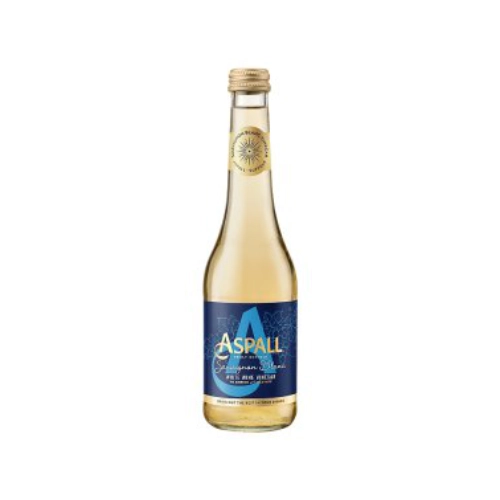
This one’s technically British (Aspall is a Suffolk producer), but it’s made from Sauvignon Blanc and works perfectly for French cooking. Clean, sharp, not too harsh. I can not make my vinaigrettes without it which is one part vinegar to three parts oil, add Dijon, salt, pepper. But you can also use it for deglazing pans. A good white wine vinegar is essential for French salad dressings, and this one does the job perfectly.
White wine stock pot
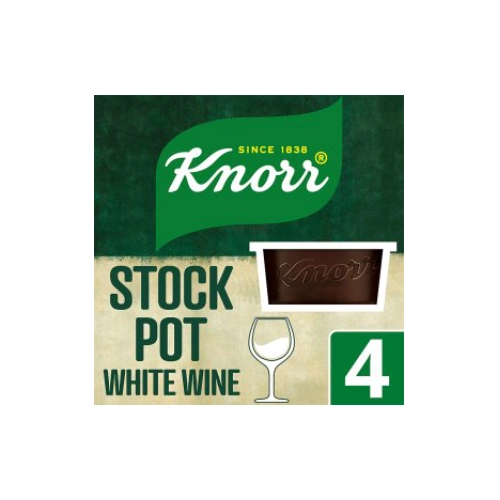
This one isn’t a French product either, but it’s ridiculously useful if you cook French food. It’s a stock pot with white wine already in it, brilliant for when you need to deglaze a pan or make French onion soup but don’t have an open bottle of wine sitting around. I keep them in the cupboard. Saves opening a whole bottle of Sauvignon Blanc just to use a couple of tablespoons in a stock.
Plant-based French products
Plant based Bacon
Plant based Lardons
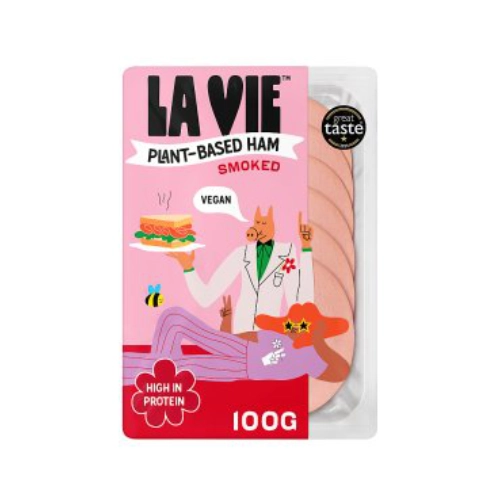
Plant based Ham
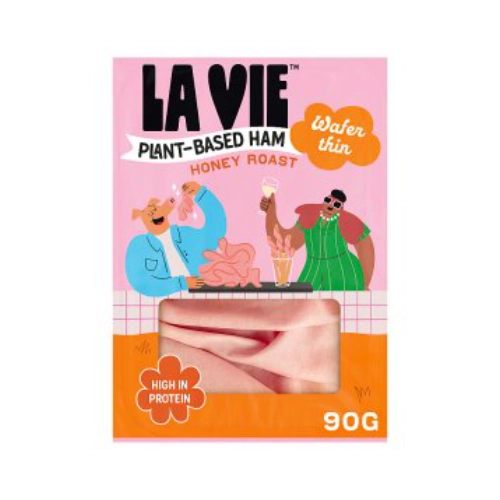
Plant based Ham Honey
La Vie range
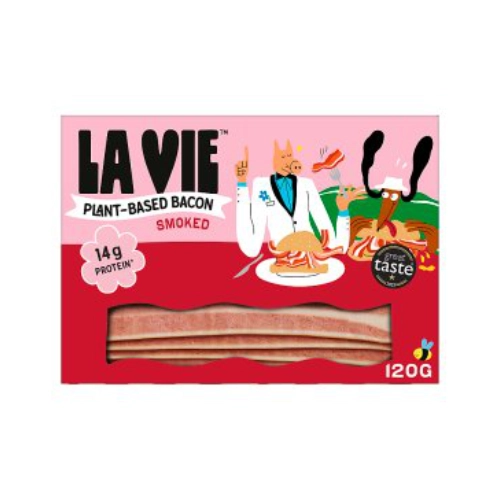
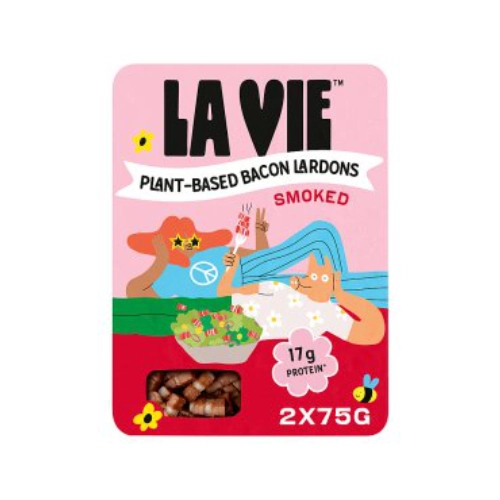
Right, this is maybe unexpected, but as we’re both pescatarian, these have become essential. We couldn’t live without La Vie products. La Vie is a French brand making plant-based charcuterie using fermentation. The result tastes unreal, genuinely smoky and meaty. They make smoked bacon, lardons, ham, and honey-roasted ham. All 100% vegan, so they work for vegetarians too.
The bacon is perfect for those bundles of green beans wrapped in bacon. The lardons are a must in our Tartiflette. The ham finishes off a classic Croque-Madame. And as an extra, the honey-roasted thin slices are brilliant on a cheeseboard or for Raclette.
Biscuits from the famous Lu
Before we get into the specific biscuits, worth knowing what Lu actually is. Lu started in 1846 when Jean-Romain Lefèvre and his wife Pauline-Isabelle Utile opened a small bakery in Nantes. They combined their surnames, Lefèvre-Utile (now simplu LU), and started making biscuits.
Their son Louis took over and created the Petit-Beurre in 1886, that iconic rectangular butter biscuit with 52 teeth around the edge. It became Lu’s most famous product and is still made using the same recipe nearly 140 years later. Waitrose stocks this original version.
Lu survived two world wars, modernised through the 20th century, and is now part of Mondelez International. But the biscuits are still made in France, at La Haye-Fouassière, just outside Nantes, using many of the original recipes. Real French food history in a pack of biscuits.
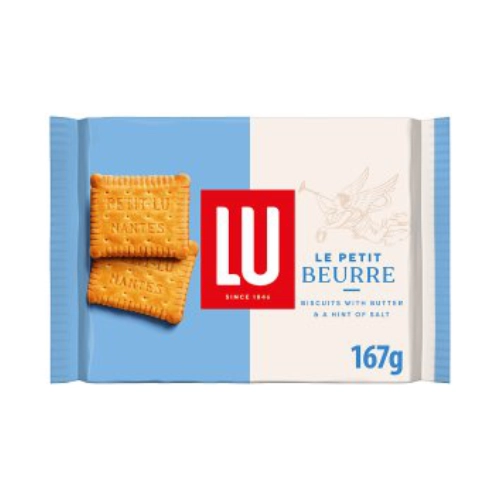
Le Petit Beurre
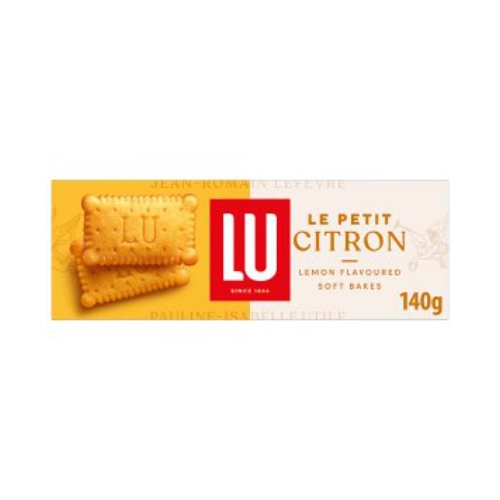
Le Petit Citron
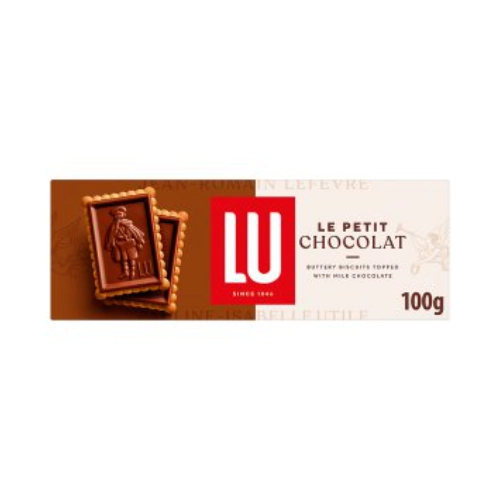
Le Petit Chocolat
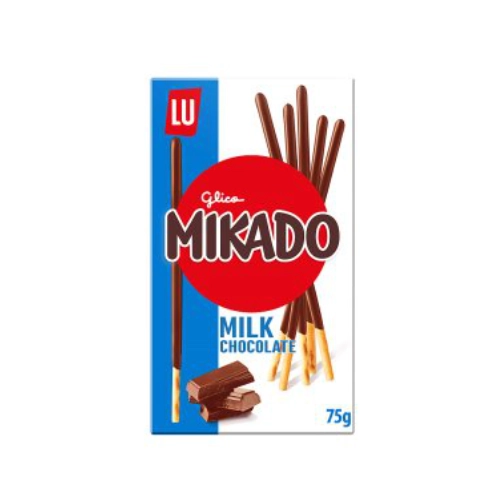
Mikado
Le Petit Beurre
Lu Petit Beurre biscuits have been around since 1886. Plain, buttery, slightly salty, perfect with tea or coffee. French kids grow up on these. They’re also excellent for dunking. Firm enough to survive hot drinks without falling apart immediately, which is as my partner reminds me, a very serious consideration. He approves.
Le Petit Chocolat
In France we call them “Le petit ecolier” a.k.a “The little schoolboy” which was created in 1897. It’s still France’s best-selling biscuit today. Similar to the Petit-Beurre but sweeter, with a thick slab of chocolate on top. As kids, my brother and I would always take them apart: eat the biscuit first, save the chocolate layer for last. The hierarchy of pleasure, even at seven years old.
Le Petit Citron
These little lemon cakes are more cake than biscuit. They’ve got a nice lemony flavour without being artificial or overpowering. The problem is they’re dangerously moorish. Once you open the box, good luck stopping at one. I’ve learnt to hide them from myself, which tells you everything you need to know.
Mikado
Lu Mikado sticks were my childhood obsession. Still are, if I’m honest. They’re slender biscuit sticks dipped in chocolate, simple, but the ratio is spot-on. Not too much chocolate, not too much biscuit. Just the right balance. I used to pester my mum for these in the supermarket. Sometimes she’d give in. Sometimes she wouldn’t. The times she did were brilliant. If you’ve never tried them, you should. They’re one of those French biscuits that seem unremarkable until you eat half a box without meaning to.
Delicious French tinned fish
A little bit about mister Parmentier, this brand has been making tinned sardines since 1883, starting in Douarnenez in Brittany, France’s sardine capital. The company was founded by Hyacinthe-Nicolas Parmentier and named after him, though there’s a wonderful bit of branding history here.
The founder had no relation to Antoine-Augustin Parmentier (the bloke who popularised potatoes in France), but he clearly wanted to pay homage. The famous yellow tins feature Napoleonic imagery, the imperial eagle, the royal bees, even a cheeky inversion of Napoleon’s sceptre and hand of justice on the logo. It was a bold choice at the time when most sardine brands just showed fishing boats and local harbours.
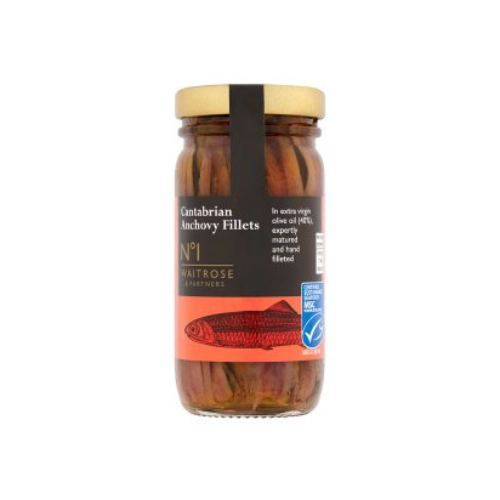
Anchovy
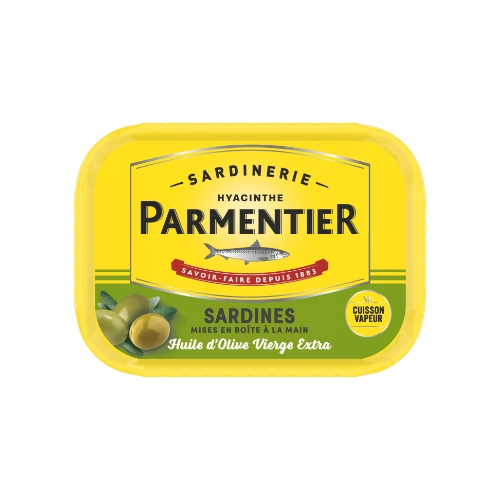
Sardines Olive Oil
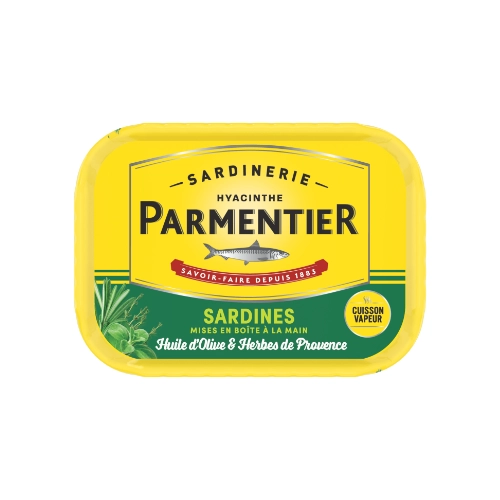
Sardines Herbes de Provence
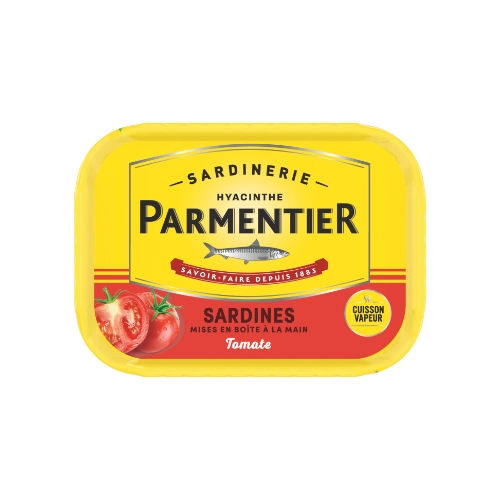
Sardines Tomato Sauce
Parmentier Sardines
French people take tinned fish seriously, and Parmentier sardines are the real thing. Plump, meaty, packed in either tomato sauce or extra virgin olive oil (with or without herbes de provences). The tomato version is brilliant on toast with lemon. The olive oil one goes into pasta with garlic and parsley, or on a side of fried potatos. Both make emergency lunches that don’t feel like emergency lunches.
Waitrose No.1 Anchovies
These anchovies are from Waitrose’s own range rather than a French brand, but they’re meaty and perfectly salted. The kind you’d actually eat straight from the tin. Good anchovies dissolve into sauces, add depth to salad dressings, and make the famous Pissaladière Niçoise possible. Keep a tin around.
Preserves and cheese accompaniments
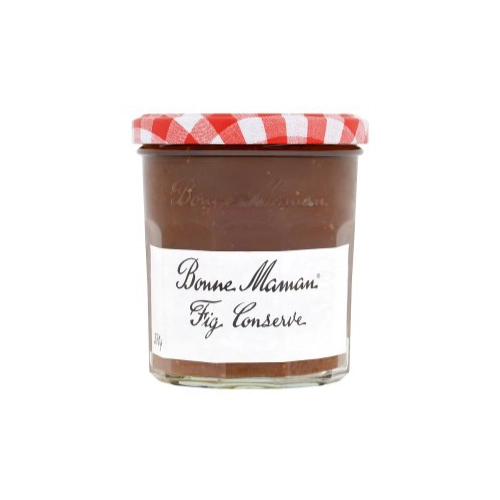
Fig Conserve
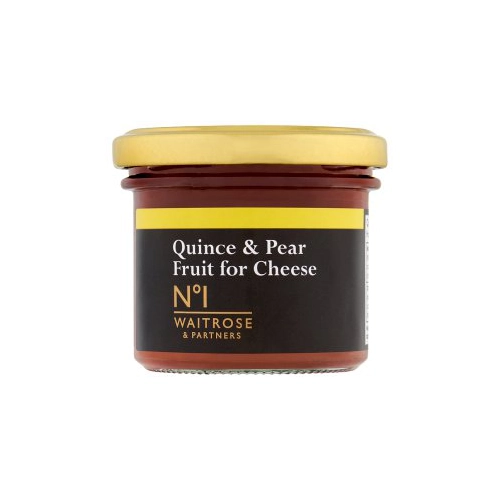
Quince & Pear Fruit Paste
Bonne Maman Fig Conserve
Bonne Maman is super French, those gingham-topped jars cover huge spaces in every French supermarket. The fig conserve is particularly good, intensely figgy, not too sweet, excellent with your cheeseboard or on toast. It’s one of the more interesting Bonne Maman flavours in my opinion. Worth having a jar around.
Waitrose No.1 Quince and Pear for Cheese
This stuff is essentially “pâte de fruits” designed to go with strong cheese. Sweet, tart, slightly grainy texture. Works brilliantly with Comté, aged Cheddar, blue cheese. It’s one of those things you might never buy yourself, but you should. Real French cheeseboard material.
Classic French drinks
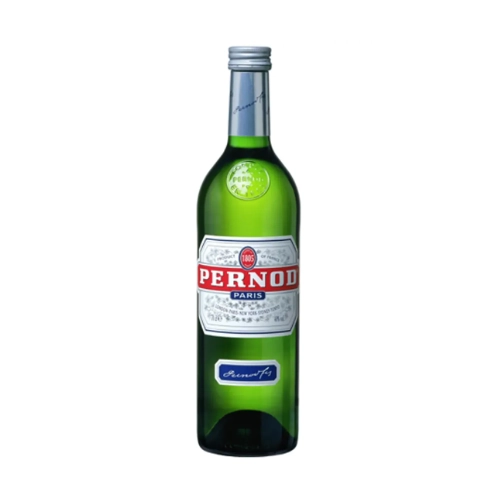
Pernod
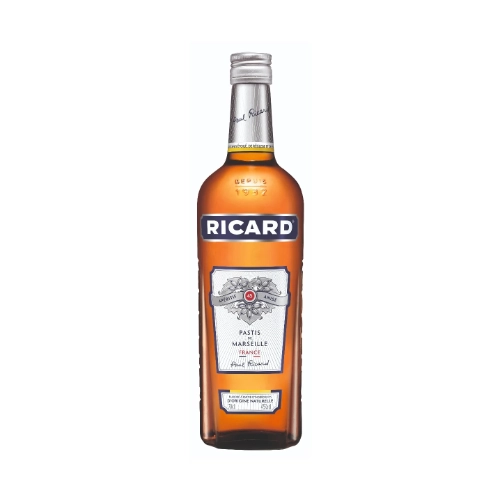
Ricard
Pernod and Ricard
Pernod and Ricard might seem like holiday drinks, but they’re useful in the kitchen too. Add a splash to seafood stews like the famous Bouillabaisse, the aniseed flavour works brilliantly with fish and shellfish. Or just drink it properly: one part pastis to five parts cold water, ice, sunshine optional. Close your eyes and you’re in Provence, listening to the clack of pétanque balls on gravel whilst someone argues about whose shot was closer. Ricard is the Marseille classic, stronger anise flavour, slightly sweeter. Pernod is more herbal. Both work. Pick whichever you prefer.
The sweet desserts
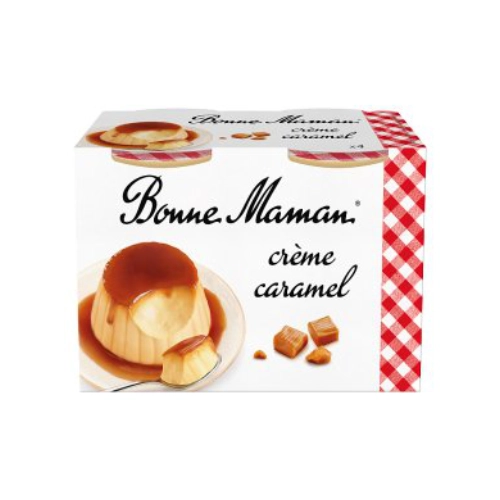
Crème Caramel
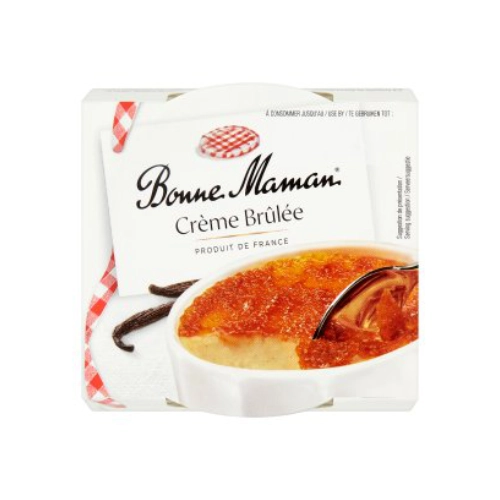
Crème Brulée
Bonne Maman Crème Caramel
These little pots are another way to take me back to childhood. Silky custard, proper caramel on top, glass pots you can reuse. It’s not homemade, but it’s a perfectly respectable finish to a weeknight dinner when you haven’t got the energy for anything complicated. French families buy these regularly. They’re better than most restaurant crème caramels, if we’re being honest.
Bonne Maman Crème Brulée
Yes, you can make your own crème brûlée, but if you’re feeling lazy and you just want to wow your guests in a instant? Then these are your answer. The custard itself is rich and creamy, very close to the real thing. It’s a shop-bought dessert that doesn’t feel like a compromise. Serves two, or one person having a really good evening.
What makes these worth buying
If you want proper French products without hunting down specialist shops and pay triple the price, Waitrose is your best bet as a British supermarket.
The Isigny butter and crème fraîche are standouts, actual Norman dairy that tastes like it should. The La Vie range has become essential in our kitchen for plant-based French cooking. The Lu biscuits are identical to what you’d buy in a Carrefour or Intermarché. And those Parmentier sardines? Keep a couple of tins around. Trust me on this one.
The products listed here earn their place. They’re either genuinely from France or just makes sense if you love French cooking.
What French products do you keep stocked? Anything I’ve missed that Waitrose does brilliantly? Let me know in the comments.
Just so you know, a few links here earn us a commission. Doesn’t cost you anything extra, and we only link to things that are actually worth your time.