French coffee culture
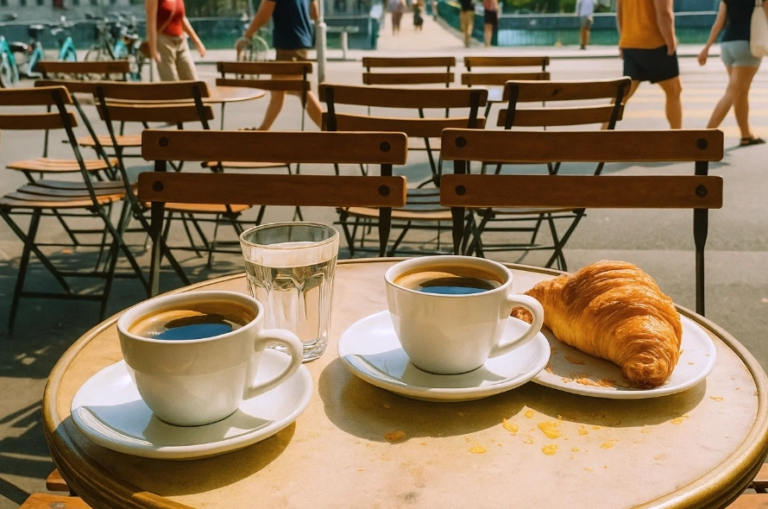
French coffee habits and traditions
As a French kid, I vividly remember watching my father stroll into the local café, order his tiny cup of dark coffee at the bar, and finish it almost before the waiter had stepped away. This little ritual captivated me, and he wasn’t alone. Businessmen from all over the neighbourhood would pop in before opening their shops, treating this bitter little elixir as nothing less than essential, something that promised the day would go just right. A quick nod, a confident “bonne journée,” and off they went to face the day.
Another morning habit I adored was how coffee wasn’t always served in a cup in the morning in French households but in a bowl. As a child, I’d sip hot chocolate from a bowl alongside my biscottes. It might seem odd to outsiders, but to us, it was completely normal, a comforting way to start the day.
Whenever I travel, the hardest thing is finding the perfect coffee outside my French habits. My preference is for the “court” (short and strong, aka espresso) though now and then, I do enjoy a creamy cappuccino. For fellow enthusiasts, we found some truly excellent UK-roasted coffee brands (with links, so the adventure doesn’t end here).
France wouldn’t be France without coffee. While the beans themselves aren’t French, the French simply couldn’t function without it. Coffee is both a pleasure and a habit, woven firmly into the fabric of everyday life and the country’s unmistakable charm.
Coffee statistics: facts behind the crema
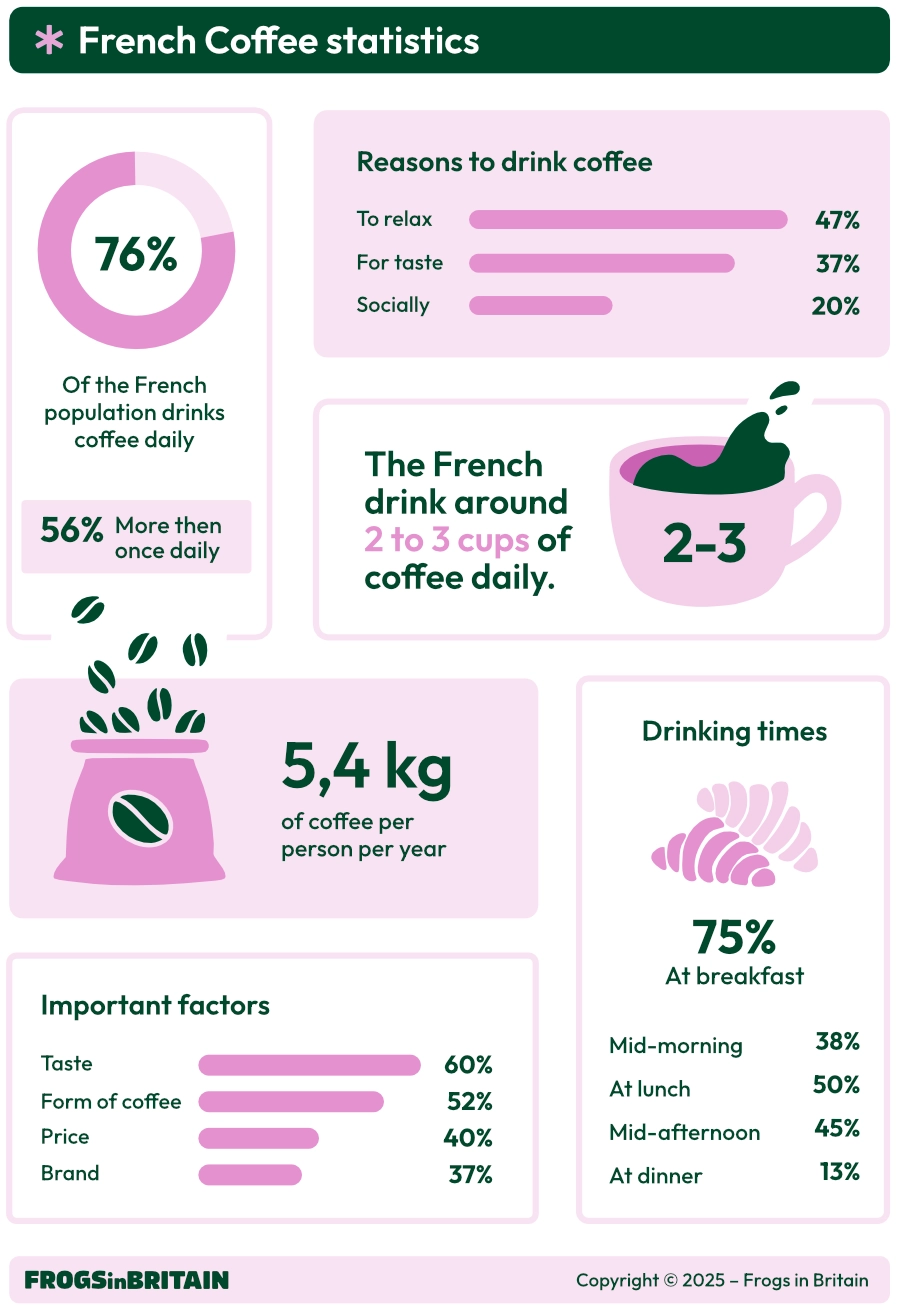
France ranks comfortably amongst the world’s top coffee consumers, with about 350,000 metric tons downed per year, holding fifth place globally. Everyone, from a postman in the Auvergne to a senator in Paris, is probably holding a cup right now, if not audibly grumbling about the price of croissants. In 2024, the French coffee market generated £8.4 billion (about $10.6 billion), and it’s on a steady rise, expecting to hit £11.3 billion by 2030. Instant coffee is surprisingly king, both in terms of revenue and fastest growth, proof that nostalgia and convenience do sometimes go hand-in-hand.
The French coffee menu decoded: what to order
There’s a certain way to ordering coffee in France, you can do so with an air of nonchalance. French cafés rarely have elaborate menus. If in doubt, pick a classic, smile, and pretend you understood every word. Here is a cheat sheet.
Un café
You’ll get an espresso shot, no questions asked. Best paired with a brisk “merci.”
Un café allongé
Like an Americano, espresso with extra hot water. Designed for contemplation…or procrastination!
Un café crème
Milchkaffee meets cappuccino. Morning treat, preferably before 11 a.m. (to avoid stern glances).
Un café au lait
Chunkier with milk and usually enjoyed with croissants. If you order after noon, prepare for a raised eyebrow.
Une noisette
Espresso with just a splash of milk for a nutty colour. Effortlessly chic for the caffeine-sensitive.
Un café Américain
Black coffee with added water, served in a regular mug. British palates often feel right at home.
Un déca
Decaf espresso. Feel free to order whenever you like (even the French need sleep).
Un café gourmand
Espresso served with pastries or desserts. The French equivalent of “go on, treat yourself.” Often ordered after a great meal in a restaurant.
Timing is everything. Milky coffees belong to the morning, you can imagine them as one more piece of the breakfast puzzle. An espresso after lunch, consumed without food, is the norm. Few French cafés offer anything resembling “takeaway” unless they’re aimed at tourists or time-pressed students. Real coffee, real moments, no paper cup required.
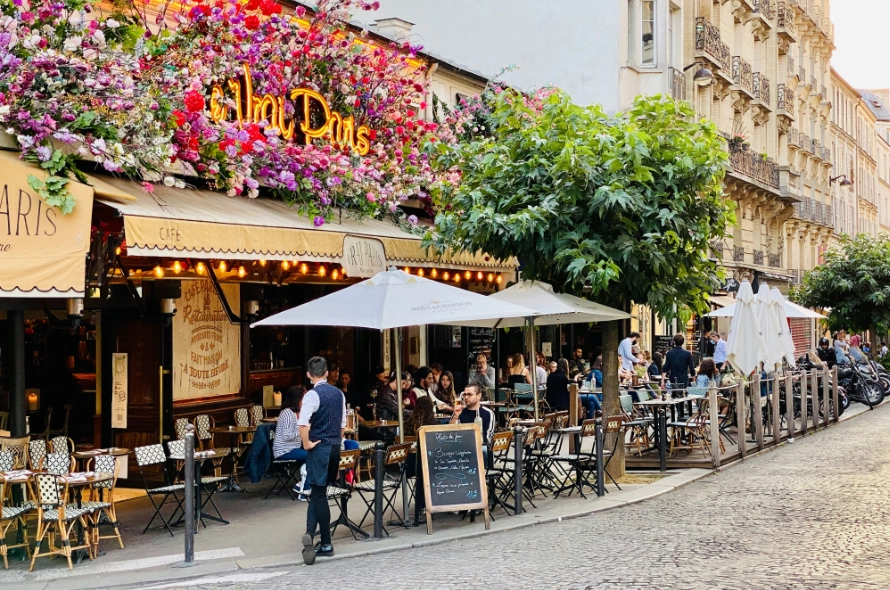
And coffee is social, but also a meditative pause. Ordering at the bar is for a quick shot and dash (like my dad used to do), sitting at a terrace signals an intention to stay and savour. Either way, nobody orders a giant latte with three pumps of caramel or expects wifi codes scribbled on napkins. And that’s the part I love best: it’s real coffee without fuss.
French coffee at home: a quick guide
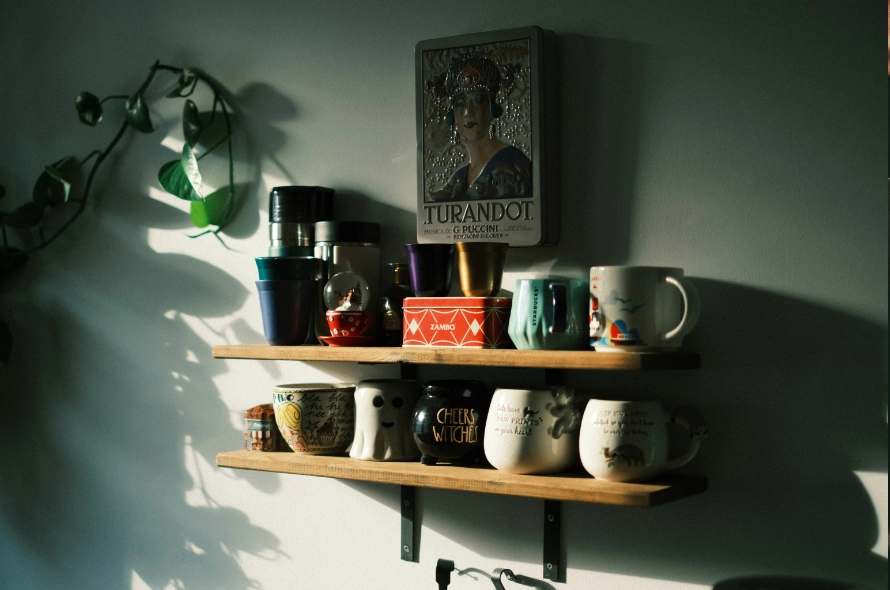
Most French households keep things charmingly simple when it comes to brewing their daily French coffee. And if you truly want to capture the full French experience, don’t forget to pair your cup with a Madeleine, they’re the perfect little treat to accompany your coffee.
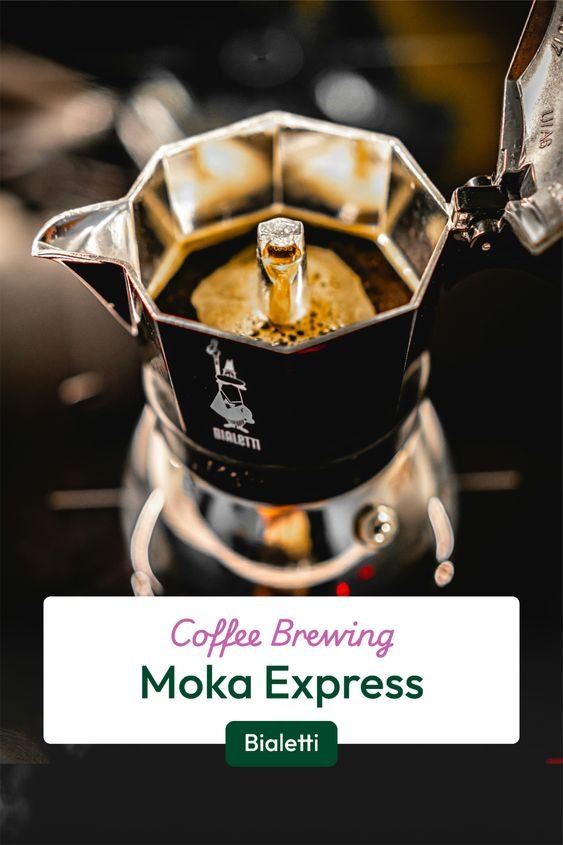
Bialetti Moka Express
The beloved moka pot, originally Italian in origin and invented in the 1930s, is a staple in many kitchens. This nifty little stovetop contraption quietly delivers a rich, espresso-like brew by forcing boiling water through finely ground coffee. It’s perfect for those who want a strong, full-bodied cup without the need for a fancy machine. In France, a significant number of families still swear by the moka pot for its reliability and the timeless ritual of making coffee this way. And in my opinion, the only brand to go for is the original Bialetti.
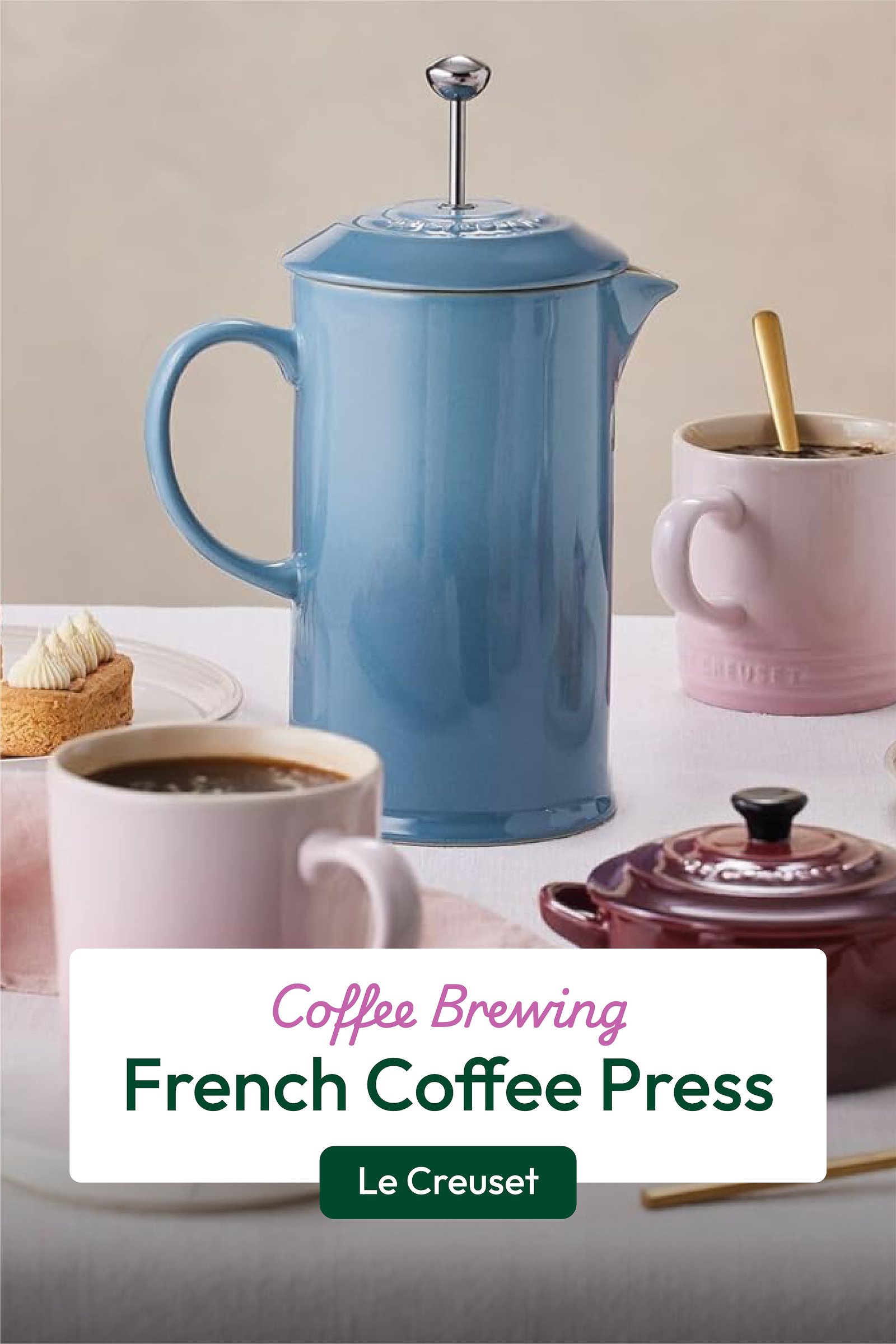
Le Creuset French Press
Then there’s the French press, or piston pot, which enjoys widespread popularity too. This straightforward method involves steeping coarse coffee grounds directly in hot water before pressing the grounds down with a mesh plunger. The result is a robust and flavourful cup, different from espresso but deeply satisfying, especially for those who appreciate fuller-bodied, nuanced brews. Many French coffee drinkers favour the French press for its ease and the control it offers over strength and extraction.
Other ways
Of course, the ever-trusty “cafetière filtre” (filter coffee maker) still holds its place, especially for those who prefer drip coffee, a milder, gentler way to wake up. Ground coffee varieties on supermarket shelves range from dark roasts designed to capture classic French bitterness to lighter blends meant for a morning pick-me-up.
Pods and capsule machines are steadily making inroads, mainly for convenience and speed, though purists often argue that these quick fixes sacrifice the rich traditions and full flavours French coffee is known for.
Nevertheless, a quiet revolution is brewing at home. A new generation is rediscovering small-batch roasters and flavour-chasing blends. Ethical sourcing, traceability, and freshness are no longer quirks for a niche few, they’re becoming standard expectations among the French coffee community.
French coffee and conversation: the human side
Every region in France boasts its own quirky traditions and local favourites. In the north, people favour robustness; in the south, coffee is lighter, sometimes taken “au comptoir” (at the bar) with a good dose of local cheer and a cheeky pastis for the truly committed. The café terrace, whether in a city or provincial town, is an institution. It’s not just coffee, it’s about seeing, being seen, reflecting and, if luck’s on your side, striking up a conversation about the recent football scores or the state of the local government.
And who hasn’t wandered into a sleepy French village, only to find a local bar-tabac doubling as coffee shop, newsagent, and sometimes, unofficial town hall? Order “une noisette,” and the proprietor is likely to remember your favourite table next time you appear.
France’s consumption usually ranks around 15th to 20th globally, with an average of about 5 to 6 kg (roughly 11 to 13 lbs) of coffee per person per year. This places France comfortably as a significant coffee market but not among the very highest per capita consumers. And that’s because in France (unlike the US for example), the love for coffee is more about quality and tradition than sheer volume, making every cup an experience rather than a marathon.
Changing tides: the rise of neo-cafés
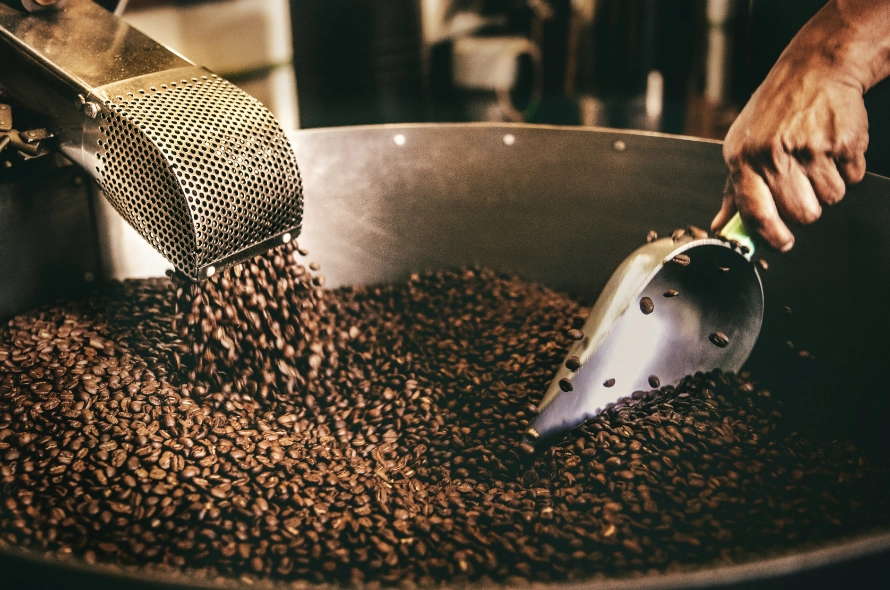
Enter the new wave: French “neo-cafés”. Fresh-faced roasteries, hipster havens with exposed brick, locally sourced oat milk, and an upbeat, international playlist. The transformation is real. Younger drinkers have started seeking out barista-style brews; single origins, pour-over magic, and everything Instagrammable. The evolving coffee market is blending the old and new: heritage cafés mingle with neo-cafés, each infusing the scene with innovative techniques and global flavours. Still, don’t expect the French to give up on their classic rituals soon.
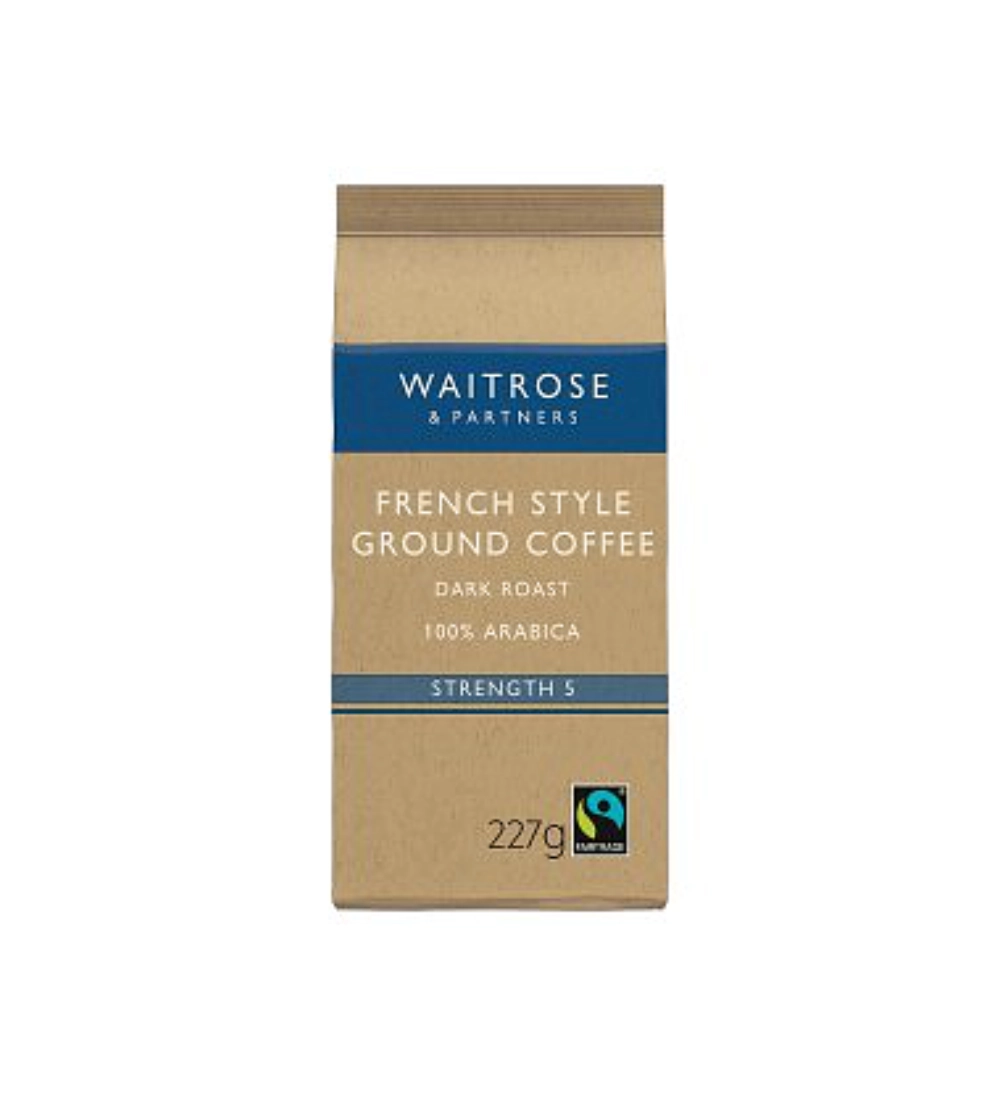
Fairtrade French Style Ground Coffee
Roast and ground coffee.Rich and full-bodied, with notes of caramel, chocolate and spice. 100% Arabica.
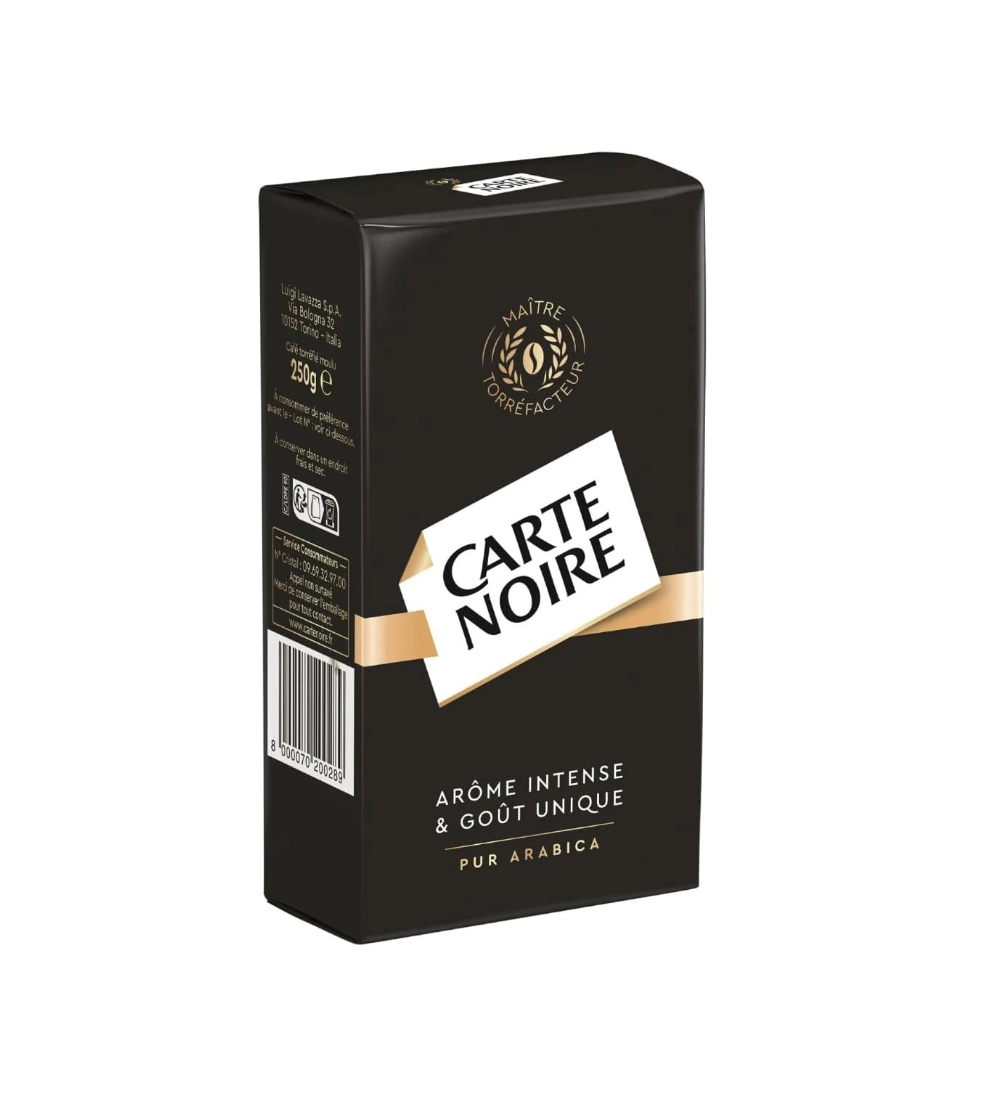
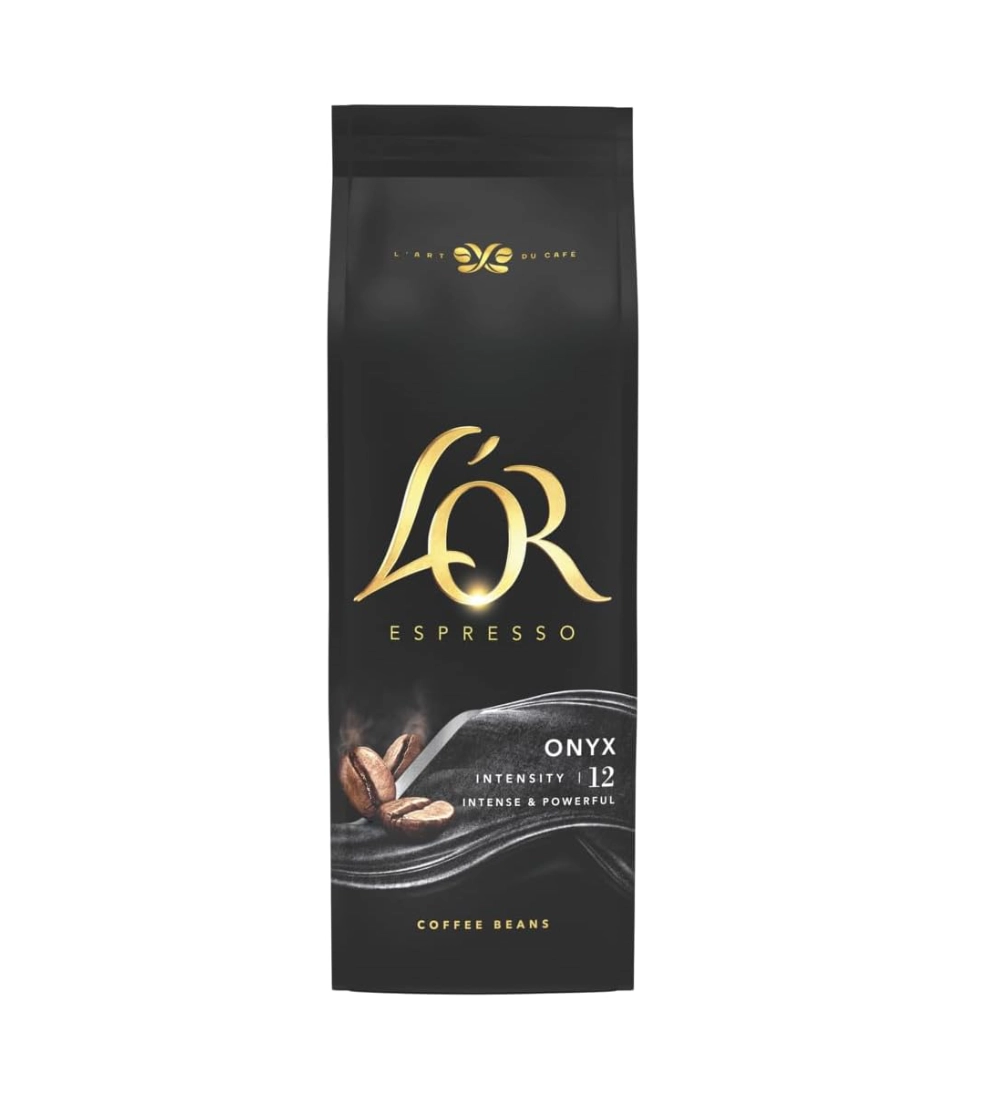
L’OR Espresso Onyx Coffee Beans
Premium blend of dark roasted Arabica and Robusta beans, intensity 12/13, delivering a pronounced spicy aroma and full-bodied espresso character.
Conclusion
So that’s the story of French coffee, the deep-rooted traditions, the simple pleasures, and the subtle evolution shaping every cup. Whether it’s the quick espresso at a bustling café or a carefully brewed French press at home, coffee in France is far more than a morning fix.
Now, I’d love to hear from you: What’s your go-to coffee style, and how do you like to enjoy it? Have you experienced French coffee culture firsthand, or are you inspired to try? Do you have a favourite café ritual or a brand you swear by? Share your thoughts and stories in the comments below.
Just so you know, a few links here earn us a commission. Doesn’t cost you anything extra, and we only link to things that are actually worth your time.