French apéro

Ah, the French apéro, the social gathering between the bustle of the day and the gentle hum of evening. Ask any French person, and they’ll say it’s the ideal moment to bring friends or neighbours together over simple snacks and a drink. It’s a little slice of national soul poured into a cosy shared moment.
Back when we lived in France, our neighbour was a remarkable host. Her father was a chef, so she often used the French apéro as a chance to test out new recipes, and we were always very happy to be invited to try what she made! She’d invite other neighbours and friends, turning those early evenings into social gatherings. Through her, we met new faces and tasted new flavours. She had a real gift for making moments in life count and we love the memories she gave us. So thank you Nathalie for being so welcoming to us and sharing your love for food with us, this one is for you!
A word that opens everything
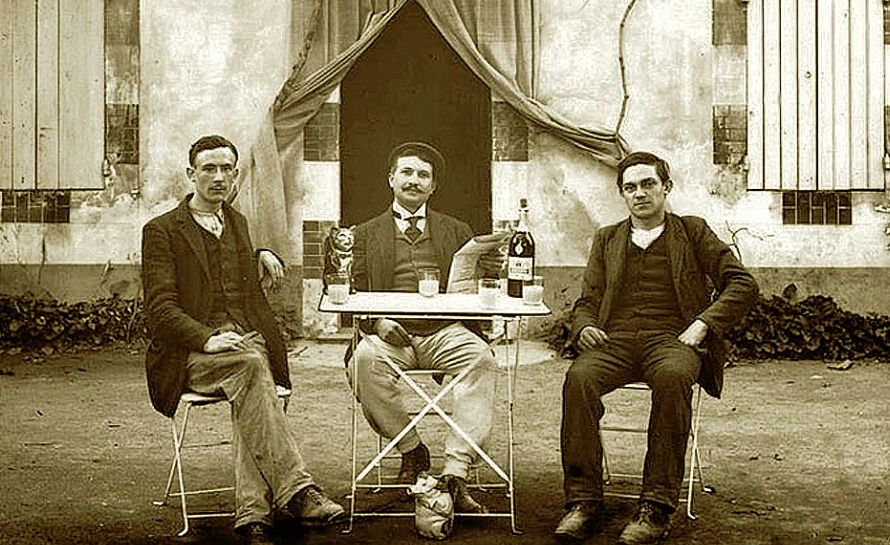
The name itself gives the game away. French Apéro is short for apéritif, from the Latin aperire, meaning “to open”. It began, literally, as a way to open the appetite. Medieval monks brewed herbal potions, early digestives, to prepare the body for food. By the 19th century, chemists like Joseph Dubonnet refined these concoctions into wines laced with botanicals and quinine, marketing them as medicines that “helped with malaria.” Naturally, once the French discovered they tasted delightful, any medical pretence was quickly abandoned!
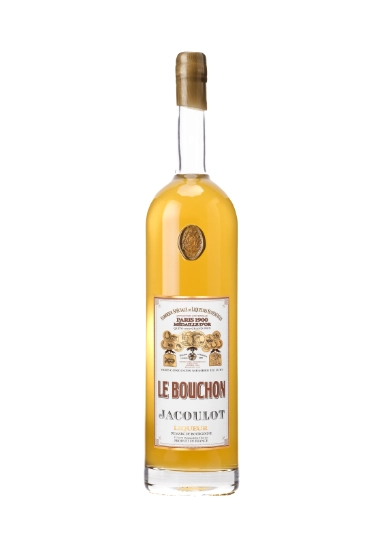
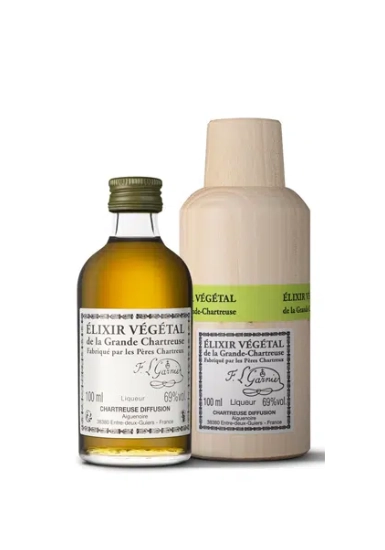
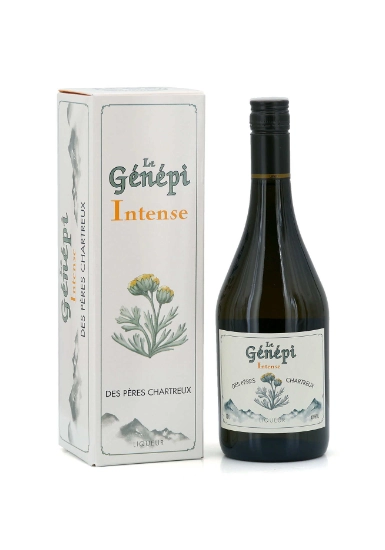
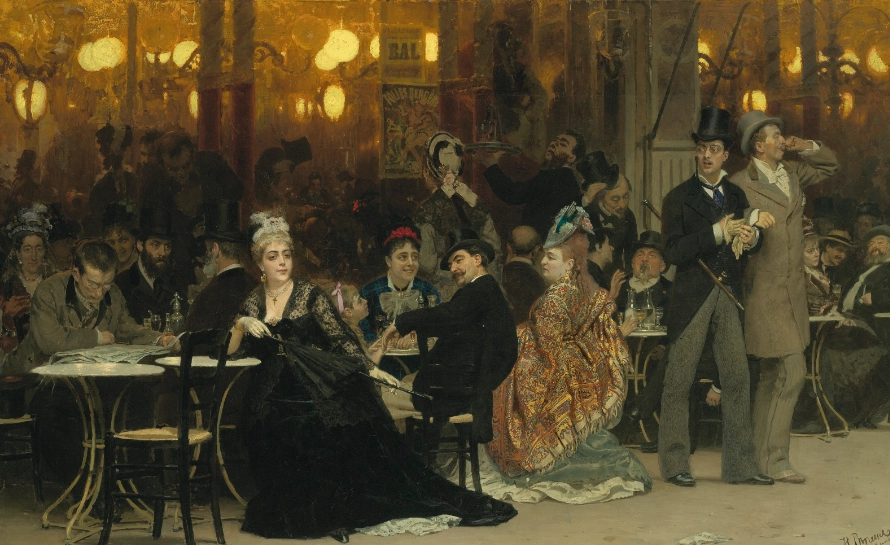
By the Belle Époque, the apéritif had transformed from a tonic into a badge of urban sophistication. Parisian cafés brimmed with chatter, cigarette smoke, and the clink of glasses filled with vermouths, anisettes, or lillet. It’s no coincidence that this was the same era that gave us le café concert, the literary salon, and the first flâneurs, after all, the French apéro has always belonged to conversation as much as to appetite.
A ritual written in time
Tradition dictates the French apéro begins an hour or two before dinner, somewhere around 6 or 7pm, depending on whether you’re north or south of the Loire. But of course, the French, being French, don’t treat it as a fixed schedule. In Provence, “l’apéro” can drift lazily from late afternoon until dusk, cicadas in the background providing the soundtrack. In Paris, it might be sharper, a prelude before heading out.
Whatever the time, two things make a French apéro authentic are simplicity and togetherness. You needn’t make a fuss. A handful of crisps will do, though olives, nuts, or cubes of Comté are always welcome. The host provides the essentials, but guests bring a bottle, part etiquette, part insurance against running dry. Arriving fashionably fifteen minutes late is standard practice, of course; that way, the host has time for one last deep breath before the doorbell rings.
The secret ingredient
Humans are social creatures by nature. Our need for connection and community is backed by science. Researchers at Harvard who followed individuals for over seventy-five years found that regular, pleasant social interactions contribute greatly to happiness and longevity. Loneliness, by contrast, has proven health risks.
So to tell you the secret ingredient to a good French apéro, it really isn’t about the pastis or peanuts. It’s about the time and connecting to your fellow humans. You can’t rush, measure, or multitask during the apéro. This time between day and dinner where life briefly stops, is there not to be productive, but simply to be.
There’s a reason it strikes such a note with travellers and expats. To sit at a French terrace at apéro hour, to hear the unhurried murmur of voices, smell garlic from the kitchen, watch the sunlight fade on the façades, is to glimpse the pulse of a country that still understands rhythm. Not speed, but tempo and good company.
Even the language around it reveals respect for craft. The verb “prendre l’apéro” meaning “to take an apéro”, implies intention. One doesn’t have an apéro hastily; one takes it, as one takes time, or takes the air. There’s that old-fashioned grace about doing things properly!
Numbers that tell a story
If the French apéro were a religion, France would be its most faithful congregation. A 2024 study by the Syndicat des Apéritifs à Croquer found that 95% of French people share an apéro at least once a year, while 61% do so at least once a month. Another survey revealed that 82% consider it part of France’s national heritage. And this isn’t just nostalgia talking. Among younger adults (25–34), weekly apéros are actually more common than among older generations.
Even inflation couldn’t shake this habit. When budgets tightened, the French didn’t abandon the ritual, they simply moved it home. By 2025, the “apéro maison” had become the reigning format, with people swapping bar terraces for balconies and living rooms, often turning the whole evening into what’s now called an apéro dînatoire, a sociable, snack-based supper that stretches on delightfully past midnight.
No formalities nor fuss
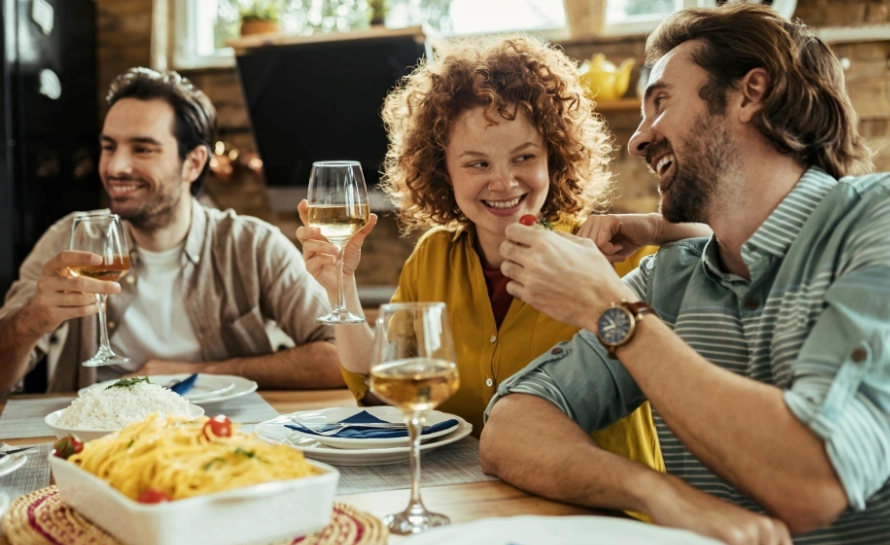
The French apéro is honest, and that’s rare in the age of multitasking. It doesn’t demand formality or a dress code. You could turn up in a linen shirt still creased from the day, bring your half-empty bottle of rosé, and no one would blink. It’s about connection. The good kind, unfiltered, face-to-face, with crumbs on the table and glasses that never quite match.
Every family has its own code. In Lyon, apéro might mean chilled Beaujolais and saucisson. In Marseille, it’s unthinkable without pastis, that anise-scented spirit turned milky with ice water, the drink that practically smells of summer holidays. Up north, where evenings are cooler, cider, beer, and kir (white wine with cassis liqueur) reign supreme.
Apéro Dinatoire: When snacking becomes supper
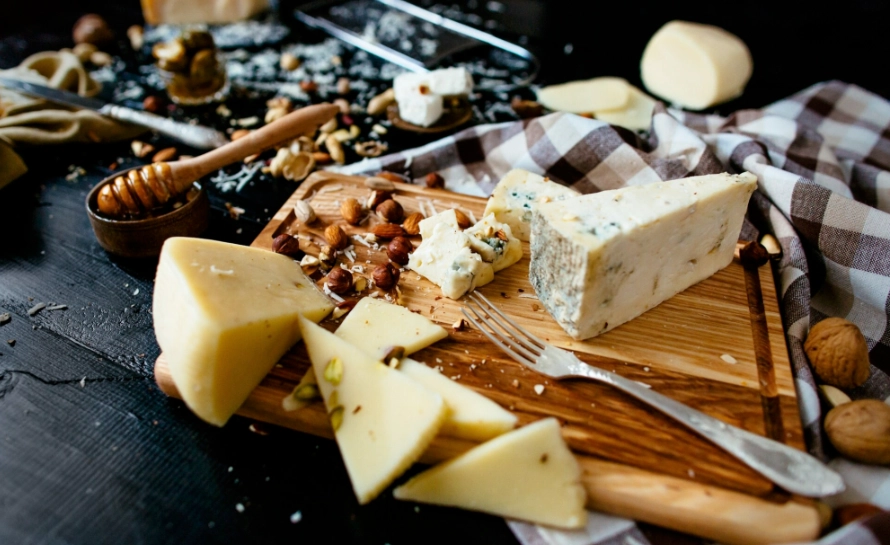
The French, naturally, reinvented their own tradition. The apéro dinatoire began as an informal gathering, a clever way to host without the faff of a sit-down meal. Instead of a main course, the table overflows with little dishes: savoury biscuits, cheese on toast, crudités, mini quiches, dips, even a whole baked Camembert! People graze, chat, refill their glasses, and drift between topics, politics, football, someone’s new haircut, with the ease that only wine and comfort can bring.
During the pandemic years, this format exploded. Video calls and home isolation may have dulled many pleasures, but they also turned the French apéro into a lifeline. By 2022, nearly one in three French adults said they hosted or joined apéros weekly, whether in person, outdoors, or on Zoom, proving that conviviality, like good cheese, endures.
Even now, in 2025, it’s evolving. Many households are turning apéro time into a healthier affair: less processed, more local, more inventive. Out go the greasy crisps, in come hummus, tapenade, and plates of cherry tomatoes dressed with olive oil from Auntie’s village in the Var.
About the “Tchin Tchin”
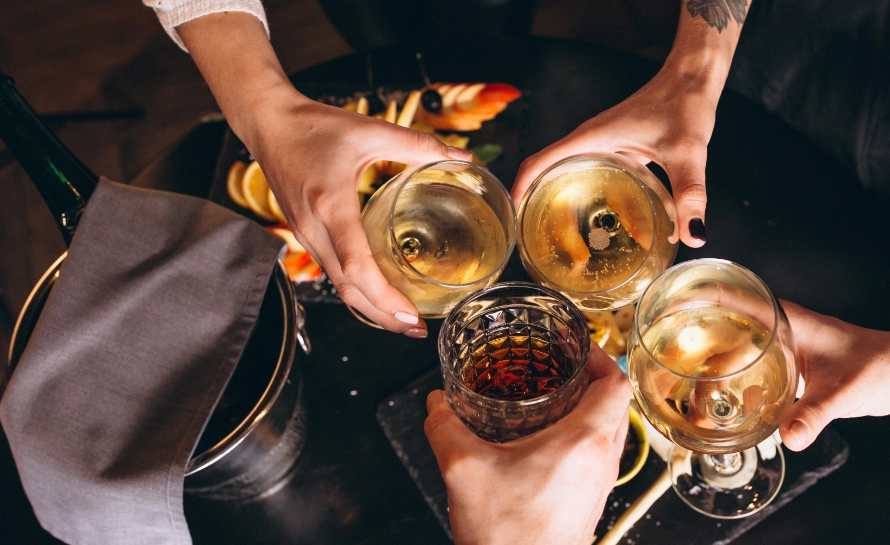
If you ever toasted in France, you know they do this by saying “tchin tchin”! The origin of the phrase “tchin tchin” used when clinking glasses doesn’t come from what you would think: the sound of glasses tapping. It actually has roots in China. The phrase comes from the Chinese pidgin expression “tsing tsing”, which means “salut” or “cheers.” French soldiers stationed in China in the early 20th century picked it up during their time there and brought it back to France. Over time, it became the typical toast phrase for the French apéro!
The older reason for clinking glasses, if you’re interested, goes back way further to medieval times when poisoning was a real threat. People would clink glasses hard enough for some of the liquid to spill into the other’s glass. This was a way to prove no one meant harm. Looking into each other’s eyes before taking the first sip sealed the trust. Though the threat of poison has long gone, the ritual of clinking and eye contact remains very present today.
How to have a French apéro, wherever you are
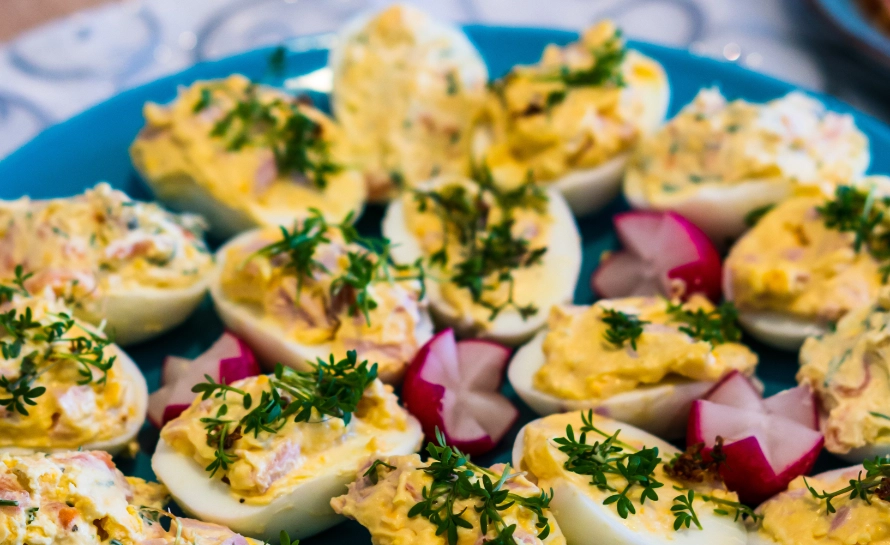
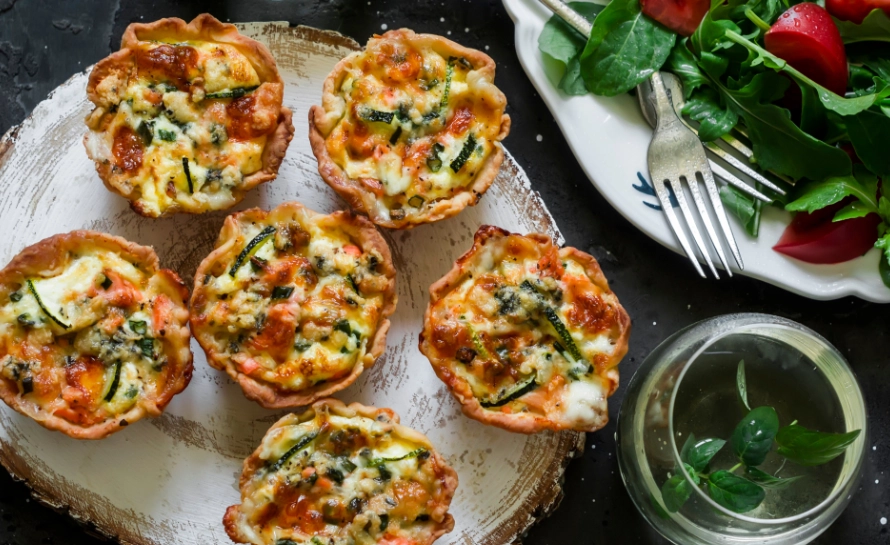
To recreate the magic of a French apéro (and many have), start small. Open a bottle, rosé, cider, or even elderflower fizz. Lay out something to graze on. You can for example make some Mimosa Eggs, or some easy smoked salmon puff pastry bites, slices of apple, mini quiches ,or some olives and Parmesan biscuits. Then, most importantly, stop. Sit. Talk. No phones, no telly in the background. Just conversation drifting between the serious and the silly, until someone laughs and the next bottle quietly appears. Maybe it’s raining outside, but that’s fine. That’s Britain’s version of cicadas!
What about you? Have you ever hosted or joined an apéro, here or in France? What snacks or drinks made the moment special? Or maybe you have a favourite story from an evening spent around a shared table, glass in hand, catching up with friends or neighbours. Do share your experiences or recipes below, because every good French apéro owes a little to the stories we tell and the moments we pass along!