Fables of Jean de La Fontaine
Timeless tales with everlasting wisdom
Even now, as an adult, I still remember the fables of Jean de La Fontaine that I had to recite at school. But rather than feeling like a chore, I genuinely enjoyed those stories.
In La Fontaine’s world, animals talk, kings end up with a pinch of humble pie, and timeless morals gently teach both young and old about life. Yes they are children’s tales, but they hold up a mirror to human nature, alive with subtle satire and everlasting wisdom for all ages.
A classic born in the glory of the Sun King’s court
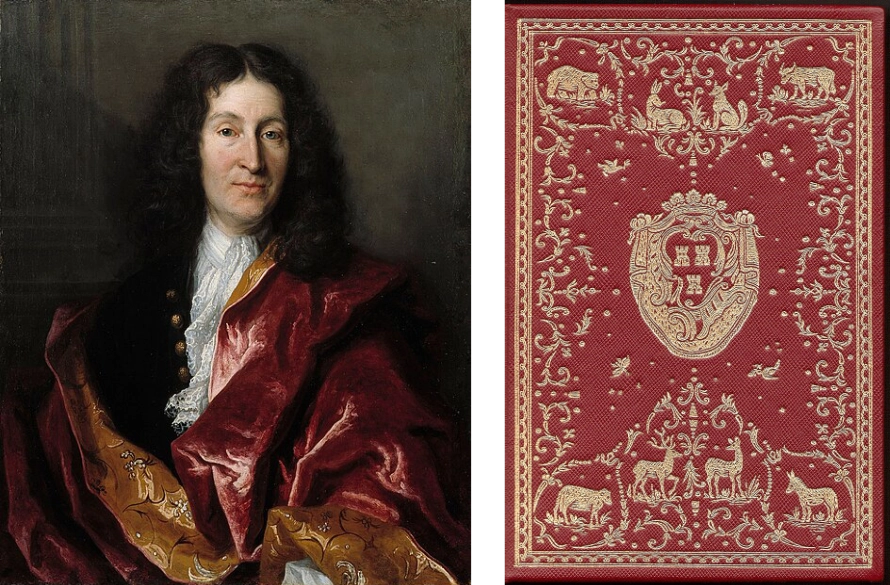
Jean de La Fontaine published his famed Fables between 1668 and 1694, during the reign of Louis XIV, famously known as the Sun King. It was a golden era in France: absolute monarchy ruled, arts flourished, and literature took on grand new forms. La Fontaine cleverly carved his niche by blending humour, poetry, and sharp social commentary under the disguise of simple animal tales.
He adapted stories from a rich mix of sources, both Western and Eastern, Aesop’s fables, ancient folklore, and even contemporary anecdotes, polishing them into French free verse. Initially aimed at adults, these stories quickly seeped into classrooms and children’s hearts, becoming a staple of French education.
The three distinct collections
The Fables of Jean de La Fontaine were published in three distinct collections, each marking a significant chapter in his life and career.
The first collection, comprising books I to VI, appeared in 1668. Dedicated to the Dauphin, the young heir to the throne, it came at a time when La Fontaine was attached to the court of the Grande Madame, Louis XIV’s aunt, at the Luxembourg Palace. This period was steeped in royal influence and artistic patronage.
The second collection, books VII to XI, was released a decade later between 1678 and 1679 in two volumes. By then, La Fontaine had left the Orléans court to join the intellectual salon of Madame de La Sablière in Paris. This set was dedicated to Madame de Montespan, the king’s powerful and celebrated favourite, reflecting the poet’s changing circle of patrons.
Finally, the third and last collection, which includes book XII, was published in 1693 following a serious illness and reissued shortly before La Fontaine’s death in 1695. This volume was dedicated to the young Duke of Burgundy, Louis XIV’s grandson and heir presumptive, who even inspired one of La Fontaine’s later fables, The Old Cat and the Young Mouse.
These three collections together chart not only the evolution of La Fontaine’s work but also a fascinating journey through the shifting landscapes of 17th-century French aristocracy and culture.
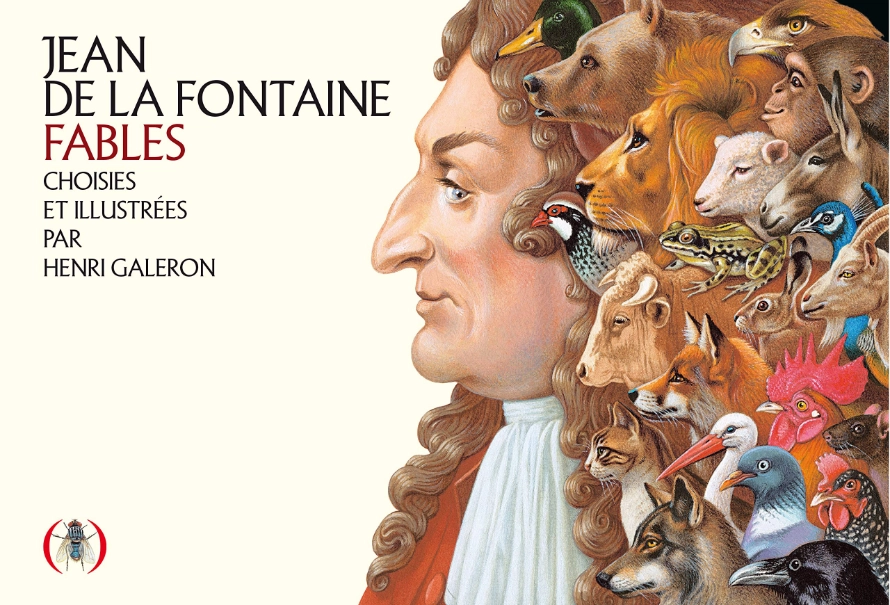
The art of the fable: small stories, big truths
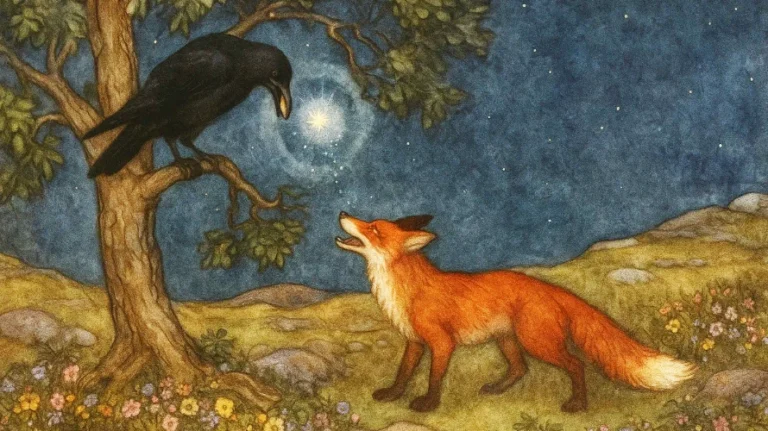
La Fontaine’s genius lay in his ability to dress profound observations in playful narratives. Take The Crow and the Fox , a clever fox flatters a crow into singing, only to snatch away the cheese clasped in its beak. The moral? Beware flattery, for it often has an ulterior motive. It’s a simple scene, but the underlying scepticism about vanity and gullibility resonates just as strongly today as it did back then.
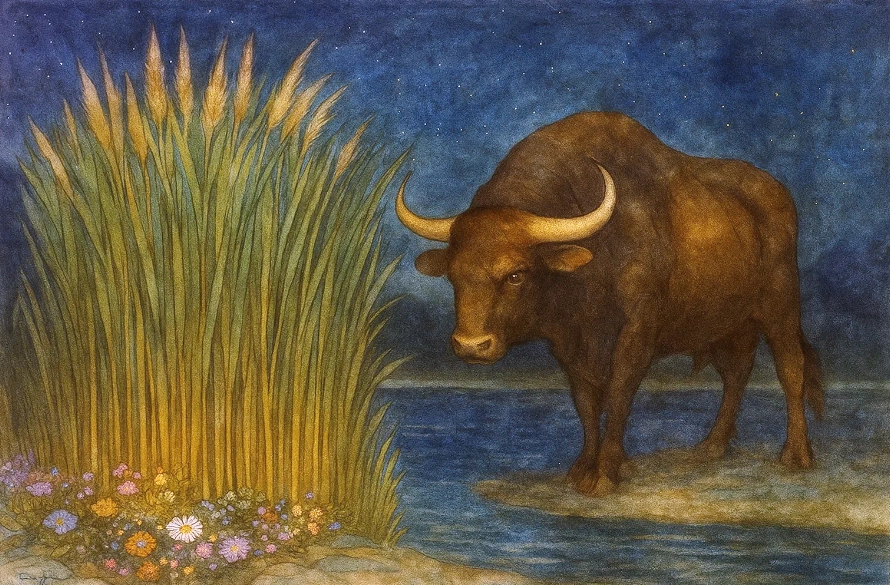
Or The Frog and the Ox, a tale warning against envy and pretending to be what you are not. These fables may feature beasts and birds, but their characters embody very human traits, from pride and greed to kindness and wisdom.
The fables of La Fontaine never grow old
Though La Fontaine penned 239 fables across 12 books, a handful have woven themselves so deeply into our cultural fabric that they’re instantly recognisable. Let me share one of the best-known stories to give you a flavour: The Grasshopper and the Ant. It’s a timeless warning about preparing for the future and the perils of laziness, one I still know by heart even today! Each fable typically ends with a clear moral, making them perfect tools for teaching ethical lessons, but also inviting readers to think deeper about human nature.
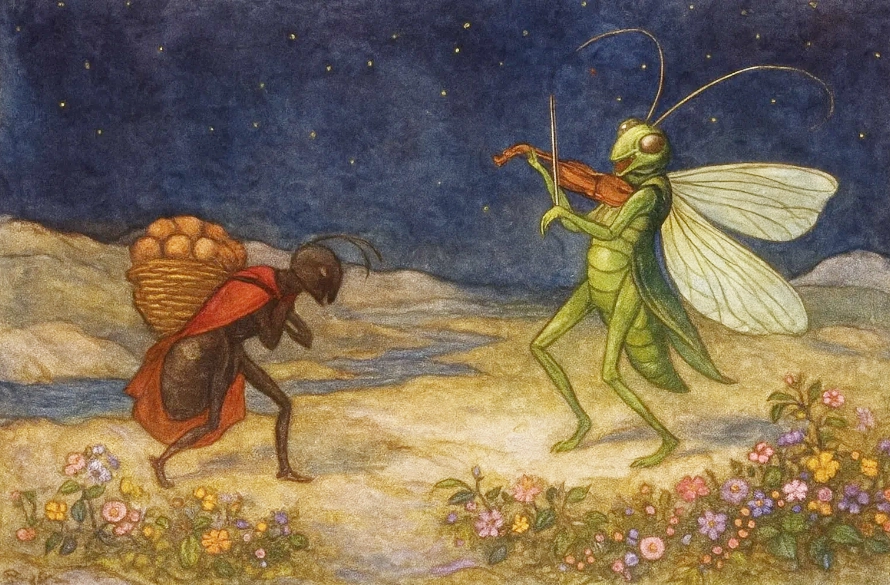
The Grasshopper and the Ant
The Grasshopper, having sung
All summer,
Found herself extremely deprived
When the cold winds began to blow:
Not even one small morsel
Of a fly or a worm.
She cried famine
At the home of her neighbour the Ant,
And entreated her to lend her
Some grain on which to subsist
Until the next season.
“I shall pay you”, she told her,
“Before august, upon my word as an animal,
Both interest and principal.”
The Ant is not a money-lender –
That’s the least of her problems!
“How did you spend the warm days?”
She asked this borrower.
“Night and day, to all who came,
I sang, if you don’t mind.”
“You sang? I am glad.
Well! now you can go dance.”
Storytelling style and language
La Fontaine was a master stylist as you can even see in his translation in English. His fables are not just stories but works of poetic art. Written in elegant, flowing free verse, they are deceptively simple, easy to memorise, yet rich in rhythm and melody. This musicality helped the fables become a beloved part of French oral tradition and schooling, hence why I recited them as a kid.
His use of irony is another defining feature. Many fables end on a note of dry wit rather than straightforward moralising. For instance, in The Fox and the Crow, the fox’s flattering words are both playful and cutting, exposing human susceptibility to flattery without losing a light-hearted tone. This balance of levity and lesson makes the fables endlessly enjoyable and thought-provoking.
La Fontaine’s fables in culture and education
La Fontaine’s influence extends far beyond the pages of his books. In Versailles, for example, 39 fountains were created to depict his fables through painted lead animals, turning water and art into storytelling. His works have inspired artists, illustrators, and educators alike, becoming an enduring part of French cultural heritage.
Across Europe, his fables were embraced enthusiastically. German philosopher Gotthold Ephraim Lessing, for instance, drew inspiration from La Fontaine’s ability to use simple stories to unveil universal truths. In America and Latin America, translations introduced these tales to new audiences, where they became part of educational curricula and local literary traditions.
Conclusion
Fancy a read? I’ve included a link below where you can find editions of La Fontaine’s fables. I bet you’ll uncover a little wisdom snuck in between the lines, and perhaps quite a few smiles too.
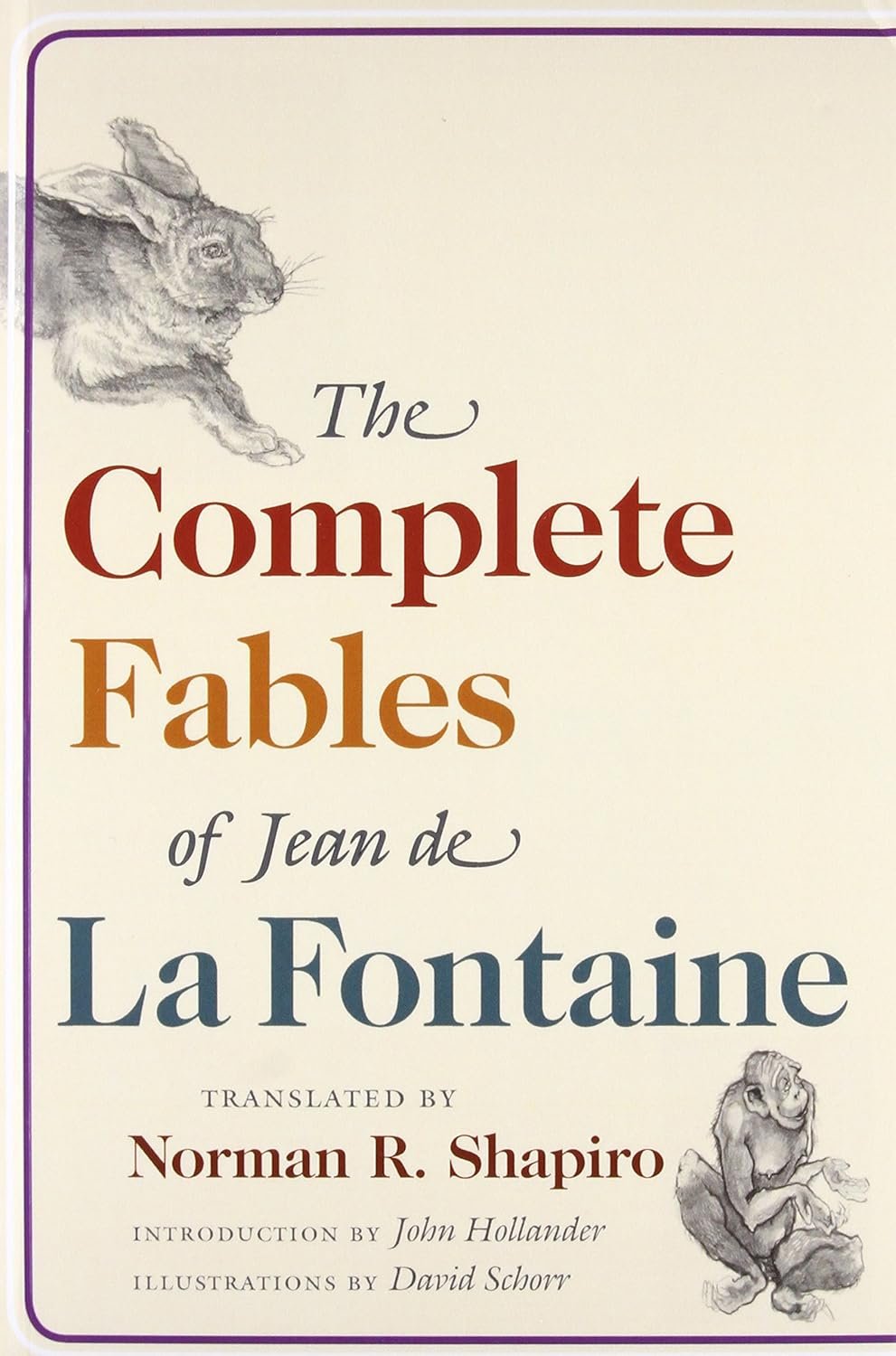
The Complete Fables of Jean de La Fontaine
Whether you’re revisiting a childhood favourite or discovering these tales for the first time, the wonderful world of La Fontaine’s fables offers a charming, sharp, and endlessly entertaining lens on life, society, and the quirks of being human.
Just so you know, a few links here earn us a commission. Doesn’t cost you anything extra, and we only link to things that are actually worth your time.