16 Best Eco Friendly Kitchen Tools & Sustainable Accessories
I’ve been cooking long enough to know that quality eco friendly kitchen tools and equipment does not mean following trends but looking for tools that last, work properly, and don’t need replacing every six months.
Since 2017, I’ve been gradually swapping out disposable kitchen bits for reusable alternatives. I started making practical choices that happen to save money and reduce the amount of rubbish I’m chucking out weekly. Good for the planet, and my wallet.
The maths is straightforward. Spend more on something that lasts five years instead of less on something you replace quarterly. Multiply that across your entire kitchen and it will result in plastic reduction too. The savings add up properly. Here’s what’s actually worked in my kitchen over the past seven years.
✱ The morning essentials
As a French person, proper coffee was never optional. It’s my happy time. I see people with their coffee machines, and look, the coffee tastes good, nothing wrong there. But when I look at the price of those pods and the amount of waste they produce, I feel considerably better about my approaches. I’ve got two setups depending on if I have guests or if I’m alone (as my British other half drinks English tea).
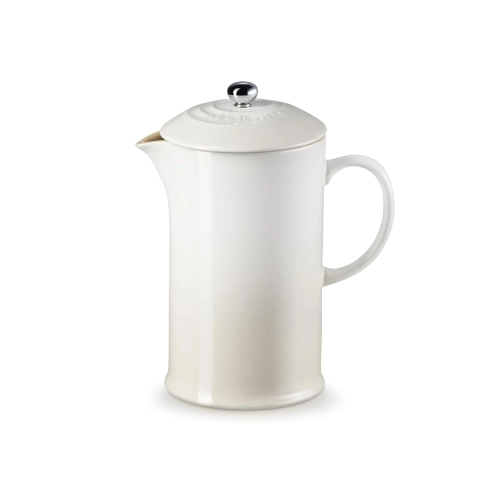
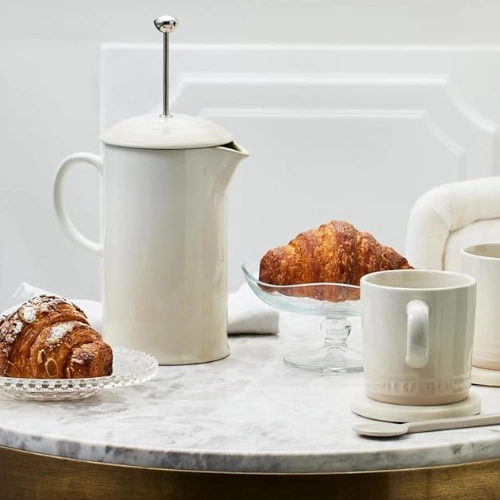
Le Creuset French press
Find it on Amazon >
For guests
The 1L pot has been going strong since 2018. Six years and zero replacements. The glazed stoneware is scratch-resistant, doesn’t stain, and cleans up easily. The plunger mechanism still works perfectly, no degraded seals or wonky springs like cheaper versions develop. The only downside is you can’t see how much coffee is left without lifting the lid. But it looks properly elegant on the table after dinner. And more importantly, it makes genuinely good coffee. Which is the actual point.
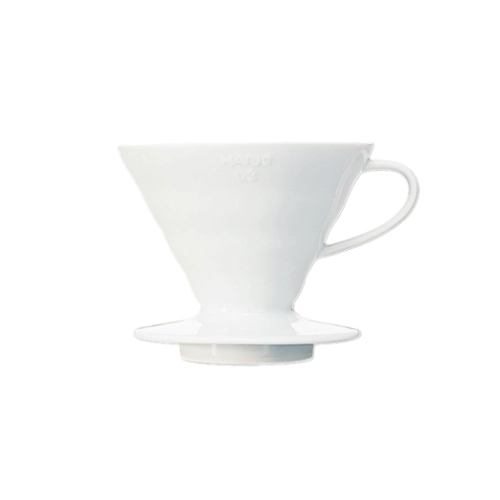
Hario V60 Ceramic
Find it on Amazon >
For solo coffee
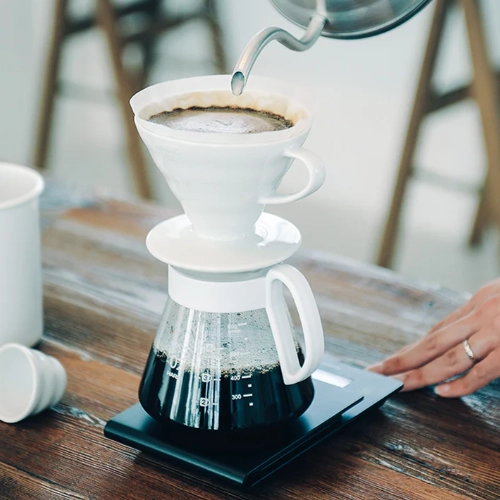
Then there is my tiny morning trustee, my Hario V60 in ceramic. The ceramic pour-over dripper sits directly over my espresso cup. One filter, one pour, brilliant coffee, done.
You can use either unbleached natural paper filters (which are compostable) or invest in a reusable stainless steel filter. I stick with the paper ones because they’re genuinely compostable, they cost about 7p each and because they filter out the coffee oils that stain your teeth. The reusable metal filters let those oils through, which makes for a fuller-bodied coffee but also more staining of your teeth over time.
After brewing, I rinse the ceramic under hot water and that’s it. My go-to morning blend is Carte Noir Petit Déjeuner, there’s a very subtle hint of cocoa in it that works perfectly for that first cup. Carte Noir is my favourite French coffee brand. Needed to share that extra info.
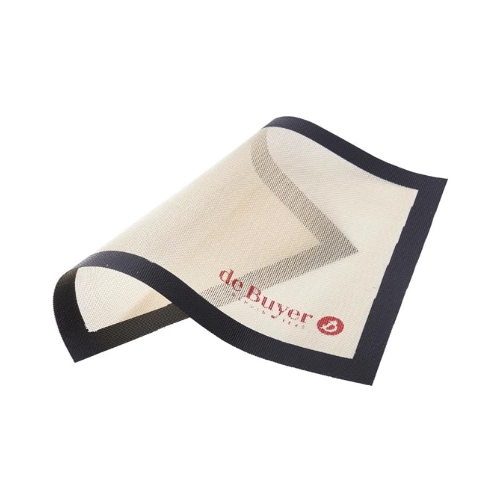

DeBuyer Reusable Baking Mat
Find it on Amazon >
✱ Reusable baking mat
This mat has paid for itself ten times over. I bought my De Buyer silicone baking mats in 2019 and I genuinely cannot tell you how much money they’ve saved me on parchment paper. Before these, I was buying parchment every few weeks. Now? I haven’t bought parchment to cook or bake in five years. The mats rinse clean, don’t stick, and handle everything from roasted vegetables to cakes without fuss. They’re brilliant. Properly brilliant. Non-stick without sprays or oils, heat up to 230°C, and they lie completely flat on your baking trays. Mine still look good after hundreds of uses. If you bake or roast anything regularly, these will pay for themselves within months.
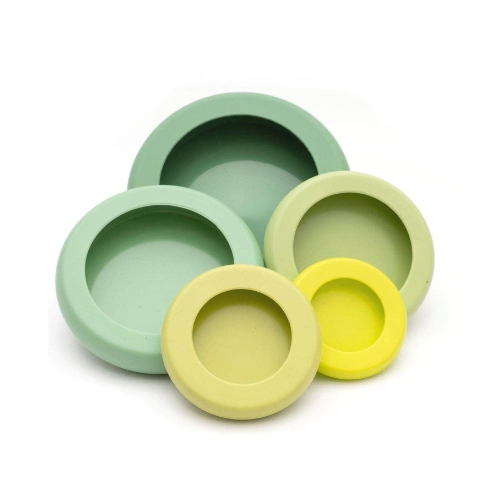
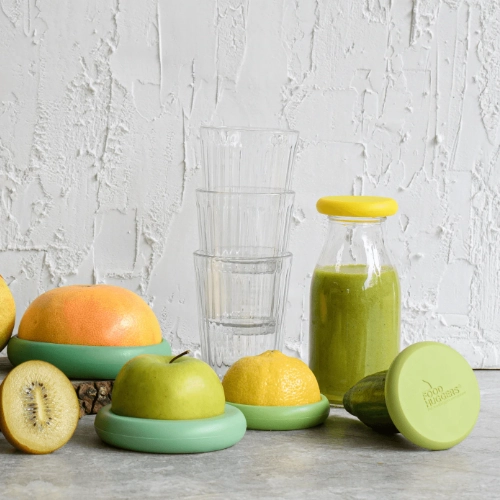
Food Huggers | Pack of 5
Find it on Amazon >
✱ Food Huggers
Right, Food Huggers sound like a slightly mad idea until you actually use them. They’re silicone caps that fit over half-used vegetables, onions, lemons, tomatoes, cucumbers, whatever. Instead of wrapping everything in cling film or watching your half onion dry out in a container, you just pop one of these over the cut end and the job is done.
I’ve had my set with five different sizes that cover most vegetables I use. They seal properly, keep things fresh for days longer than they’d last otherwise, and they’re still going strong after six years of regular washing as they are made of silicone. And they are 100% BPA & Phthalate Free.
The amount of cling film this saves is absurd. But more importantly, vegetables actually stay fresh instead of going straight in the bin three days later. I highly recommend these little helpers.
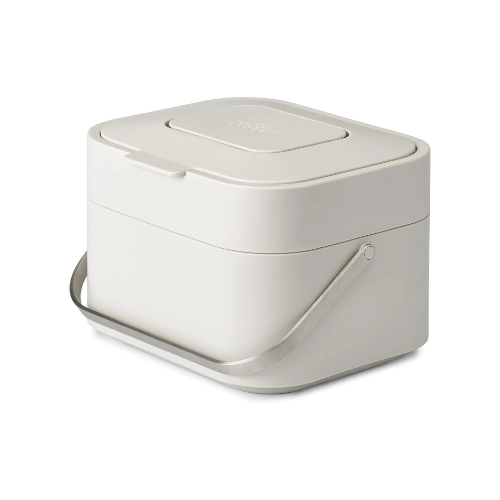
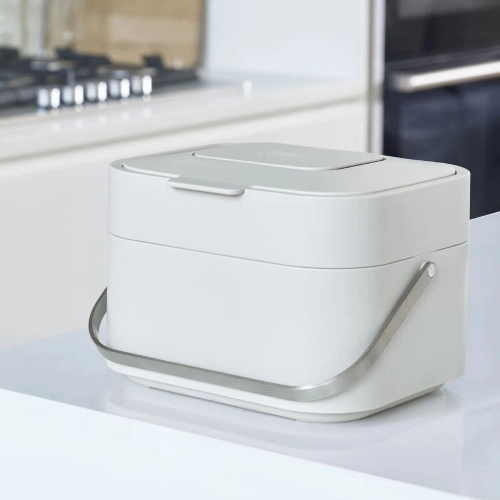
Joseph Jospeh Compost Bin
Find it on Amazon >
✱ Compost bin
The Joseph Joseph compost bin sits on my kitchen counter and doesn’t make the place smell like decomposing vegetables. Which is the entire point of a good compost bin. It’s got a charcoal filter in the lid that actually works. I empty it every few days into the garden compost, rinse it out, and that’s it. No fruit flies, no smell, no drama. They do sell little plastic bags to go in this bin, but I don’t see the point of using more plastic, even if it’s says it’s compostable. Keep it simple. Fewer bin bags, free compost for the garden, no smell and they look sleek.
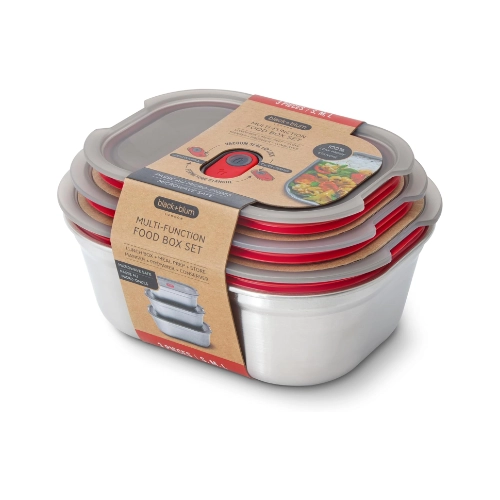
Black+Blum Stainless Steel Containers
Find it on Amazon >
✱ Stainless steel containers
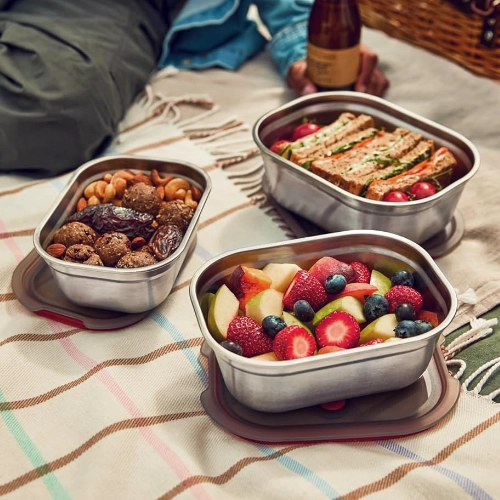
I’ve got three of the Black+Blum stainless steel containers in different sizes (600ml, 900ml, and 1.2L) and they’re indispensable in my kitchen. Oven safe, microwave safe, dishwasher safe, and actually leakproof. Which means I can roast something in the oven, eat half, and stick the rest straight in the freezer without decanting into another container. One less thing to wash.
They’re also brilliant for bringing food to gatherings. No more turning up with a stained plastic tub that looks like it’s seen better days. These look properly smart, and they don’t absorb smells or colours no matter what you put in them.
We take salads to the forest regularly, vinaigrette and all, and they’ve never leaked. Not once. We’ve both got Joseph Joseph GoEat travel cutlery sets because eating outdoors with actual proper utensils makes it considerably (environmentally) better than plastic forks that snap.
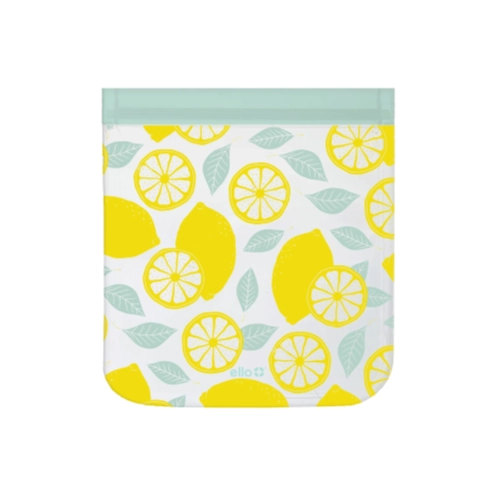
Ello Reusable PEVA produce bags
Find it on Amazon >
✱ Reusable PEVA produce bags
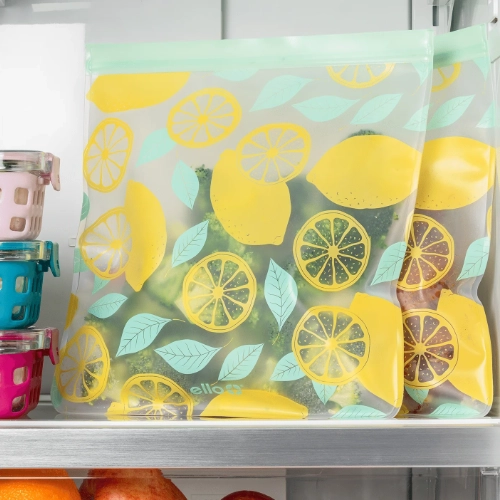
The Ello reusable produce bags live in my backpack, my fridge permanently. I have to say they aren’t the most elegant looking bags. As you know I like the more country looking natural look. The design of these bags are a bit bright for my taste. But they work ridiculously well, so I’ve made my peace with it.
I bought the 14 bags set to replace sandwich bags and vegetable bags for storing food in the fridge and freezer. The set includes different sizes for different jobs. The big ones are great for pre-steamed broccoli or brussel sprouts. They’re genuinely leakproof, which most reusable bags aren’t. And the seal actually works. I’ve laid down soup in it to freeze without disaster, which tells you everything you need to know. When a product works this well, you’re willing to overlook the fact that it’s not winning any design awards. Sometimes function goes over form.
Souper Cubes Silicone Freezer Trays
Find it on Amazon >
✱ Silicone freezer tray
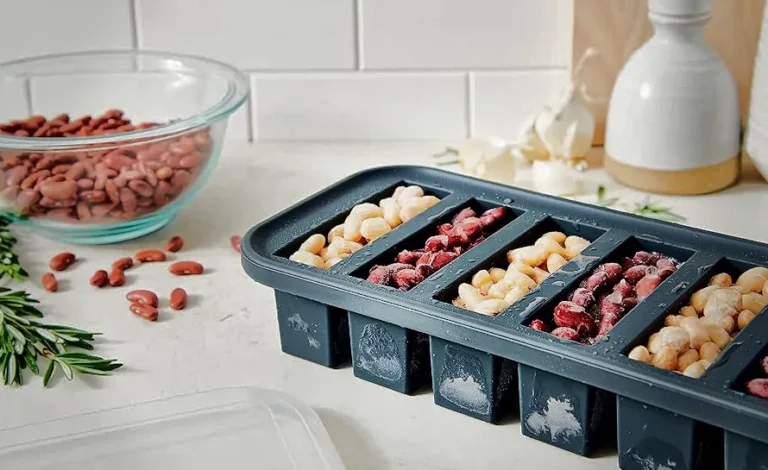
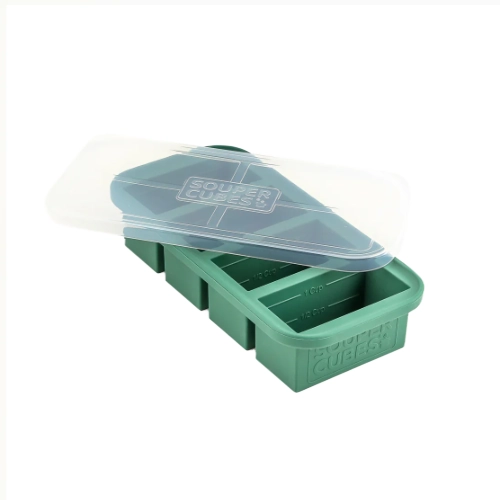
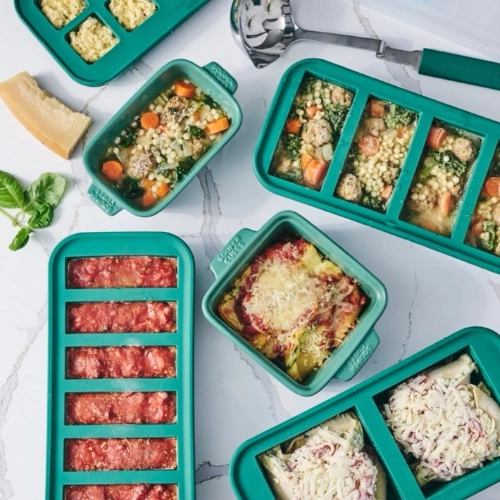
The Souper Cubes silicone freezer trays have genuinely changed how I deal with leftovers and batch cooking. They’re stackable silicone trays with lids that come in different sizes, half-cup, one-cup, and two-cup portions. The sides are rigid enough that they don’t bulge or collapse when you fill them with liquid, which is the main problem with freezer bags.
My most common use is soup, I make a big pot, freeze individual portions, and then when we can’t be bothered to cook but want something decent, we just pop two out and reheat it. Takes about 15 minutes from freezer to table. But I also freeze mushroom bourguignon in big batches. The two-cup size is perfect for single portions of stews or casseroles. They’re brilliant for anything liquidy. Sauces, broths, stocks, leftover wine for cooking.
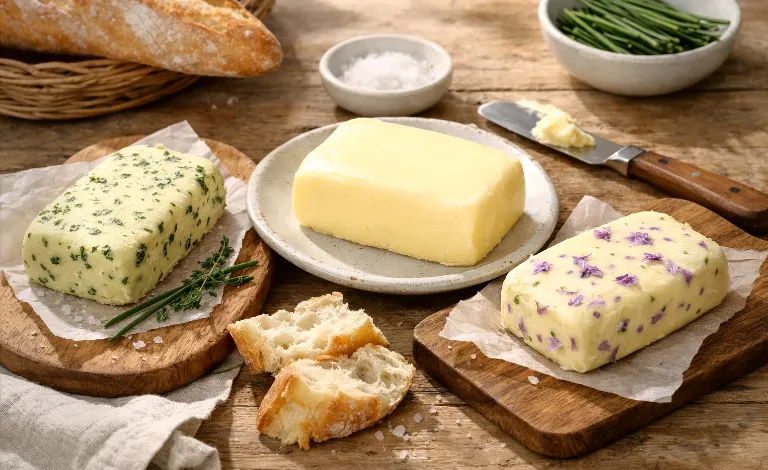
The smaller trays are perfect for herb butter, I make batches in summer with sage or parsley, freeze them in cubes, and then when I’m making mussels in January, I just finish my persillade with a cube of frozen parsley butter. Job done.
Once frozen, you can either leave them in the trays or pop them out and transfer them to silicone storage bags to free up the trays for the next batch. The frozen blocks stack neatly in the freezer, which is considerably more space-efficient than random containers.
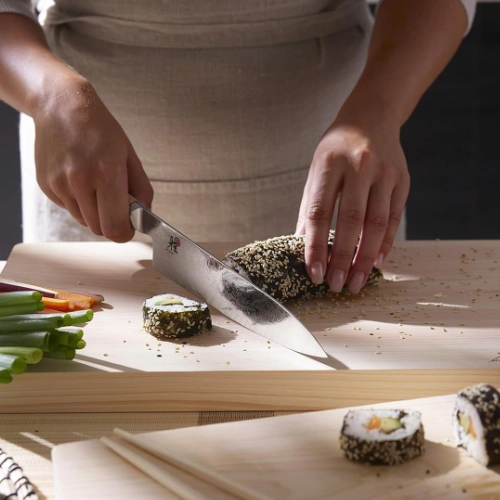
MIYABI Hinoki wood chopping board
Find it on Amazon >
✱ Hinoki wood chopping board
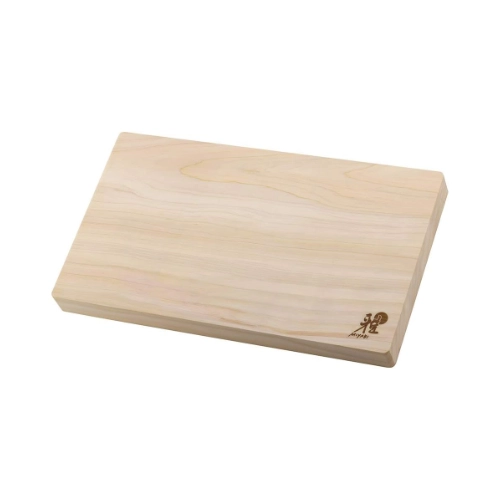
The Hinoki wood chopping board is an investment piece, but it’s worth it if you’ve got (and want to keep) decent knives.
It’s Japanese cypress wood, naturally antibacterial and gentle on knife blades. That matters. You can spend proper money on good knives, but if you’re chopping on hard surfaces like glass or slate, you’re blunting them constantly and shortening their life considerably. Hinoki is soft enough to preserve your blade edges whilst being dense enough to not score or gouge easily. The wood also has natural oils that prevent food smells from absorbing, which is why it’s traditionally used for sashimi prep in Japan.
I’ve never bought a plastic, glass, or slate chopping board since I left home. Plastic looks and feels horrible to me. It scores easily, those marks harbour bacteria, and you’re essentially eating microplastics as tiny pieces flake off into your food. Glass and slate are hygienically fine, but the noise drives me mad, that sharp clacking every time the knife hits the surface. Cooking is relaxing for me. I don’t need that level of loudness unless it’s the occasional electric mixer, which you can’t avoid.
BioGo Biodegradable Kitchen Sponges
Find it on Amazon >
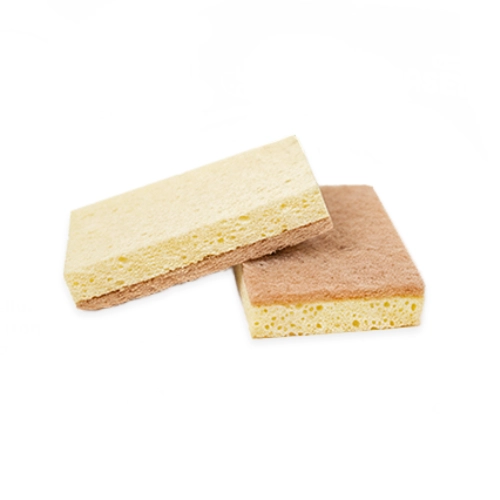
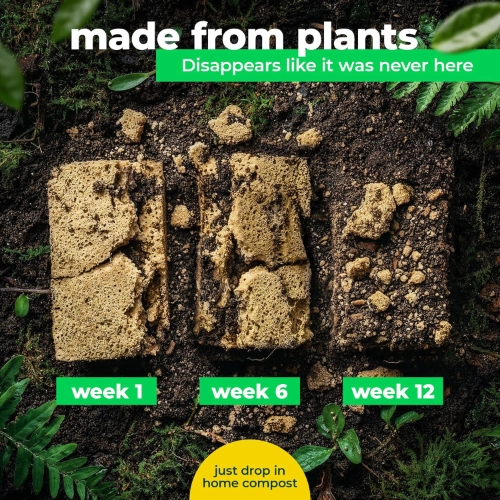
✱ Biodegradable sponges
Most kitchen sponges are plastic. They don’t break down, they shed microplastics when you use them, and you’re meant to replace them a lot as they break down quite easily.
I found that biodegradable sponges made from plant cellulose and coconut husk are robust and last a lot longer, look nicer (I never liked the colours of regular sponges) and I’m not polluting the planet while washing up. They work exactly like regular sponges, scrubby side for stuck-on bits, soft side for general washing up, but when they’re finally done, they go in the compost bin. So at the end of their use, there’s no guilt about chucking them out because they’ll actually decompose. They don’t smell as quickly as plastic sponges either, which is a bonus I wasn’t expecting.
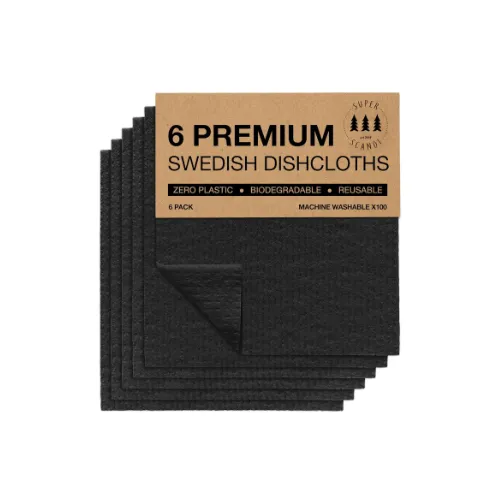
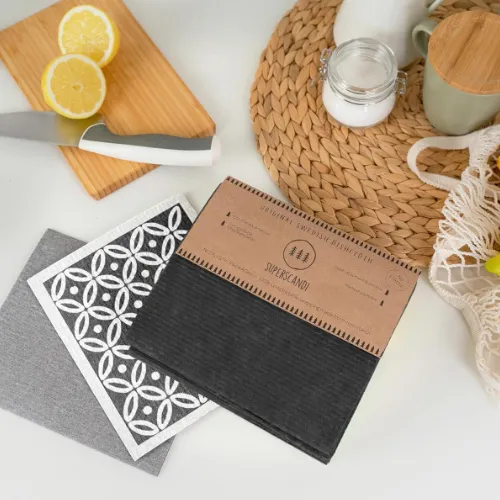
Superscandi Swedish Dishcloths
Find it on Amazon >
✱ Swedish Dishcloths
These Swedish dishclothes ones are made from cellulose and cotton, no acrylic nonsense. They’re sustainable kitchen tools made, biodegradable, and they actually work better than paper towels. Each cloth replaces about 17 rolls of paper towels.
They absorb liquid better than paper towels, wipe surfaces clean without streaking, and you just rinse them out and hang them to dry. When they get properly dirty, chuck them in the washing machine. They do eventually wear out, but when they’re done, they go in the compost bin because they’re fully biodegradable. No plastic, no guilt.
I went with these specifically because they also come in neutral colors. I have an aversion for those bright yellow ones you see everywhere. They look considerably better hanging in the kitchen, which matters to me especially when I use them daily.
Parchment Paper Sheets
Find it on Amazon >
✱ Parchment Paper Sheets
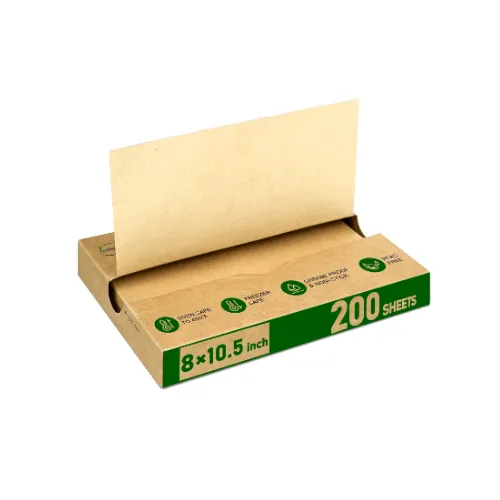
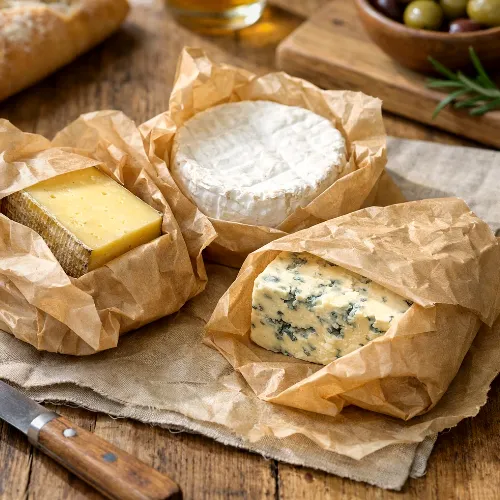
These pre-cut parchment sheets aren’t for baking in my kitchen, I’ve got the silicone mat we talked about earlier for that. These are specifically for wrapping cheese.
Cheese needs to breathe. Store it in a plastic container and it sweats, develops off flavours, and makes the container permanently smell like old cheese no matter how many times you wash it. Cling film is even worse, it traps moisture against the cheese and you end up with slimy surfaces and wasted cheese. Parchment paper is the only way to store cheeses as it lets them breathe whilst protecting it from drying out too quickly.
The pre-cut sheets are convenient. They come already sized, you just grab one, wrap your cheese, and you’re done. They’re unbleached, which matters if you care about not having chlorine-processed paper touching your food.
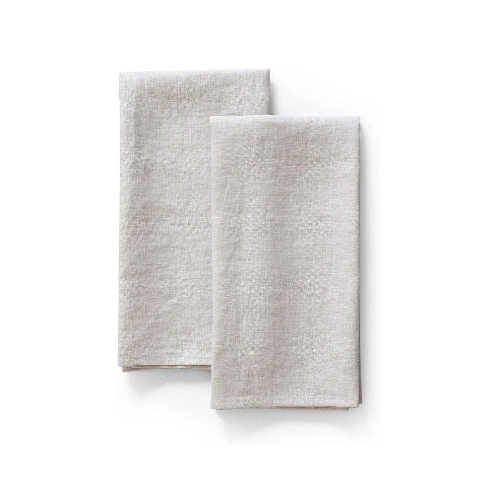
Stone Washed Linen Tea Towels
Find it on Amazon >
✱ Stone Washed Linen Tea Towels
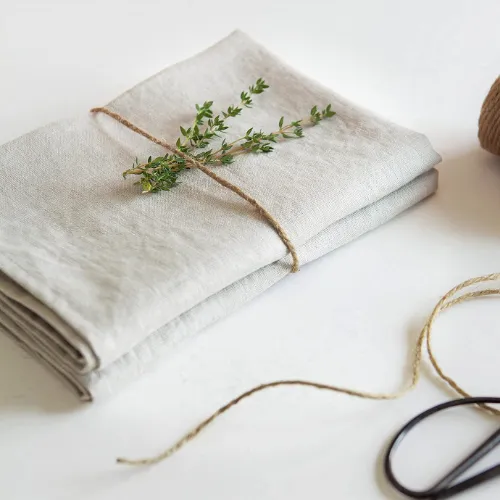
Yes it’s true, these stone washed linen tea towels are considerably more expensive than the cheap cotton ones from supermarkets. They they cost more upfront, but will last you forever.
The cheap cotton tea towels I used to buy wouldn’t last long before they fell apart, went grey no matter how many times you washed them, or developed that horrible texture that doesn’t absorb anything. And some barely absorbed water at all from day one, just pushed it around the plate whilst staying soaking wet themselves.
Linen is different. It’s more absorbent than cotton, dries faster, and the most fabulous thing, it gets better with age. Each wash makes linen softer and more absorbent. The fabric develops this lovely worn-in texture that actually works better than when it was new. They look considerably better than generic tea towels too. Proper linen has a natural elegance that cheap cotton will never achieve. Classy, beautiful, and actually functional. Worth the investment.
Aarke Water Filter Jug
Find it on Amazon >
✱ Water Filter Jug
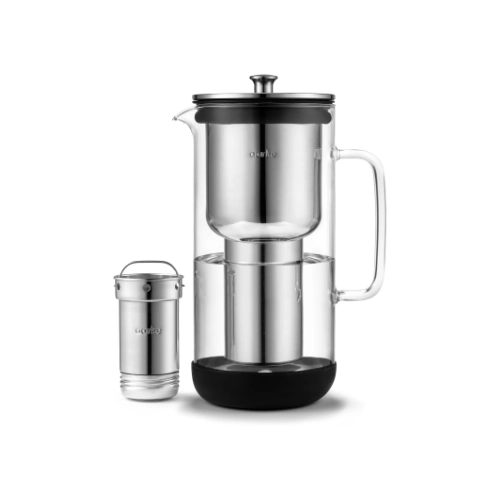
This jug has been on my kitchen counter for five years, and it’s genuinely brilliant. Most water filter systems use plastic cartridges that you replace every month or two. The entire cartridge goes in the bin, plastic housing, filter media, everything. It’s wasteful and not to mention expensive.
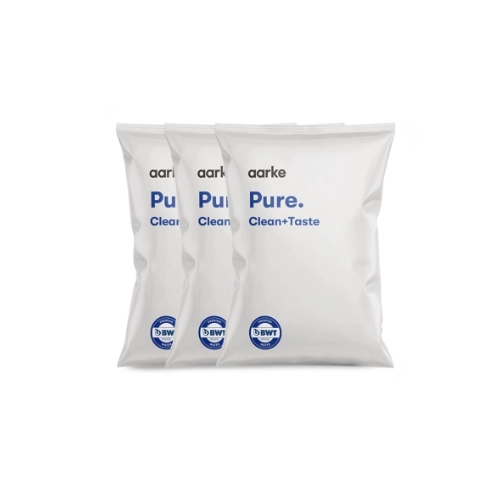
This water jug works differently. The jug is stainless steel, so it’ll last decades. But the clever bit is the filter system, instead of replacing entire plastic cartridges, you just refill the filter chamber with new filter beads. Considerably less plastic waste.
The cost savings versus bottled water are substantial. If you’re buying even a few bottles of water weekly, this pays for itself within months. And the filtered water tastes better than tap water, no chlorine taste, no weird metallic notes, perfect for my morning coffee that taste smooth and clean.
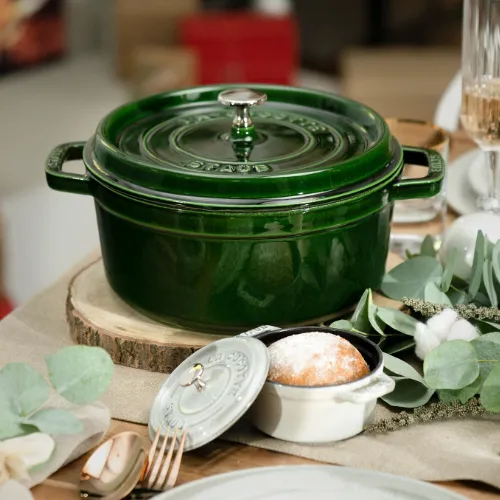
Staub Cocotte Cast Iron Cookware
Find it on Amazon >
✱ Cast Iron Cookware
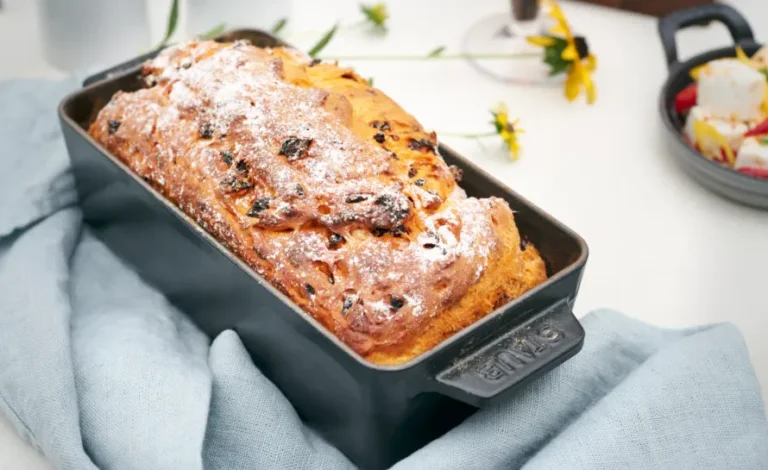
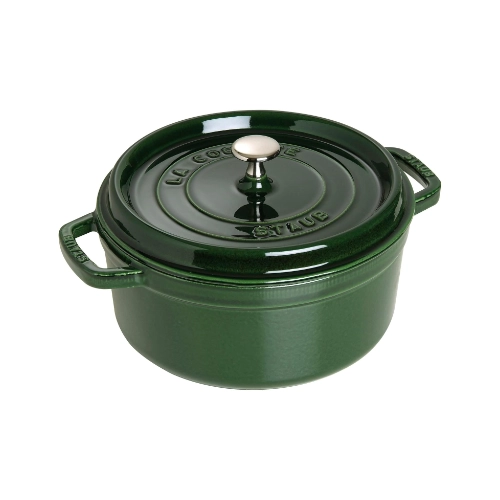
I wouldn’t be me if I didn’t mention the cast iron cookware that will last you a lifetime. I cook literally so many dishes in my 28cm Staub cocotte. If you want to know more about cast iron cookware in detail, I’ve written a complete article about it here.
The sustainability angle is straightforward, this will outlive you. One pot, bought once, used for decades. No replacements, no upgrades, no planned obsolescence. Just proper French cookware that gets passed down through generations.
Mine is the 28cm round one in basil green. Bought it in France, of course. It’s the kind of investment piece that makes sense when you cook regularly and want equipment that actually lasts.
Peugeot Salt & Pepper Mill
Find it on Amazon >
✱ Cast Iron Salt & Pepper Mill
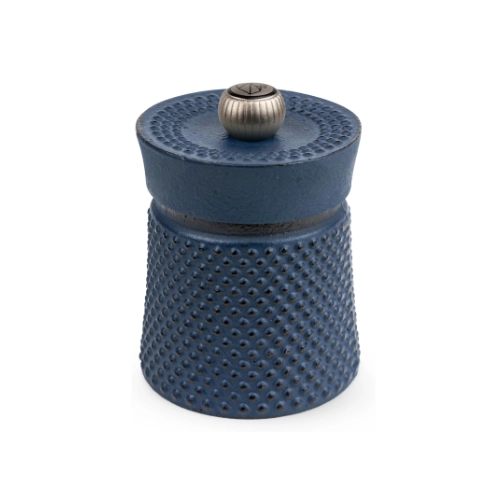
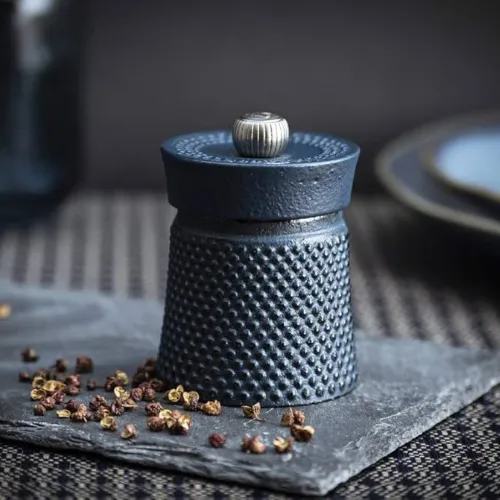
And to stay in the long-lasting cast iron category, these pepper mills from Peugeot are made to last too. No need to buy those plastic pepper grinders from the supermarket that you throw away when they’re empty. It’s ridiculous. Buy proper mills once, then just refill them with bulk peppercorns and sea salt.
These mills look fantastic on the table. The ceramic grinding mechanism is solid. They’re small but mighty, compact enough not to dominate your counter but substantial enough to feel proper in your hand. The ceramic grinder won’t corrode or wear out like cheap metal mechanisms do. These will last years with regular use. Just refill them when they’re empty and carry on. One purchase, zero plastic waste, better-tasting pepper because you’re grinding it fresh instead of using pre-ground stuff that’s been sitting in a warehouse for months.
Conclusion
Seven years of gradually swapping to eco friendly kitchen accessories has saved me a lot of money compared to buying disposable alternatives. But more than that, it’s just less annoying as I don’t have to constantly replacing things that break or buying the same consumables over and over.
The upfront cost is higher. A Staub cocotte costs considerably more than a cheap pot. Linen tea towels aren’t cheap either. But when you’re still using the same equipment five, seven, ten years later without needing replacements, the maths works out properly.
Most of these tools have genuinely improved how I cook too. Better coffee from proper brewing methods. Fresher vegetables because they’re stored correctly. Less food waste because batch cooking and freezing actually works.
The waste reduction is a huge bonus at this point. No more weekly bin bags full of plastic packaging, disposable coffee pods, and knackered kitchen equipment.
What’s already in your kitchen that you’re still using years later? Or what are you planning to swap next? I’m always curious what actually works long-term versus what sounds good but doesn’t last.
Just so you know, a few links here earn us a commission. Doesn’t cost you anything extra, and we only link to things that are actually worth your time.