Crème Brûlée
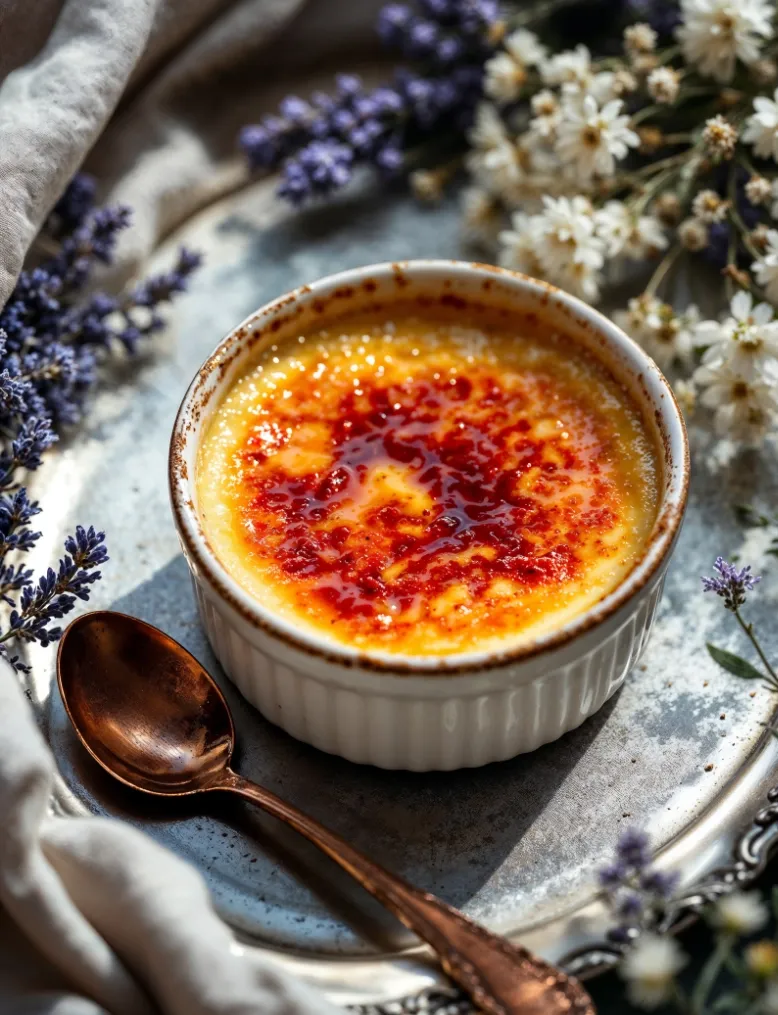
Crème Brûlée
Silky vanilla custard beneath a thin layer of caramelized sugar that cracks under your spoon with that satisfying snap. Each spoonful gives you both textures at once, crisp shards of caramel melting into cool, wobbling custard that's infused with proper vanilla. It's sweet but not cloying, rich but somehow delicate, and that contrast between the sugar crust and the smooth custard is what makes it irresistible. It’s a classic French treat!
Pin Recipe Print Recipe Prep Time 15 minutes Cook Time 1 hour Total Time 1 hour 15 minutes Servings 4
 Prep Time 15 minutes
  Cook Time 1 hour
  Total Time 1 hour 15 minutes
  Servings 4
Ingredients

- 500 ml Double cream
- 1 vanilla pod
- 5 egg yolk
- 100 gr caster sugar plus extra for caramelizing
Equipment
- 1 saucepan
- 1 whisk
- 1 baking dish for water bath (bain-marie)
- 4 ramekins small ovenproof dishes
- 1 sieve optional
Instructions
- 1. Prepare the vanilla creamSplit the vanilla pod lengthwise and scrape out the seeds. In a saucepan, combine the double cream, vanilla seeds, and pod. Gently heat the mixture until it just starts to simmer, then remove from heat and let infuse for 15 minutes to absorb the vanilla flavour.
- 2. Whisk the egg yolks and sugarIn a mixing bowl, whisk together the egg yolks and caster sugar until the mixture becomes pale and smooth but not frothy.
- 3. Combine the cream and egg mixtureRemove the vanilla pod from the cream. Slowly pour the warm cream into the egg yolk mixture, stirring constantly with a spatula to avoid cooking the eggs. Mix until fully combined.
- 4. Strain the custard (optional)For an extra smooth texture, strain the custard through a fine sieve into another bowl to remove any cooked bits of egg or vanilla pod residue.
- 5. Pour and bakeDivide the custard evenly into the ramekins. Place the ramekins in a baking dish and add hot water to the dish until it reaches halfway up the sides of the ramekins, creating a water bath. Bake in a preheated oven at 150°C (300°F) for about 50–60 minutes, until the custard is just set but still slightly wobbly in the centre.
- 6. Cool and chillRemove ramekins from the water bath and let cool to room temperature. Cover with cling film and refrigerate for at least 4 hours, preferably overnight, to fully set.
- 7. Caramelize the sugar toppingBefore serving, sprinkle a thin, even layer of caster sugar over the surface of each custard. Using a kitchen blow torch, carefully caramelize the sugar until it bubbles and turns a golden brown crust. If you don’t have a torch, place ramekins under a hot grill for 2–3 minutes watching closely to avoid burning.
Notes
- For the smoothest custard, avoid whisking air into the eggs and cream mixture.
- Use a spatula gently to combine.
- Let the cream infuse properly with the vanilla to get that trademark aromatic flavour.
- The top sugar should be thin so it cracks perfectly when you tap it with the spoon.
About this recipe
Crème Brûlée has this lovely air of mystery about where exactly it came from, but one thing’s for sure, it’s a classic French dessert loved around the world. The earliest recipe we know of popped up in 1691 in a French cookbook by François Massialot, who cooked for the French nobility, including the court of Louis XIV. The story goes that Massialot invented Crème Brûlée by trying to warm up a cold dessert for Philippe d’Orléans, the king’s brother, by melting sugar on top with a hot iron! That signature crackling, caramelised crust was born from that clever moment.
That said, France isn’t the only place laying claim to the creation. England had its own version, “burnt cream” or “Trinity cream,” going back to the 1400s, famously served at Cambridge University with a caramelised sugar crust. Plus, Spain has its close cousin, “Crema Catalana,” which actually dates back even further to medieval times. This one’s a bit different, thickened with cornflour and flavoured with lemon or cinnamon, but it shares the same joy of a crisp caramel topping and creamy base.
Despite all these contenders, it’s the French Crème Brûlée, with its silky vanilla custard and brittle caramel topping, that became iconic. It’s deceptively simple, made from just a handful of ingredients, but it takes a little patience and a steady hand to get that custard texture just right and the caramel topping with the perfect crack.
Over the years, people have gotten playful with it, adding chocolate, coffee, or infusions like lavender, orange, or even festive spices like gingerbread. But the classic vanilla version remains a firm favourite, striking that perfect balance between creamy sweetness and that lightly burnt caramel crunch that makes you want to go back for one more spoonful.
Share your feedback and spread the love!
If you try this Financiers recipe, I’d love to hear how it turns out! Leave a ★★★★★ rating and your thoughts in the comments, it helps fellow food lovers discover this recipe too. Snap a photo and tag @frogsinbritain on Instagram if you’re sharing your bake online. Don’t forget to save this recipe to Pinterest so you’ll always have it handy for your next French-inspired meal!
Disclosure: This post contains sponsored content and/or affiliate links. If you make a purchase through these links, I may receive a small commission at no extra cost to you. All opinions are my own!