21 French country pantry essentials that transform storage
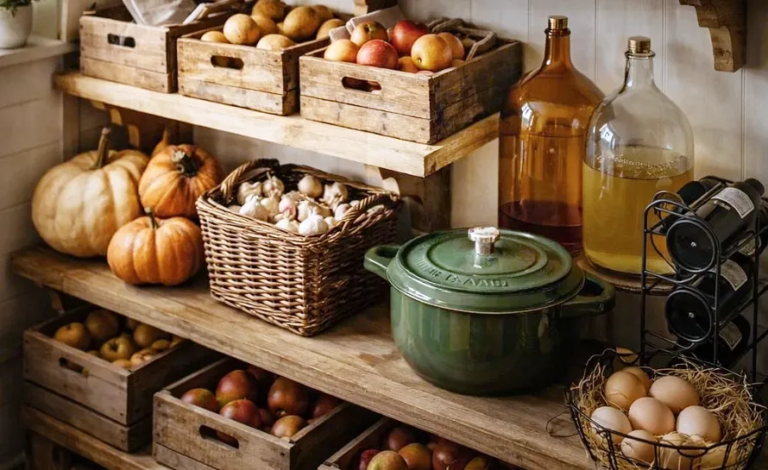
My neighbours all have a cave. Not a wine cellar (though there’s wine in it) but a proper French country pantry. Rows of preserved tomatoes in Le Parfait jars. Demijohns of fermenting cider. Strings of garlic and thyme hanging from hooks. Root vegetables in baskets and wooden crates. Garlic stored in stoneware. Everything they’ve made, preserved, or put up for winter.
It’s a working pantry that’s been built up over years, stocked with what they grow, make, and preserve themselves. And it happens to be absolutely beautiful because it’s real.
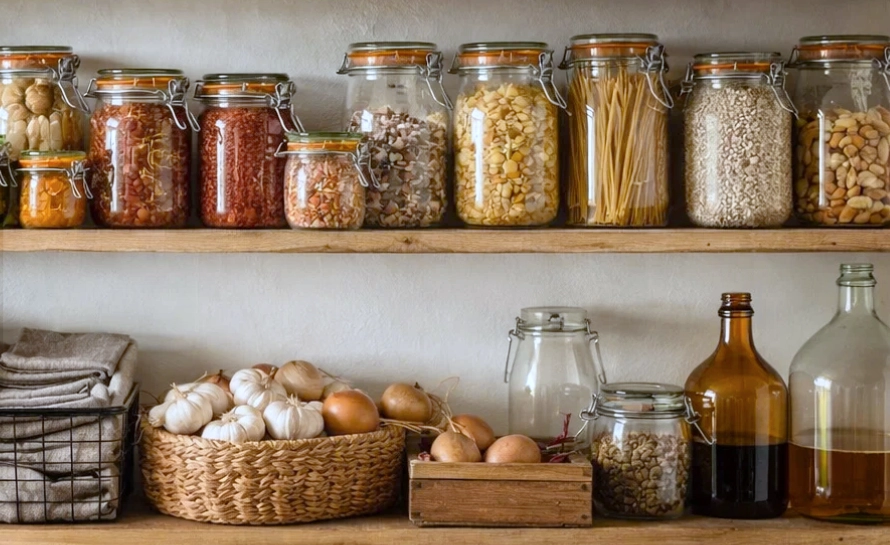
This is what a proper country pantry looks like, where everything serves a purpose, lasts decades, and gets used constantly. Stone-washed linen covers bread. Wicker baskets hold vegetables that need air. Glass jars show exactly what’s running low. Demijohns ferment dandelion wine in the corner.
If you want to build a country pantry that actually functions, one that stores seasonal food, keeps preserves properly, and looks gorgeous whilst doing it, here’s how to do it French style.
What makes a country pantry different
A country pantry is about preserving and storing food the way people did before supermarkets, using methods that still work better than most modern alternatives.
It’s seasonal
The pantry fills in summer and autumn when you’re preserving tomatoes, making jam, fermenting vegetables. It empties through winter and spring as you eat what you’ve put up. The contents rotate with what’s available, what you’re cooking, what food you’re preserving next.
It’s self-sufficient
Or as self-sufficient as you want it to be. Maybe you’re growing vegetables and preserving them. Maybe you’re buying from markets and learning to put food up. Either way, you’re making things yourself rather than buying them ready-made. Jams, pickles, preserved fruit, fermented vegetables, homemade drinks, confit if you’re feeling ambitious.
It uses traditional equipment that last
Not because it’s pretty (although in my opinion it looks the part), but because it works. Glass, wicker, stoneware, linen, these materials cost more upfront than plastic containers and disposable storage. But you buy them once. A Le Parfait jar from 1950 works exactly as well as one made today. Wicker baskets last decades with basic care. Stoneware crocks get passed down through families. Linen tea towels improve with age and washing.
Compare that to plastic storage containers that warp, stain, absorb smells, crack, and need replacing every few years. Or disposable packaging that goes straight in the bin. The maths works in favour of traditional materials within a few years, and after that you’re just saving money whilst everything gets better with age.
Essential equipment for a country pantry
Building a country pantry starts with proper equipment. Not everything at once, you add pieces as you need them, as you start preserving different things, as your system develops. But these are the foundations that make everything else work.
✱ Le Parfait jars
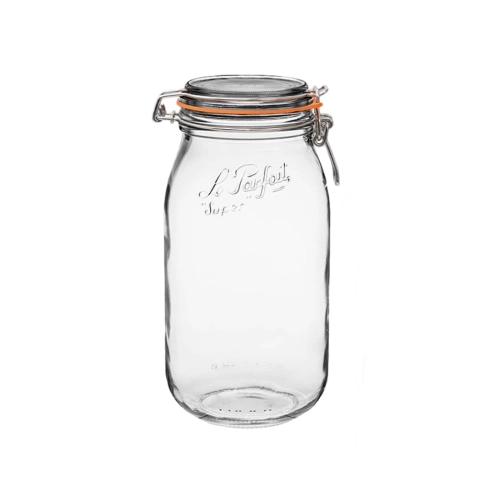
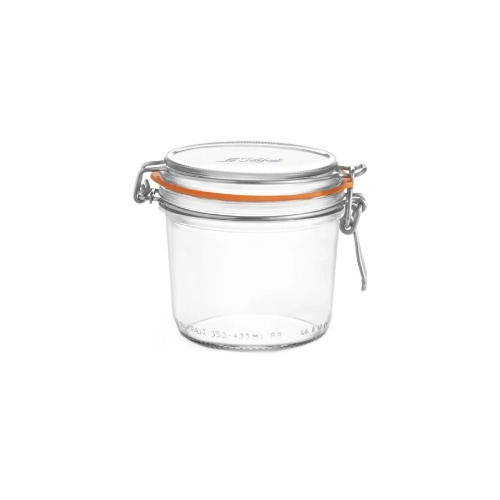
These glass jars are the backbone of any country pantry. They’re the French clip-top jars with glass lids, rubber seals, and metal clips. You see them everywhere in France, markets, hardware shops, nurseries, everyone’s cave and kitchen. They’ve been made since 1930, something using the same design because it works perfectly.
The rubber seal and clip system creates an airtight closure that’s strong enough for proper food preserving, you can process jars in a water bath and they’ll seal properly. But they’re also easy to open and close for everyday storage. Unlike screw-top jars where the lids eventually rust or cross-thread, Le Parfait jars last decades. The glass is thick, the clips are sturdy, and replacement rubber seals cost almost nothing.
For a country pantry, you want a range of sizes
Buy jars gradually as you start preserving different things. Don’t try to stock an entire pantry in one go. Start with a set of 500ml jars for jam. Add litre jars when you’re ready to pickle vegetables. Get the big ones when you want to ferment or store bulk ingredients. The beauty of Le Parfait jars is they’re all compatible, same rubber seals fit multiple sizes, spare parts are easy to find, and they stack reasonably well when stored empty.
Le Parfait 500ml
Find it on Amazon >
Le Parfait 1 liter
Find it on Amazon >
Le Parfait 2 or 3 liter
Find it on Amazon >
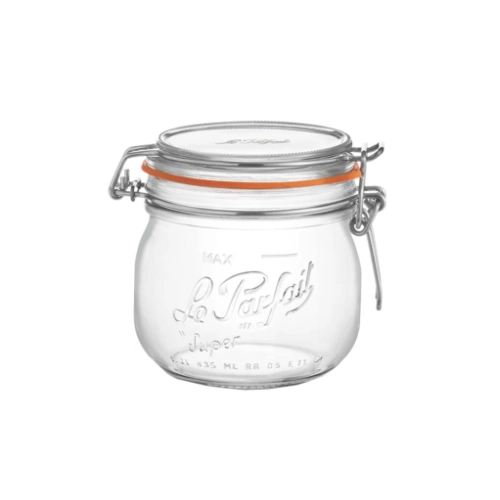
Le Parfait 500ml
This jar is your workhorse size. A batch of jam from 2kg of fruit fills about four or five 500ml jars. They fit nicely on shelves, you can see what’s in them at a glance, and they’re the right size for getting through a jar before it spoils once opened.
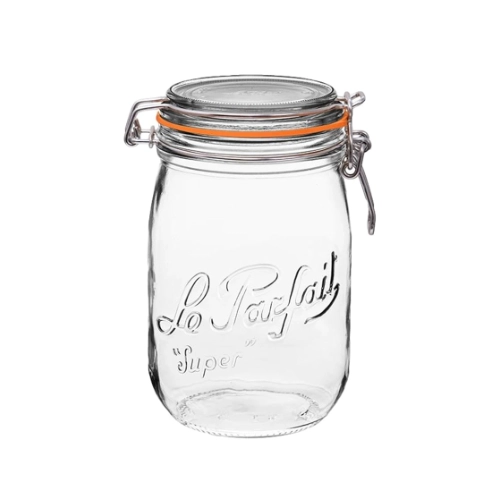
Le Parfait 1 liter jars
A liter jar holds enough pickled cornichons or fermented carrots to last a few weeks once opened. These are brilliant for preserving whole tomatoes, peach halves, anything where you want larger pieces intact.
Le Parfait 2 liter and 3 liter jars
A 3-litre jar works for fermenting sauerkraut or pickles, enough volume for a proper fermentation. They’re also excellent for storing dried beans, flour, sugar, anything you buy in larger quantities. The wide opening makes filling and accessing contents easy.
✱ Demijohns for fermenting drinks
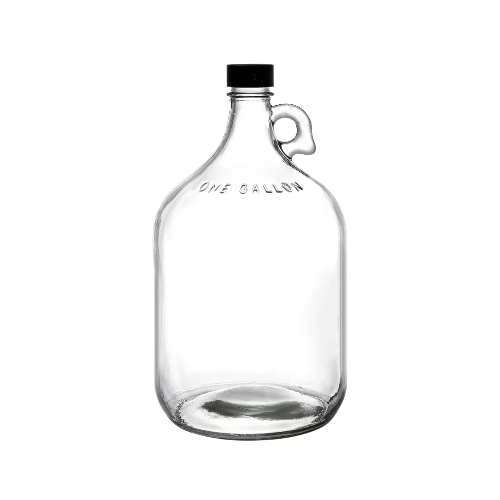
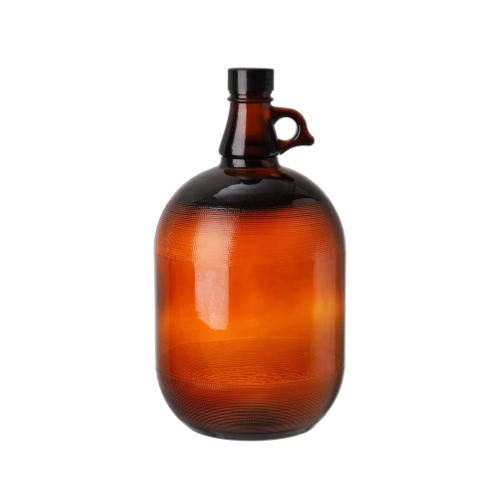
Demijohns are those large glass bottles with narrow necks. They hold anywhere from 3 to 50 litres and they’re what French country homes use for making cider, fruit wines, and dandelion wine, which sounds mad but is actually brilliant. The ones my neighbours use were bought by the previous owner of their house and is still perfect.
A demijohn works for fermenting drinks because the narrow neck limits oxygen exposure whilst allowing CO2 to escape. You fit them with an airlock, a simple water-filled device that lets gas out but keeps air from getting in. This creates the right environment for controlled fermentation without things going vinegary or mouldy.
✱ Fermentation crocks and weights
For fermenting vegetables, sauerkraut, pickles, kimchi, anything in brine, you want proper fermentation crocks or large jars with weights to keep everything submerged.
Traditional stoneware crocks
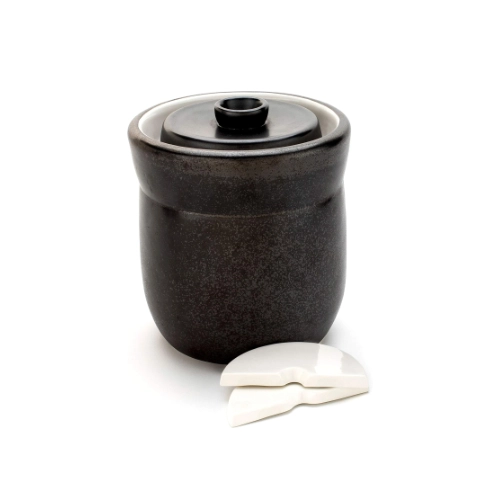
Ceramic fermentation crock with weights and lid are the classic option. Heavy glazed stoneware with a water-seal lid that allows gas to escape whilst keeping oxygen out. These work brilliantly and they last generations. The downside is you can’t see what’s happening inside and they’re a bit heavy.
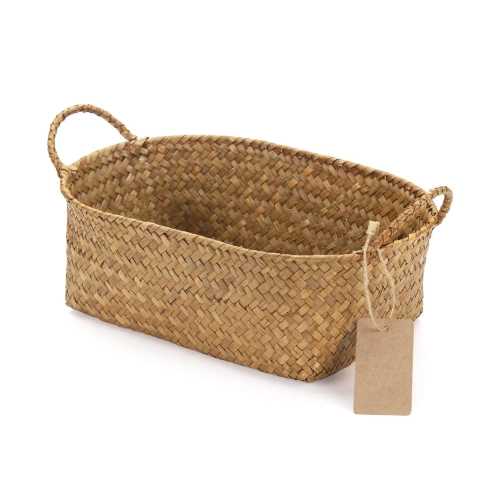
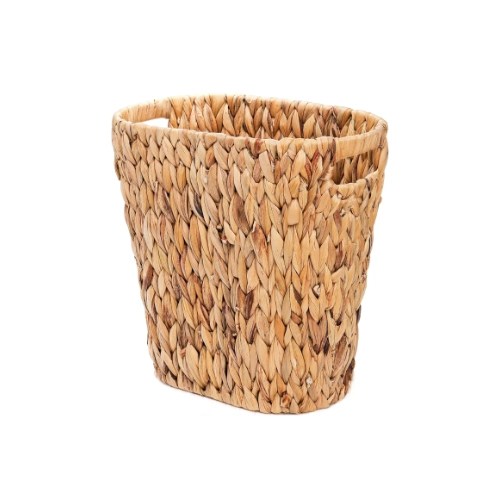
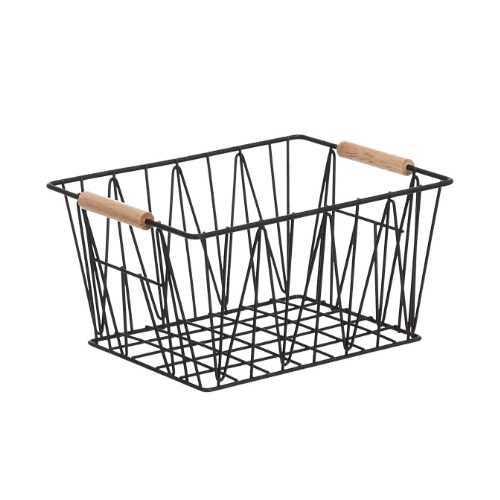
✱ Wicker and wire baskets
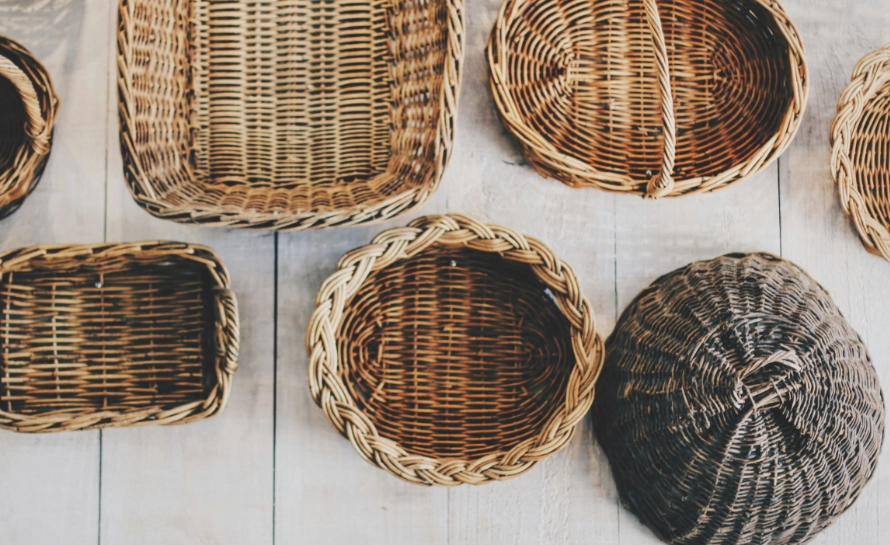
Country pantries use wicker baskets everywhere. Not because they look rustic and charming, but because they’re incredibly practical for storing food. Choose wicker that’s tightly woven enough to support weight but open enough for air circulation. Avoid anything lacquered or heavily treated, you want natural wicker that can breathe and absorb slight moisture without rotting.
Wicker baskets last years. Decades if you treat them reasonably well. When they’re empty in summer, store them somewhere dry. Don’t let them sit in damp areas year-round or they’ll develop mildew. But for a working country pantry, they’re perfect.
✱ Wooden crates and shallow storage
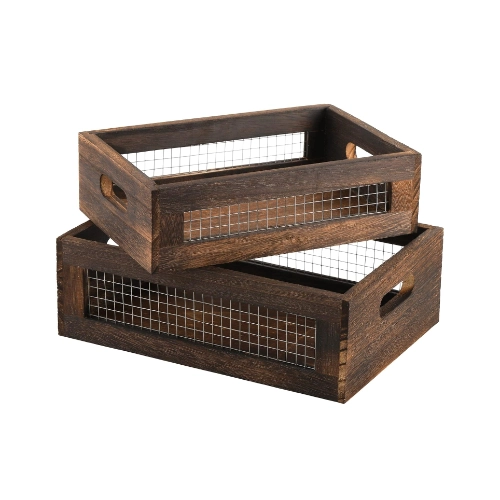
Wooden crates bring vertical storage to your pantry whilst keeping things accessible and visible. Use crates for seasonal rotation. Fill them with preserving equipment during winter when you’re not preserving. Stack them with root vegetables during autumn. Move them around as your pantry needs change through the year.
Shallow crates
Find it on Amazon >
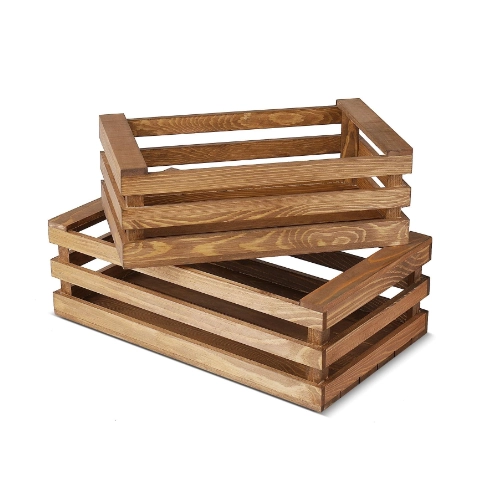
Wooden crates
Find it on Amazon >
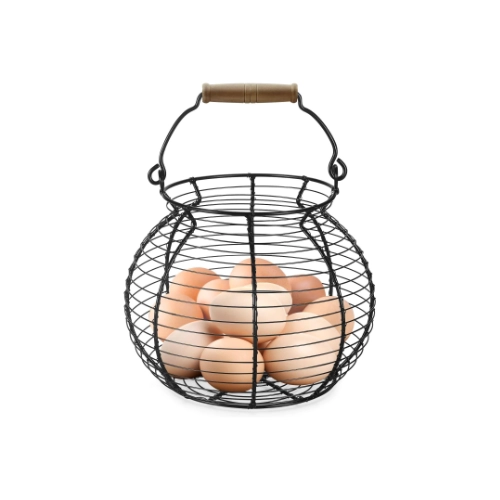
Egg wire baskets
Find it on Amazon >
Wooden crates
They hold heavier items, bottles, larger jars, bulk dry goods in their packaging. Stack them against a wall or under shelves to maximize floor space. Wood is sturdy enough for weight, and unlike plastic crates, it ages beautifully. Thirty years of use makes wooden crates look better, not worse.
Egg wire baskets
The classic French egg wire baskets hold a dozen eggs easily and the wire lets air circulate around the eggs. Also brilliant for storing garlic bulbs or small shallots. The handle makes them easy to move when you’re cleaning shelves or reorganizing.
✱ Linen cloths and storage bags
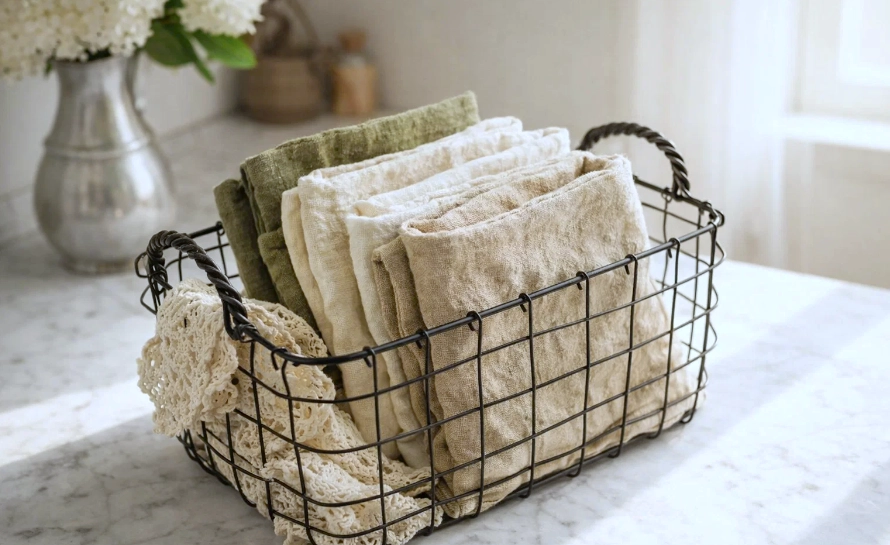
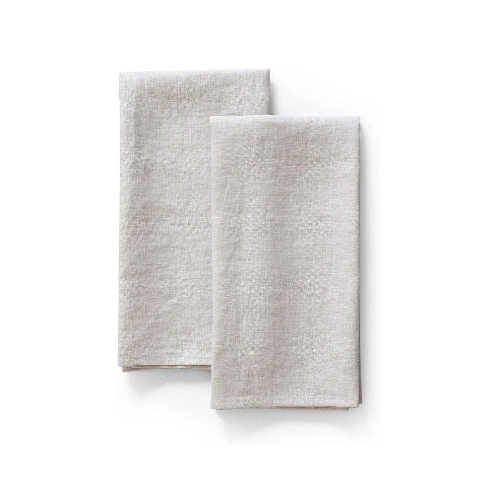
Linen shows up everywhere in French country pantries. Bread bags. Covers for rising dough. Cloths for wrapping cheese. Bags for storing dried herbs. It works because linen regulates moisture, breathes naturally, and lasts decades with basic care.
Get unbleached or natural linen rather than bright white. It looks better in a country pantry, shows less staining from use, and hasn’t been processed with harsh chemicals. Stone-washed linen is already broken in and soft, which makes it more practical from day one and very pretty as it ages.
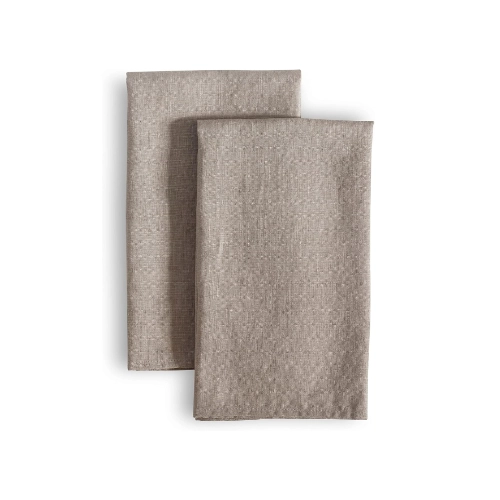
Linen tea towels
Find it on Amazon >
Linen tea towels
Find it on Amazon >
Jute drawstring bags
Find it on Amazon >
Stone-washed linen tea towels
These tea towels are the multi-purpose workhorses. Keep a few dedicated to pantry use. One in the bread basket. One or two for covering things. They wash at 60°C, they last decades, and they don’t develop the weird smells that tea towels used for everything eventually get.
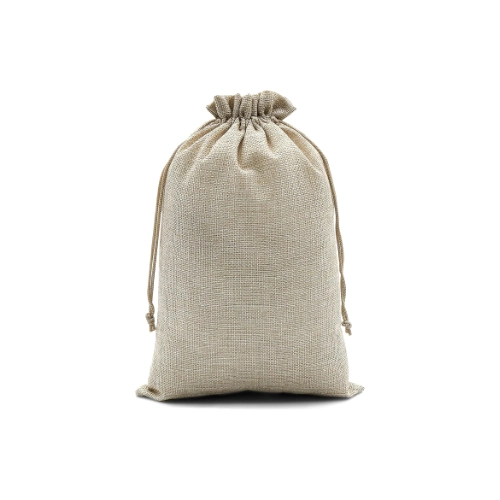
Jute drawstring bags
Super practical to store dried beans, lentils, grains, nuts, dried fruit. The natural fibres protects from light and pests whilst allowing air circulation. Much better than sealed plastic bags for long-term storage of things that need to breathe slightly.
✱ Organization tools
The small tools make a country pantry work. These are the bits you don’t think about until you need them, and then you use them constantly. These aren’t glamorous tools. But they’re the difference between a pantry that functions smoothly and one where you’re constantly improvising solutions with whatever’s to hand.
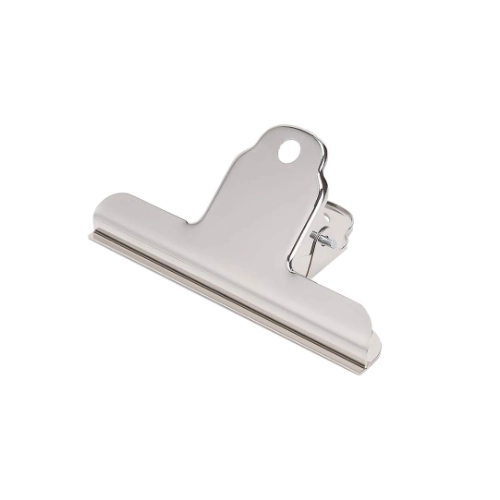
Bulldog clips
Secure any bag once opened, much better then elastic bands and they will last you forever. Buy the medium and large sizes for different size bags. A dozen clips and you’ll wonder how you managed without them.
Herb drying racks
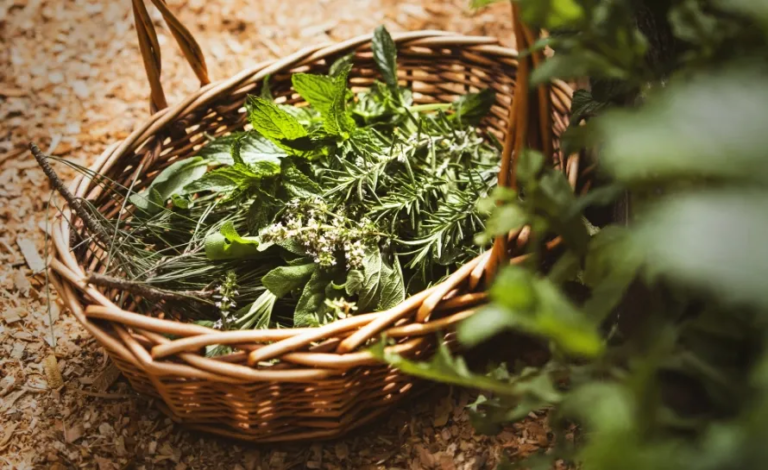
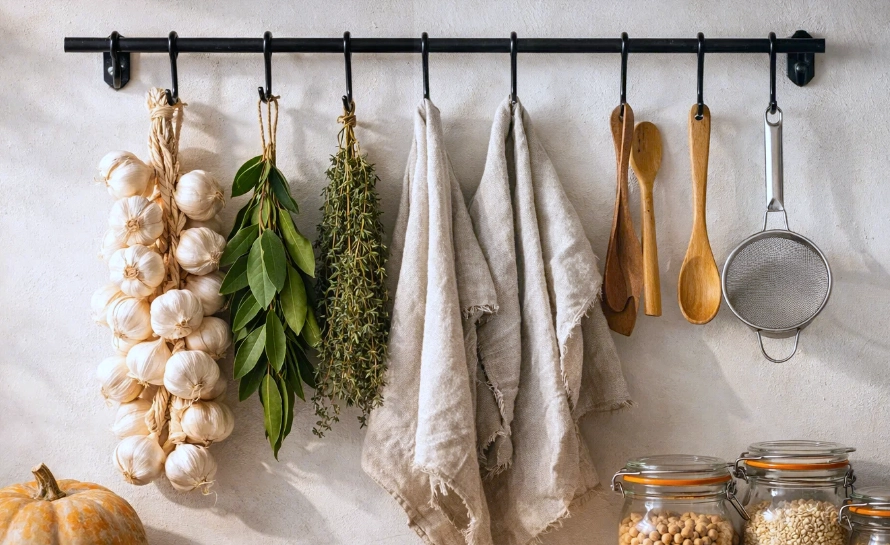
Technically sold as a utensil rack, but perfect for drying herbs. Hang it in a corner where air circulates, bay leaves, thyme, rosemary, whatever you’ve got. If you’ve got ceiling space, hang it there. Otherwise wall-mounted works just as well.
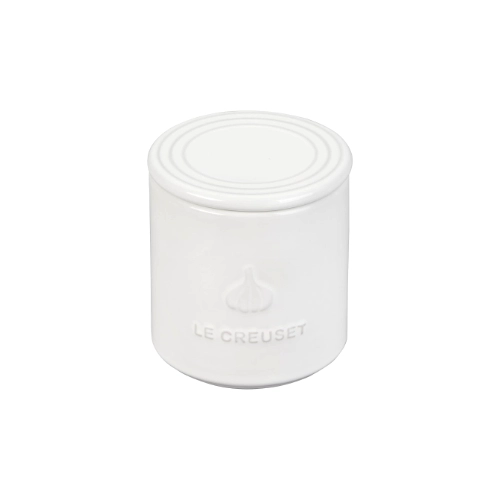
Garlic keeper
A small stoneware pot with holes for ventilation. Keeps garlic fresh for weeks. The stoneware regulates moisture without making things damp. The ventilation holes allow air circulation. The lid keeps light out whilst making access easy. The Le Creuset version lasts forever, looks beautiful on a shelf, and does the job properly.
✱ Smart storage
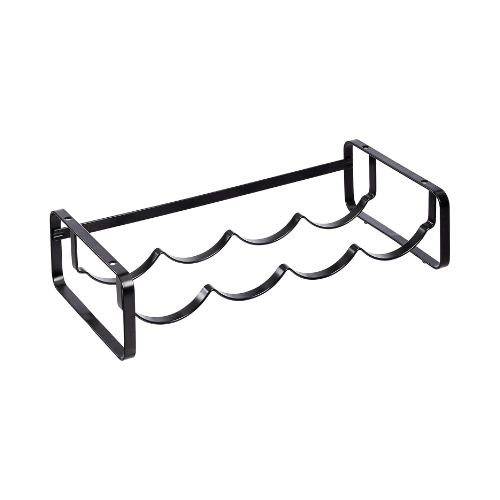
Stackable wine rack
Find it on Amazon >
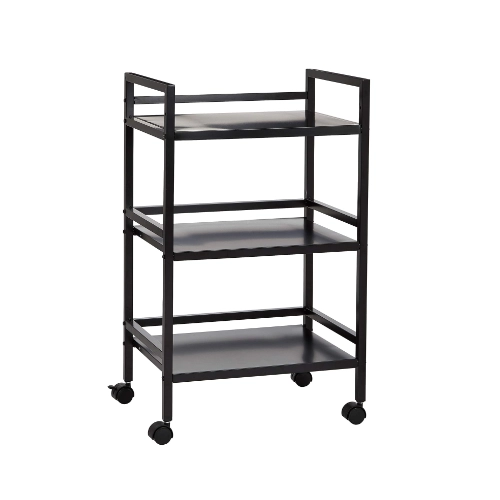
Kitchen cart
Find it on Amazon >
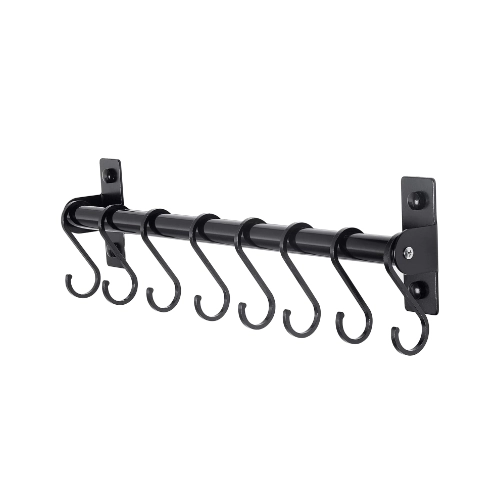
Herb drying rack
Find it on Amazon >
Stackable wine rack
And of course, when in France, you need somewhere to store wine. A stackable wine rack holds bottles horizontally (keeps corks moist, prevents oxidation), stacks to whatever height you need, and slots neatly under shelves or in corners. Keeps bottles organized and accessible without taking up valuable shelf space.
Kitchen cart
If your pantry allows it space-wise, a rolling kitchen cart is brilliant for accessing items without gymnastics. Tuck it under a shelf when not in use, roll it out when you need to reach things. The wheels make it easy to move for cleaning underneath. Get one with metal shelves rather than wood if you’re storing anything damp or heavy.
Spice jars
These are the small Le Parfait jars (350ml) which are perfect for storing spices. The airtight seal keeps spices fresh far longer than those little tins from the supermarket. You can actually see what you have and how much is left. Label the lids with permanent marker (easier to see when stacked).
The seasonal rhythm of a country pantry
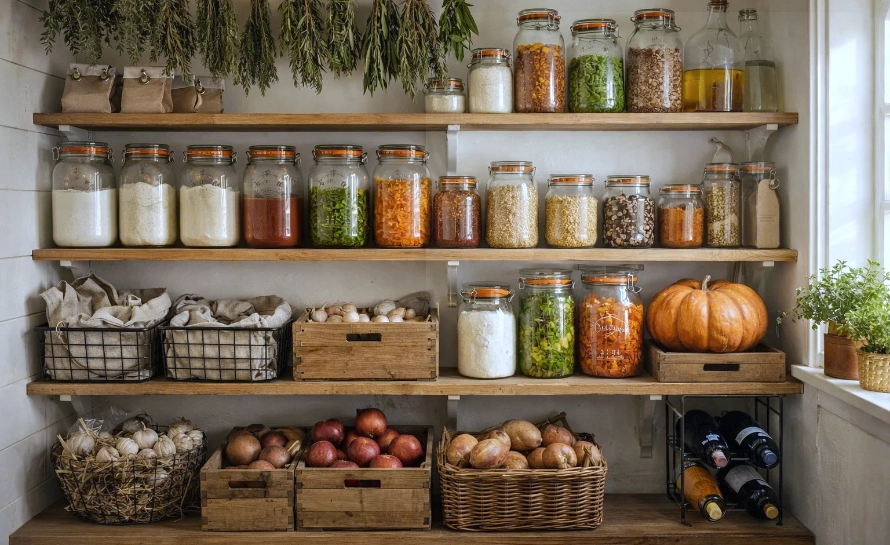
A country pantry changes constantly. It’s not a static storage system, it’s a living thing that responds to seasons, harvests, and what you’re cooking. This rhythm is why a country pantry works. It matches how food actually becomes available, what you’re cooking when, and how much storage space you need at different times. You preserve in autumn because that’s when everything’s abundant and cheap. You eat through winter because that’s when nothing’s growing. The system evolved to match the seasons.
Spring
The pantry’s at its emptiest. You’re using up the last of winter preserves. Making elderflower cordial if the flowers are out. Starting to think about what you’ll plant or buy for preserving this year. The demijohns might be emptying as you bottle winter’s fermented drinks.
Summer
Preserving season starts. Strawberry jam in June. Apricot jam in July. Pickled vegetables as things come into season. The pantry starts filling again. Demijohns might have elderflower champagne fermenting. You’re assessing shelf space and buying more jars if needed.
Autumn
Peak preserving. Tomatoes in enormous quantities. Cucumbers need to turn into pickles. Apple cider pressing. The pantry’s filling up fast. You’re using shelves you emptied in spring. Wicker baskets get filled with onions, garlic, squash, potatoes. The fermentation crocks come out for sauerkraut season.
Winter
The pantry’s full. You’re using what you’ve put up. Preserved tomatoes turn into pasta sauces. Pickles come out. Jams get eaten. Root vegetables from baskets. Cider from demijohns. The preserving equipment gets cleaned and stored away. You’re planning what worked and what to do differently next year.
Making it work in your space
You don’t need a separate cave to have a country pantry. You need cool, dark storage space with some air circulation. Here’s how to make it work wherever you are.
If you’ve got a basement or cellar
Perfect. Install sturdy shelving, organize by type, ensure good air circulation. Keep the really cool areas (12-15°C) for root vegetables and fermenting drinks. Slightly warmer areas (15-18°C) for preserved goods.
If you’ve got a garage or outbuilding
Works as long as it doesn’t freeze in winter or get too hot in summer. Insulate if needed. Use metal shelving. Keep things off the floor in case of damp. Invest in rodent-proof containers for anything that might attract mice.
If you’ve only got kitchen cupboards
Use what you have. A couple of lower cupboards for root vegetables in baskets. Upper cupboards for preserved goods. Keep demijohns in a corner somewhere cool, under stairs, in a spare room, wherever stays consistently cool and dark.
If you’ve got a garden shed
Can work for some storage. Keep vegetables in baskets here. Store empty jars and equipment. Possibly demijohns if temperature’s stable enough. Not ideal for preserved foods, temperature fluctuations aren’t great for preserves.
The key requirements are:
- Cool (12-18°C is ideal, up to 20°C acceptable for most things)
- Dark (light degrades preserved foods)
- Dry (but not desert-dry, some humidity is fine)
- Good air circulation (prevents mould, keeps root vegetables fresh)
You can create these conditions in most spaces with some work. Paint walls white to reflect what light there is. Add ventilation if it’s too humid. Use door curtains to keep areas dark. Install temperature monitoring if you’re serious about it.
Conclusion
Start with what makes sense for your space and what you’re already storing. Maybe that’s a few Le Parfait jars and a seagrass basket for onions or investing in proper linen tea towels and ditching the plastic bags. Maybe it’s finally getting that wine rack you’ve been eyeing or adding a rolling cart for easier access.
The beauty of this system is it grows with you. Buy one piece at a time. Add equipment as you need it. Let your pantry develop organically rather than trying to create the perfect setup in one go. My neighbours’ cave wasn’t built in a year, it’s decades of gradually accumulating equipment that works, keeping what’s useful, and building a system that matches how they actually live.
Your pantry will look different from mine, and that’s exactly how it should be. Different space, different climate, different cooking style. The principles stay the same, materials that last, storage you can see, equipment that does its job properly, but how you apply them is entirely yours.
What’s the first piece of equipment you’re adding to your pantry? Do you already have some of this equipment that’s been brilliant? Or have you discovered something I’ve missed that works beautifully in a country pantry? Drop a comment below, I’d love to know what you’re building and what’s working in your space.
Just so you know, a few links here earn us a commission. Doesn’t cost you anything extra, and we only link to things that are actually worth your time.