Cast iron cookware explained: history, benefits and tips
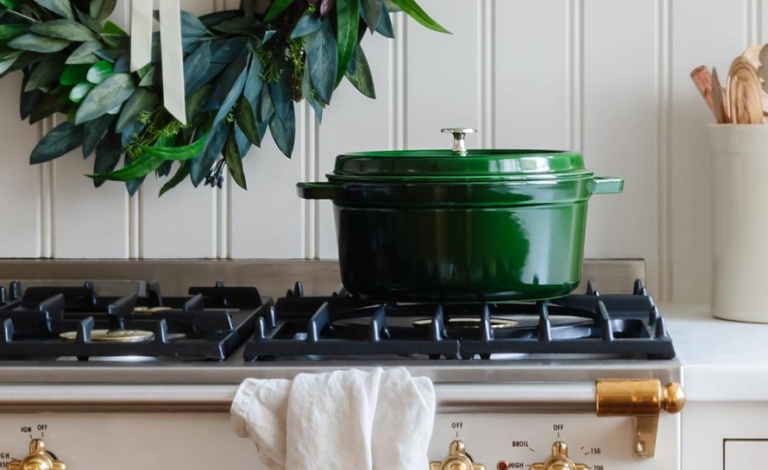
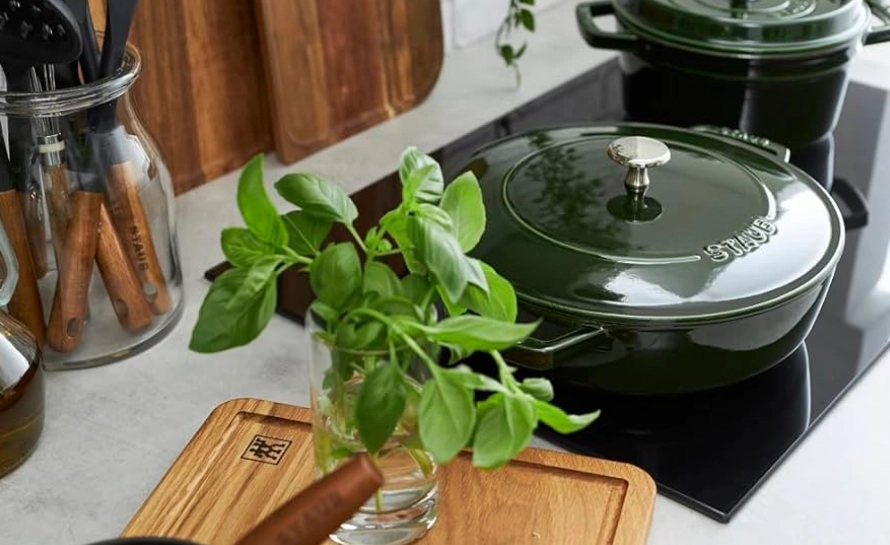
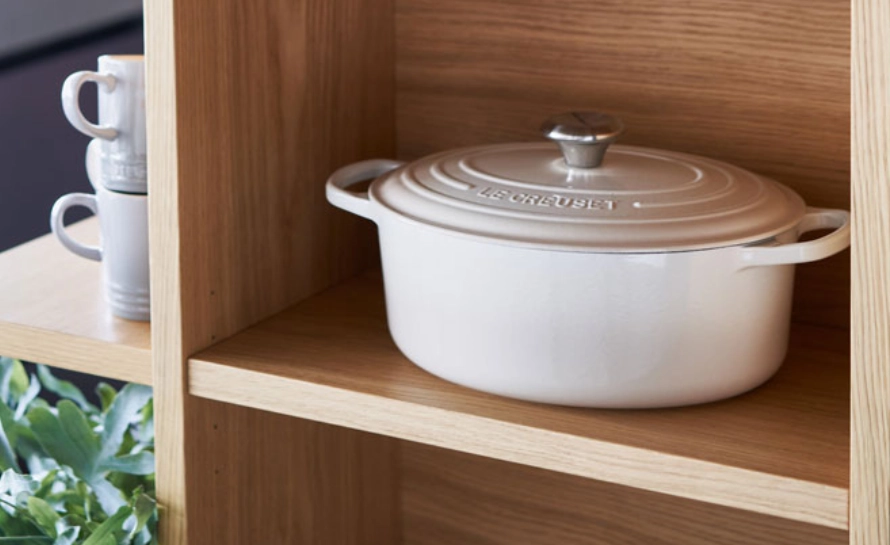
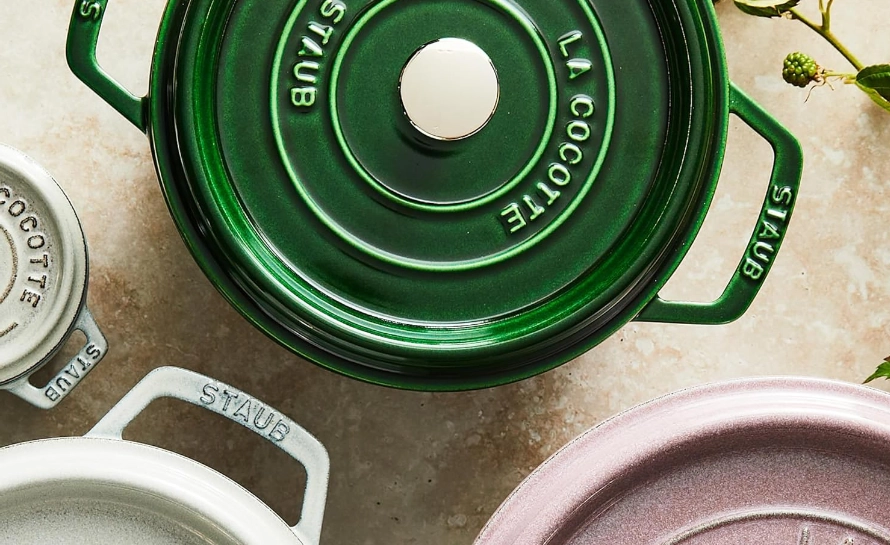
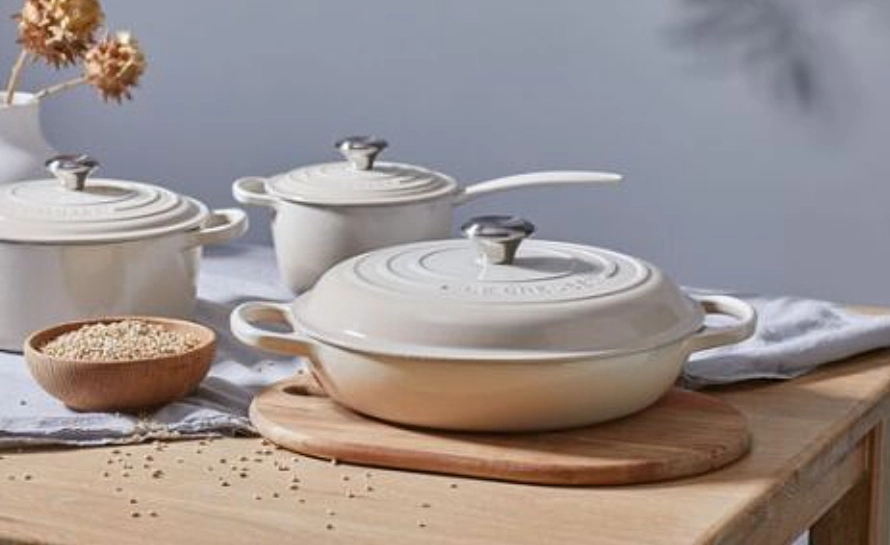
I own three cast iron pans and absolutely adore using them. They didn’t arrive in some grand, all‑at‑once upgrade, I bought them one by one, starting in my twenties, when it clicked that I wanted pots that would genuinely last a lifetime. My two favourites brands are, unsurprisingly, French, and over the years they’ve earned permanent spots on my hob. Most of the recipes on this blog are cooked in my Staub 26cm cocotte, my Staub cast iron sauté pan for braising and my 27cm Le Creuset oval dish. I’m rather fond of the way the deep green and soft meringue colours sit together on the stove, and the different shapes and lids each pull their weight, one better for slow braises, one for everyday sautés, and one for those slightly showy, bring‑it‑to‑the‑table moments.
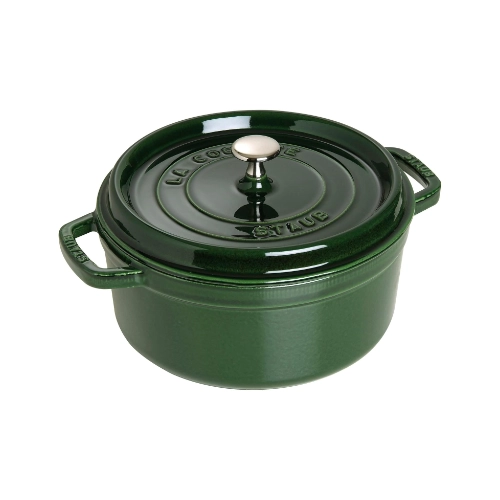
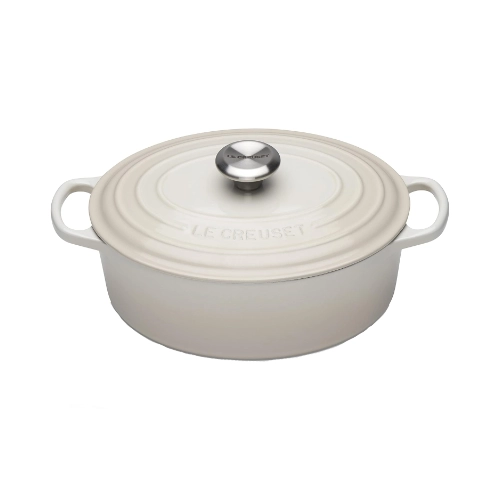
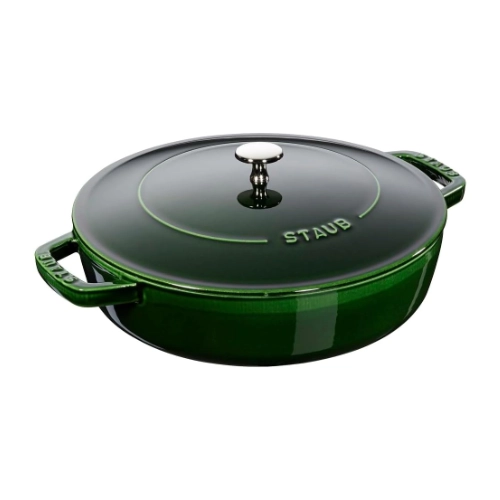
In this article, I want to unpack why cast iron cookware is so good, beyond the pretty colours and the heavy lids. Once you’ve cooked with a proper cocotte, you really do understand the fuss. Yes, they’re pricey, but they’re also the sort of thing you can hand down to your children, still going strong, instead of replacing every few years. I love the idea that one solid piece of cookware can quietly see you through decades of soups, stews, loaves and Sunday lunches.
So, here are the benefits, the reasons I reach for cast iron again and again, and a few practical tips to help you get the best out of it.
A short history of cast iron cookware
Cast iron cookware has been around far longer than most people realise. The Chinese were casting iron as early as the 5th century BCE, and archaeological evidence suggests they were making cooking vessels in the Han Dynasty, around 200 BCE. These early pots were prized for exactly the same reasons we love them today: they hold heat brilliantly and last practically forever.
The technology spread along trade routes to Europe, where cast iron became widespread by the 16th century. In 1707, an Englishman named Abraham Darby patented a sand-casting method that made production cheaper and more consistent, essentially the same technique still used today. His innovation made cast iron cookware accessible to ordinary households, and the Dutch oven (or what the French call a cocotte) became a kitchen essential across Europe and, later, colonial America.
Le Creuset: The Pioneers
Fast-forward to 1925 in northern France. Two Belgian industrialists (Armand Desaegher, a casting specialist, and Octave Aubecq, an enamelling expert) met at the Brussels fair and decided to combine their skills. They established a foundry in Fresnoy-le-Grand, a small town in the Aisne department strategically positioned near iron ore deposits and coal for the furnaces.
That same year, they produced their first cocotte, and chose a bold, fiery orange colour they called “Flame” (still made today as “Volcanique” in France). Le Creuset, the name translates roughly as “the crucible” or “the cauldron”, essentially invented the modern enamelled cast iron pot. Nearly a century later, every piece of Le Creuset cast iron cookware is still made in that same foundry, by artisans using sand moulds that are broken after each pour. Each cocotte is technically unique.
Le Creuset’s 12-step production process involves hand-finishing and at least two coats of enamel (three for the Signature range). The company uses recycled steel from the auto industry for its raw materials. Julia Child famously kept a Le Creuset Dutch oven in her kitchen, it’s now on display at the Smithsonian, though specialist sources suggest her actual favourite was a Descoware, a now-defunct competitor. Still, the association stuck.
Staub: The Chef’s Choice
Staub is the younger sibling, founded in 1974 in Alsace, a region famous for hearty, slow-cooked dishes and centuries of enamelling tradition. Francis Staub, the grandson of a cookware merchant, designed his first cocotte in an old artillery factory in Turckheim. He established Les Usines Métallurgiques de Turckheim and began producing cast iron cocottes that paid homage to Alsatian cooking traditions while incorporating some clever innovations.
The most notable was the self-basting lid. Staub lids have small spikes (or “picots”) on the underside that catch condensation and drip it back down in tiny droplets across the entire surface of your food, what Staub calls “La Pluie d’Arômes” (the aroma rain). It’s a small detail, but it genuinely makes a difference for braises and slow-cooked dishes.
Francis Staub became close friends with Paul Bocuse, the legendary Michelin three-star chef, who became Staub’s official ambassador for twenty years. Pick up any serious French cookbook, and you’ll likely see Staub in the photographs. In France, nearly half of Michelin-starred restaurants use Staub cookware; in Japan, it’s over three-quarters.
In 2008, Staub was acquired by Zwilling J.A. Henckels, the German knife manufacturer, but the brand continues to operate independently. The company relocated its main foundry to Merville in the Hauts-de-France region in 2002, but production remains in France, with each piece involving around 25 specialists for inspection and finishing. The stork in the Staub logo (a symbol of Alsace) testifies to the brand’s regional roots.
Why cast iron is different
Set a cast iron casserole next to a thin steel pot and you can feel the difference immediately. One is a quick sprinter; the other is a patient marathon runner. Cast iron’s particular talent is thermal mass. Once it’s hot, it stays hot, and it spreads that heat evenly across the base and up the sides.
Cast iron advantages
- You get even browning. Sear onions for French onion soup and you don’t end up with one patch burnt and another anaemic.
- The pot doesn’t panic when you add cold ingredients. Deglaze with wine or add stock and it recovers quickly instead of dropping to a lukewarm sulk.
- Food stays hot at the table. Bring a cocotte straight to a trivet and it will keep a stew warm through a long, chatty supper with no trips back to the hob.
Enamel advantages
- Rust protection, unlike bare cast iron, you don’t need to worry about moisture.
- No seasoning required, the pot arrives ready to use.
- It makes is very easy to clean with a surface you can happily scrub with a soft sponge and a bit of washing‑up liquid.
- You don’t have to worry about acidity in tomatoes or wine reacting with the metal.
What enamelled cast iron is really good at
Some pans are one‑trick ponies. Cast iron cookware is more like the dependable friend who turns up for everything.
Slow cooking and braises
This is where cast iron truly earns its keep. A stew or braise likes three things: steady heat, a heavy lid and time. A cocotte delivers all three. Once the pot is up to temperature, you can turn the hob down and let the mass of iron do the work for your Mushroom Bourguignon, gently simmering away without wild swings.
The tight-fitting lids make a real difference. Steam condenses on the underside and drips back into the pot, keeping everything moist. With Staub, those spiked lids distribute the moisture more evenly; with Le Creuset, the smooth lid and tight seal trap steam effectively. Either way, you get that “left in the oven all afternoon” flavour without constant hovering.
Bread, gratins and oven cooking
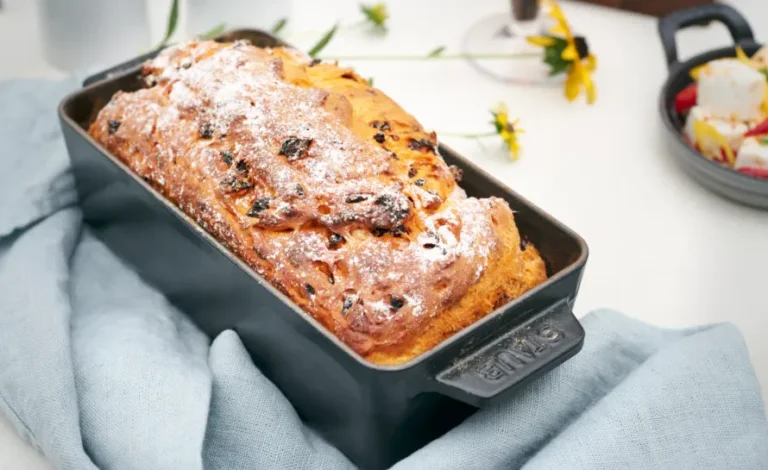
Plenty of people buy a cocotte and then end up baking bread in it more than anything else. The enclosed space traps steam from the dough, giving you that thick, shattery crust you normally only see in a bakery. The heavy base browns the bottom properly, instead of the pale, soft base that comes from a thin tin.
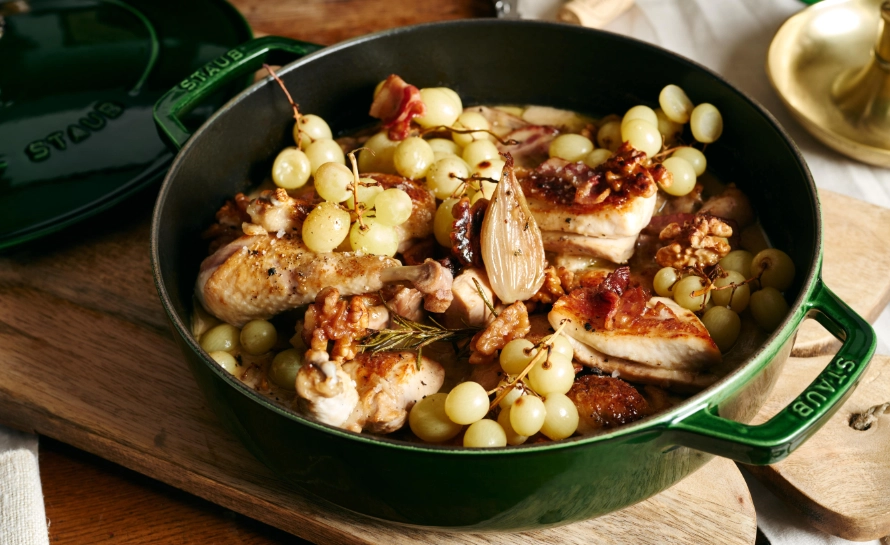
Gratins like a Tartiflette and Brandade de Morue also love cast iron. The enamel releases food easily, the sides brown beautifully, and you can go from hob (for starting onions or a béchamel) straight into the oven without changing pans. It’s all very civilised, fewer dishes to wash, and a pot that looks perfectly at home in the middle of the table.
Everyday cooking
The romantic image is all about slow braises and Sunday roasts, but realistically I use these pots mid‑week too. Once you have one on the hob, it tends to stay there for your pumpkin soup, risottos or big batches of tomato sauce to portion and freeze.
Because enamelled cast iron doesn’t react with acidic ingredients, you can simmer wine, tomatoes, lemons and vinegar in it without worrying about off‑flavours or damage. You can also store the food in the same pot in the fridge once it’s cooled, which is handy if you’re the “cook once, eat twice” type.
Staub vs Le Creuset: cousins, not enemies
People often frame Staub and Le Creuset like rival football teams. In truth, they’re more like cousins with slightly different personalities. I have both for different reasons.
Staub
– Founded 1974 in Alsace
– Using sand moulds*
– Interior is dark matte enamel
– The exterior enamel is glossy
– Colours very deep and saturated
Le Creuset
– Founded 1925 in Fresnoy-le-Grand
– Using sand moulds*
– Interior is pale sand shade
– The exterior enamel is glossy
– Colours brighter with gradients
*Both use sand moulds that are broken after each pour, so every cocotte is technically unique
Weight, shape and ergonomics
Staub
Staub cocottes often feel denser in the hand, with slightly thicker cast iron and a lower, more compact profile. The handles are more tucked-in, which saves space in the oven but can feel snug if you’re using thick oven mitts. The extra weight gives them a very steady, “anchored” feel on the hob.
Le Creuset
Le Creuset is generally a bit lighter than the equivalent Staub, helpful when lifting a full pot from oven to table. The side handles are broader and more open, so there’s plenty of room for bulky oven gloves. If you’re cooking for a crowd or have any concerns about lifting heavy cookware, this is worth considering.
Moisture and condensation
Staub
The Staub lid with its self-basting spikes genuinely works. In side-by-side tests, Staub cocottes retain about 5% more moisture than Le Creuset over long cooking times. You can see it when you lift the lid, droplets rain down from those spikes in a way that’s genuinely impressive. For braises, stews, and slow-cooked meats, this makes a discernible difference.
Le Creuset
Le Creuset’s lids seal well and trap plenty of steam, but the smooth underside means moisture runs to the edges rather than dripping evenly across the food. Some people actually prefer this for sauces and reductions where you want a bit more evaporation.
Heat behaviour
Staub
Both pots perform beautifully, but with slightly different characters. Staub’s thicker walls and darker enamel hold onto heat more aggressively, great for searing, but you need a gentler hand with the burner. Medium or low heat is usually plenty.
Le Creuset
Le Creuset heats a touch more gently and feels more responsive on the hob. The pale interior makes it easier to judge when to turn the heat down, which is reassuring for milk-based sauces or anything prone to catching.
The last pan you will ever buy
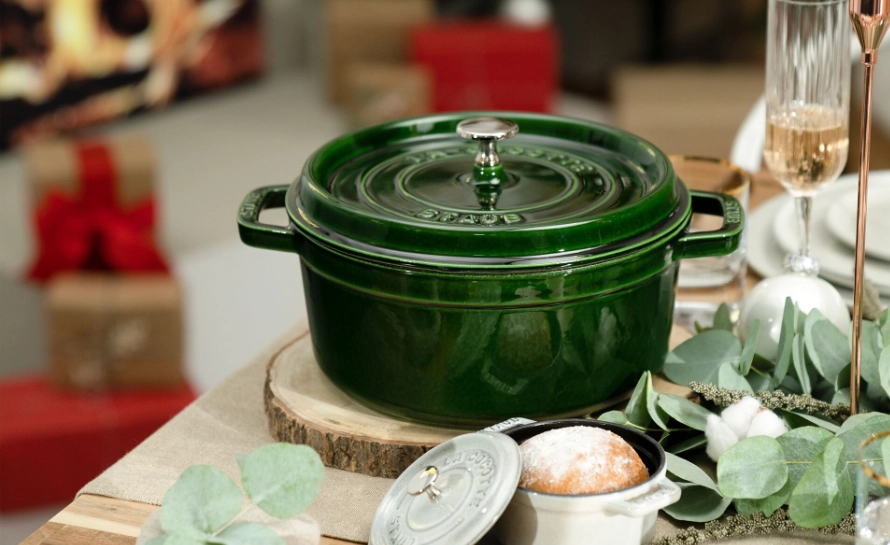
There’s no way around it, cast iron cookware is expensive. You can pick up a light aluminium pot for a fraction of the price. So why do people keep saving up for cast iron?
1. Longevity
Cast iron, looked after well, can outlast its owner. The enamel protects it from rust, and unlike some non-stick coatings, it doesn’t quietly peel away after a couple of years. Many families pass these pots down through generations, there’s something rather nice about cooking a Ratatouille in the same casserole your grandparents used.
2. Consistency
Cheap, thin pots warp, develop hot spots, and can scorch at the slightest provocation. That means your results are never entirely predictable, which is maddening for long braises or bread baking. Heavy cast iron smooths out that chaos, the heat is even, the base stays flat, and your food behaves the same way every time.
3. Versatility
A 24–28cm cocotte is one of the few pieces of cookware that can genuinely handle starter, main, and dessert, soup, stew, bread, gratin. It works on gas, induction, ceramic, in the oven, and often under the grill too (within the temperature guidelines). That flexibility makes the cost feel very reasonable over years of use.
The math
A quality cocotte costs roughly £200–£400 depending on size and brand. If you use it twice a week for 30 years, a conservative estimate, that’s about 6–13p per use. The cheap pot you replace every three years costs more in the long run, never mind the landfill.
How to care for cast iron cookware
The good news: these pots don’t need babying, just a bit of common sense.
| Heat | Let the pot heat up gradually, don’t crank the hob straight to maximum. Avoid shocking a hot pot with cold water, which can stress the enamel. Thermal shock is the main enemy of enamelled cast iron. |
| Utensils | Use wooden, silicone, or plastic utensils rather than metal if you want to keep the interior pristine. Staub’s dark enamel is more tolerant of metal, but gentle is always safer. |
| Cleaning | For everyday cleaning, warm water, mild washing-up liquid, and a soft sponge are absolutely fine. For stubborn bits, let the pot soak for 20 minutes, most things lift off easily. A gentle nylon brush works for anything stubborn. |
| Dishwasher | Most enamelled cast iron is technically dishwasher-safe, but both manufacturers warn that repeated dishwashing can dull the exterior enamel over time. Hand-washing is the better option if you care about keeping that glossy finish. |
| Staining | If the interior develops discolouration (common with Le Creuset’s light enamel), both brands sell specific cleaning products that restore the surface without scratching. A paste of bicarbonate of soda and water also works for mild staining. |
| Storage | Store lids ajar or separately to allow air circulation and prevent moisture buildup. |
How to choose the right cast iron cookware
If you’re thinking about bringing one into your kitchen, a few practical questions help narrow it down. But I can assure you, they all work beautifully, it’s really about what makes you feel most confident.
Size

20–22 cm
For 1–2 people, side dishes, small loaves.
24 cm
Comfortable everyday size for 2–4 portions.
26–28 cm
Better for families and baking bigger loaves.
Remember the weight goes up as the diameter increases, so be honest about how much you like lifting.
Shape

Round
Best all‑rounder for stews, soups and bread. Great everyday shape for most recipes.
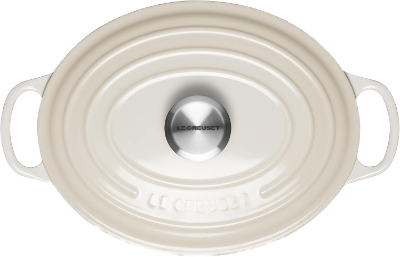
Oval
Ideal for whole chickens, roasts and longer cuts of meat. Sits nicely across wider burners.
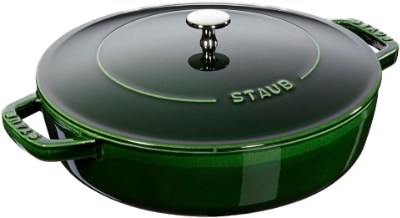
Low
Perfect for shallow braises, gratins and searing. Doubles as a serving dish.
Final toughts
ou don’t need to buy everything at once. Start with the pieces you’ll reach for every week, one good cocotte and perhaps a braiser will already change how your kitchen feels. Over time, the investment really does pay off: meals become more consistent, you fight less with scorched pans or warped bases, and you get that quiet satisfaction of using something built to last instead of heading for landfill after a few years.
If you already have a cast iron favourite, I’d love to know what it is and what you cook in it most. And if you’ve inherited a pot from a parent or grandparent, what’s the one dish that really belongs in it for you?
Just so you know, a few links here earn us a commission. Doesn’t cost you anything extra, and we only link to things that are actually worth your time.