Bourges
The heart of Berry in the Loire valley
You’ve probably heard of Bourges because of Le Printemps de Bourges, its famous music festival? But there’s so much more to it than that. Bourges is really lovely, it manages to feel relaxed even when there’s plenty going on. There’s loads to see and do, and never feels overwhelming. Grab a bench in one of the parks, do some people-watching, and you’ll quickly fall into the city’s warm, easygoing rhythm.
Bourges is full of history and culture, with impressive Gothic monuments and medieval neighbourhoods that really are impressive! Located in the Cher department, Bourges was once a major regional hub. It sits right on the Loire wine route too, making it a natural stop if you’re exploring vineyards and châteaux nearby.
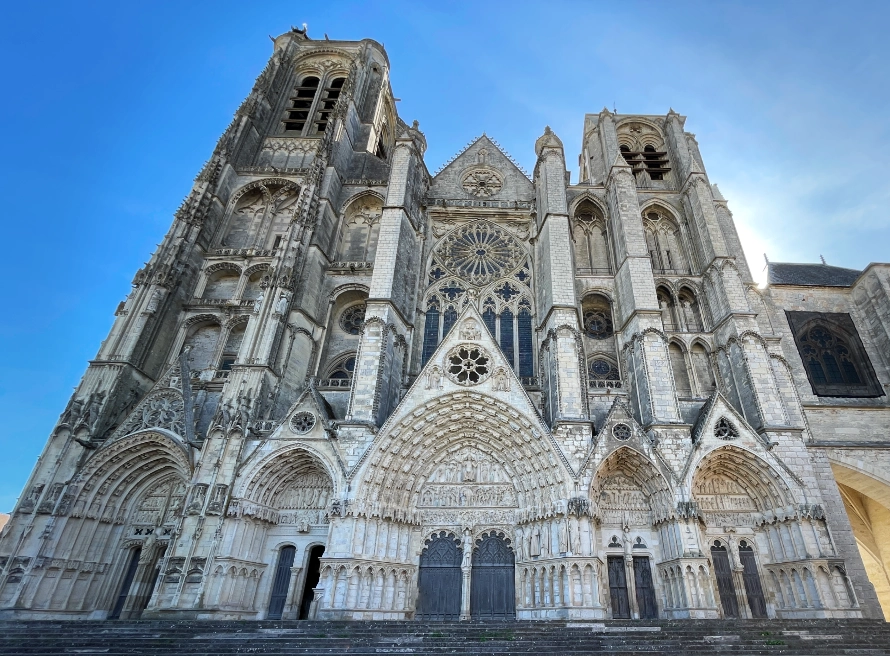
Saint-Étienne cathedral
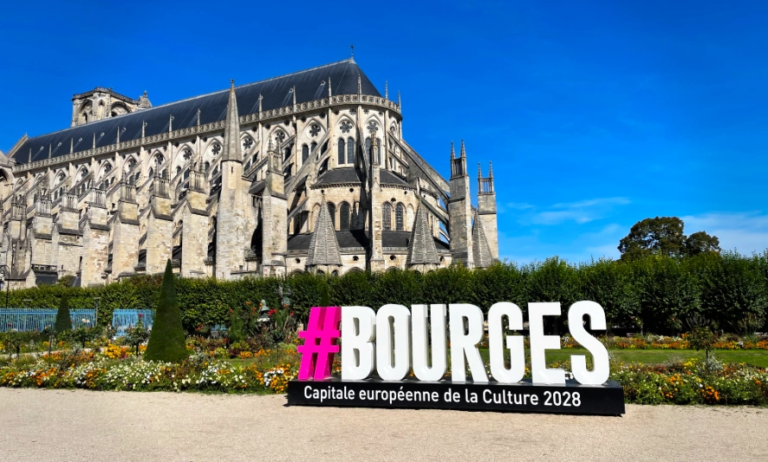
Talking about Bourges without mentioning Saint-Étienne Cathedral is like visiting London and skipping Big Ben. This cathedral is absolutely massive and absolutely majestic , a definite must-see. And it’s not just because those dramatic Gothic spires dominate the skyline. Its history and art make it one of the most fascinating, and beautiful, cathedrals in France.
History
Construction started in the early 12th century but took nearly 200 years to finish. Building something like this was an incredible feat back then. The cathedral blends different architectural styles from across those centuries, but it’s the Gothic elements that really grab you, high ceilings, flying buttresses, and those unforgettable stained glass windows. It represented a massive leap forward in medieval architecture.
Bourges was wealthy, and the cathedral was a statement. Both religious and political. It showcased the power and prestige of the city’s bishop and was designed to inspire awe and devotion in anyone who walked through its doors.
Over the centuries, it’s witnessed everything. As the local seat of religious authority, it sat at the centre of medieval politics and later survived the religious turmoil of the Reformation. Remarkably, it made it through the French Revolution intact, unlike so many other churches. That’s partly down to the locals, who fiercely protected their beloved landmark.
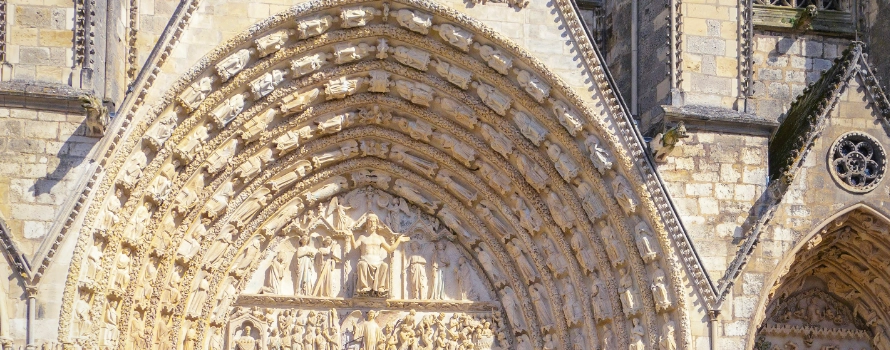
The exterior are stories told in stone. Sculptures and carvings depict scenes from the Bible, saints, and all sorts of medieval symbolism, essentially a visual textbook for an era when most people couldn’t read. Take your time with the façade. The details are so intricate you’ll spot something new each time you look.
Stained glass windows
The real magic is inside, in the incredible stained glass windows. I was genuinely bowled over by how many there are and how stunning they look in person. Photos don’t come close, you have to see them yourself to get the full impact. Most date back to the 13th century. There’s been some restoration over the years, but much of the original glass is still there. They flood the interior with coloured light, and walking among them feels almost meditative. It’s one of those experiences that sticks with you, religious or not.
The blend of architecture, history, and art makes Saint-Étienne a museum of medieval life and faith wrapped up in one stunning building. If you’re lucky enough to catch the “Nuits Lumière” festival, when the cathedral gets lit up with artistic projections, it’s meant to be absolutely magical.
This cathedral has been telling the story of a city, its faith, and its people for over 800 years. And that’s a story that’s well worth hearing in person!
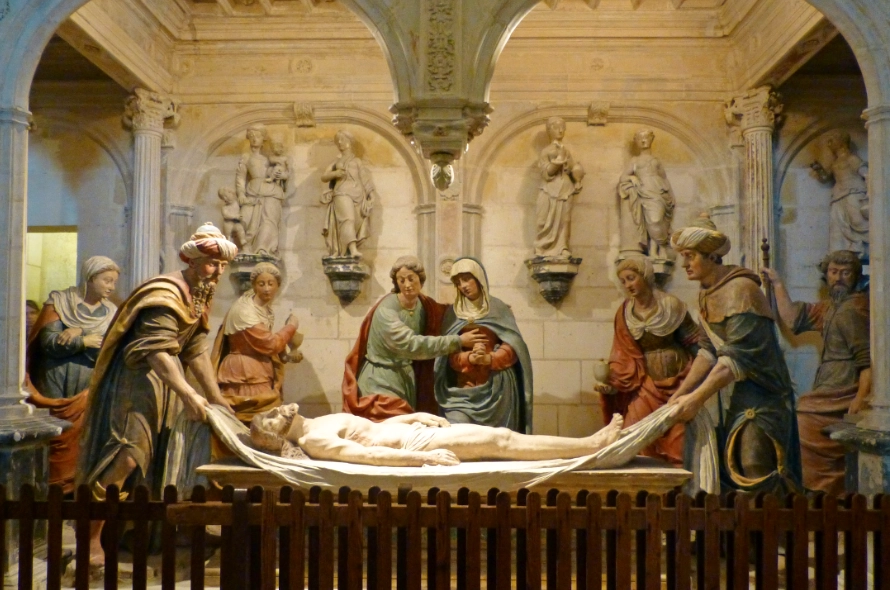
The crypt of Bourges Cathedral
Right beneath the heights of Saint-Étienne lies a quieter treasure that most people overlook, the crypt. It’s a space that offers a completely different atmosphere from the bright, colourful grandeur upstairs.
The crypt is one of the oldest bits of the cathedral, dating back to the 11th century, before the Gothic structure was even built. It was part of the earlier Romanesque church that stood on this site, making it a rare glimpse into the city’s medieval past, all carved in stone and shadow.
You’ll find some fascinating architectural details down there, Romanesque arches and well-preserved sculptures that hint at what religious life was like centuries ago. It’s an essential part of visiting the cathedral, especially if you’re interested in how places like this evolved over time.
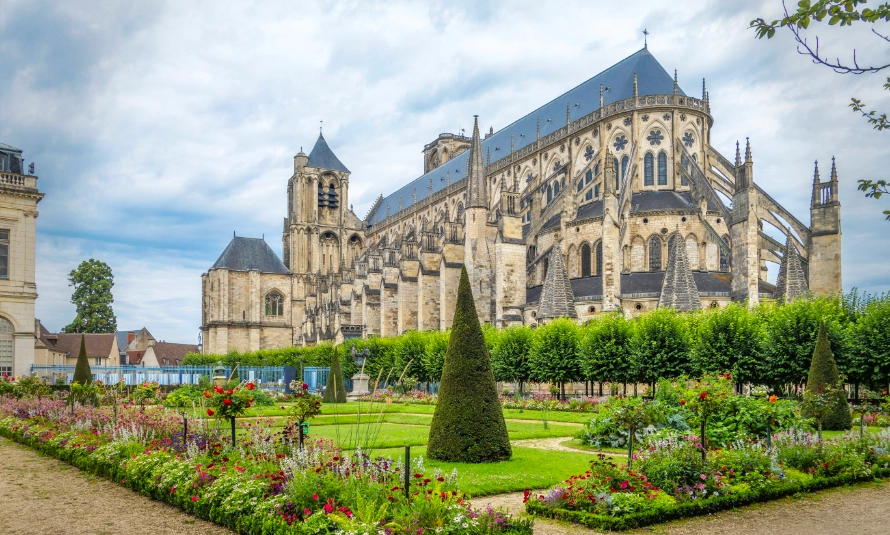
Le Jardin de l’Archêveché
Once you’ve taken in the grandeur of Saint-Étienne Cathedral, pop next door to Le Jardin de l’Archêveché. You can’t miss it, it’s right beside the cathedral and offers a completely different vibe that perfectly complements what you’ve just seen.
This garden was originally the private grounds of the archbishops who lived nearby, a quiet green space where they could escape their duties. Now it’s open to everyone, and it’s a lovely spot to slow down and catch your breath after wandering through all that stone.
The garden is a nice balance between formal design and natural charm. Well-kept lawns, colourful flowerbeds, winding paths shaded by mature trees. It’s a place where we sat on a bench to do a bit of people-watching!
The garden changes with the seasons, spring brings bright blossoms, autumn dresses everything in warm reds and golds, all framed by the cathedral’s impressive stone walls. If you’re lucky, you might catch a small cultural event or exhibition during the warmer months, which adds a nice bit of extra interest.
Palais Jacques-Cœur
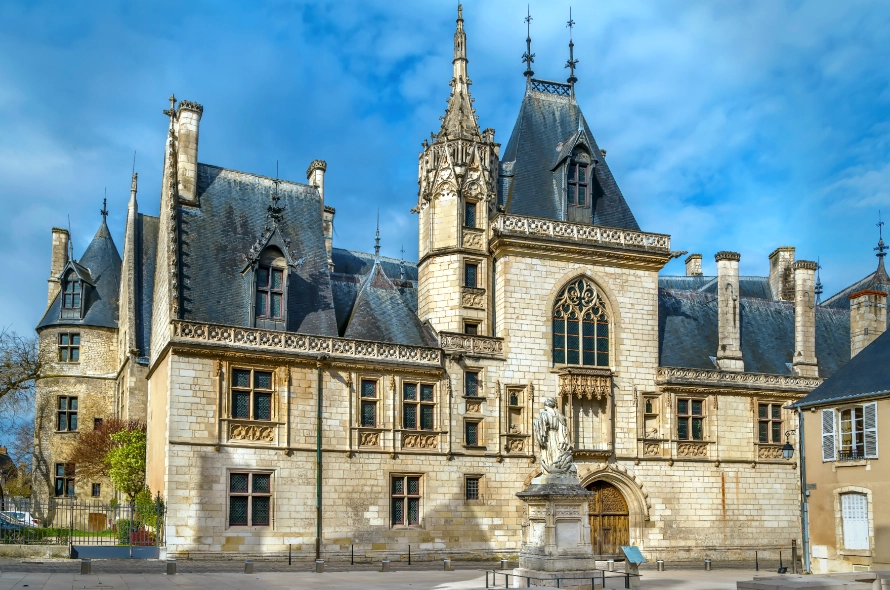
If you want to see how Bourges’ wealthiest and most powerful lived in the 15th century, Palais Jacques-Cœur is a must. Jacques Cœur was a merchant who made an absolute fortune through trade, and he built this palace as a bold statement of his success. It’s impressive not just for its size but for the details, the craftsmanship tells you everything about the wealth and taste of the era.
Walking through the grand rooms, you get a real sense of what life was like for a powerful medieval businessman. Stone carvings, frescoes, arched galleries, decorated fireplaces, it’s all there, showing the mix of luxury and practicality that defined the place. The palace also showcases early Renaissance decoration, which was just starting to influence French design at the time. It’s a bit of a bridge between medieval solidity and something lighter, more elegant.
If you like history, Palais Jacques-Cœur is worth taking your time and absorb the architecture, the art, and the story behind one of Bourges’ most fascinating figure.
Note
Tickets currently cost between €7.50 and €9 for individual entry, depending on the season and any special rates. There’s also a combined ticket for both the palace and the cathedral crypt, priced around €12 to €14.
Be aware that parts of the palace are undergoing restoration until April 2026, including the attic, Treasure Room, and Aldermen’s Cabinet. During this period, ticket prices have been adjusted slightly and some areas will be closed.
The old town
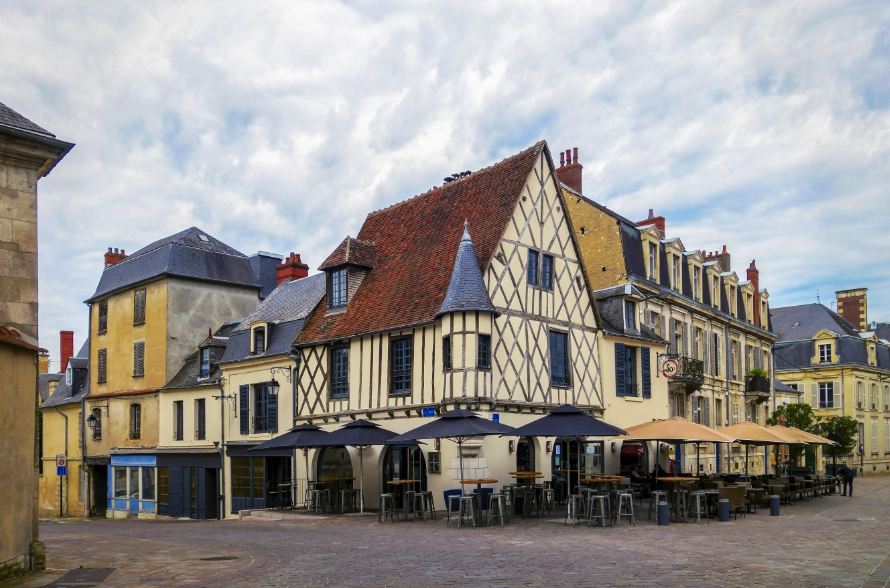
The old town in Bourges is the kind of place where it’s easy to lose track of time—and directions, come to think of it. With more than 400 half-timbered houses lining the cobbled streets, you get a genuine taste of medieval France, but without the feeling that everything’s just for the tourists. Locals still live, shop, and go about their business in buildings that have seen several centuries pass by.
It’s a place to stroll, not march, come with good shoes and let yourself be guided by curiosity and the occasional whiff of fresh bread. If you like a bit of history served with food or shopping, this is the quarter to linger in.
A marshland near the city
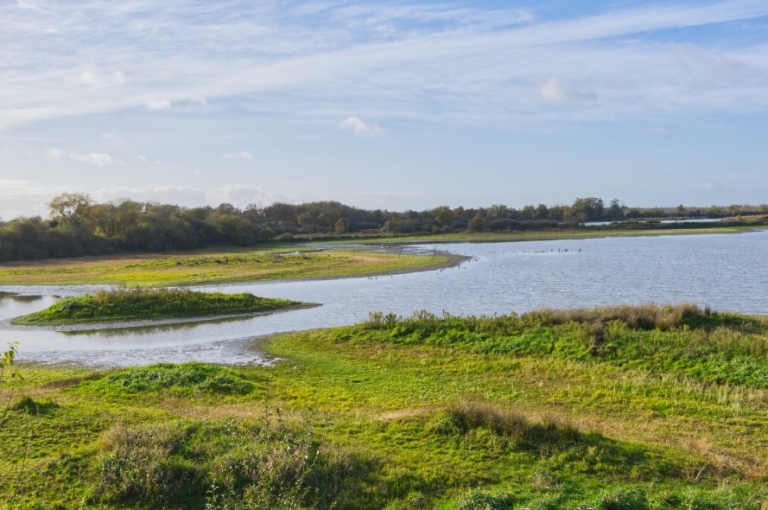
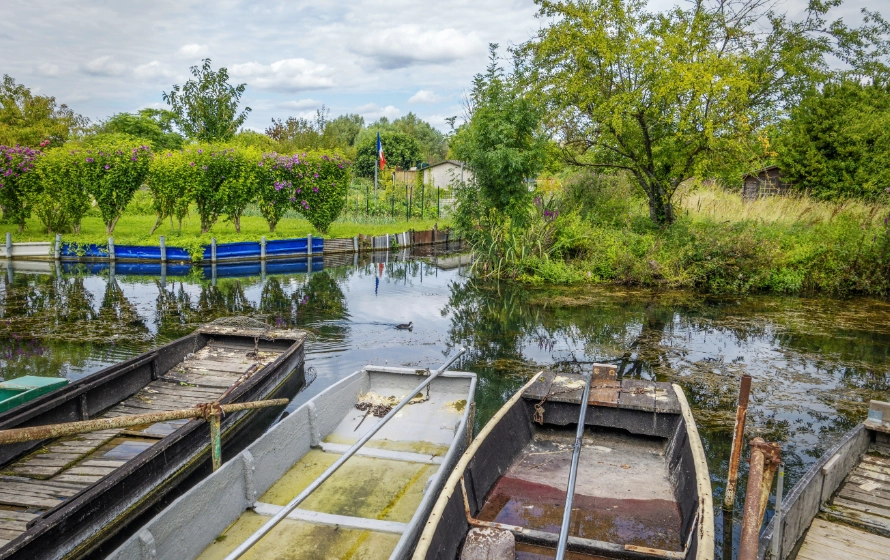
Unusual for a city centre, Bourges has its own bit of marshland! It’s a peaceful green space full of wildlife trails, wooden walkways, and calm ponds. This marshland covers about 135 hectares and is a bit of countryside folded neatly into the edge of the urban landscape. Access is easy, with free entry and public paths that make it a perfect place for families. Nearby, you’ll find a couple of local restaurants serving up fresh, seasonal fare inspired by the bounty of the marshes.
Back in the Middle Ages, these wetlands played a vital part in protecting the city. The marshes acted as a natural defense barrier, making it harder for invaders to get close. Come the 17th century, the Jesuits took over the land and rented it out to gardeners, a tradition of market gardening that lasted right through to the 19th century. Today, many of these small plots are still lovingly tended by local gardeners, making the marshes a patchwork of cultivated gardens filled with vegetables, flowers, and fruit.
The marshes are crossed by the Yèvre river and are crisscrossed with paths perfect for walking or cycling, offering a peaceful spot to unwind surrounded by nature just minutes from the city. Birdwatchers will appreciate the variety of aquatic birds that call the marsh home. You might spot ducks in their vibrant spring plumage, coots with their funny white masks, and plenty of songbirds flitting through the trees. There’s plenty of other wildlife too, from hedgehogs to foxes and even bats.
If you’re visiting in early September, try to catch the Fête des Marais, a local festival celebrating the harvest season and Saint Fiacre, the patron saint of gardeners. The marshes come alive with colour, boat parades, floating markets, and folk activities.
Prés Fichaux Garden
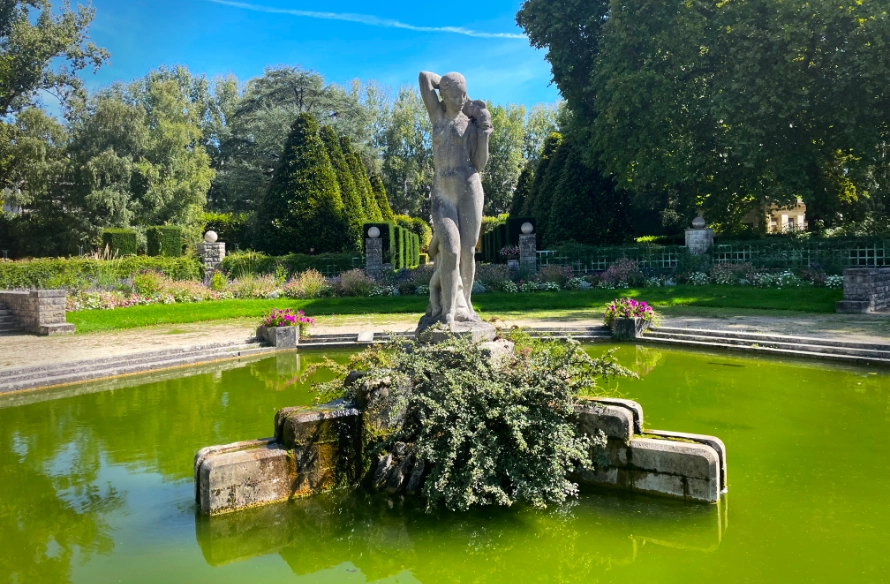
If you’re in Bourges and fancy a bit of greenery away from the hustle and bustle, the Jardins des Près-Fichaux is a good place to check out. The gardens are situated on the outskirts of the city, making them easy to reach without much fuss. It’s a local well-kept park, quiet and ideal for a relaxed walk, a picnic, or just sitting down with a coffee and soaking up the peace.
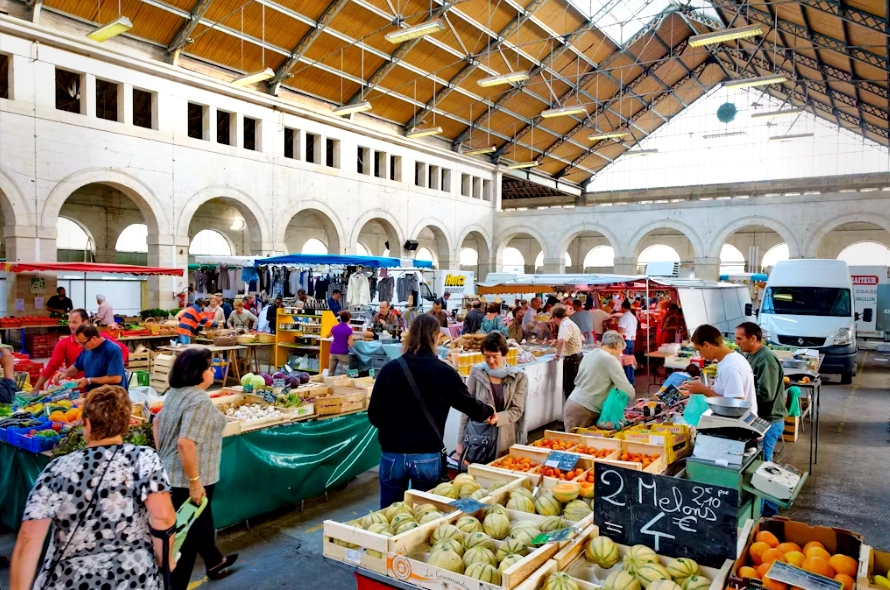
Halle aux blés
La Halle aux Blés in Bourges is a fine example of 19th-century architecture and a key part of the city’s history. Built between 1832 and 1836 on the site of a former convent, it was designed to serve as a grain market, a vital hub back when agriculture was central to the local economy. The building has a classic, sturdy design with arcaded galleries and a large open courtyard, which was originally uncovered. In 1892, this courtyard was covered by a glass canopy, adding a touch of lightness to the structure and protecting the market from the weather.
Today, La Halle aux Blés hosts a lively food market every Saturday morning where you can find artisan cheeses, fresh produce, meats, and regional delicacies, a great spot to get a taste of Bourges and the surrounding Berry region.
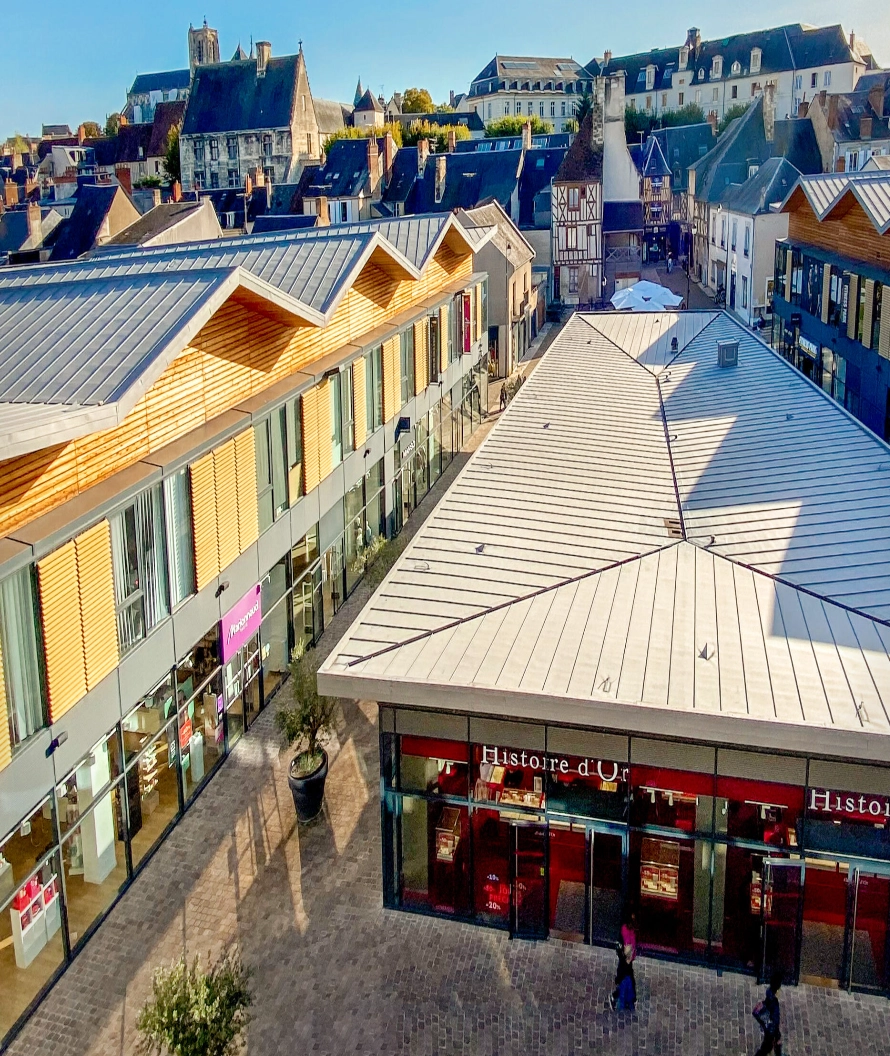
Avaricum Commercial Centre
If you’re in Bourges and wondering where to find a good mix of shopping, dining, and services all under one roof, the Avaricum Commercial Centre is the place to head. It’s Bourges’ main shopping hub, modern and well laid-out, offering everything from big-name stores to smaller boutiques.
The centre opened not too long ago and immediately became popular with locals for its convenience and variety. You’ll find everything you might need: fashion outlets, electronics, homeware, a supermarket, and plenty of places to grab a quick bite or sit down for a coffee and a chat.
What to see and do in Bourges
- Saint-Étienne Cathedral
Marvel at this Gothic masterpiece, its detailed façade, and the breathtaking stained glass inside. - The crypt of Bourges Cathedral
Head downstairs below the cathedral to see the impressive “Mise au Tombeau” and soak up the ancient atmosphere. - Palais Jacques-Cœur
Visit the grand 15th-century mansion, packed with history and stories of ambition, art, and Renaissance design. - Jardin de l’Archêveché and Prés-Fichaux gardens
Take a walk in these peaceful green spaces right by the cathedral or wander through the art deco Prés-Fichaux park for a bit of fresh air. - The old town
Roam the crooked medieval lanes, lined with timber-framed houses, little squares, and hidden courtyards, Place Gordaine is especially lively. - Les Marais de Bourges
Venture out to the marshes for a slice of nature; stroll the footpaths, spot wildlife, and watch local market gardeners at work. - Halle aux Blés (Saturday market)
Drop by the historic grain market for a friendly bustling scene and the best regional produce to sample or take home. - Musée Estève and Hôtel Lallemant
If you’re curious about local art and history, these museums are tucked into beautiful Renaissance buildings and worth a visit. - Les Nuits Lumière (from July to September)
At nightfall, tour the city centre as monuments light up in blue and gold, an open-air show that’s unique to Bourges.
Practical information for visitors
- Getting there
Bourges is easily reached by train (roughly two hours from Paris)or by car, with good road links from major routes in central France. Once you arrive, the city centre is compact and walkable, so you won’t need a car to get around. Public transport covers the main neighbourhoods, and parking is usually straightforward near key sightseeing spots. - When to visit
Bourges has something happening all year. Spring is great for outdoor walks with mild weather and lively gardens. Summer brings festivals, especially the music-filled Printemps de Bourges, and open-air events. It’s busiest then, so for a quieter trip, autumn is ideal, there’s soft light on the old town and fewer crowds. Midweek visits and out-of-holiday days give you the best chance at peace. - Accommodation
You’ll find a variety of accommodation: city centre hotels, simple guesthouses, B&Bs, and self-catering flats. The main hotels are welcoming and central, though if you fancy some peace and greenery, countryside guesthouses and campsites around Bourges are a solid bet.