Bouillabaisse
Bouillabaisse
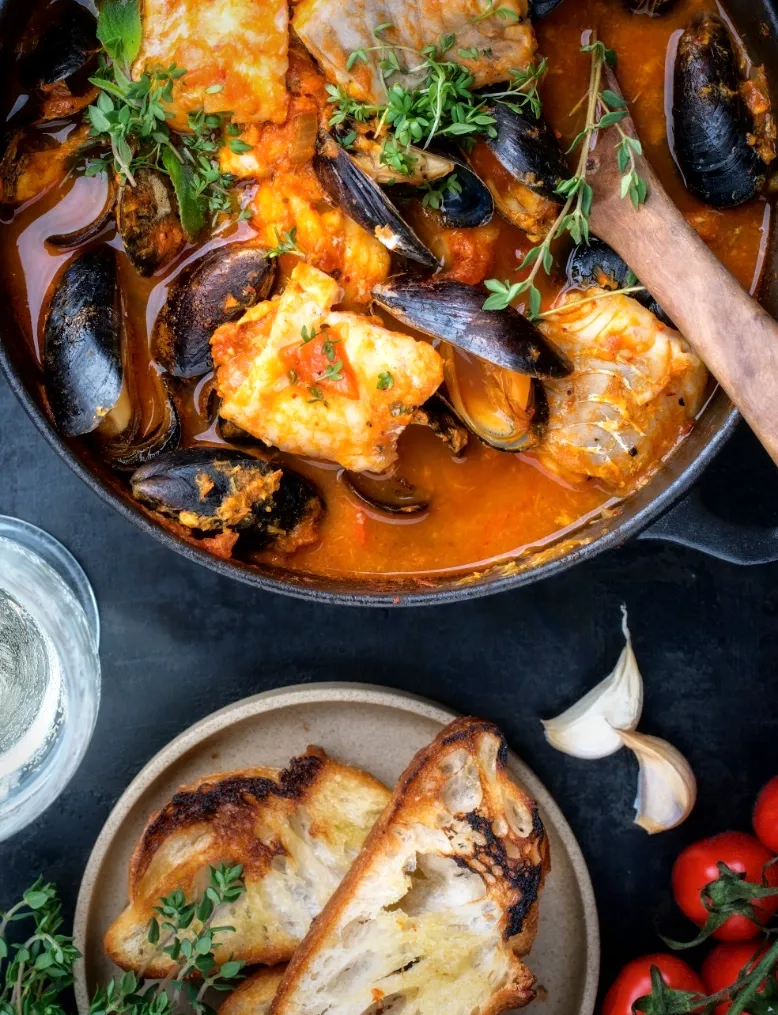
Bouillabaisse is a fragrant, hearty summery fish stew brimming with tender chunks of fresh seafood, infused with saffron, herbs, and the subtle aniseed warmth of Pastis. Born from humble fishermen’s need to make the most of their catch, this iconic dish has evolved into a beloved French classic!
Pin Recipe Print Recipe Prep Time 1 hour 15 minutes Cook Time 40 minutes Total Time 1 hour 55 minutes Servings 4
 Prep Time 1 hour 15 minutes
  Cook Time 40 minutes
  Total Time 1 hour 55 minutes
  Servings 4
Ingredients

Fish and seafood
- 200 gr sea bass whole
- 150 gr monkfish
- 100 gr red snapper
- 1 dover sole whole
- 200 gr shrimps preferably with shells on
- 500 gr mussels
Soup base
- 1 onion
- 1 leek
- 1 fennel small
- 5 threads saffron
- 2 cloves garlic
- 5 tomatoes ripe
- 1 tbsp tomato puree
- 450 gr firm-fleshed potatoes
- 1 tbsp fennel seeds
- 3 bay leaf
- 1 l fish stock or prepare your own with whole fishheads
- 120 ml dry white wine
- 2 tbsp Pastis Ricard from Marseille
- salt to taste
Fish stock
- 500 gr fish bones, heads, and shells from the fish and shrimp
- 1 stick celery roughly chopped
- 1 onion quartered
- 2 cloves garlic
- 1 bay leaf
- 1 l water
- 5 peppercorns
Rouille sauce
- 2 egg yolks
- 3 cloves garlic
- 1 tbsp mustard Dijon
- 2 slices white bread crust removed
- 6 threads saffron
- 1 tsp ground paprika
- 1 tsp Piment d’Espelette or cayenne pepper
- 65 ml olive oil
- 65 ml rapeseed oil
- lemon juice
- salt
Equipment
Instructions
- 1. Prepare the fish and shrimps for stock and soupStart by carefully filleting the whole Dover sole and whole sea bass. Use a sharp knife to cut along the backbone and remove the fillets, setting these aside for the soup later. Keep the bones, heads and frames from both fish (all the parts left after filleting) as these are perfect for making a rich, flavourful fish stock. Peel your shrimps and put the shells aside.
- 2. Make the fish stockRinse the fish bones, heads, frames, and shrimp shells thoroughly under cold water to remove any blood or impurities that can otherwise make the stock cloudy or bitter. Place these cleaned parts in a dutch oven. Add roughly chopped carrot, celery, quartered onion, garlic cloves, bay leaf, peppercorns, parsley stalks, and 1 litre of water.Bring to a gentle simmer over medium heat. Avoid boiling rapidly, which can cloud the stock; a gentle simmer will extract flavours clearly. Let it cook uncovered for 20 to 30 minutes. This process draws out all the savoury juices and creates the flavorful base for your bouillabaisse.
- 3. Strain and blend vegetablesStrain the stock through a fine mesh sieve or cheesecloth to remove all bones, shells, and solids. Reserve the cooked vegetables separately from the clear stock.Using a blender or food processor, blend the cooked vegetables with a small amount of the strained stock until smooth. Return this vegetable purée to the clear stock and stir well to create a rich, textured broth that remains clear but carries body and flavour from the vegetables.Keep this combined fish stock and vegetable purée warm and set aside.
- 4. Prepare the remaining vegetablesSlice the onion, fennel, and leek. Dice the tomatoes and potatoes into nice chunks.
- 5. Begin the soup baseGently heat olive oil in a large pot over medium heat. Add the sliced onion, fennel, and leek, sautéing until the onion turns translucent and fragrant.
- 6. Add spices and tomatoesSprinkle in the fennel seeds and saffron threads, followed by the minced garlic, tomatoes and tomato puree. Stir well and cook for a few minutes to allow the flavors to meld beautifully.
- 7. Deglaze and add stockDeglaze the pot with pastis and white wine, allowing the alcohol to reduce slightly. Then pour in the fish stock.
- 8. Cook potatoes and herbsAdd the chopped potatoes and bay leaves into the pot, simmering gently over medium heat for about 20 minutes, or until the potatoes soften but hold shape.
- 9. Add seafood and cookCut the reserved sea bass and Dover sole fillets into large chunks. Add these along with cleaned mussels and shrimps to the simmering broth. Cover and cook for 5 to 7 minutes until fish is opaque, shrimp is pink, and mussels have opened. Discard any unopened mussels.
- 10. Prepare the rouille sauceInfuse saffron threads in lemon juice. Blend egg yolks, garlic, Dijon mustard, soaked bread, saffron mix, salt, paprika, and piment d’Espelette using a whisk in a bowl. Slowly drizzle in olive oil and rapeseed oil while blending to form a creamy, emulsified sauce (similar to a mayonnaise). Adjust seasoning and chill briefly.
- 11. ServeRemove the bay leaves. Ladle bouillabaisse into warm bowls and serve with crusty bread spread with rouille. Traditionally, rouille-topped croutons are floated on the soup or dipped into it for an extra flavour boost!
Notes
Authentically, bouillabaisse is made with Mediterranean fish native to the southern coast of France. Typical varieties include Bar (European sea bass), Saint-Pierre (John Dory), Rouget grondin (red gurnard), Lotte (monkfish), and Rascasse (scorpion fish), along with red mullet. For the fish stock, a mix of rock fish like scorpion fish and other firm white fish bones is traditionally used to create a rich, aromatic base.
However, these specific fish can be challenging to find outside the Mediterranean, especially in the UK. Don’t worry, use what’s fresh and available locally. Good UK alternatives for the main fish include red snapper, sea bass, Dover sole, and monkfish. These firm white fish provide a delicate flavour and texture that bring you close to the original bouillabaisse experience. For the stock, use fish with firm, flavourful bones like Dover sole or sea bass, and include shrimp shells to enhance the taste.
✱ Drink pairing
About this recipe
Bouillabaisse is the treasured culinary emblem of Marseille and a vibrant symbol of Provençal heritage. Its origins trace back to ancient Greek settlers in Marseille (then Massalia) over 2,600 years ago, who crafted a simple fish broth called kakavia from unsold fish and shellfish. This humble fishermen’s dish evolved over centuries into the fragrant, saffron-laced masterpiece we celebrate today.
The name “bouillabaisse” itself comes from the Provençal words bolhir (to boil) and abaissar (to reduce heat), describing the cooking method that brings the broth to a rolling boil before simmering down gently to develop its layers of flavour. Traditionally, fishermen used the bony rockfish and unsellable scraps from their catch mixed with aromatic vegetables and herbs to create this hearty communal meal enjoyed alongside crusty bread and garlicky rouille.
Saffron, the “red gold” of Provence, is indispensable to bouillabaisse’s signature colour and aroma. Introduced to the region by the Romans and cultivated widely from the 16th century onward, saffron thrived in the local climate and soils near Marseille. Revered for its delicate bitterness and golden hue, it was long a prized spice among Provence’s chefs and monasteries. Though France’s saffron production waned over centuries, it remains a delicacy that infuses bouillabaisse with its unmistakable warmth.
Today, bouillabaisse honors its roots with a strict culinary charter preserving its authentic fish varieties and celebrates Marseille’s bustling markets and coastal bounty. It exemplifies Mediterranean conviviality: sharing flavours, stories, and a taste of the sea’s generosity passed down from fishermen to families and now to tables worldwide.
Share your feedback and spread the love!
If you try this Bouillabaisse recipe, I’d love to hear how it turns out! Leave a ★★★★★ rating and your thoughts in the comments, it helps fellow food lovers discover this recipe too. Snap a photo and tag @frogsinbritain on Instagram if you’re sharing your bake online. Don’t forget to save this recipe to Pinterest so you’ll always have it handy for your next French-inspired meal!
Disclosure: This post contains sponsored content and/or affiliate links. If you make a purchase through these links, I may receive a small commission at no extra cost to you. All opinions are my own!