Roquefort: The King of French Blue Cheese (+ 4 More)
Introduction
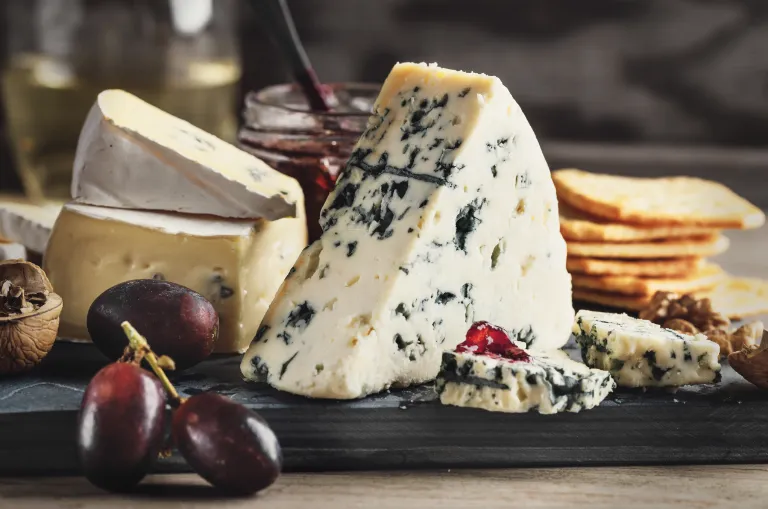
Roquefort is the blue cheese that set the standard for everything that came after, the one that proved mold-veined cheese could be something extraordinary rather than something gone wrong. Made in the natural caves of Roquefort-sur-Soulzon for over a thousand years, it was France’s first AOC-protected cheese and remains the benchmark against which all other blues are measured.
But France doesn’t stop at Roquefort. The country produces a remarkable range of blue cheeses, each with its own character and tradition. Bleu des Causses follows Roquefort’s cave-aging methods but uses cow’s milk. Bleu de Laqueuille brought blue cheesemaking to the Auvergne mountains in the 19th century. Bleu des Basques applies blue cheese techniques to Basque sheep’s milk traditions. And Bleu de Termignon stands apart entirely, a rare Alpine cheese where the blue appears naturally, never injected, from the mountain air itself. These five represent what happens when you let Penicillium roqueforti do the work it was always meant to do.
✱ Roquefort
Made in
Roquefort-sur-Soulzon, Aveyron
Milk
Raw sheep’s milk (Lacaune breed)
Aged
3-9 months
AOP/PDO Status
Yes (AOC since 1925, France’s first AOC)
Fat content
52% minimum
Origin and Production
Roquefort is the undisputed king of French blue cheeses and arguably the most famous blue cheese in the world. It’s been made in the natural caves of Roquefort-sur-Soulzon in the Aveyron region for over a thousand years. Legend has it a shepherd left his lunch of bread and sheep’s cheese in a cave while chasing a beautiful girl—when he returned months later, the cheese had developed blue veins and an extraordinary flavor. The caves’ unique microclimate, with constant temperature and humidity created by underground fissures (fleurines), provides perfect conditions for aging. Only cheese aged in these specific caves can legally be called Roquefort.
Taste and Texture
Roquefort is intensely flavored, salty, tangy, and complex with a sharp, peppery finish. The blue veining is pronounced, creating pockets of intense flavor throughout the creamy, ivory-colored paste. The texture is moist and crumbly yet creamy, almost buttery. It’s assertive without being overwhelming, with a clean sheep’s milk sweetness balancing the sharp blue notes.
Culinary Uses
Superb on its own with walnut bread and a glass of Sauternes (the classic pairing) or port. Essential in Roquefort sauce for steak, crumbled over salads, or melted into pasta. Also excellent with pears, figs, or honey. The French often eat it with butter on bread to soften the intensity.
Seasonal Availability
Year-round, though traditionally considered best from April to October when sheep are on pasture
✱ Bleu des Causses
Made in
Causses region (Aveyron, Lozère, Gard)
Milk
Cow’s milk
Aged
70 days minimum
AOP/PDO Status
Yes (AOC since 1953)
Fat content
45% minimum
Origin and Production
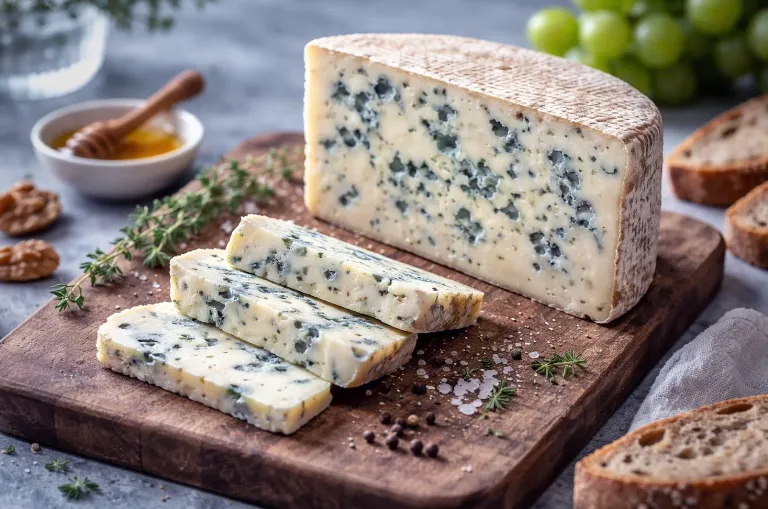
Bleu des Causses comes from the limestone plateaus (causses) near Roquefort and is essentially the cow’s milk cousin of Roquefort. It’s aged in the same type of natural limestone caves with similar temperature and humidity conditions, using traditional methods that date back centuries. The AOC requires aging in natural caves on the Causses plateaus. Production follows strict guidelines similar to Roquefort, creating a blue cheese with genuine terroir character.
Taste and Texture
Strong and assertive with a full-bodied blue flavor that’s less sharp than Roquefort but more pronounced than many cow’s milk blues. The taste is rich and creamy with a pleasant sharpness and slightly spicy finish. The texture is firm yet creamy, with a smooth paste that’s ivory to pale yellow with abundant blue-green veining. Well-balanced between creaminess and the characteristic blue bite.
Culinary Uses
Excellent on cheese boards, particularly paired with local Marcillac wine or Cahors. Works beautifully in salads, melted into sauces, or crumbled over grilled meats. Also traditional with walnut bread and sweet wines, following the Roquefort serving tradition.
Culinary Uses
Year-round
✱ Bleu de Laqueuille
Made in
Auvergne (Puy-de-Dôme)
Milk
Cow’s milk
Aged
3-4 months
AOP/PDO Status
No (but Label Rouge protected)
Fat content
50% minimum
Origin and Production
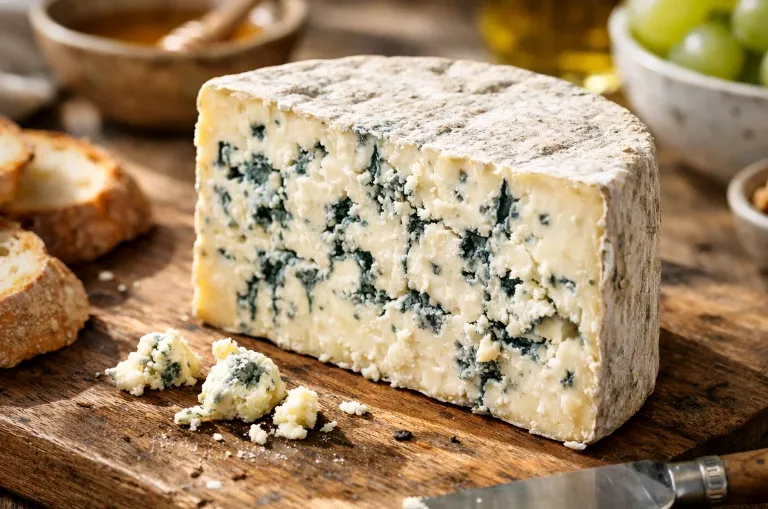
Bleu de Laqueuille was created in 1850 by Antoine Roussel, a young cheesemaker from the village of Laqueuille in the Auvergne mountains. Inspired by Roquefort but wanting to create a cow’s milk version, Roussel experimented with introducing Penicillium roqueforti into the curd. His innovation created one of the first cow’s milk blue cheeses in France. The cheese is still made traditionally in the Auvergne, though it never received AOC protection.
Taste and Texture
Milder than Roquefort, with a creamy, smooth texture and gentle blue flavor. The taste is sweet and buttery with a pleasant sharpness from the blue veining, which is less aggressive than sheep’s milk blues. The paste is ivory to pale yellow with even blue-green marbling throughout. It’s approachable for those new to blue cheese.
Culinary Uses
Excellent on cheese boards, melted into potato dishes (aligot-style preparations), or crumbled over salads. Pairs well with Auvergne red wines or a good Côtes d’Auvergne. Also works beautifully in quiches and savory tarts.
Culinary Uses
Year-round
✱ Bleu des Basques
Made in
French Basque Country (Pyrénées-Atlantiques)
Milk
Sheep’s milk (Manech and Basco-Béarnaise breeds)
Aged
2-3 months
AOP/PDO Status
No
Fat content
50% minimum
Origin and Production
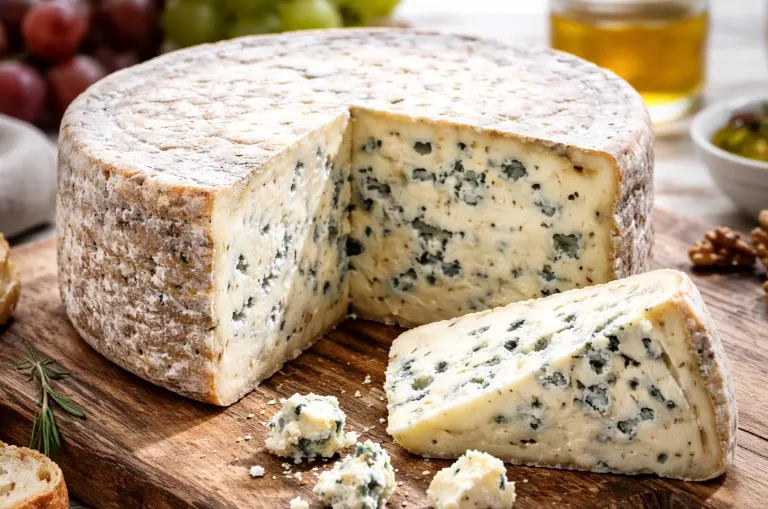
Bleu des Basques is a relatively recent creation, developed in the 1980s to bring blue cheese production to the Basque region. Made from the milk of local Manech and Basco-Béarnaise sheep that graze on Pyrenean mountain pastures, it applies blue cheese techniques to traditional Basque sheep’s milk cheesemaking. Production is limited and follows artisanal methods, though the cheese has quickly gained a following.
Taste and Texture
Rich and creamy with a pronounced sheep’s milk sweetness that balances the blue mold’s sharpness. Less salty than Roquefort, with a softer, gentler blue flavor and a smooth, supple texture. The paste is ivory-colored with moderate blue-green veining. The finish has subtle nutty and grassy notes from the mountain pastures.
Culinary Uses
Delicious on its own with Basque cherry jam (confiture de cerises noires) or membrillo (quince paste). Pairs beautifully with Jurançon wine, either sec or moelleux. Also excellent crumbled over piperade or incorporated into Basque-style pintxos.
Culinary Uses
Year-round, though best from spring through autumn when sheep are on mountain pastures
✱ Bleu de Termignon
Made in
Haute-Maurienne, Savoie (Vanoise National Park)
Milk
Raw cow’s milk
Aged
3-6 months
AOP/PDO Status
No (extremely limited production)
Fat content
45-50%
Origin and Production
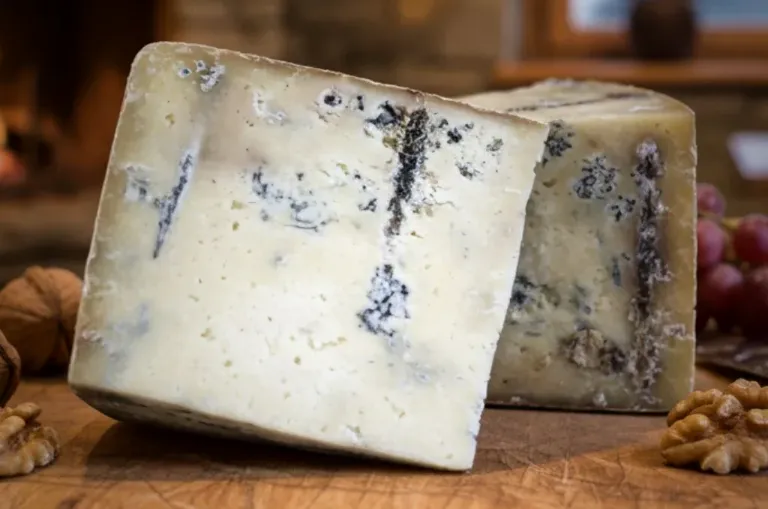
Bleu de Termignon is one of the rarest and most extraordinary French cheeses. Made in the high Alps of Savoie at around 2,000 meters altitude, it’s unique because the blue mold develops naturally, the Penicillium is never injected. Instead, the mold comes from the mountain air and the specific flora the cows eat. Only a handful of farmers still make it using traditional methods, with total annual production measured in hundreds of wheels. The cheese is never pierced; the blue appears sporadically and unpredictably throughout the paste.
Taste and Texture
Complex and refined with delicate blue notes that are subtle rather than aggressive. The flavor profile includes floral and herbal notes from the Alpine pastures, with a gentle tanginess and creamy richness. The blue veining is irregular and light, appearing in pockets rather than evenly distributed. The texture is firm yet creamy, more pressed than typical blues.
Culinary Uses
So rare and special that it’s best eaten on its own with good bread and perhaps a local Savoie white wine. Not typically used in cooking due to its scarcity and subtle flavors. Collectors and connoisseurs seek it out for its unique character and connection to traditional Alpine cheesemaking.
Culinary Uses
Very limited, summer and early autumn only, when cows are on high Alpine pastures (estive)
Conclusion
Roquefort set the standard, but these five together show you the full range of what French blue cheese can be. From cave-aged sheep’s milk to naturally blue-veined Alpine rarities, each proves that Penicillium roqueforti is capable of extraordinary things in the right hands. Get them to room temperature, pair them properly, and you’ll understand why France takes its blues as seriously as it does. Start with Roquefort if you haven’t already, it’s called the king for a reason.
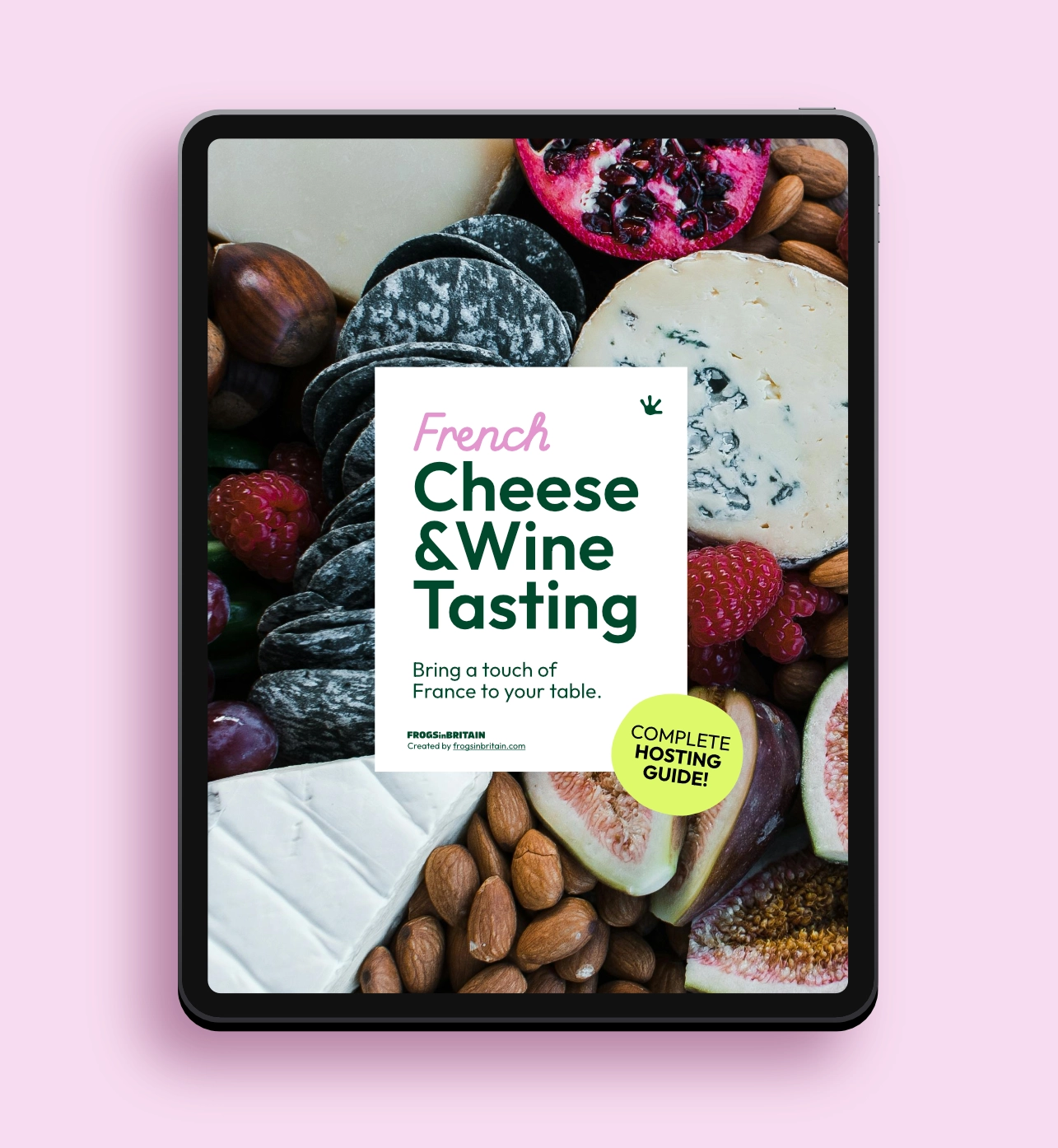
A Complete Hosting Guide
This complete guide takes the intimidation out of French cheese and wine hosting, so you can create an impressive, memorable evening that feels effortless.
Just so you know, a few links here earn us a commission. Doesn’t cost you anything extra, and we only link to things that are actually worth your time.