FC 3: Blue cheeses
Introduction
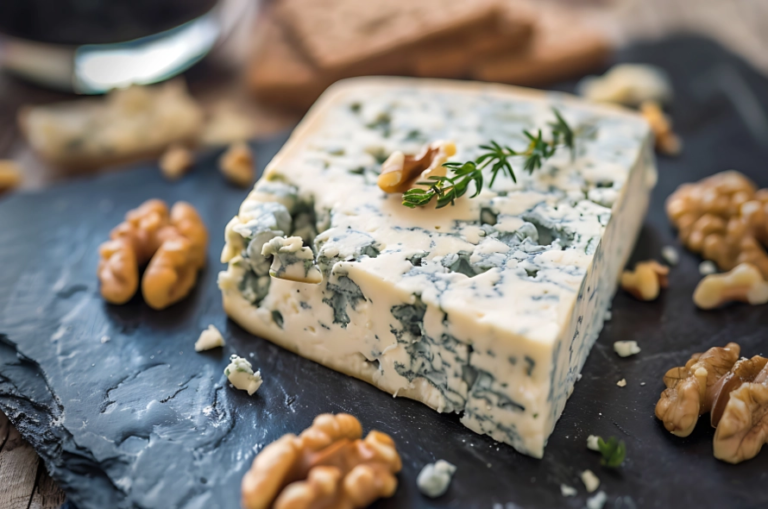
Let’s tackle the obvious: blue cheese has mold in it. Proper, visible, blue-green mold running through the cheese like veins. And for many people, that’s where the conversation ends. Mold equals spoiled, surely?
Here’s what makes blue cheese fascinating: that mold is precisely what transforms ordinary cheese into something extraordinary. The blue-green veins aren’t contamination, they’re cultivation. Cheesemakers deliberately introduce specific mold cultures, then pierce the cheese to let air in so the mold can flourish exactly where it’s meant to. It’s controlled, intentional, and the result is some of the most complex, flavourful cheeses France produces.
From the legendary Roquefort aged in limestone caves to creamy cylindrical varieties from the Auvergne, French blue cheeses represent centuries of refined cheesemaking expertise. Whether you’re curious about that marbled cheese you’ve been eyeing uncertainly at the cheese counter, or you’re already a convert looking to understand the category better, this guide will sort you out.
What Are French Blue Cheeses?
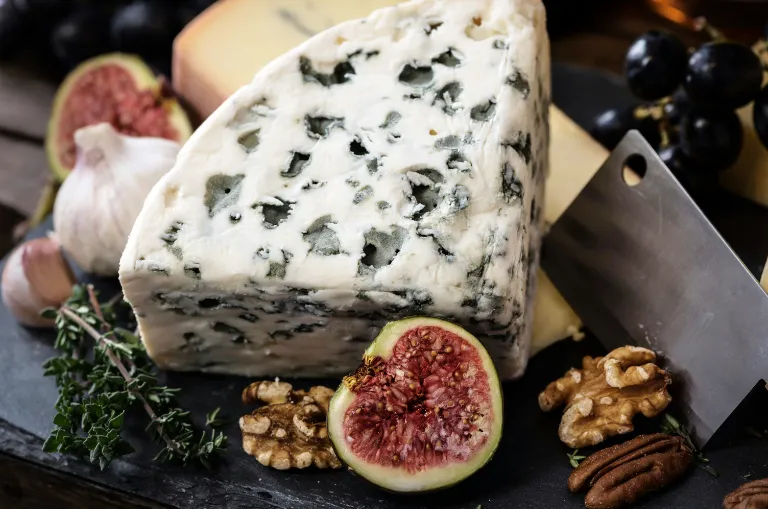
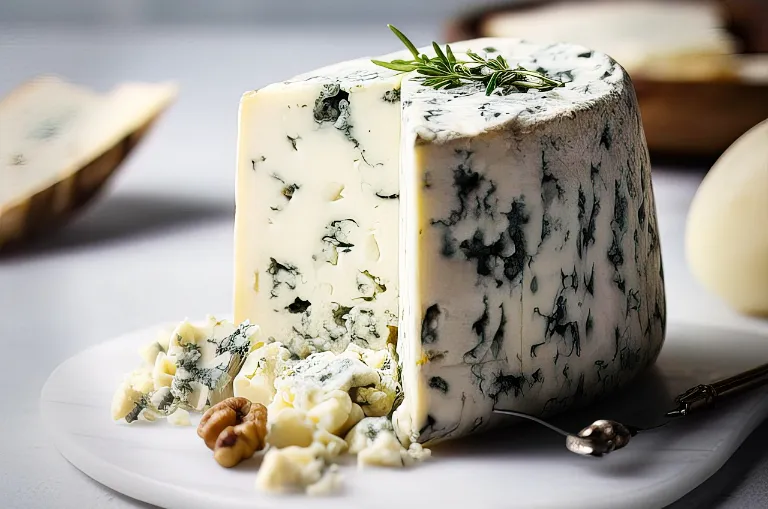
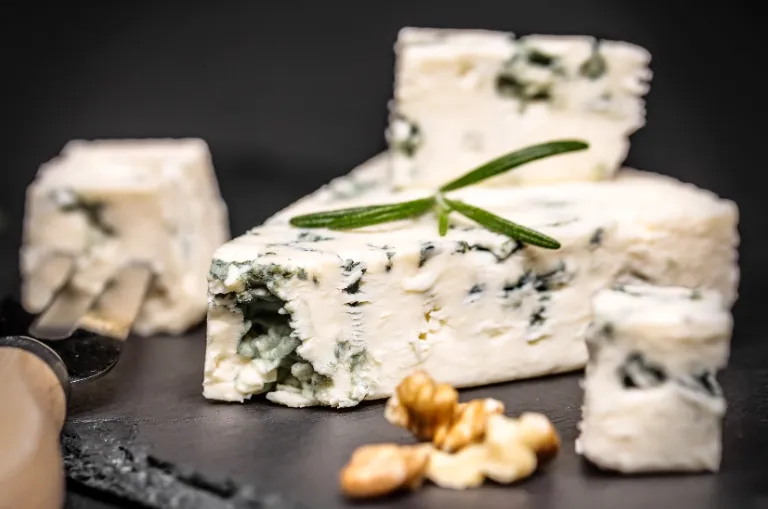
Now let’s talk about the basics. Blue cheeses (fromages à pâte persillée in French, literally “parsley-veined cheeses”) are distinguished by internal blue-green veining created by specific mold cultures. Unlike other cheeses where mold grows on the exterior, blue cheeses develop their characteristic appearance inside the paste.
The star performer is Penicillium roqueforti, a mold that’s been used in French cheesemaking for centuries. Originally, this mold occurred naturally in the caves where cheese was aged. Legend has it that a shepherd left cheese in a cave whilst chasing after a maiden, and when he returned months later, the cheese had developed blue veins. Whether or not that’s true, French cheesemakers eventually learned to cultivate and control this beneficial mold deliberately.
The process is remarkably clever. After the cheese is formed, makers pierce it with long needles or skewers. These create air channels throughout the interior. Penicillium roqueforti needs oxygen to grow, so these channels allow the mold to colonise the cheese from within, creating those distinctive blue-green veins running through the paste.
The Defining Characteristics
What makes a blue cheese a blue cheese?
- Internal blue-green veining: The mold grows inside the cheese, creating marbled patterns throughout the paste
- Distinctive flavour profile: Sharp, tangy, often salty, with complex savoury notes that can range from mild to powerfully pungent
- Piercing during production: All blue cheeses are deliberately pierced to create air channels for mold growth
- Crumbly to creamy texture: The texture varies considerably, from firm and crumbly to soft and almost spreadable
- Strong aroma: Blue cheeses typically smell quite pronounced, though intensity varies by variety
The fascinating thing about blue cheese is how the mold fundamentally transforms the cheese’s character. Penicillium roqueforti produces enzymes that break down fats and proteins during aging, creating the intense flavours and often creating a softer, creamier texture than the cheese had when young. The same cheese at different aging stages can taste remarkably different.
How French Blue Cheeses Are Made
The production of blue cheese follows traditional cheesemaking methods with crucial additions at specific stages. Understanding the process helps explain why these cheeses taste the way they do.
1. Inoculation
The process starts with milk, either cow’s, sheep’s, or occasionally goat’s. The critical difference appears early: Penicillium roqueforti spores are added directly to the milk or mixed into the curds. Originally, cheesemakers cultivated these spores on rye bread left in caves, harvesting the mold that grew naturally. Today, most producers use commercially cultivated strains, though traditional methods still exist.
2. Coagulation and cutting
The milk is cultured and coagulated with rennet, then cut into curds. The curds are cut larger than for many other cheeses, helping create the more open texture that allows mold to spread through the interior.
3. Draining and molding
The curds are gently drained and placed into molds. Unlike pressed cheeses, blue cheeses aren’t heavily pressed, which maintains a more open structure, the spaces between curds become the pathways where blue veining develops.
4. Salting
The cheeses are salted, either by rubbing salt on the exterior or sometimes by adding salt to the curds. This controls moisture, inhibits unwanted bacteria, and enhances flavour.
5. Piercing
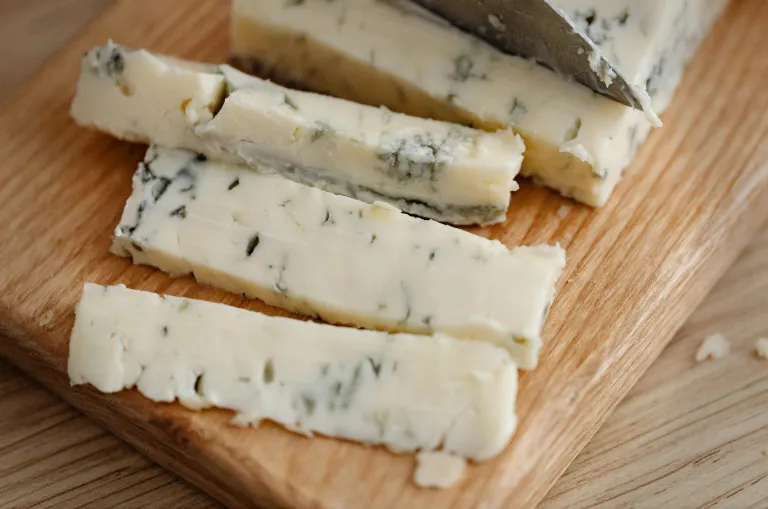
This is the defining step. After a few days to weeks, when the cheese has formed but is still relatively young, cheesemakers pierce each wheel with long stainless steel needles or skewers. These create channels from the exterior into the interior, allowing oxygen to reach the mold spores waiting inside. The pattern and frequency of piercing affects how the blue veining develops.
6. Cave aging
The cheeses are aged in cellars or caves where temperature and humidity are carefully controlled. The environment needs to be cool (typically 8-12°C) and quite humid (85-95% relative humidity). In these conditions, Penicillium roqueforti thrives, growing along the air channels created by piercing and spreading through the cheese’s interior.
7. Continued ageing
As the mold grows, it produces enzymes that break down fats (lipolysis) and proteins (proteolysis), creating the complex flavours blue cheeses are known for. The paste often becomes creamier and softer as aging progresses. Different varieties age for different periods, from just a few weeks to several months, depending on the desired intensity and character.
The Cave Connection
There’s good reason so many legendary blue cheeses trace their origins to specific caves. Natural limestone caves provide ideal conditions: consistent cool temperatures, high humidity, and natural air circulation. Many caves also harbor their own unique populations of Penicillium roqueforti that have evolved there over centuries, creating distinctive local characteristics.
The most famous example is Roquefort, which by law must be aged in the natural Combalou caves of Roquefort-sur-Soulzon. These caves were formed by ancient rockfalls that created natural fissures (fleurines) allowing air to circulate whilst maintaining stable temperature and humidity. The specific strain of Penicillium roqueforti that thrives in these caves creates Roquefort’s distinctive character.
Even blue cheeses not aged in caves often mimic those conditions. Modern affinage cellars are engineered to replicate the temperature, humidity, and air circulation that made cave-aged cheeses so successful.
The Spectrum of French Blue Cheeses
Blue cheeses come in remarkable variety despite sharing the same fundamental technique. Understanding the main types helps you navigate this bold category and choose cheeses that match your preferences.
By Texture
Creamy and Soft
These blue cheeses have a high moisture content and develop an almost spreadable consistency when ripe. The paste is smooth and unctuous rather than crumbly, coating your palate with rich, creamy texture. The blue veining is often generous, with mold penetrating deeply throughout. Expect bold, complex flavours with pronounced tanginess and salty depth. The creaminess balances the sharpness, making these cheeses rich without being overwhelming.
Firm and Crumbly
At the other end of the texture spectrum sit drier, firmer blue cheeses with the characteristic crumbly texture many people associate with the category. The paste breaks apart easily, almost granular in texture, and the blue veining appears as distinct pockets or veins rather than spreading throughout. These cheeses tend to be less rich but often more intensely flavoured. The drier texture concentrates flavours, creating sharp, salty, sometimes almost crystalline notes.
Semi-Firm with Balanced Texture
Many French blue cheeses occupy a middle ground, neither too soft nor too crumbly. These have a pleasant yielding texture that’s sliceable but not dry, with enough creaminess to coat the palate without becoming spreadable. The blue veining in these varieties is typically moderate, creating balanced flavour without overwhelming intensity. Expect complex but approachable taste profiles, creamy, tangy, slightly sharp, with nutty or earthy undertones. These are often described as the most versatile blue cheeses.
By Production Method
Traditional Cave-Aged
Some French blue cheeses must by law be aged in specific natural caves, whilst others choose traditional cave aging for the unique character it provides. Cave-aged blues benefit from the stable temperature and humidity, plus they develop flavours influenced by the cave’s unique microflora.
These cheeses often have more complex, nuanced character than cellar-aged equivalents. The natural air circulation in caves, the specific humidity levels, and the native bacterial and mold populations all contribute subtle notes. Many producers maintain that cave-aging creates irreplaceable terroir.
Cave-aged blues are often protected by AOC/AOP designations that specify not just the production area but the specific caves where aging must occur. This traditional method represents blue cheesemaking at its most authentic, maintaining practices developed over centuries.
Modern Cellar-Aged
Most contemporary blue cheese production occurs in carefully controlled aging cellars designed to mimic ideal cave conditions. Modern climate control allows precise management of temperature, humidity, and air circulation.
These cheeses are also excellent, producers can maintain more consistent conditions than natural caves sometimes provide. The character may be slightly different from traditional cave-aged varieties, but modern techniques also allow for consistent quality and innovation.
Many artisanal producers use modern cellars whilst maintaining traditional methods in all other aspects. The choice between cave and cellar aging is about balancing tradition, terroir, and practical considerations, both approaches can produce outstanding blue cheeses.
By Region
Auvergne Blues
The Auvergne region in central France is blue cheese heartland, producing some of France’s most iconic varieties. The region’s volcanic soil, mountain pastures, and cheesemaking traditions create distinctive blues.
Auvergne blues are typically cow’s milk cheeses with excellent balance, neither too aggressive nor too mild. The region produces both creamy, cylindrical varieties and firmer, more traditional blues. The milk quality from cows grazing mountain pastures contributes exceptional character.
These cheeses often have earthy, mushroomy notes alongside the blue tang, reflecting the terroir. They’re versatile and food-friendly, equally at home on cheese boards, in cooking, or paired with regional wines.
Southern French Blues
Southern France, particularly around Aveyron and the Causses region, produces blues with Mediterranean influence. The most famous are sheep’s milk varieties, though cow’s milk blues from this region also exist.
Southern blues often benefit from traditional cave aging in limestone caves that riddle the region. The climate, the pastures, and centuries of specialized cheesemaking expertise create blues with particular character, intense, complex, often quite powerful.
Expect bold flavours with pronounced saltiness and complexity. These are often the blues that serious enthusiasts seek out, cheeses with strong regional identity and uncompromising character.
Jura and Eastern France
The Jura region and eastern France produce blues with their own distinct style. These are often cow’s milk varieties with refined character, less aggressively intense than some other French blues but beautifully balanced.
The region’s expertise in pressed cooked cheeses translates into careful attention to texture in their blue varieties. Expect creamy to semi-firm textures with elegant blue veining, complex but not overwhelming flavours, and excellent versatility.
These blues pair naturally with the region’s white wines and work brilliantly in local cuisine. They represent a more restrained approach to blue cheesemaking, emphasising finesse over power.
How to Buy French Blue Cheeses
Buying blue cheese requires paying attention to a few specific details. Unlike some cheeses where visual inspection tells you everything, blue cheese demands a bit more knowledge.
What to Look For
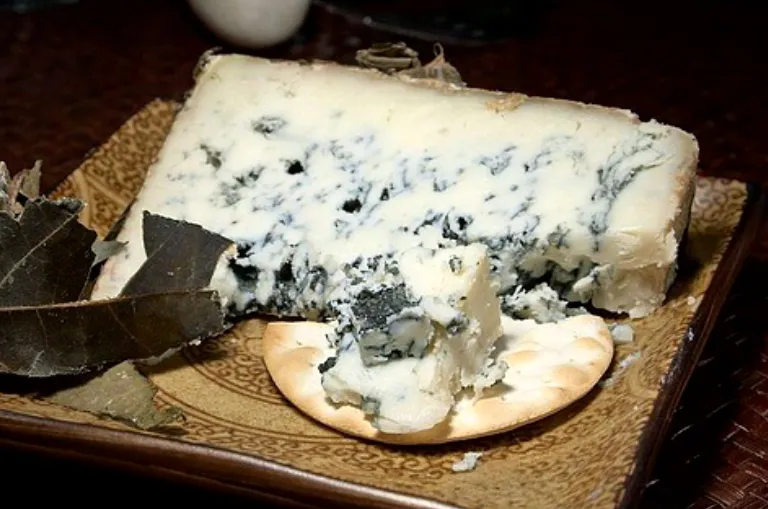
The exterior appearance varies considerably depending on the variety. Some blues have natural rinds that look mottled and irregular, others are wrapped in foil, some have bloomy white rinds with the blue interior hidden until you cut in. Don’t judge a blue cheese by its exterior alone.
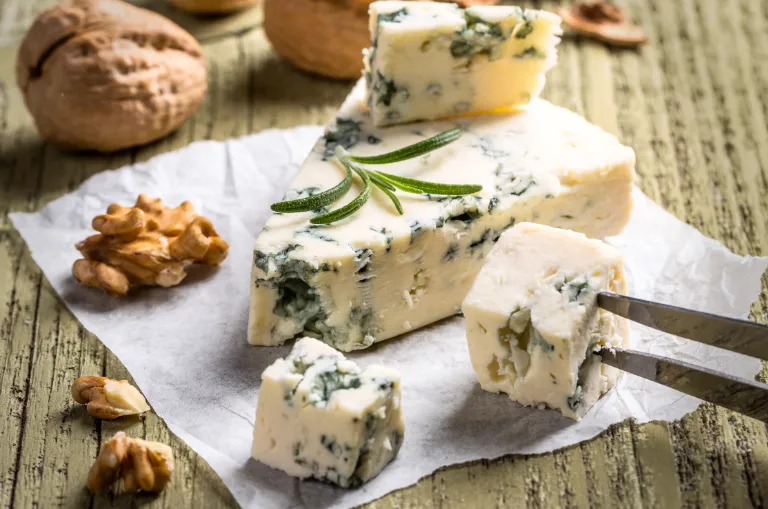
When possible, ask to see the interior. The blue veining should look healthy, blue-green to blue-grey, evenly distributed or in attractive patterns depending on the variety. Avoid cheeses with brown, black, or pink discolouration, this indicates unwanted mold growth or spoilage.
The paste colour matters too. It should look clean, white to ivory depending on milk type, without grey or yellowed areas. Some blues develop a slightly darker paste near the blue veining, which is normal, but the overall impression should be fresh.
Reading the Labels
Look for AOC/AOP designations on traditional varieties. These protected designations guarantee authentic production methods, specific aging locations, and traditional recipes. An AOC/AOP blue cheese meets strict quality standards.
Check the milk type. Sheep’s milk blues are typically more intense and expensive than cow’s milk varieties. Goat’s milk blues are less common and offer different character. Raw milk (lait cru) versus pasteurised also affects flavour, raw milk creates more complex taste but isn’t suitable for pregnant women.
Note whether it’s fermier (farmhouse), artisanal (traditional small-scale), or laitier (dairy, larger production). Farmhouse blues often have more character but shorter shelf life. Artisanal production typically means traditional methods even if not farmhouse-produced.
Check the age if mentioned. Younger blues are milder and creamier; older blues are more intense and often firmer. Choose based on your preference and intended use.
How to Store French Blue Cheeses
Storage is critical with blue cheeses. The mold that makes them special also makes them more finicky about storage conditions than many other cheeses.
Temperature and Location
Blue cheeses need proper refrigeration at 1.5-7°C (35-45°F). The vegetable drawer often works well, it’s typically slightly warmer and more humid than the main fridge compartment, which blues appreciate.
These cheeses need to breathe but also need protection from drying out. Too much exposure to air and they dry out, crack, and the blue veining can turn brown. Too little air and they can develop off-flavours or unwanted surface mold.
The moisture level is trickier with blues than with many cheeses. They’re naturally more humid than hard cheeses, and that moisture needs somewhere to go without making the cheese soggy or encouraging wrong sorts of mold growth.
Packaging and Containers
Here’s where blue cheese storage gets specific. The traditional foil wrapping many blues come in actually works quite well for storage, it allows some air exchange whilst preventing excessive drying. If your blue cheese came in foil, you can rewrap it in fresh foil after cutting.
For blues without foil, wrap in cheese paper or parchment paper first, then place in a container with a loose-fitting lid or a partially open plastic bag. Don’t wrap directly in plastic wrap, it traps too much moisture and the cheese will develop unpleasant sliminess and potentially unwanted mold growth.
Change the wrapping if it becomes very damp. Blue cheeses release moisture as they age, and soggy wrapping doesn’t do them any favours. Fresh wrapping every few days helps maintain proper conditions.
Some people store blues in separate containers from other cheeses to prevent the blue mold spreading. Penicillium roqueforti can colonise other cheeses if given the opportunity, so if you’re storing multiple cheese types together, keep blues well-wrapped.
The Aroma Issue
Blue cheese will make your fridge smell. There’s no completely avoiding this. Proper storage in well-sealed containers helps contain the aroma, but blue cheese is simply aromatic by nature.
Store blue cheeses away from delicate foods that might absorb flavours. Butter, milk, cream, and other mild dairy products are particularly susceptible. Some people dedicate a specific area of the fridge to strong cheeses.
If the aroma becomes overwhelming, it might indicate the cheese is becoming too old. Fresh blue cheese smells strong but pleasant, characteristic blue cheese aroma. Overripe blue cheese develops an ammonia smell that’s distinctly unpleasant.
Shelf Life and Signs of Spoilage
Blue cheese shelf life varies by type. Unopened, properly stored blues can last 3-4 weeks beyond their sell-by date, sometimes longer for firmer varieties. Once opened, consume within 3-4 weeks for best quality.
Creamy blues should be eaten more quickly, within 2-3 weeks of opening. The higher moisture content means they’re more perishable. Firmer, drier blues can last a bit longer, potentially up to a month if stored well.
Trust your senses. If the blue veining turns brown or black rather than blue-green, that indicates oxidation or age. Small amounts are often fine to trim away, but extensive discolouration means the cheese is past its best.
Pink, fuzzy, or hairy mold on the exterior is not the blue mold you want. It’s unwanted contamination. You can sometimes cut it away if it’s just surface growth, but if it’s extensive, discard the cheese.
The ammonia smell test is crucial. A slight ammonia note in very ripe blues can be normal and will dissipate after unwrapping and airing. But if the smell persists or is overwhelming, the cheese has gone too far.
Texture changes also indicate problems. If creamy blues become separated, weeping liquid, or develop grainy texture where they should be smooth, they’re overripe. If firm blues become slimy or excessively soft, they’re past it.
Can You Freeze Blue Cheese?
Freezing blue cheese is possible but compromises quality. The texture suffers considerably, creamy blues become grainy and separated when thawed, and crumbly blues become even more crumbly and can turn mushy.
If you must freeze blue cheese to avoid waste, crumble it first. Frozen crumbled blue works reasonably well in cooked dishes where texture doesn’t matter, salad dressings, sauces, gratins. Don’t freeze whole pieces expecting to serve them on cheese boards after thawing.
Wrap very well before freezing, use multiple layers to prevent freezer burn and odour transfer. Use within 2-3 months. Thaw in the refrigerator, never at room temperature.
Serving French Blue Cheeses
Serving blue cheese properly makes the difference between “this is interesting” and “this is revelatory.”
Temperature Matters
This is non-negotiable: blue cheeses must come to room temperature before serving. Remove them from the fridge 30-45 minutes before you plan to serve. Creamy varieties benefit from the full 45 minutes; firmer varieties need at least 30 minutes.
Cold blue cheese is a shadow of itself. The flavours are muted, the texture is wrong (hard when it should yield, or unpleasantly cold-creamy when it should be unctuous), and you’re not experiencing what the cheese can be. At proper temperature, the fat softens, the flavours emerge fully, and the texture becomes what the cheesemaker intended.
This tempering is especially important for creamy blues, which can be almost tasteless when cold but gloriously complex at room temperature. Even crumbly blues benefit enormously—cold suppresses their nuanced flavours.
Presentation
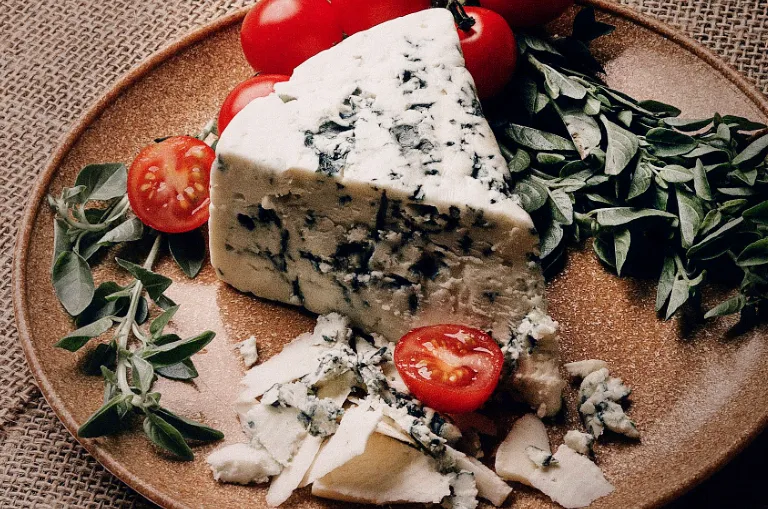
Blue cheese deserves thoughtful presentation. Provide a dedicated cheese knife, blue cheese can be sticky and will contaminate knives used for other cheeses. Many people prefer small forks for crumbling blues rather than knives.
Serve blues on their own space on a cheese board, or on a separate small board if serving multiple cheese types. This prevents the strong flavour from affecting other cheeses and gives guests the option to avoid it if they’re not fans.
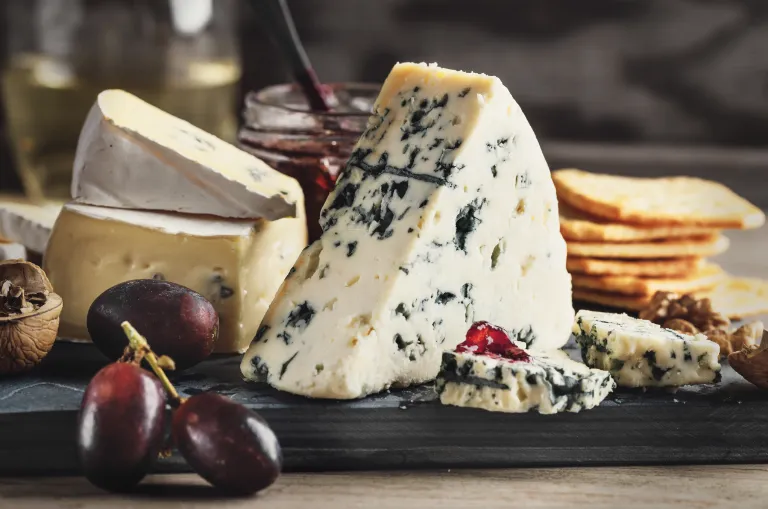
Include appropriate accompaniments close to the blue cheese. Honey, dried fruits, nuts, and sweet chutneys all work beautifully. Fresh pears or figs are classic pairings. Crusty bread or plain crackers let the cheese shine.
For creamy blues, provide small spoons or spreaders. For crumbly blues, acknowledge that they’ll fall apart when cut, it’s part of their charm. Don’t apologise for the crumbles, they’re meant to be that way.
The Rind Question
Most blue cheeses don’t have traditional rinds. Many are wrapped in foil during aging, others develop thin natural rinds. Those that do have rinds are generally edible, though not everyone enjoys them.
The exterior of blue cheese can concentrate salt and intense flavours. Try a bit to see if you like it. There’s no obligation to eat it if you don’t, serve it or leave it on your plate as you prefer.
Cooking with French Blue Cheeses
Blue cheeses are brilliant in cooking, bringing intense, complex flavours that elevate dishes dramatically.
Salads
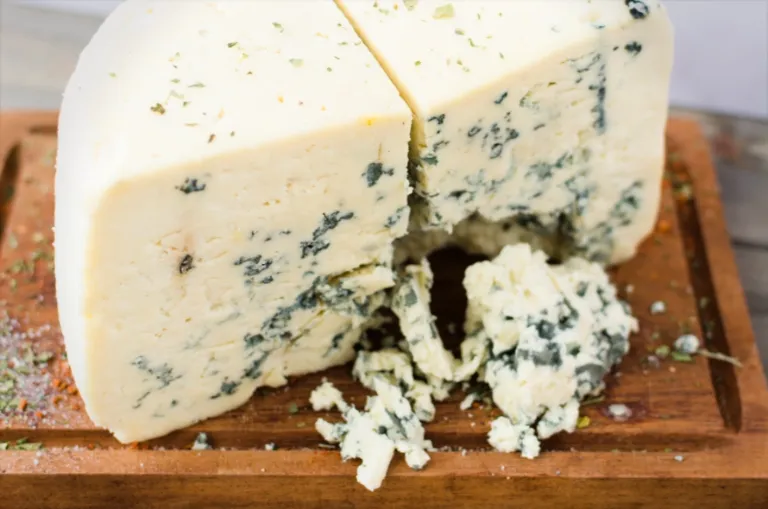
Crumbled blue cheese is a salad classic. It pairs particularly well with bitter greens like rocket or endive, sweet elements like pears or caramelised onions, and nuts. The combination of bitter greens, sweet fruit, crunchy nuts, and tangy blue creates excellent balance. Dress simply with good olive oil and vinegar, the blue provides plenty of flavour on its own.
Sauces
Blue cheese makes exceptional sauces. Melt crumbled blue into cream for pasta sauces or steak accompaniment. The cheese melts smoothly, creating rich, intensely flavoured sauces. Add white wine, a touch of garlic, and fresh herbs for complexity. Blue cheese sauce pairs brilliantly with beef, particularly steak.
Quiches & Tarts
Blue cheese transforms quiches and tarts from simple to sophisticated. The creamy egg custard base mellows the blue’s intensity whilst the cheese adds savoury complexity throughout. Crumble blue cheese into the filling along with complementary ingredients, caramelised onions, roasted vegetables, sautéed mushrooms, or wilted spinach all work brilliantly.
For tarts, blue cheese pairs exceptionally well with autumnal ingredients like roasted butternut squash, beetroot, or pears. A blue cheese and pear tart with honey makes a stunning starter or light lunch, the sweet fruit and honey provide counterpoint to the tangy cheese.
Cooking Tips
Blue cheese has powerful flavour, so less goes further than you might expect. Start conservatively and add more if needed. A little blue cheese in a dish creates intriguing depth; too much becomes overwhelming.
Add blue cheese at the end of cooking or off heat when making sauces. It melts at relatively low temperatures and can become oily and separated if overheated. Gentle heat or residual heat is usually sufficient.
Health Benefits of French Blue Cheeses
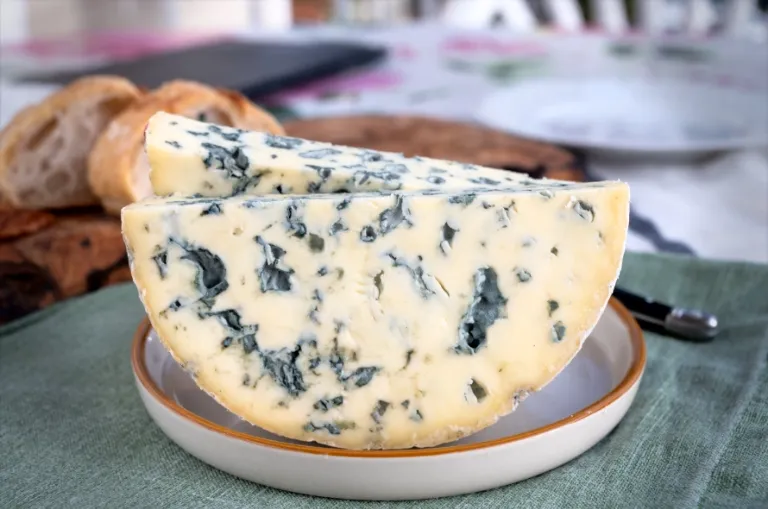
Blue cheeses offer nutritional benefits alongside their bold flavours, though moderation is important given their richness and salt content.
Nutritional Profile
Blue cheeses provide excellent protein, typically 21-22g per 100g serving, making them one of the better protein sources among cheeses. This is particularly useful for vegetarian diets where concentrated protein sources are valuable.
They’re exceptionally rich in calcium, providing 150mg per ounce (28g) or about 528mg per 100g. This represents roughly 50-53% of the daily recommended intake in just 100g. Calcium is crucial for bone health, muscle function, and nerve transmission.
Blue cheese is an outstanding source of vitamin B12, providing around 21% of daily needs per small serving. B12 is essential for nerve function, red blood cell formation, and DNA synthesis. This makes blue cheese particularly valuable for those who don’t eat much meat, as B12 is primarily found in animal products.
Other nutrients present in good amounts include phosphorus (works with calcium for bone health), vitamin A (supports vision and immune function), riboflavin (vitamin B2), and vitamin K2 (important for bone and cardiovascular health).
The fat content is substantial, typically 29g per 100g, with significant saturated fat. This is why moderation matters, blue cheese is a treat food rather than something to consume in large quantities daily.
The Beneficial Mold
Penicillium roqueforti is a living organism that may offer health benefits. While research is ongoing, blue cheese may provide some probiotic effects, contributing to gut microbiome diversity.
The mold produces various bioactive compounds during cheese aging. Some research suggests these may have anti-inflammatory properties and could support cardiovascular health, though you’d need to consume blue cheese regularly for any effect.
Blue cheese contains spermidine, a compound that’s been associated in animal studies with improved heart health and potentially increased longevity. While human studies are limited, the presence of beneficial compounds beyond basic nutrition is intriguing.
Unlike many probiotics that don’t survive digestion, the beneficial organisms and compounds in blue cheese have already completed their work during aging. You’re consuming the results of their metabolic activity, the enzymes and compounds they’ve produced, rather than relying on live cultures surviving to your gut.
Digestibility
Despite containing lactose, blue cheese is often better tolerated by those with lactose sensitivity than fresh dairy products. The aging process breaks down much of the lactose, and the harder or more aged the cheese, the lower the lactose content.
The protein breakdown that occurs during aging (proteolysis) also means blue cheese contains partially digested proteins, potentially making it easier for your body to process than younger cheeses. Some people who struggle with fresh cheese find aged blues more digestible.
The fat content, whilst high, includes some conjugated linoleic acid (CLA), which some research suggests may have beneficial effects on body composition and metabolism, though evidence is still emerging.
Final Thoughts
Blue cheeses represent French cheesemaking at its most distinctive and characterful. These aren’t subtle cheeses, they’re bold statements of flavour, the result of deliberately cultivated mold transforming milk into something complex and memorable.
Don’t let the mold put you off. That blue-green marbling is precisely what makes these cheeses special, it’s not spoilage, it’s sophistication. The Penicillium roqueforti that creates those veins has been carefully cultivated for centuries, and it’s responsible for the complex flavours that make blue cheese worth discovering.
Start with milder varieties if you’re building your appreciation. Creamy, cow’s milk blues with moderate blue veining offer the blue cheese experience without overwhelming intensity. You might discover, as generations of cheese lovers have, that blue cheese becomes genuinely addictive once you develop a taste for it. The complexity, the savoury depth, the perfect balance of salt and tang and creaminess, it’s remarkably satisfying.
A Complete Hosting Guide
This complete guide takes the intimidation out of French cheese and wine hosting, so you can create an impressive, memorable evening that feels effortless.
Just so you know, a few links here earn us a commission. Doesn’t cost you anything extra, and we only link to things that are actually worth your time.