Bloomy Rind Cheese: The Living French Cheese Worth Knowing

Introduction
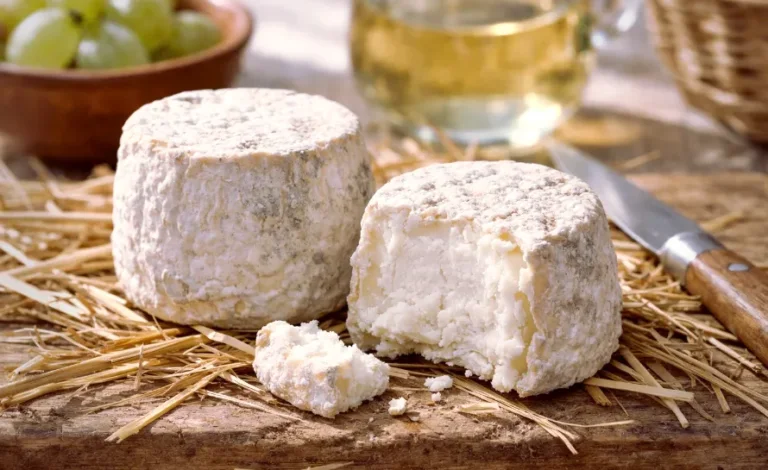
Let’s address the elephant in the room: yes, this bloomy rind cheese is covered in mold. Deliberate, cultivated, perfectly safe mold that transforms simple milk into something extraordinary.
Soft bloomy rind cheeses are the elegant showstoppers of French cheesemaking, those pristine white wheels and rounds that grace every proper cheese board. From Camembert’s velvety exterior to Brie’s creamy, oozing interior, these are cheeses defined by their distinctive white, fuzzy rinds and their remarkable transformation during aging. What starts as firm, chalky paste becomes progressively creamier from the outside in, developing mushroomy, buttery flavours along the way.
These aren’t cheeses that keep indefinitely. They’re living, breathing things that ripen from the moment they’re made, moving through distinct stages from fresh and mild to fully ripe and complex to, eventually, overripe and ammoniated. Understanding where a bloomy rind cheese sits in its life cycle, and how to guide that journey, separates satisfying experiences from disappointments.
Whether you’re nervous about that fuzzy white coating, confused about when to eat your Camembert, or wondering why your Brie smells like a gym sock, this guide will sort you out.
What Are French Soft Bloomy Rind Cheeses?
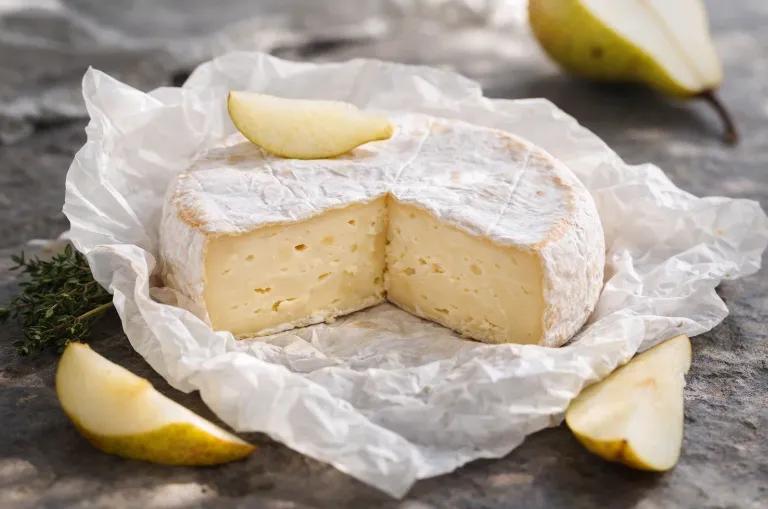
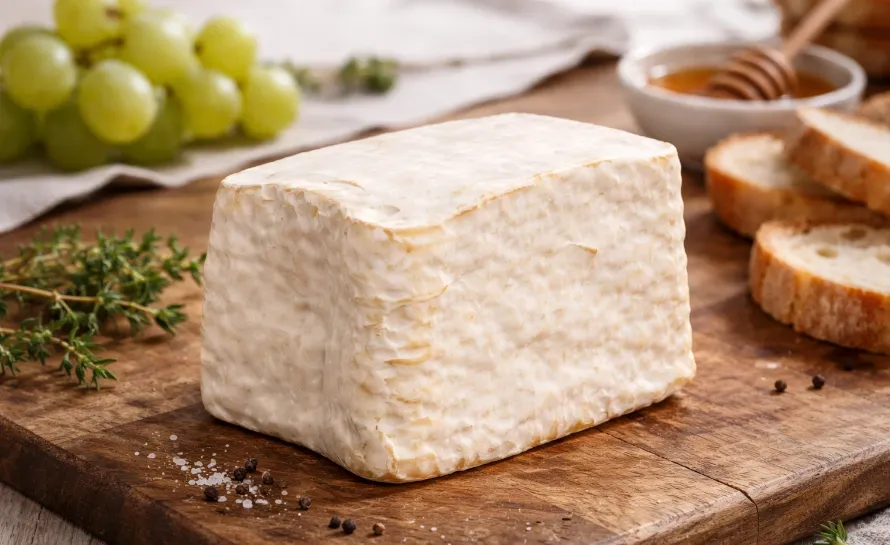
In French, these are “fromages à pâte molle à croûte fleurie” literally “soft paste cheeses with flowered rind.” That poetic name captures their defining characteristic: a soft, white, velvety rind that develops during aging and resembles blooming flowers under close inspection.
The rind forms from specific molds, primarily Penicillium candidum or Penicillium camemberti, that are deliberately introduced during cheesemaking. These white mold spores are either mixed into the milk or sprayed on the cheese surface after molding. As the cheese ages, the molds bloom across the exterior, creating that characteristic fluffy white coating.
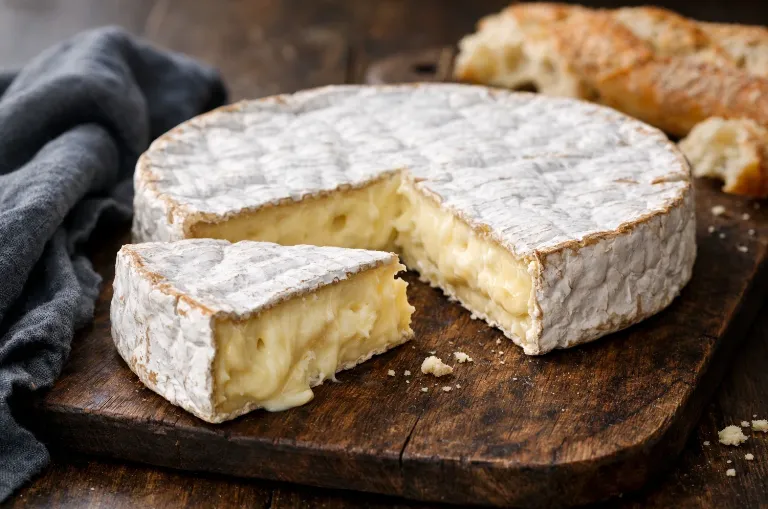
The mold actively works on the cheese, breaking down proteins and fats from the outside inward. This creates the “creamline”, that softer, more liquid layer just beneath the rind. In young bloomy rind cheese, the center remains chalky and firm. As aging continues, the creamline progresses inward until the entire interior becomes creamy, sometimes even spreadably gooey at peak ripeness.
The result is cheese with remarkable textural variation, firm, almost bouncy rind protecting increasingly soft, creamy interior. The flavour evolves too, starting mild and milky when young, developing mushroomy, earthy notes as the mold works, and eventually creating buttery richness with slightly funky undertones when fully ripe.
These cheeses are relatively small, typically 250g to 3kg, because the mold ripening works from outside in. Smaller formats mean the ripening reaches the center before the exterior becomes overripe. This is why you don’t see massive Camembert wheels.
The Defining Characteristics
What makes bloomy rind cheese distinct?
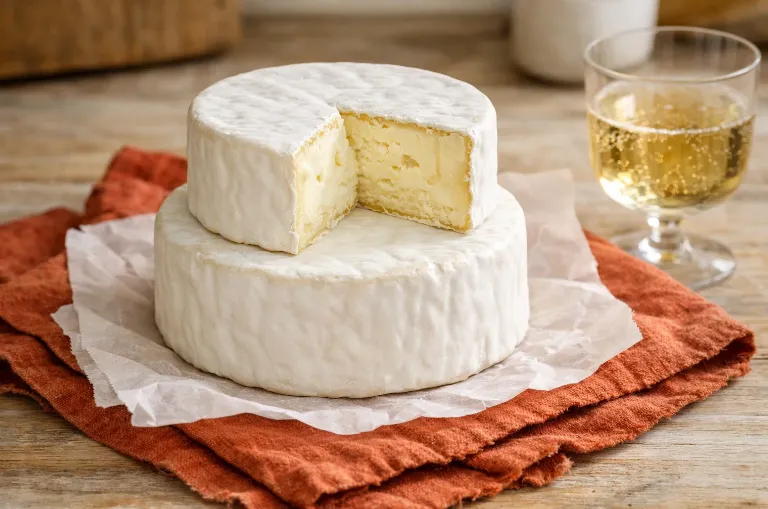
- White, fuzzy edible rind
Soft, velvety coating from Penicillium candidum/camemberti - Soft paste that ripens progressively
Firm and chalky when young, becoming creamy from outside in - Outside-in ripening
The creamline advances inward as aging continues - Mushroomy, earthy flavours
From the active mold breaking down fats and proteins - Short to medium aging
Typically 2 weeks to 2-3 months maximum - Small format cheeses
Usually 250g-3kg to allow proper ripening - Living, evolving character
These cheeses change continuously, with distinct stages of ripeness
These are cheeses defined by transformation. What you buy today won’t taste the same in three days or a week. They’re on a journey from youth to ripeness to overripeness, and knowing where they are on that path is crucial.
How French Soft Bloomy Rind Cheeses Are Made
The production creates conditions for Penicillium molds to thrive whilst developing the characteristic soft, creamy texture.
1. Milk Preparation
Most bloomy rind cheese uses cow’s milk, though some use goat’s or sheep’s milk. The milk is typically pasteurized for commercial production, though traditional varieties may use raw milk. The milk is gently warmed to around 30-32°C.
2. Culturing and Molding
Mesophilic lactic acid bacteria are added, cultures that work at moderate temperatures to acidify the milk slowly. This is crucial; bloomy rind cheeses need gentle, slow acidification. The white mold spores (Penicillium candidum) are added either at this stage or sprayed on after molding. Rennet is added, and coagulation proceeds for 1-2 hours. The resulting curd is much softer than for pressed cheeses, bloomy rinds need tender curds that drain slowly whilst retaining moisture.
3. Cutting and Draining
The curds are cut gently into large pieces or ladled whole into molds, depending on variety. For traditional Camembert, curds are carefully ladled in thin layers, allowing each to drain slightly before adding the next. This creates specific texture and promotes proper drainage. The cheeses drain naturally, no pressing. They’re flipped regularly (sometimes hourly) during the first day to ensure even draining. The goal is removing enough whey for the cheese to hold its shape whilst retaining sufficient moisture for that characteristic creamy texture.
4. Salting
After draining (typically 24 hours), the cheeses are salted. Most are dry-salted, salt rubbed directly on the exterior, though some are briefly brined. The salt controls moisture, provides flavor, and moderates mold growth during aging.
5. Mold Development
Here’s where the magic happens. The cheeses are moved to aging rooms maintained at cool temperatures (10-14°C) with high humidity (85-95%). If the mold wasn’t added to the milk, it’s sprayed on now. Within days, the Penicillium spores germinate and begin growing, forming the characteristic white fuzz. The cheeses are regularly flipped to ensure even mold coverage. After 7-14 days, the rind is fully formed, soft, white, velvety, completely covering the cheese.
6. Aging and Ripening
Once the rind forms, the real aging begins. The mold produces enzymes that break down proteins and fats, working from the outside inward. The surface becomes soft first, creating the creamline. Over days and weeks, this softening progresses toward the center.
Young bloomy rind cheese (2-3 weeks old) has firm, chalky centers with just a thin creamline. Medium-aged (4-6 weeks) has progressed significantly, with thick creamlines and softening centers. Fully ripe (6-8+ weeks) is creamy throughout, sometimes almost liquid.
The aging time varies by format, smaller cheeses ripen faster than larger ones because there’s less distance for the ripening to travel. Most bloomy rind cheeses are sold at 4-8 weeks, at or approaching peak ripeness.
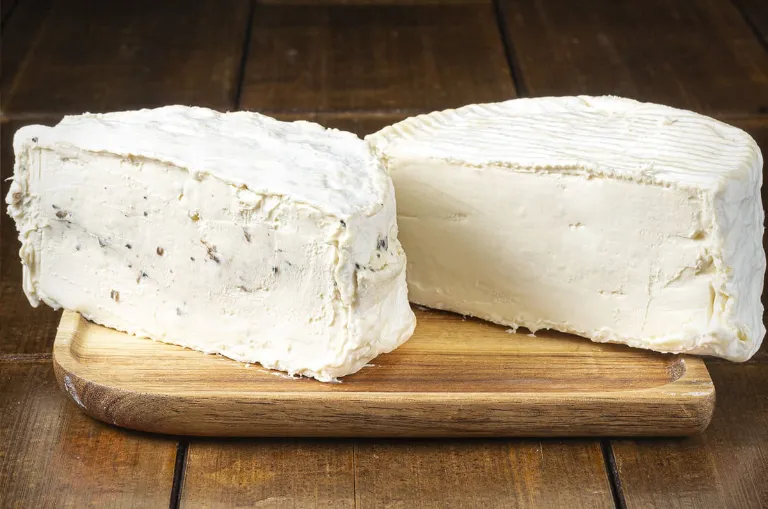
The Spectrum of French Soft Bloomy Rind Cheeses
Despite sharing production methods, bloomy rind cheeses offer surprising variety.
By Size and Shape
Large, Flat Wheels (Brie-Style)
These are the show-off cheeses, large, flat wheels (30-40cm diameter, 3-4cm thick) designed for dramatic presentation. The flat shape means high surface area relative to volume, so ripening progresses quickly throughout. When fully ripe, these wheels become almost liquid in the center, perfect for spreading but challenging to slice neatly.
Expect mild, buttery flavors when young, developing mushroomy depth and slight funk as they ripen. The large format means you’re buying quantity, which can be challenging for small households since these cheeses ripen continuously.
Small, Thick Rounds (Camembert-Style)
More compact format, typically 10-12cm diameter, 3-4cm thick. The thicker profile means ripening takes slightly longer to reach the center, and these cheeses maintain better structure even when fully ripe.
The flavors tend to be more concentrated than large flat wheels. Expect earthy, mushroomy notes with buttery richness. These are practical for home use, a full wheel serves 2-4 people comfortably.
Thick Cylinders and Tall Shapes
Some bloomy rind cheeses are formed as thick cylinders or tall shapes. These take longer to ripen because the ripening must travel further to reach the center. The result is often cheese with distinct textural layers, creamy exterior, firm interior, even when fully aged.
These varieties often maintain a chalky center indefinitely, never becoming fully gooey throughout. Some people prefer this textural variation; others find it frustrating.
By Richness
Standard Bloomy Rinds
Made from whole milk with standard fat content (around 45-50% fat in dry matter), these represent classic bloomy rind character. Expect creamy texture when ripe, mushroomy flavors, pleasant richness without overwhelming fat content.
Double and Triple Cream
Some bloomy rinds have cream added during production, dramatically increasing fat content. Double cream (60% fat in dry matter) and triple cream (75%+ fat) varieties are extraordinarily rich and unctuous.
These develop almost spreadable, butter-like texture even when not fully ripe. The flavors remain relatively mild, the fat coats your palate, moderating the mushroomy funk. They’re indulgent treats rather than everyday cheeses.
By Milk Type
Cow’s Milk Bloomy Rinds
The vast majority use cow’s milk, which creates mild, approachable flavors and reliably creamy textures. These are the bloomy rinds most people know, accessible, crowd-pleasing, versatile.
Goat’s Milk Bloomy Rinds
Less common but increasingly popular, goat’s milk creates distinctively different character. Expect tangier, brighter flavors alongside the mushroomy notes from the rind. The texture tends to be slightly chalky compared to cow’s milk versions, maintaining more structure even when ripe. The contrast between tangy goat’s milk paste and earthy white rind creates interesting complexity.
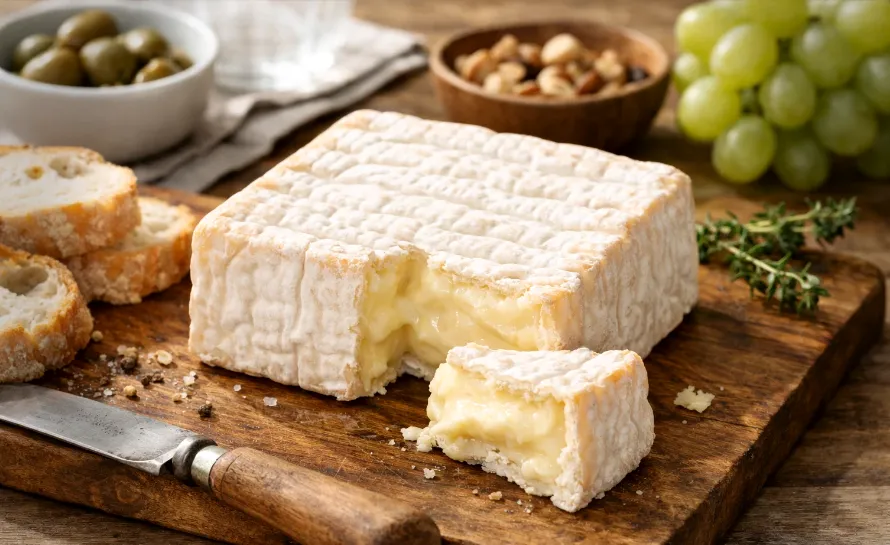
How to Buy French Soft Bloomy Rind Cheeses
Buying bloomy rind cheese requires understanding ripeness stages and knowing what you want.
Reading the Labels
AOC/AOP designations guarantee traditional production. Camembert de Normandie AOC must be made in Normandy with raw milk and specific methods. Brie de Meaux and Brie de Melun are protected varieties.
Check whether it’s pasteurized or raw milk (lait cru). Raw milk varieties offer more complexity but aren’t suitable for pregnant women or young children. Most bloomy rinds sold outside France use pasteurized milk for safety.
Note the fat content. Standard bloomy rinds are around 45-50% fat in dry matter. Double cream is 60%, triple cream 75%+. Higher fat means richer, more indulgent cheese.
“Fermier” (farmhouse) indicates small-scale traditional production. “Laitier” (dairy) means larger production. For bloomy rinds, farmhouse production often delivers superior character but may be less consistent.
What to Look For
The rind should look healthy, pure white or cream-colored, soft and fuzzy like velvet. Some darker patches or brown spots on older cheese are acceptable, but grey or green discoloration suggests wrong molds growing.
Gently press the cheese (if shopping allows). Young cheese feels firm throughout, like pressing clay. Medium-ripe cheese has soft exterior with firmer center, like pressing the web between your thumb and forefinger. Fully ripe cheese feels uniformly soft throughout, giving easily to gentle pressure, like pressing ripe avocado.
Smell matters enormously. Young bloomy rind smells mild, milky, slightly mushroomy. Ripe cheese has stronger mushroom aroma, earthy notes, slightly funky undertones. Overripe cheese smells distinctly of ammonia, sharp, cleaning-fluid smell. Some ammonia is acceptable in very ripe cheese, but strong ammonia indicates the cheese is past its prime.
Check the production date if visible. For standard Camembert, optimal ripeness typically occurs 4-6 weeks after production. Brie ripens slightly faster due to its flat shape. If buying for immediate consumption, choose cheese approaching this age. If planning to age at home, buy younger.

How to Store French Soft Bloomy Rind Cheeses
Storage is tricky because these cheeses never stop ripening. Your goal is controlling that ripening to eat them at optimal stages.
Temperature and Location
Refrigeration (4-7°C) dramatically slows ripening. Young bloomy rind cheese kept cold may take weeks to ripen. At room temperature (18-20°C), ripening accelerates, the same cheese might fully ripen in days.
This gives you control. If your cheese feels too firm and you want it riper, leave it at room temperature for a day or two. If it’s approaching perfect ripeness and you’re not ready to eat it, refrigerate immediately to slow further ripening.
Packaging and Containers
Bloomy rind cheese needs to breathe but not dry out. Cheese paper or parchment paper works well, wrap loosely, allowing some air exchange whilst preventing drying. Place wrapped cheese in a loose plastic bag or container.
Don’t wrap tightly in plastic wrap, it traps moisture and ammonia, accelerating overripening and creating unpleasant flavors.
For cheese still actively ripening, consider unwrapped storage in a covered container, flipping daily. This allows gas release (these cheeses produce ammonia as they ripen) whilst maintaining humidity. Once ripe, wrap to slow further development.
Shelf Life and Signs of Spoilage
Once you buy bloomy rind cheese, ripeness determines lifespan. Young cheese (still firm throughout) keeps 2-3 weeks refrigerated, slowly ripening. Medium-ripe cheese (developing creamline) keeps 5-7 days. Fully ripe cheese (soft throughout) should be eaten within 2-3 days before becoming overripe.
Bloomy rind discolors as it ages. Pure white when young, it develops tan, brown, or pinkish patches when older. This is normal aging, not spoilage, though it indicates the cheese is quite ripe.
Can You Freeze Bloomy Rind Cheese?
Generally not recommended. Freezing destroys the delicate texture, when thawed, the paste becomes grainy and watery, losing the creaminess that defines the category. The flavor dulls significantly. If you must prevent waste, freeze only for use in cooking where texture matters less. Expect significantly degraded quality.
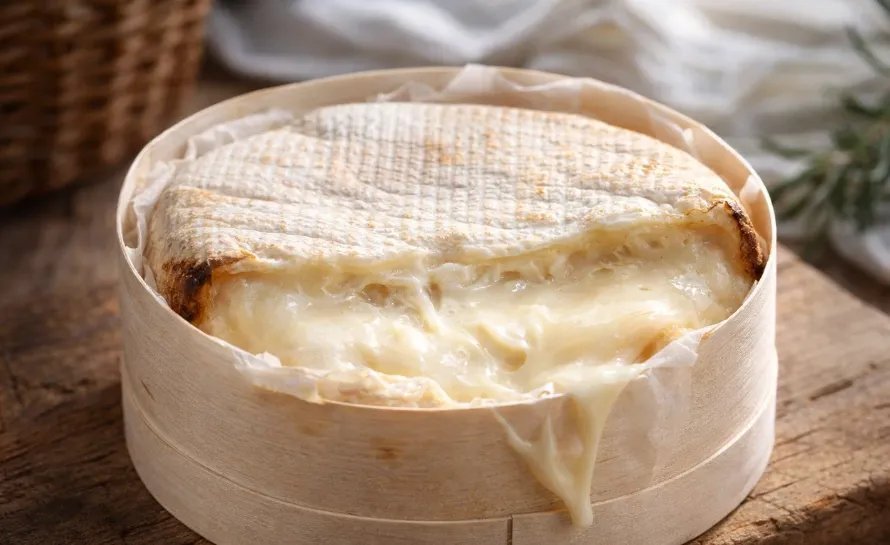
Serving French Soft Bloomy Rind Cheeses
Serving bloomy rind cheese properly showcases their character.
Temperature Matters
This is absolutely critical. Remove bloomy rind cheese from refrigeration at least 1 hour before serving, ideally 1.5-2 hours. Cold bloomy rind cheese has muted flavors, tough texture, and none of the creamy luxury you’re after.
At proper room temperature (18-20°C), the paste softens, flavors emerge fully, and you experience the buttery, mushroomy character these cheeses are prized for. The difference is dramatic, cold Camembert is merely acceptable; properly tempered Camembert is magnificent.
Presentation
Bloomy rind cheeses present beautifully. Serve whole wheels on wooden boards with appropriate knives. For Brie, provide a sharp knife for clean cuts. For very ripe Camembert, provide a spoon, it may be too soft to slice.
The Rind Question
The white rind is completely edible and meant to be eaten. It adds earthy, mushroomy flavors and interesting textural contrast. Some people love it; others dislike the stronger taste or slightly fuzzy texture.
Try it before deciding, many people surprised they enjoy it. If you genuinely don’t like it, trim it off, though you’re missing part of what makes these cheeses special.
1
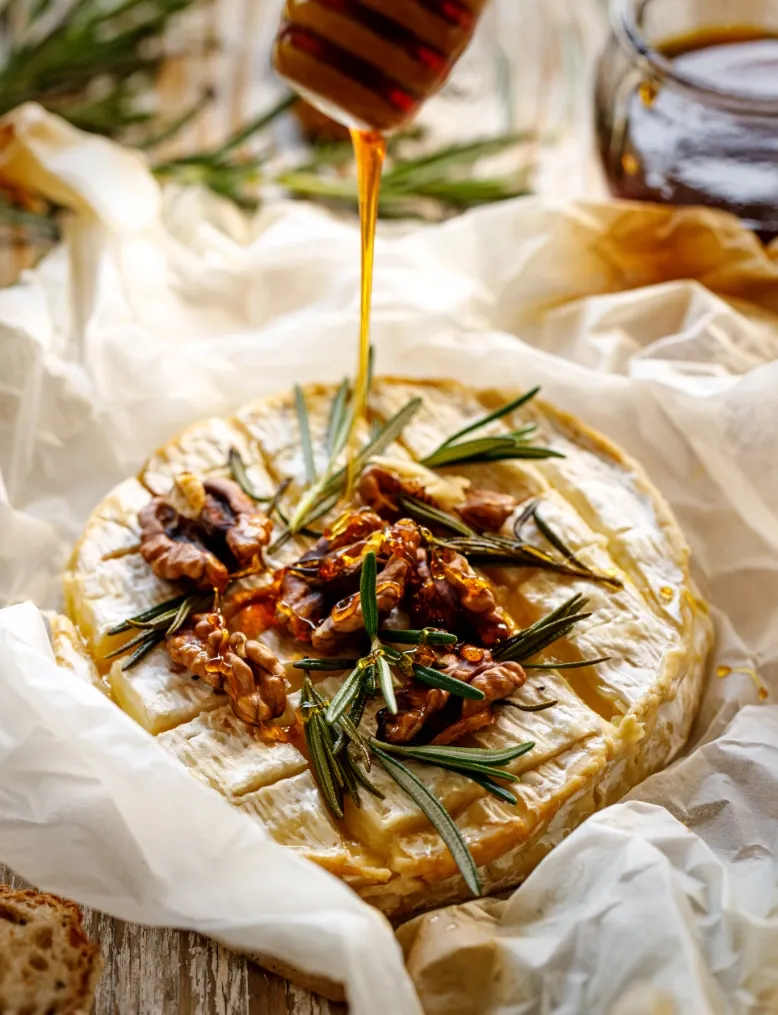
Baked Camembert
This Baked Camembert captures the warm, comforting essence of French country cooking. This little wheel of creamy, oozy cheese, gently infused with fresh herbs, crunchy toasted walnuts and a drizzle of golden honey, is an absolute showstopper, effortless to prepare yet irresistibly indulgent!
Get the recipe →Cooking with French Soft Bloomy Rind Cheeses
Bloomy rind cheeses excel in cooking, their creamy texture and mild flavors create luxurious results.
Brie en Croûte
The next level of baked Brie: wrap the wheel in puff pastry with sweet or savory additions (jam, nuts, herbs, caramelized onions), then bake until the pastry is golden and the cheese molten. Slice like a pie to serve.
Quiches and Tarts
Cut bloomy rind cheese into cubes and scatter through quiche or tart filling. It melts beautifully, creating pockets of creamy, mushroomy richness throughout. Pair with leeks, mushrooms, or spinach for classic combinations.
Pasta and Risotto
Cube bloomy rind cheese and stir into hot pasta or risotto just before serving. It melts into creamy sauce whilst maintaining some structure. The earthy notes complement simple preparations beautifully.
Soups
Stir cubed bloomy rind into finished soup for instant creaminess and depth. Mushroom soup with melted Camembert is classic French bistro fare.
Sandwiches and Panini
Sliced bloomy rind in sandwiches, particularly with apple, and honey, creates elegant lunch fare. Grill as panini for warm, melted perfection.
Cooking Tips
Bloomy rind melts at low temperatures, gentle heat works best. High heat can make it separate and become oily. Use young to medium-ripe cheese for cooking. Very ripe cheese has such strong flavor it can dominate dishes, and overripe cheese develops unpleasant ammonia notes when heated.
Remove thick rinds if using in pasta or risotto where textural smoothness matters. For baking or dishes where the rind adds character, leave it on.
Health Benefits of French Soft Bloomy Rind Cheeses
Bloomy rind cheeses offer nutritional benefits, though moderation remains important.
Nutritional Profile
These cheeses provide good protein, typically 20-21g per 100g. This makes them reasonable protein sources, though not as concentrated as hard cheeses. Calcium content is good, typically 180-390mg per 100g, providing 18-40% of daily recommended intake. This supports bone health, particularly important for those not consuming much dairy.
They’re excellent sources of vitamin B12, vitamin A, and riboflavin (vitamin B2). B12 is essential for nerve function and red blood cell production. Vitamin A supports vision and immune function. The fat content is substantial, typically 24-28g per 100g, predominantly saturated fat. This richness contributes to satiety but means portion control matters. Calories are moderate to high, typically 300-340 per 100g. The energy density reflects the fat content and relatively low moisture.
Protein Quality and Digestibility
The protein is high-quality, containing all essential amino acids. The ripening process partially breaks down proteins into peptides and amino acids, potentially making them more digestible than unripened cheeses.
Despite being dairy, bloomy rind cheeses have relatively low lactose (0-2% by weight). The cheesemaking process removes most lactose with the whey, and the remainder is consumed during aging. Many people with lactose intolerance tolerate them well.
Beneficial Compounds
The ripening process creates conjugated linoleic acid (CLA), which research suggests may have anti-inflammatory properties. Some studies show bloomy rind cheeses may slow growth of certain cancer cells, though more research is needed. The beneficial molds (Penicillium species) may provide probiotic-like effects, though this is still being researched.
Explore Our Soft Bloomy Rind Cheeses Collection
This guide provides the foundation, but individual varieties deserve deeper exploration. We’ve created detailed articles covering specific types, each featuring five carefully selected varieties showcasing the category’s diversity. Discover more about French soft bloomy rind cheeses:
Final Thoughts
Soft bloomy rind cheeses represent French cheesemaking at its most approachable yet most dynamic. These aren’t the cheeses that age for months in mountain cellars or develop the complex intensity of long-aged varieties. Instead, they offer something different: immediate accessibility combined with fascinating evolution.
What makes them special is their living quality. Buy a wheel of Camembert today and it tastes one way. Check it in three days and the flavor’s developed. Wait a week and it’s transformed entirely. These cheeses are journeys, not destinations, you choose where to step off based on your preferences.
They’re also remarkably forgiving of inexperience. Unlike blue cheese’s acquired-taste intensity or washed-rind varieties’ powerful aromas, bloomy rinds offer gentle entry into serious cheese. Yes, there’s mold. Yes, properly ripe bloomy rind has funk. But the progression from mild to bold happens gradually enough that you can find your comfort zone.
Start with young bloomy rind if you’re exploring the category. A Camembert or Brie that still has chalk-firm center and just developing creamline offers bloomy rind character, the mushroomy rind, the beginning butteriness, without intensity that might challenge. Leave it at room temperature and check it daily, tasting as it ripens. You’ll discover where you prefer it.
As you develop appreciation, explore riper expressions. That Camembert approaching liquid center, smelling distinctly funky, that’s bloomy rind showing its full character. Not everyone wants to go there, and that’s fine. But experiencing the full range helps you understand what these cheeses can do.
Start with one good wheel. Let it warm properly. Taste it attentively, noting how the rind and paste taste different. Then leave the remainder at room temperature overnight and taste again tomorrow. Welcome to the wonderfully dynamic world of French bloomy rind cheeses.

A Complete Hosting Guide
This complete guide takes the intimidation out of French cheese and wine hosting, so you can create an impressive, memorable evening that feels effortless.
Just so you know, a few links here earn us a commission. Doesn’t cost you anything extra, and we only link to things that are actually worth your time.