Tarte Tatin
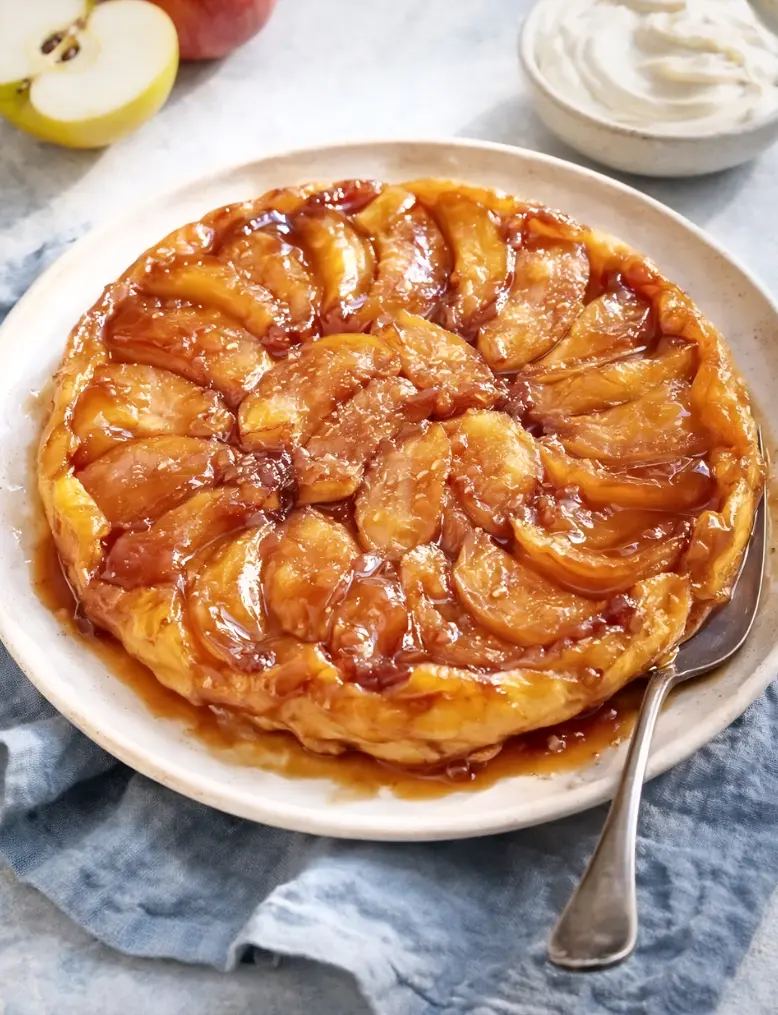
Apples cooked low and slow in butter and sugar directly in the pan until they're golden, yielding, and caramelised to the core, then covered with a sheet of puff pastry, baked until crisp and deeply golden, and flipped onto a plate at the table. Served warm with a spoonful of crème fraîche alongside. This is a tarte tatin done the way it should be done.
Ingredients

For the pâte brisée
- 200 gr plain flour
- 100 gr unsalted butter
- 25 gr caster sugar
- 1 pinch salt
- 1 egg
- 1-2 tsp cold water if needed
For the filling
- 1.4 kg Reine des Reinettes apples firm, slightly tart varieties only
- 130 gr unsalted butter
- 150 gr caster sugar
- 1 sheet all-butter puff pastry kept cold until needed
To serve
- crème fraîche to serve
Equipment
- 24–26cm ovenproof frying pan or skillet Cast iron or a proper tarte tatin mold if you have one. It must go from hob to oven.
- vegetable peeler
- plate or board for flipping, wider than your pan
Instructions
- 1. Make the pâte briséePut the flour, sugar, and salt in a large bowl and mix briefly. Add the cold butter cubes and rub them into the flour with your fingertips, working quickly so the butter stays cold, until the mixture resembles coarse breadcrumbs with a few pea-sized lumps still visible, those lumps are what give the pastry its texture. Make a well in the centre, add the egg, and mix with a fork until it just starts to come together. If it's too dry to form a dough, add cold water a teaspoon at a time. Work it as little as possible. Overworked pastry turns tough.Shape into a flat disc, wrap in cling film, and refrigerate for at least 30 minutes. Cold pastry is easier to roll and holds its shape better in the oven.
- 2. Prepare the applesPeel, quarter, and core the apples. You want firm, slightly acidic varieties, the acidity balances the caramel and holds up through the long cooking. Cut quarters in half again if the apples are large. Set aside.
- 3. Start the caramel and apples togetherPlace your ovenproof pan over a medium-low heat. Add the butter and let it melt gently. Add the sugar in an even layer over the butter, don't stir, just let it begin to dissolve. After a few minutes, when the mixture starts to turn golden at the edges, arrange the apple pieces tightly in the pan, curved side down, packed as snugly as possible. They will look like far too many. They're not.
- 4. Cook low and slow on the hobThis is the step most recipes rush, and it's the most important one. Cook the apples over a medium-low heat for 35–40 minutes, without stirring. Tilt the pan occasionally to check the caramel underneath, you want it bubbling, gradually deepening from golden to a rich, dark amber. The apples will shrink considerably, soften, and begin to take on colour. By the end they should be deeply golden, very tender, and sitting in a thick, dark caramel. If the caramel looks pale and thin after 20 minutes, nudge the heat up slightly. Be patient, this stage cannot be hurried.Preheat your oven to 200°C / 180°C fan while the apples are cooking.
- 5. Roll the pastryOn a lightly floured surface, roll the chilled pastry "pâte brisée" into a circle slightly larger than your pan, about 2–3cm of overhang all round. Work quickly so the pastry stays cold. If it cracks at the edges, press it back together with your fingers.
- 6. Top the applesTake the pan off the heat. Lay the pastry circle carefully over the hot apples and tuck the edges down inside the pan, between the apples and the pan sides. This folded-under pastry becomes part of the base once the tart is flipped and gives you more to eat. Prick the pastry a few times with a fork to let steam escape.
- 7. BakeTransfer to the oven and bake for 25–30 minutes until the pastry is a deep, even golden brown and cooked through. Press it gently in the centre, it should feel firm and dry, not soft or doughy. The caramel will be bubbling up around the edges. A pale pastry means it needs more time.
- 8. The flipLeave the tarte tatin to rest in the pan for exactly 10 minutes after coming out of the oven, no longer, or the caramel sets and the apples stick. Place a large, deep plate or board firmly over the pan. Hold both together with both hands, using a kitchen cloth or oven gloves. Flip in one confident, decisive movement. Set down and lift the pan off slowly. If any apples have shifted, press them back into place with a spoon. The caramel will be extremely hot, keep hands away from any that runs off the edge.Serve warm, not piping hot, with crème fraîche alongside.
Notes
- Apple variety is everything. The Reine des Reinettes is the traditional Solognot apple, firm, slightly sharp, and it holds its shape beautifully through long cooking. Boskoop is also excellent. Avoid Gala and Braeburn, too juicy, they make the caramel watery. Avoid Bramley, turns to mush. Avoid Granny Smith, too firm and too sour.
- The recipe is genuinely four ingredients. No vanilla, no cinnamon, no lemon. The Confrérie des Lichonneux, the brotherhood that has defended the authentic recipe since 1979, is quite clear on this. The apple and caramel flavour should stand entirely on their own.
- On pastry: the traditional Solognot recipe uses pâte brisée (shortcrust), and the Confrérie considers puff pastry an inauthentic substitution. Practically speaking, puff pastry is what most French home cooks use today and it gives you a lighter, more dramatic result. Both are good. If you want to be truly traditional, use shortcrust.
- The caramel must be genuinely dark. A timid, pale caramel tastes of sugar. A deep amber caramel tastes of something worth eating. Take it further than feels comfortable, right to the edge of dark without burning.
- The flip works best at exactly 10 minutes of resting time. Too early and the tart falls apart. Too late and it sticks. Set a timer.
- Tarte tatin is best eaten warm on the day it's made. It can be gently reheated in a low oven (150°C) for 10 minutes, but the pastry loses some of its crispness.