Oeufs au Lait
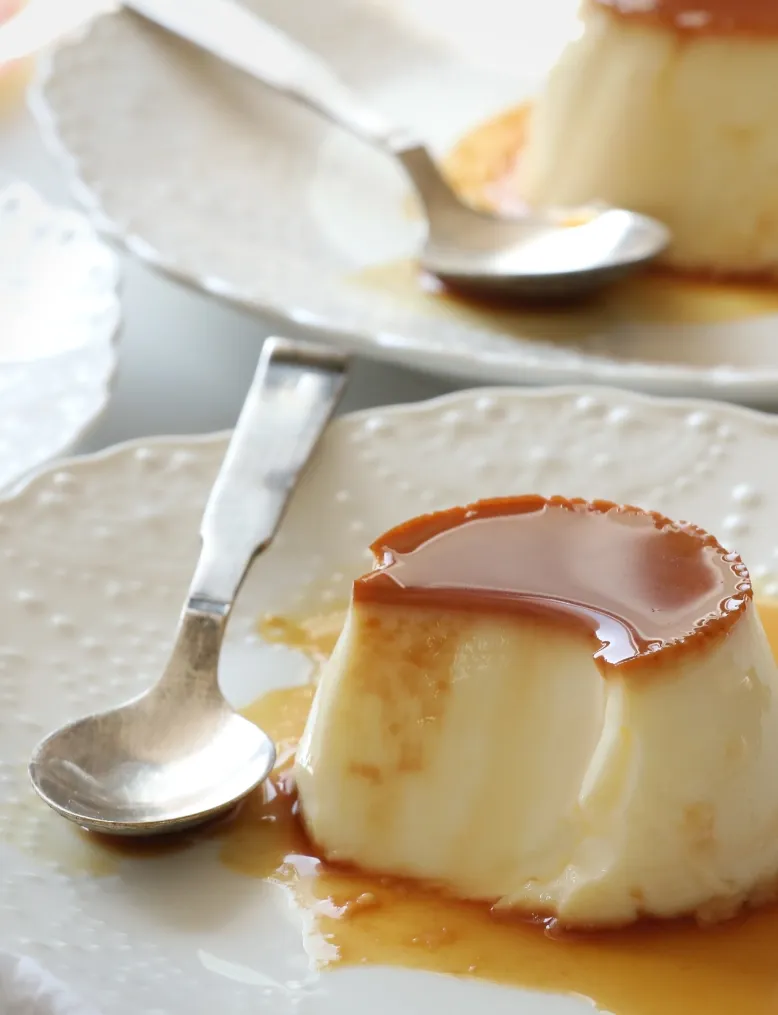
Smooth, wobbly baked custard with a layer of amber caramel on top. It's delicate and silky, infused with vanilla, tasting of eggs and milk and not much else, but in the best way. Simple, comforting, old-fashioned in the way good things often are. The kind of dessert French families have been serving at Sunday lunch since the Middle Ages.
Ingredients

- 1 l whole milk
- 6 egg
- 200 gr sugar
- 1 vanilla pod or 2 tsp vanilla extract
- 1 tbsp water
Equipment
- 1 whisk
- 1 baking dish or individual ramekins
- 1 double boiler pot for bain-marie
- 1 saucepan for caramel
- 1 spatula for caramel
Instructions
- 1. Make the caramel saucePlace the sugar (100gr) and water in a small saucepan over medium heat. Stir gently to dissolve the sugar, then stop stirring and let the mixture bubble. Watch closely as it turns from clear to golden amber. Once it reaches a rich amber colour, remove from the heat. Carefully swirl the pan to coat the bottom and sides of your baking dish or ramekins. Set aside to cool and harden slightly while you prepare the “oeufs au lait”.
- 2. Heat the milkPour the milk into a large saucepan. Split the vanilla pod lengthwise and scrape out the seeds, then add both pod and seeds to the milk. Stir in the sugar (100gr). Heat gently, stirring occasionally, until the milk just comes to the boil. Remove from the heat and set aside to infuse for a few minutes. Remove the vanilla pod before using the milk.
- 3. Beat the eggsWhile the milk is heating, crack the eggs into a large mixing bowl. Beat them well with a whisk or fork until they are smooth and slightly frothy.
- 4. Combine milk and eggsSlowly pour the hot milk into the beaten eggs, whisking constantly to avoid scrambling the eggs and to ensure a smooth, custardy mixture.
- 5. Prepare for bakingPour the custard mixture over the cooled caramel in your baking dish or ramekins. For a bain-marie, place your baking dish inside a larger dish and fill the larger dish with hot water so it comes about halfway up the sides of your baking dish.
- 6. Prepare for bakingPlace the dish or ramekins in a cold oven. Set the oven to 120°C (fan 100°C) and bake for 20 minutes. Then increase the temperature to 180°C (fan 160°C) and bake for a further 30–40 minutes, or until the top is golden and the centre is just set (it should still have a slight wobble).
- 7. Cool and chillTurn off the oven and leave the door ajar to let the dish cool slowly. Once at room temperature, transfer to the fridge and chill for at least 2 hours, or preferably overnight, before serving.
- 8. ServeTo serve, gently run a knife around the edge of your dish or ramekins to loosen the custard from the sides. Place a plate on top, flip everything over in one confident move, and lift off the dish or ramekin so the gorgeous caramel sauce cascades over the top. If the caramel sticks the first time, don’t worry, just give it a gentle tap and try again. The result should be a smooth, glossy custard with a beautiful caramel topping every time.
Notes
- Caramel watch: Keep an eye on the caramel as it cooks, it can burn quickly.
- Vanilla options: If you don’t have a vanilla pod, vanilla extract works just as well.
- Make ahead: This dish is even better the next day.