Asparagus Omelette with Goat's Cheese
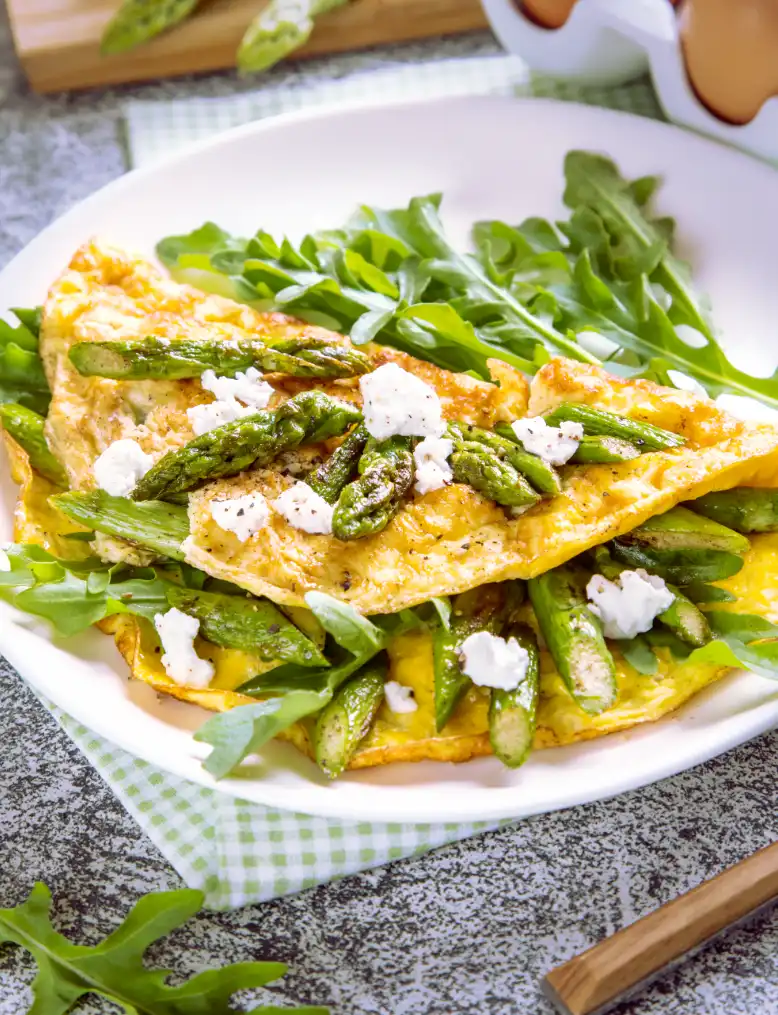
A softly set French omelette filled with quickly sautéed green asparagus and creamy chèvre frais, served with dressed rocket leaves on the side. The eggs are pale and yielding, the asparagus keeps a bit of bite, and the goat's cheese melts just enough to turn creamy and tangy throughout. This is spring cooking at its most straightforward, seasonal, fast, and properly good.
Ingredients

For the asparagus filling
- 200 gr green asparagus woody ends snapped off, cut into 3–4cm pieces
- 15 gr unsalted butter
- salt and black pepper
For each omelette (makes 2)
- 3 eggs
- 1 gr unsalted butter
- 1 tbsp cold water
- salt and black pepper
To finish
- 80 gr goat cheese
- 1 handful rocket
- 1 drizzle olive oil
- 1 squeeze lemon juice
Equipment
- 1 frying pan for the asparagus
- 1 frying pan 20–22cm, for the omelette
Instructions
- 1. Cook the asparagusMelt the butter in a small frying pan over a medium-high heat. Add the asparagus pieces and cook for 3-4 minutes, tossing occasionally, until just tender with a little colour on them. Season with salt and pepper. Set aside and keep warm. You'll divide this between two omelettes.
- 2. Prepare the eggsCrack 3 eggs into a bowl. Add a tablespoon of cold water, a good pinch of salt, and some black pepper. Beat firmly with a whisk until the yolks and whites are fully combined and the mixture is slightly frothy. Don't over-beat it, you want it mixed, not aerated. Do this fresh for each omelette rather than beating all six eggs at once.
- 3. Cook the omeletteThis is the part that requires attention. Heat your non-stick pan over a high heat until properly hot. Add the butter and let it foam. The moment the foam starts to subside, not before, not after, pour in the beaten eggs.Immediately start stirring with a spatula in quick, small circular movements, pulling the set egg from the edges towards the centre whilst shaking the pan gently with your other hand. Keep going for about 30–40 seconds until the eggs are about 80% set but still look slightly wet and glossy on top. This happens fast.
- 4. Add the filling and foldScatter half the asparagus over one half of the omelette. Add half the crumbled goat cheese. Now stop stirring and let the omelette sit for about 10 seconds, just enough for the base to set without colouring.Tilt the pan away from you at about 45 degrees. Using the spatula, fold the unfilled half of the omelette over the filled half. Slide it onto a warm plate. The omelette should be pale, slightly golden at most, with no brown. If it looks like scrambled eggs wrapped in a pancake, the heat was too high or you cooked it too long. It comes with practice.
- 5. Repeat for the second omeletteWipe the pan quickly with kitchen paper, return to the heat, and repeat with the remaining eggs and filling. Serve both immediately.
- 6. Dress the rocket and serveToss the rocket leaves with a small drizzle of olive oil, a squeeze of lemon, and a pinch of salt. Serve alongside the omelette. Simple as that.
Notes
- Pan size is not optional. A 20-22cm non-stick pan for a 3-egg omelette is the standard for a reason. Too big and the eggs spread too thin and set too quickly. Too small and you get a thick, under-set slab. If yours is bigger, use 4 eggs.
- Don't brown the omelette. This is the most important rule in French omelette-making. The moment you see colour on the outside, it's overcooked by French standards. High heat for speed, not for colour.
- The cold water trick is worth doing. A tablespoon of cold water beaten into the eggs creates a slightly lighter, more tender result. Some French cooks use a splash of crème fraîche instead. Both work.
- Goat cheese is what you want here, the soft, fresh kind that crumbles easily and melts into the eggs. Aged, rind-on chèvre is a different thing entirely and won't work the same way.
- Asparagus season runs April to June in France. Outside those months, this recipe is still worth making, but it's best when asparagus is actually in season and tastes like something.
- Serve on warm plates. A French omelette cools and firms up quickly. Cold plates are the enemy.